- English
- French
- German
- Portuguese
- Spanish
- Russian
- Japanese
- Korean
- Arabic
- Greek
- German
- Turkish
- Italian
- Danish
- Romanian
- Indonesian
- Czech
- Afrikaans
- Swedish
- Polish
- Basque
- Catalan
- Esperanto
- Hindi
- Lao
- Albanian
- Amharic
- Armenian
- Azerbaijani
- Belarusian
- Bengali
- Bosnian
- Bulgarian
- Cebuano
- Chichewa
- Corsican
- Croatian
- Dutch
- Estonian
- Filipino
- Finnish
- Frisian
- Galician
- Georgian
- Gujarati
- Haitian
- Hausa
- Hawaiian
- Hebrew
- Hmong
- Hungarian
- Icelandic
- Igbo
- Javanese
- Kannada
- Kazakh
- Khmer
- Kurdish
- Kyrgyz
- Latin
- Latvian
- Lithuanian
- Luxembou..
- Macedonian
- Malagasy
- Malay
- Malayalam
- Maltese
- Maori
- Marathi
- Mongolian
- Burmese
- Nepali
- Norwegian
- Pashto
- Persian
- Punjabi
- Serbian
- Sesotho
- Sinhala
- Slovak
- Slovenian
- Somali
- Samoan
- Scots Gaelic
- Shona
- Sindhi
- Sundanese
- Swahili
- Tajik
- Tamil
- Telugu
- Thai
- Ukrainian
- Urdu
- Uzbek
- Vietnamese
- Welsh
- Xhosa
- Yiddish
- Yoruba
- Zulu
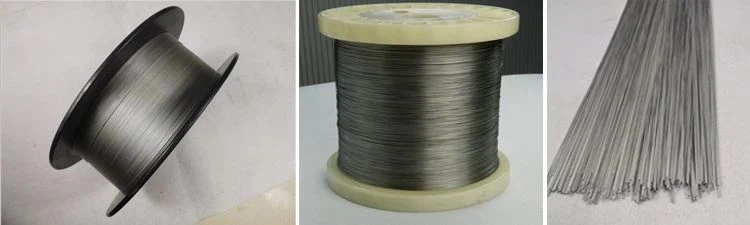
Incoloy 925 Wire
Manufacturing Capacity: 150 tons/month
Grade: Incoloy 925 (UNS N09925)
Standard: ASTM B446, ASTM B168, JIS, DIN
Size: Diameter 0.1–10.0 mm (customized sizes available)
Finish: Bright, Annealed
Customized Size and Processing: Supported
Certificate: ISO9001:2008, TÜV, MTC acc EN10204.3.1
Delivery: 20–45 days
Incoloy 925 Wire – High-Strength Nickel Alloy Wire for Demanding Applications
What you need is a material that will not fail you when you're dealing with sour gas conditions or mechanical fatigue in high-pressure systems. The nickel-iron-chromium metal Incoloy 925 Wire is made to withstand these tough conditions and gets stronger over time. The performance of this high-quality wire is somewhere between that of high-strength steels and superalloys. Using precise precipitation hardening with titanium and aluminium, it makes downhole tools and naval parts with very strong structures. Our product works reliably where you need it most, unlike most stainless steels that break when acidic and mechanical stress are put on them together. It's the answer for users that need both resistance to rust and power.
Specification
We offer comprehensive size ranges to meet your specific requirements:
| Parameter | Details |
|---|---|
| Grade | Incoloy 925 (UNS N09925) |
| Standards | ASTM B446, ASTM B168, ASTM B805, JIS, DIN |
| Diameter Range | 0.1–10.0 mm (customized sizes available) |
| Finish | Bright, Annealed |
| Manufacturing Capacity | 150 tons/month |
| Minimum Order Quantity | 50 kg (stock available) |
| Delivery Time | 20–45 days |
| Certification | ISO9001:2008, TÜV, MTC acc EN10204.3.1 |
Physical and Chemical Properties
Chemical Composition
| Element | Content (%) |
|---|---|
| Nickel (Ni) | 42.0–46.0 |
| Chromium (Cr) | 19.5–22.5 |
| Molybdenum (Mo) | 2.5–3.5 |
| Copper (Cu) | 1.5–3.0 |
| Titanium (Ti) | 1.9–2.4 |
| Aluminum (Al) | 0.1–0.5 |
| Iron (Fe) | Balance |
Mechanical Properties (Post-Ageing Condition)
| Property | Value |
|---|---|
| Tensile Strength | 1140–1310 MPa |
| Yield Strength | ≥790 MPa |
| Elongation | ≥20% |
| Hardness | 26–38 HRC |
| Temperature Range | Cryogenic to 540°C (1000°F) |
| PREN Value | 30–34 |
Product Standards
Our production strictly follows internationally recognized standards:
- ASTM B805 – Cold-worked and precipitation-hardened materials
- ASTM B446 – Nickel-chromium-molybdenum-columbium alloy rod and wire
- ASTM B168 – Nickel-chromium-iron alloys plate, sheet, and strip
- NACE MR0175 – Compliant for sour oilfield environments
- EN 10204.3.1 – Material test certificates
What are the Features of Incoloy 925 Wire?
The things you need for your projects must work regularly. It's different because of these things:
- Better Resistance to Corrosion: The nickel-rich mix is very good at stopping stress-corrosion cracks in places with a lot of H2S and CO2.
- Outstanding Mechanical Strength: When steel ages, it hardens and gains tensile strength above 1140 MPa while still being able to bend easily.
- Pitting Resistance: Materials with a lot of chromium and molybdenum are very resistant to pitting and crevice corrosion in salt settings.
- Stability at Different Temperatures: It keeps its shape and mechanical qualities from very low temperatures to 540°C.
- Fatigue Resistance: This material is great for uses that load and unload and where fatigue failure is a worry.
- Ability to weld: It can be welded while solution-annealed as long as the right heat treatment is done after the join.
Application
Incoloy 925 Wire does very well in three important business areas:
The bar for high-strength valve stems, packers and mandrels in sour gas wells is set by Upstream Oil & Gas. When high levels of H2S and CO2 threaten the stability of equipment, this material stands up.
Marine Engineering: Great for bolts, high-load gear, and deep-sea instrument housings. Its ability to fight salt pitting and biofouling makes it reliable for long-term use.
Chemical Processing: Made into heavy-duty springs and parts that can handle harsh conditions. The wire keeps its elasticity and doesn't become weak from hydrogen in either acidic or basic liquids.
Specialised fasteners are used in important bolting jobs where strength and resistance to rust can't be reduced.
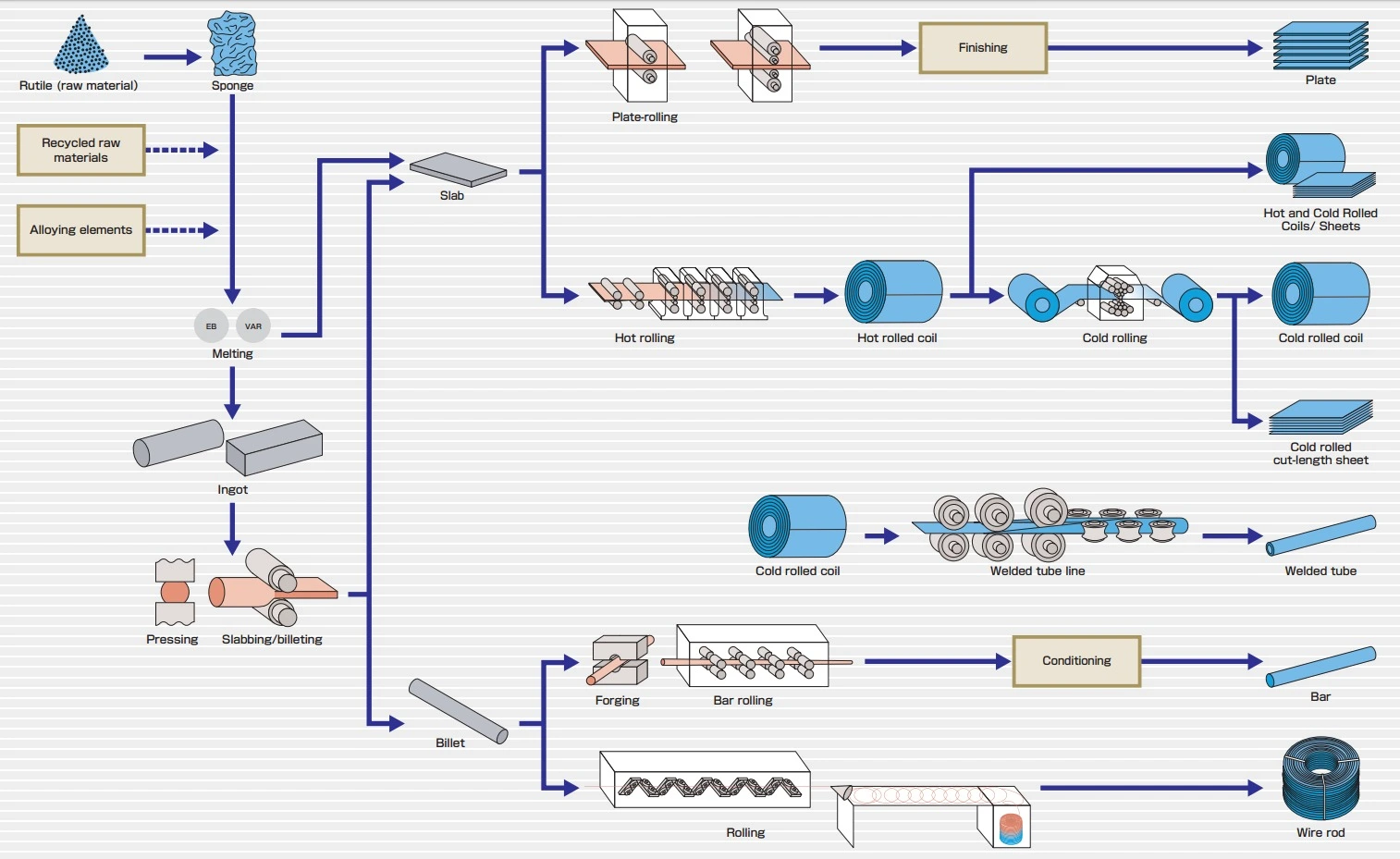
Production and Processing Technology
Consistent quality is guaranteed by our modern manufacturing:
Step 1: We get high-purity nickel and alloying elements from reliable providers.
Step 2: Vacuum Melting—Uniform chemical composition is achieved by melting the metal in ovens with controlled atmospheres.
Step 3: Hot Working – Billets undergo hot forging and rolling to refine grain structure.
Step 4: Cold Drawing—To get the width you need, you gradually reduce the thickness of the metal using precise dies.
Step 5: Heat treatment at 980–1040°C melts the precipitates and gets the wire ready to continue hardening.
Step 6: Condition Hardening—The desired mechanical qualities are created through controlled precipitation hardening at 715°C.
Step 7: Bright heating or surface treatment based on your needs.
Quality Inspection
We use an in-depth, multi-level review protocol:
For Positive Material Identification (PMI), XRF spectroscopy checks the chemistry of complicated alloys to make sure they are the right makeup.
Testing mechanically: Rockwell C hardness testing and ASTM E8 tensile testing show that the ageing process got the desired qualities.
Examination of the Microstructure: SEM research looks for harmful stages like sigma formation or too much carbide precipitation.
Controlling Dimensions: Laser micrometre checking makes sure that the width stays the same, which is important for precise tasks like spring winding.
Nondestructive Testing: Eddy current or ultrasonic screening finds holes or cracks inside or on the outside of something that could cause it to break too soon.
Full traceability is provided by Material Test Certificates (MTC) that are in line with EN 10204.3.1.
Why Choose TSM Technology?
Manufacturing Excellence: Our 50,000 modern building has more than 100 precise tools that allow us to do the whole production process, from melting the metal to checking it for quality.
Certifications for Quality: We keep our ISO 9001, AS9100D, and AS9120 certifications, which make sure that our quality meets aircraft standards.
Technical Knowledge: We've been serving customers in over 70 countries for over 14 years, so we really understand what you need for your application.
Customisable: We can make solutions that fit your needs, whether you need specific sizes, surface finishes, or mechanical qualities.
Quick Response: We can produce 150 tonnes per month and have stock on hand, so we can get your projects to you on time.
Support Across the Entire Project Lifecycle: Our team is here to help you with everything from choosing the right materials to getting technology help after the sale.
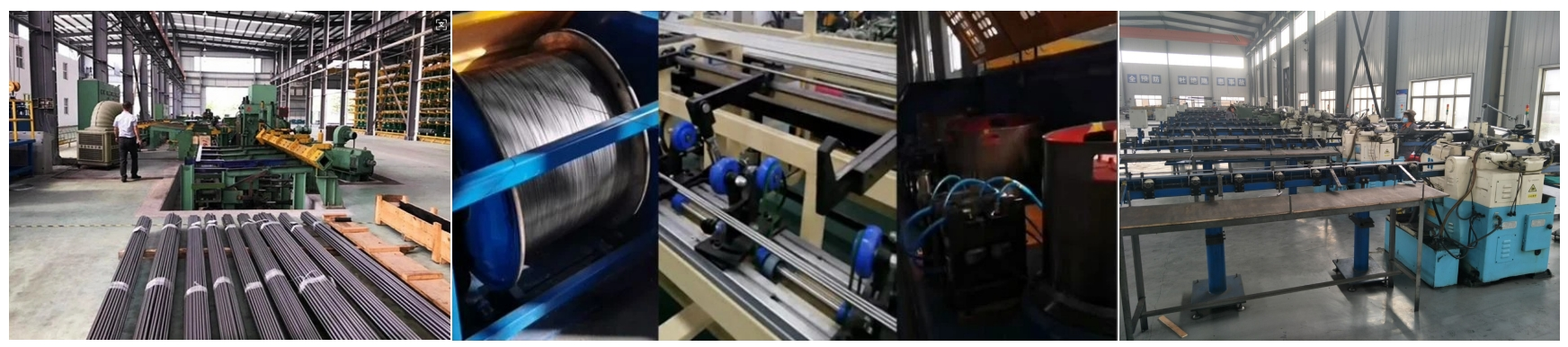
Factory
The production centre that TSM Technology runs is state-of-the-art and covers 50,000 square meters. Modern wire drawing machines, controlled atmosphere ovens, and precise finishing systems are all part of our production lines. We can keep tight quality control at every stage of production in this integrated plant, which also gives you the volume you need.
Package and Shipping
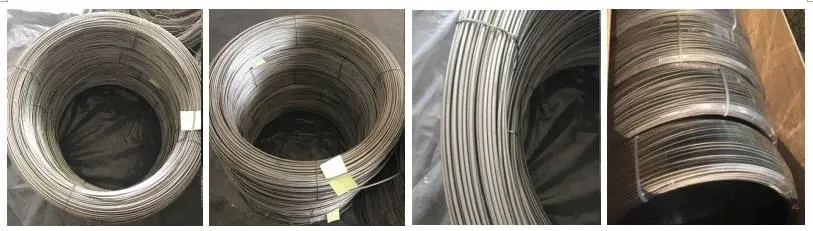
The material you ordered comes in perfect condition:
- Indoor safety: wire bands covered with waterproof paper and plastic film
- Cases or pallets made of wood that are good for foreign shipping
- Labelling: Clearly defined with grade, size, heat number, and details for tracking
- Optional shipping methods include sea freight, air freight, or fast delivery, depending on how quickly you need it.
- Global logistics: Our Hong Kong hub makes sure that supplies get to all corners of the world quickly.
FAQ
Q: Are the products compliant with NACE MR0175?
A: Yes, it's fully approved for sour oilfield environments provided it meets the specified hardness requirements. This makes it ideal for your downhole applications.
Q: How does age hardening affect the wire's ductility?
A: Ageing significantly increases strength while maintaining sufficient elongation (typically 20% or more). You get the strength you need without sacrificing workability for fastener applications.
Q: Can this material be welded?
A: Yes, though it's usually welded in the solution-annealed condition using matching filler metals. Post-weld heat treatment restores the desired properties.
Q: What is the PREN (Pitting Resistance Equivalent Number)?
A: It typically ranges from 30 to 34, indicating high resistance to localized pitting in seawater. This explains its excellent performance in marine applications.
Q: Why choose Incoloy 925 over Inconel 718?
A: This alloy offers a more cost-effective solution for applications requiring high corrosion resistance in H2S environments. You get the performance you need without paying for ultra-high temperature capabilities you don't require.
Q: What diameter tolerances can you achieve?
A: We maintain tight tolerances of ±0.02mm for standard sizes. For precision applications, even tighter tolerances are available upon request.
Contact Us
Ready to discuss your project requirements with Incoloy 925 Wire? Our technical team is here to help you select the right specifications and ensure successful application.
Email: info@tsmnialloy.com
Online Message
Learn about our latest products and discounts through SMS or email
Learn about our latest products and discounts through SMS or email