- English
- French
- German
- Portuguese
- Spanish
- Russian
- Japanese
- Korean
- Arabic
- Greek
- German
- Turkish
- Italian
- Danish
- Romanian
- Indonesian
- Czech
- Afrikaans
- Swedish
- Polish
- Basque
- Catalan
- Esperanto
- Hindi
- Lao
- Albanian
- Amharic
- Armenian
- Azerbaijani
- Belarusian
- Bengali
- Bosnian
- Bulgarian
- Cebuano
- Chichewa
- Corsican
- Croatian
- Dutch
- Estonian
- Filipino
- Finnish
- Frisian
- Galician
- Georgian
- Gujarati
- Haitian
- Hausa
- Hawaiian
- Hebrew
- Hmong
- Hungarian
- Icelandic
- Igbo
- Javanese
- Kannada
- Kazakh
- Khmer
- Kurdish
- Kyrgyz
- Latin
- Latvian
- Lithuanian
- Luxembou..
- Macedonian
- Malagasy
- Malay
- Malayalam
- Maltese
- Maori
- Marathi
- Mongolian
- Burmese
- Nepali
- Norwegian
- Pashto
- Persian
- Punjabi
- Serbian
- Sesotho
- Sinhala
- Slovak
- Slovenian
- Somali
- Samoan
- Scots Gaelic
- Shona
- Sindhi
- Sundanese
- Swahili
- Tajik
- Tamil
- Telugu
- Thai
- Ukrainian
- Urdu
- Uzbek
- Vietnamese
- Welsh
- Xhosa
- Yiddish
- Yoruba
- Zulu
ASTM B564 Inconel 625 Flange
Manufacturing Capacity: 150 tons/month
Grade: Inconel 625 (UNS N06625)
Standard: ASME B16.5, ASTM B564, JIS, DIN
Size: DN10–DN600 | Class 150–2500
Finish: Machined, Pickled
Material Certification: MTC and SGS test reports available
Customized Size and Processing: Supported
Certificate: ISO9001:2008, TÜV, MTC acc EN10204.3.1
Delivery: 5–20 days
ASTM B564 Inconel 625 Flange – High-Performance Forged Connection Solution
When your channeling framework faces extraordinary erosion, high pressure, and warm cycling, you require more than standard components. The ASTM B564 Inconel 625 flange conveys the unwavering quality you request. Made beneath strict ASTM B564 measures utilizing UNS N06625 nickel-chromium-molybdenum alloy, this forged rib gives secure, leak-proof connections in the most challenging situations. Whether you're managing with acrid gas benefit, deep-sea applications, or forceful chemical handling, the product solves three basic issues: resistance to setting and hole erosion, uncommon weariness quality beneath vibration, and oxidation soundness from cryogenic to 1800°F (982°C).
What are the ASTM B564 Inconel 625 Flanges?
These spines are precision-forged components planned particularly for basic intersection points in mechanical channeling frameworks. Not at all like machined-from-plate or cast options, manufactured spines experience controlled distortion that optimizes grain structure. This handle improves affect quality and weariness resistance—essential qualities when you're interfacing channels in seaward stages, chemical reactors, or aviation deplete systems. The alloy's interesting composition—combining nickel, chromium, molybdenum, and niobium—creates a lattice that stands up to both oxidizing and diminishing situations without requiring warm treatment. You get prevalent execution right out of the box.
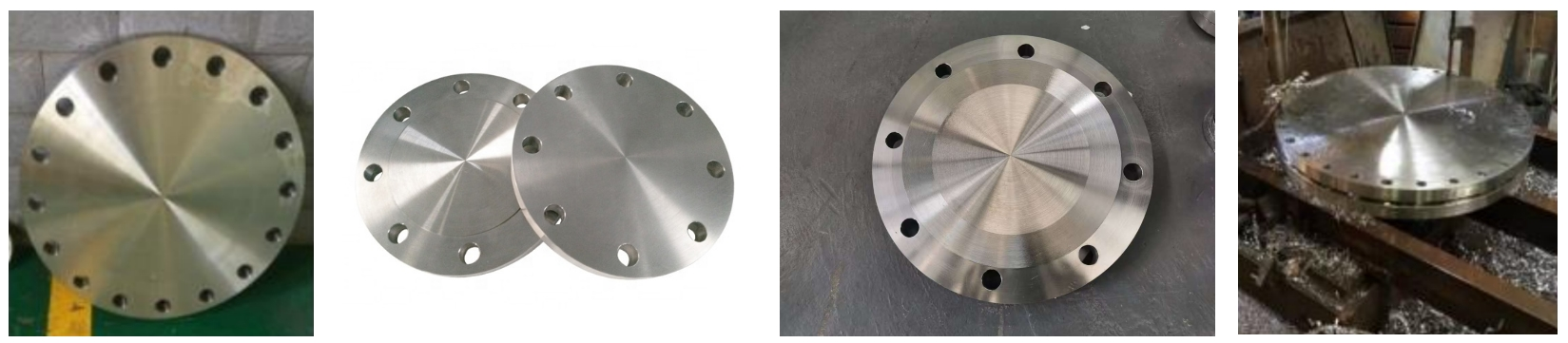
Specifications
| Parameter | Details |
|---|---|
| Grade | Inconel 625 (UNS N06625) |
| Standard | ASTM B564, ASME B16.5, DIN, JIS |
| Size Range | DN10–DN600 |
| Pressure Class | 150–2500 |
| Face Type | RF, FF, RTJ |
| Finish | Machined, Pickled |
| Manufacturing Capacity | 150 tons/month |
| Delivery Time | 5–20 days |
Physical and Chemical Properties
Chemical Composition (%)
| Element | Content |
|---|---|
| Nickel (Ni) | ≥58.0 |
| Chromium (Cr) | 20.0–23.0 |
| Molybdenum (Mo) | 8.0–10.0 |
| Niobium (Nb) | 3.15–4.15 |
| Iron (Fe) | ≤5.0 |
| Carbon (C) | ≤0.10 |
Mechanical Properties
| Property | Value |
|---|---|
| Tensile Strength | ≥120 ksi (827 MPa) |
| Yield Strength | ≥60 ksi (414 MPa) |
| Elongation | ≥30% |
| Hardness | ≤293 HB |
| PREN | >45 |
Product Standards
Our ribs comply with different worldwide standards:
- ASTM B564 – Nickel amalgam forgings
- ASME B16.5 – Pipe spines and flanged fittings
- NACE MR0175/ISO 15156 – Acrid benefit compliance
- EN 10204 3.1 – Fabric test certificates
What are the Features of our products?
1. Remarkable Erosion Resistance
The tall PREN esteem (>45) implies predominant resistance to setting and cleft corrosion—even in chloride-rich seawater and acidic environments.
2. No Warm Treatment Required
Niobium stabilization avoids sensitization amid welding. You can utilize these ribs in the as-welded condition without post-weld warm treatment.
3. Exceptional Weakness Strength
The fashioning handle makes a refined grain structure that withstands cyclic stacking and vibration superior than cast or machined alternatives.
4. Wide Temperature Range
Maintains mechanical properties from cryogenic temperatures up to 1800°F, advertising adaptability over assorted applications.
5. Push Erosion Splitting Immunity
Unlike 316L stainless steel, Inconel 625 stands up to chloride-ion stretch erosion cracking—critical for subsea and marine installations.
Application
The ASTM B564 Inconel 625 flange exceeds expectations in requesting B2B environments:
Offshore and Marine Engineering
In subsea channeling frameworks and riser components, these spines stand up to high-pressure saltwater and microbiologically actuated erosion (MIC). They keep up airtight seals indeed beneath extraordinary hydrostatic pressure.
Chemical and Petrochemical Processing
Reactors and refining columns dealing with phosphoric corrosive, sulfuric corrosive, or blended oxidizing situations depend on these spines to anticipate localized assault and guarantee long-term reliability.
Aerospace and Power Generation
Exhaust frameworks and flare stacks require components that keep up mechanical soundness in spite of consistent warm cycling and introduction to combustion gasses. These ribs avoid creep-rupture whereas supporting leak-free operation.
Oil & Gas (Sour Service)
Wellhead components, valve bodies, and pipeline associations in H2S, CO2, and natural sulfur situations advantage from full NACE compliance and demonstrated resistance to sulfide stretch cracking.
Production and Processing Technology
At TSM Innovation, we utilize progressed fabricating techniques:
- Vacuum Induction Melting (VIM) guarantees high-purity ingots with negligible inclusions
- Hot Producing at controlled temperatures optimizes grain stream and mechanical properties
- Precision Machining on 100+ CNC machines conveys tight tolerances
- Surface Treatment counting pickling and passivation improves erosion resistance
What is the Production Process of our products?
- Raw Material Selection – High-purity ASTM B564 Inconel 625 flange ingots from qualified suppliers
- Heating – Controlled heating to forging temperature (1900–2100°F)
- Forging – Multi-stage hot forging to achieve desired dimensions and grain structure
- Heat Treatment – Solution annealing if required by specification
- Machining – CNC machining of bolt holes, facing, and dimensional features
- Surface Finishing – Pickling, passivation, or shot blasting
- Inspection – Comprehensive testing per ASTM and customer requirements
- Marking & Packaging – Traceability marking and protective packaging
Quality Inspection
Every rib experiences thorough testing:
- Chemical Investigation – Optical emanation spectrometry
- Mechanical Testing – Ductile, hardness, affect tests
- Dimensional Assessment – CMM and manual measurement
- Non-Destructive Testing – Ultrasonic, radiographic, fluid penetrant testing
- Corrosion Testing – Intergranular erosion and setting tests
- Hydrostatic Testing – Weight testing when required
- Documentation – Full traceability with MTC, ITP, and QAC certificates
Why Choose TSM Technology?
Proven Manufacturing Excellence
Our 50,000㎡ office with 100+ exactness machines conveys 150 tons month to month capacity. We keep up AS9100D and ISO 9001 certifications—proof of aerospace-grade quality control.
14+ Years of Global Experience
Exporting to 70+ nations, we get it your administrative necessities and conveyance desires. Our Hong Kong coordinations center guarantees convenient worldwide shipping.
Complete Material Traceability
Every item incorporates full documentation—MTR per EN 10204 3.1, SGS test reports, and dimensional assessment records. You get total straightforwardness from crude fabric to wrapped up product.
Technical Support
Our designing group gives fabric determination direction, welding strategies, and application counseling. We're your accomplice, not fair your supplier.
Customization Capability
Need non-standard sizes or extraordinary prerequisites? Our R&D group creates custom arrangements sponsored by a long time of combination handling expertise.
Factory
TSM Innovation works a advanced fabricating complex featuring:
- Dedicated fashioning workshops with pressure driven presses up to 5000 tons
- Temperature-controlled warm treatment facilities
- Class 10,000 cleanroom machining zones for aviation components
- Advanced testing research facilities with imported assessment equipment
Our coordinates supply chain—from dissolving to last inspection—ensures reliable quality and competitive lead times.
Package and Shipping
Protective Packaging:
- Wooden cases for huge flanges
- Plywood boxes with dampness barriers
- Inner wrapping with VCI paper
- Individual plastic caps for rib faces
- External stamping per client requirements
Shipping Options:
- Sea cargo for bulk orders
- Air cargo for pressing requirements
- Express conveyance for samples
- Door-to-door benefit available
We work with major coordination suppliers to guarantee secure conveyance worldwide.

FAQ
Q1: What is the difference between ASTM B564 and ASTM B446 for Inconel 625?
A: ASTM B564 particularly covers fashioned items like ribs, whereas B446 covers bars and bars. B564 guarantees the fabric has experienced the particular distortion required for rib geometry, coming about in predominant mechanical properties.
Q2: Can the product be used in sour service?
A: Completely. It is completely compliant with NACE MR0175/ISO 15156 guidelines for use in H2S-containing situations, making it perfect for oil and gas applications with acrid gas exposure.
Q3: What is the maximum temperature limit for an product?
A: While it maintains oxidation resistance up to 1800°F (982°C), pressure-rating codes typically limit its structural application in piping to around 1200°F-1500°F depending on the specific ASME code and pressure class.
Q4: Why is the product preferred over 316L stainless steel?
A: It offers significantly higher resistance to pitting, crevice corrosion, and stress corrosion cracking in chloride environments where 316L would fail rapidly. The PREN value of >45 compared to 316L's ~24 tells the story.
Q5: Does the product require post-weld heat treatment (PWHT)?
A: Generally, no. The alloy is designed to be used in the as-welded condition due to its resistance to sensitization during the welding process. This saves you time and cost in fabrication.
Q6: What documentation do you provide with each order?
A: We provide complete traceability documentation including Material Test Certificates (MTC) per EN 10204 3.1, dimensional inspection reports, heat treatment charts, and third-party inspection reports (SGS/TÜV) upon request.
Q7: Can you manufacture custom sizes not listed in your specifications?
A: Yes. Our engineering team can produce non-standard sizes and special designs. We support custom machining, drilling patterns, and surface treatments to meet your project specifications.
Contact Us
Ready to use the ASTM B564 Inconel 625 flange to discuss your project requirements?
Email: info@tsmnialloy.com
Online Message
Learn about our latest products and discounts through SMS or email
Learn about our latest products and discounts through SMS or email