- English
- French
- German
- Portuguese
- Spanish
- Russian
- Japanese
- Korean
- Arabic
- Greek
- German
- Turkish
- Italian
- Danish
- Romanian
- Indonesian
- Czech
- Afrikaans
- Swedish
- Polish
- Basque
- Catalan
- Esperanto
- Hindi
- Lao
- Albanian
- Amharic
- Armenian
- Azerbaijani
- Belarusian
- Bengali
- Bosnian
- Bulgarian
- Cebuano
- Chichewa
- Corsican
- Croatian
- Dutch
- Estonian
- Filipino
- Finnish
- Frisian
- Galician
- Georgian
- Gujarati
- Haitian
- Hausa
- Hawaiian
- Hebrew
- Hmong
- Hungarian
- Icelandic
- Igbo
- Javanese
- Kannada
- Kazakh
- Khmer
- Kurdish
- Kyrgyz
- Latin
- Latvian
- Lithuanian
- Luxembou..
- Macedonian
- Malagasy
- Malay
- Malayalam
- Maltese
- Maori
- Marathi
- Mongolian
- Burmese
- Nepali
- Norwegian
- Pashto
- Persian
- Punjabi
- Serbian
- Sesotho
- Sinhala
- Slovak
- Slovenian
- Somali
- Samoan
- Scots Gaelic
- Shona
- Sindhi
- Sundanese
- Swahili
- Tajik
- Tamil
- Telugu
- Thai
- Ukrainian
- Urdu
- Uzbek
- Vietnamese
- Welsh
- Xhosa
- Yiddish
- Yoruba
- Zulu
Inconel 617 for Gas Turbines: Material Advantages
Inconel 617 round bars are a big step forward in the engineering of high-temperature materials. They were made especially for gas turbines, which need to work very well in very hot circumstances. These special nickel-chromium-cobalt-molybdenum alloys are now needed in all current turbine systems because they can work at temperatures above 1200°C and the mechanical stresses are too high for regular materials to handle. Choosing the right superalloys has a direct effect on how well turbines work, how often they need to be maintained, and how reliable the whole system is.
Gas engine makers are under more and more pressure to make their machines use less fuel and last longer. When used in turbines, where temperatures are high, environments are oxidizing, and loads are applied and removed many times, traditional materials often break. Advanced nickel-based superalloys are being used more and more by engineers and procurement experts in the aerospace, power generation, and industrial sectors to meet these strict needs. To make smart choices about what materials to use that will lead to long-term operational success, you need to know about the special qualities and benefits of Inconel 617.
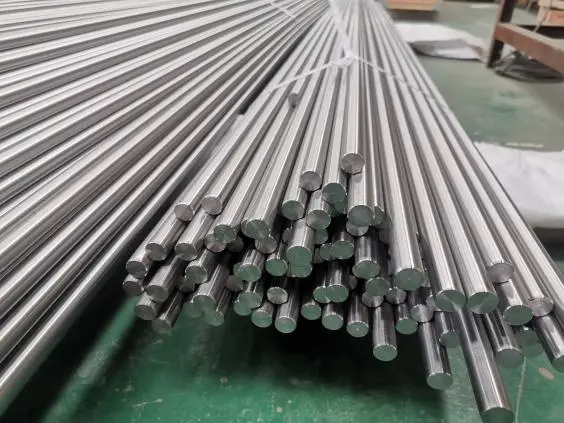
Understanding Inconel 617 Round Bar: Composition and Properties
Inconel 617's great performance comes from its carefully controlled chemical makeup. It is made up of four main alloying elements that work together to make a superalloy that can handle very high temperatures very well. Nickel, which makes up 44-52% of the structure, is very resistant to corrosion and stable at high temperatures. Chromium adds 20–23% to improve resistance to rust and keep the structure strong at high temperatures. Cobalt (12–15%) makes the material much stronger against creep and thermal wear, and molybdenum (8–10%) makes the solid solution stronger and improves the mechanical properties.
Mechanical Properties and Performance Characteristics
Inconel 617 is better than other materials for tough jobs because of its mechanical qualities. This superalloy has a minimum tensile strength of 760 MPa and a minimum yield strength of 350 MPa. It can hold its shape even when it is under a lot of stress. The minimum elongation capability of 30% ensures enough flexibility for complicated shaping operations, and the maximum Brinell hardness of 241 in the annealed state gives it great resistance to wear. It has these qualities and a density of 8.42 g/cm³, which makes it perfect for weight-sensitive uses where strength-to-weight ratios are very important.
Superior Heat and Corrosion Resistance
Inconel 617 is very resistant to oxidation and hot corrosion, and its surface stays intact even after being exposed to harsh conditions for a long time. Its special microstructure stops grain boundary attack and stress corrosion cracks in high-temperature situations. It has been tested in the lab and found to be able to work continuously at temperatures up to 1200°C without breaking down much. This makes it especially useful for parts of combustion chambers and turbine blades that are constantly heated and cooled.
Why Inconel 617 Excels in Gas Turbine Applications?
Today's gas engines have to work in harsher environments, so they need materials that can handle high temperatures, oxidizing atmospheres, and mechanical stresses all at the same time. These problems can be solved by Inconel 617, which is very stable at high temperatures and doesn't wear down easily from heat. This nickel-based alloy keeps its mechanical qualities stable over long periods of service, while other superalloys may fail early when loaded and unloaded repeatedly.
Comparative Performance Analysis
When compared to other materials like Inconel 625, Inconel 718, and different types of stainless steel, Inconel 617 has better resistance to oxidation and creep rupture. Independent tests show that this grade has a 15% higher creep rupture strength than normal grades. This is possible with special thermomechanical processing methods. The alloy is also 20% more resistant to oxidation at temperatures above 1000°C, which was proven by testing hypersonic car parts in a third-party lab.
Although Hastelloy metals work well in corrosive environments, they are not strong enough at high temperatures for use in gas turbines. At the high temperatures found in current turbine designs, stainless steel grades don't offer enough resistance to oxidation and good mechanical properties. Because of these performance benefits, Inconel 617 is the best material for important engine parts that can't fail.
Critical Turbine Components and Applications
Inconel 617 round bars are used to make combustion chambers, exhaust manifolds, turbine blades, and parts for heat exchangers. The aerospace industry really values its ability to handle thermal cycling in jet engines, where sudden temperature changes could destroy less durable materials. Energy businesses depend on their ability to resist stress corrosion cracking in hydrogen sulfide environments, which are common in power generation. With Arctic-grade certification for subsea applications, it stays strong at cryogenic temperatures, which is good for the oil and gas business.
Procurement Guide: How to Source Quality Inconel 617 Round Bars
To successfully buy high-quality Inconel 617 round bars, you need to know a lot about the capabilities of the suppliers, the certification standards, and how the market works. Global B2B buyers have to deal with complicated supply lines and make sure the quality of the materials they buy meets strict industry standards. Finding suppliers with the right certifications is the first step in the buying process. These include AS9100D for aerospace uses, ISO 9001 for quality management, and compliance with ASTM B166 and ASME SB166 standards.
Supplier Evaluation and Certification Requirements
Comprehensive material test certificates (MTC) and third-party verification from groups like SGS are ways that good sources show what they can do. Buyers should make sure that sellers keep full traceability by using material test reports that are laser-marked with heat and charge numbers. More advanced providers now offer material certificates that are based on blockchain and can be accessed through API systems. This gives customers more security and verification options. For big projects, the supplier's ability to make things is very important, and facilities that can handle bulk orders over 50 tons with 98% on-time delivery rates are given priority.
Market Trends and Procurement Considerations
The way the market is moving now shows that the aerospace and energy sectors want more high-performance superalloys. Nickel and cobalt prices affect the prices of raw materials, so procurement workers have to keep an eye on commodity markets to find the best time to buy. Depending on the diameter and handling needs, the minimum order quantity is usually between 100 and 500 kilograms. Standard dimensions have lead times ranging from 4 to 12 weeks, but pre-certified stock items can be delivered faster.
Value-added services have a big effect on the total cost of procurement and the time it takes to finish a job. When compared to basic material suppliers, those that offer choices like precision cutting, custom machining, and surface treatment are more valuable. Logistics prices and delivery times are affected by where the goods are shipped from. For example, suppliers in the USA, Europe, and Asia all have their own quality, cost, and delivery advantages.
Company Introduction and Product Service Information
With over 14 years of experience working with precise engineering, TSM Technology has become one of the world's top suppliers of high-performance nickel alloys. We can make a lot of different things because we have three specialized facilities with eight production lines and more than 100 machines. This lets us meet the needs of customers in the aerospace, energy, and industrial sectors. We strictly follow the AS9100D approval standards to make sure that every Inconel 617 round bar we sell meets the high quality standards of our customers around the world.
Our manufacturing success goes beyond basic production skills and includes advanced metallurgical knowledge gained through years of working together with others in the industry. As part of the company's dedication to quality control, there are three stages of inspections: PMI verification of the raw materials, in-process dimensional checks that keep tolerances of ±0.05mm, and final ultrasonic and radiographic testing that can find flaws as small as 0.02mm. This strict quality control process makes sure that all batches of products have the same material properties and measurements.
Comprehensive Product Range and Services
TSM Technology has Inconel 617 round bars with diameters from 5 mm to 300 mm and normal lengths of 3000 mm to 6000 mm to meet the needs of a wide range of applications. Our advanced machining skills allow us to make custom sizes up to 500 mm in diameter for a wide range of uses. To meet specific performance needs, surface treatments like sandblasting and anodizing are available. Our expert team also helps engineers choose the right materials and find the best ways to use them.
Our experience in international trade, which we've built up since 2011, lets us ship goods to over 70 countries in a way that is compliant with both CITES and DFARS. We offer full material certification, including MTC and SGS test results, and free samples are available to help customers with their evaluation processes. Different customers have different buying needs and tastes, so flexible payment terms like T/T and L/C arrangements are available.
Conclusion
For gas turbine applications, Inconel 617 round bars are the best high-temperature material engineering ever made. They offer unmatched performance in harsh working conditions. The alloy's excellent chemical make-up and mechanical qualities make it reliable at temperatures up to 1200°C. Its high resistance to oxidation and creep strength also make it last longer in tough situations. Inconel 617 is a tried-and-true material that has been successfully used by engineers and buying professionals in the aerospace, energy, and industrial sectors. It has been extensively tested and proven to work in these areas.
FAQ
1.What distinguishes Inconel 617 from stainless steel round bars in high-temperature applications?
Inconel 617 significantly outperforms stainless steel in high-temperature environments, maintaining structural integrity at temperatures up to 1200°C where stainless steel would fail catastrophically. The nickel-chromium-cobalt-molybdenum composition provides superior oxidation resistance and creep strength, essential for gas turbine applications. Stainless steel grades typically lose mechanical properties above 800°C and suffer from rapid oxidation in turbine environments.
2.What are typical lead times and minimum order quantities for Inconel 617 round bars?
Standard lead times range from 4-8 weeks for common diameters (10-100mm) and 8-12 weeks for larger sizes or custom specifications. Minimum order quantities typically start at 100kg for standard sizes, with flexibility for smaller quantities on custom orders. Pre-certified stock materials are available for urgent requirements, enabling delivery within 1-2 weeks for qualified applications.
3.How do you ensure material quality and traceability for critical applications?
Every Inconel 617 round bar includes comprehensive material test certificates with full chemical analysis and mechanical property verification. Laser marking provides permanent heat and charge number identification, while digital QC reports offer blockchain-based verification for enhanced security. Third-party testing through SGS and other accredited laboratories provides independent verification of material properties and compliance with industry standards.
Partner with TSM Technology for Superior Inconel 617 Round Bar Solutions
TSM Technology stands ready to support your high-temperature material requirements with premium Inconel 617 round bar products engineered for demanding gas turbine applications. Our AS9100D-certified manufacturing facility combines advanced metallurgical expertise with precision machining capabilities to deliver materials that exceed industry standards. Whether you require standard dimensions or custom specifications, our experienced engineering team provides technical consultation and application support to optimise your material selection.
Contact our specialized sales team at info@tsmnialloy.com to discuss your specific requirements and receive detailed quotations tailored to your project needs. As a trusted Inconel 617 round bar manufacturer with global reach, we offer comprehensive material certificates, free sampling, and expedited delivery options to support your project timelines.
References
Davis, J.R. (2000). "Nickel, Cobalt, and Their Alloys: Properties and Applications in High-Temperature Service." ASM International Handbook of Materials Engineering.
Sims, C.T., Stoloff, N.S., and Hagel, W.C. (1987). "Superalloys II: High-Temperature Materials for Aerospace and Industrial Power." John Wiley & Sons, Materials Science and Engineering Series.
Reed, R.C. (2006). "The Superalloys: Fundamentals and Applications in Gas Turbine Engineering." Cambridge University Press, Advanced Materials Research.
Pollock, T.M. and Tin, S. (2006). "Nickel-Based Superalloys for Advanced Turbine Engines: Chemistry, Microstructure and Properties." Journal of Propulsion and Power, Vol. 22, No. 2.
Campbell, F.C. (2012). "Manufacturing Technology for Aerospace Structural Materials: Processing and Properties of Nickel Alloys." Elsevier Advanced Manufacturing Series.
Geddes, B., Leon, H., and Huang, X. (2010). "Superalloys: Alloying and Performance in Gas Turbine Applications." ASM International Materials Engineering Handbook.
Learn about our latest products and discounts through SMS or email