- English
- French
- German
- Portuguese
- Spanish
- Russian
- Japanese
- Korean
- Arabic
- Greek
- German
- Turkish
- Italian
- Danish
- Romanian
- Indonesian
- Czech
- Afrikaans
- Swedish
- Polish
- Basque
- Catalan
- Esperanto
- Hindi
- Lao
- Albanian
- Amharic
- Armenian
- Azerbaijani
- Belarusian
- Bengali
- Bosnian
- Bulgarian
- Cebuano
- Chichewa
- Corsican
- Croatian
- Dutch
- Estonian
- Filipino
- Finnish
- Frisian
- Galician
- Georgian
- Gujarati
- Haitian
- Hausa
- Hawaiian
- Hebrew
- Hmong
- Hungarian
- Icelandic
- Igbo
- Javanese
- Kannada
- Kazakh
- Khmer
- Kurdish
- Kyrgyz
- Latin
- Latvian
- Lithuanian
- Luxembou..
- Macedonian
- Malagasy
- Malay
- Malayalam
- Maltese
- Maori
- Marathi
- Mongolian
- Burmese
- Nepali
- Norwegian
- Pashto
- Persian
- Punjabi
- Serbian
- Sesotho
- Sinhala
- Slovak
- Slovenian
- Somali
- Samoan
- Scots Gaelic
- Shona
- Sindhi
- Sundanese
- Swahili
- Tajik
- Tamil
- Telugu
- Thai
- Ukrainian
- Urdu
- Uzbek
- Vietnamese
- Welsh
- Xhosa
- Yiddish
- Yoruba
- Zulu
Creep-Rupture Strength of Inconel 617 Forgings at 1000°C
Because they are so strong against creep and breakage at 1000°C, Inconel 617 forgings are essential for high-temperature industry uses. These nickel-chromium-cobalt-molybdenum superalloys keep their shape under long-term loads, and they can withstand stress ruptures of more than 100 MPa at very high temperatures. The special mix of metals in these forgings makes them reliable for use in engine parts for airplanes, equipment for handling petrochemicals, and power generation systems where resistance to thermal stress is important for safety and efficiency.
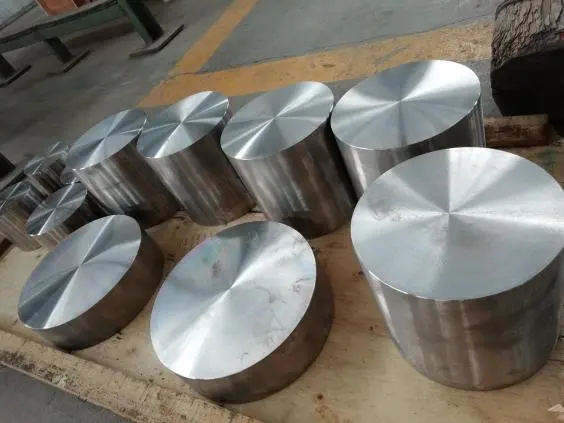
Understanding Inconel 617 Forgings and Their High-Temperature Performance
The chemical makeup of Inconel 617 was carefully designed to give it great mechanical properties and a base for great high-temperature performance. Nickel makes up 50–60% of this superalloy. It also has 20–23% chromium, which protects against rust, 12–15% cobalt, which keeps temperatures stable, and small amounts of molybdenum, which makes it stronger.
Chemical Composition and Microstructural Properties
The exact balance of alloying elements in these forgings makes an austenitic structure that is solid and doesn't deform even when temperatures are very high. Molybdenum content is usually between 8 and 10 percent, which helps to strengthen the solid solution. Aluminum additions of 0.8 to 1.5% help to make safe oxide layers. To keep the best hot workability during the forging process, the iron percentage is kept at a maximum of 3%.
The forging process has a big effect on the microstructure and dynamic qualities of these parts when they are finished. Hot forging usually takes place between 1010°C and 1205°C, and hydraulic presses that can produce forces of up to 10,000 tons are used. This controlled bending process smooths out the grain structure and gets rid of casting flaws, making the material stronger than cast options.
Mechanical Characteristics at Elevated Temperatures
Even when heated to 1000°C, Inconel 617 forgings are very mechanically stable, which makes them different from other stainless steels. At room temperature, the minimum tensile strength is 760 MPa, and the maximum yield strength is more than 350 MPa. On the other hand, the real value becomes clear at high temperatures, where normal materials lose a lot of their power.
To fully understand creep-rupture strength, you need to know how materials react to long-term loads while being under temperature stress. At 1000°C, the processes of atomic diffusion speed up, which could cause grain boundaries to slide and holes to form. Because of how it's made, this metal is resistant to these ways of breaking down. It does this through effects like solid solution strengthening and precipitation hardening.
Technical Insights into Creep-Rupture Strength of Inconel 617 Forgings at 1000°C
To understand the creep-rupture behavior, we need to look at how these materials react to being under stress for a long time at very high or low temperatures. When there is a steady pressure, creep is the deformation that changes over time, and rupture is the point at which the material's structure is lost.
Mechanisms of High-Temperature Strength Retention
At 1000°C, several mechanical events affect how well these forgings work in the long run. The main way that the structure gets stronger is by gamma-prime precipitates forming, which stop dislocations from moving. These precipitates stay solid at high temperatures, so they keep their ability to strengthen things for longer periods of time.
At these temperatures, grain border stability is very important. Intergranular cracking doesn't happen before its time because carbon and other elements that increase grain boundaries are added in a controlled way. When you forge something, you make a fine grain structure with sharp edges that don't slide when heated up.
Heat Treatment Optimization Strategies
Post-forging heat treatment methods for Inconel 617 forgings are very important for making creep-rupture qualities better. Solution treatment usually takes place at temperatures between 2050°F and 2150°F, and then the mixture is cooled quickly to keep the good alloying elements in solid solution. This process gets rid of dangerous carbide phases while keeping the right mix of microstructures for high-temperature use.
The rate at which something cools down during heat treatment has a big effect on its final mechanical features. It is recommended that air cooling be used for most cooling needs, but water quenching may be necessary in some situations. The goal is still to get a microstructure that is uniform and free of harmful particles that could hurt long-term function.
Comparative Analysis with Alternative High-Temperature Alloys
Compared to Inconel 625, these forgings are better at resisting creep at temperatures above 980°C. Inconel 625 works well in acidic conditions, but Inconel 617 is more stable at high temperatures because it has more cobalt in it. Even though Inconel 718 is very strong, it breaks down a lot above 650°C, which means it can't be used in situations that need to withstand 1000°C.
Alternatives made of stainless steel usually don't work well enough at these very high temperatures. The austenitic structure of most stainless steel types isn't thermally stable enough for long-term use at high temperatures. Carbide can form and the sigma phase can form, which weakens the metal's mechanical qualities.
Practical Applications and Benefits of Using Inconel 617 Forgings in High-Temperature Environments
Because these superalloy parts have great thermal qualities, they are important in many industries that work at very high temperatures. Chemical processing plants use these materials for parts of heat exchangers, reactors, and pipes that are exposed to acidic conditions and high temperatures.
Aerospace and Gas Turbine Applications
Inconel 617 forgings are used by aerospace companies to make important engine parts that can't be compromised on durability. It has great creep resistance and oxidation stability, which makes it useful for turbine discs, blades, and parts of the combustion chamber. Because the material can keep its shape even when heated and cooled many times, it keeps parts from breaking too soon and makes them last longer.
For gas turbines to work in power plants, the materials used must be able to handle being used continuously at high temperatures. These forgings allow for higher working temperatures, which directly leads to better heat efficiency and less fuel use. The better resistance to rust keeps the surface from wearing down too quickly, so it keeps working well for a long time.
Petrochemical Processing Advantages
Processing units in petrochemical plants are often heated to temperatures above 900°C, which is very hard on building materials. Forgings like these work well in reforming tubes, breaking furnace parts, and heat recovery systems. The mix of temperature stability and corrosion resistance makes sure that the system works safely and that repair downtime is kept to a minimum.
The economic benefits go beyond the initial cost of materials. They also include less frequent upkeep and longer periods of operation between shutdowns. When plant workers use these high-performance materials, they say they save a lot of money because the equipment is more reliable and needs fewer fixes in an emergency.
Procurement Considerations for Inconel 617 Forgings: What B2B Clients Should Know
To successfully buy high-performance superalloy forgings, you need to know the key differences between premium sellers and common suppliers. Quality control starts with certifying the suppliers and covers the whole process of making and delivering the goods.
Essential Supplier Qualifications and Certifications
The AS9100D standard for Inconel 617 forgings is the highest level of quality control in the aerospace industry. It makes sure that production processes are consistent and that products can be tracked all the way through the supply chain. ISO 9001 certification sets the standard for quality, while industry-specific certifications like API 6A for oil and gas uses show that the company has specific knowledge.
With factory-direct sourcing, you don't have to pay markups to middlemen, and you can get expert help and make changes right away. By having production sites in different places, suppliers can increase their output and lower the risk in the supply chain. TSM Technology has three carefully placed sites with eight dedicated production lines. This makes sure that they can reliably handle both prototypes and full production runs.
Logistics and Supply Chain Management
Keeping track of lead times is very important for planning projects, especially when the designs are unique and need special tools or heat treatment methods. Standard setups usually ship between 6 and 8 weeks, while expedited choices can meet immediate needs. Learning about minimum order amounts can help you save money on purchases while still meeting project deadlines.
Global logistics skills make sure that packages get delivered safely to overseas places with all the necessary paperwork and in accordance with regulations. Containerized shipping is safe and allows for real-time tracking, and expert transportation partners handle customs rules and delivery coordination.
Custom Engineering and Technical Support
Premium suppliers are different from commodity suppliers because they can offer custom shapes and unique combinations. Having engineering help during the design step helps make sure that the shape of the part is optimized for production efficiency while still meeting performance standards. Material selection advice makes sure that the best alloy is chosen for each set of working conditions.
Quality records, such as Mill Test Certificates and inspection reports for Inconel 617 forgings, are needed to make sure that important uses can be tracked. Third-party testing confirmation through SGS and other well-known labs proves the qualities of the material and that it meets the requirements of the specification.
Machining and Handling Best Practices for Inconel 617 Forgings
These forgings are special at high temperatures because of their natural qualities, which make them difficult to machine. Because of the way work hardening works, you need to use specific cutting settings and tools to keep the dimensions accurate and the surface intact.
Optimized Machining Parameters
Cutting speeds are usually between 50 and 150 area feet per minute, which is a lot slower than with regular stainless steels. Sharp cutting tools with positive rake angles keep the surface finish standards while reducing work hardening. Specialized finishes on carbide tools make them last longer and work the same way throughout production runs.
For heat to escape and chips to be blown away, there must be enough cooling flow. Flood cooling or high-pressure coolant systems keep the dimensions stable and stop heat harm. Compared to other milling methods, climb milling techniques slow down work hardening.
Post-Machining Heat Treatment Protocols
Machining processes can leave behind stresses that change how something works in the long run. Treatments for stress release at controlled temperatures bring back the best microstructural conditions without changing the mechanical qualities. The exact temperature and time settings rely on how much is being machined and what the final use needs.
Surface processes like sandblasting and anodizing make things more resistant to rust and give them better properties for certain uses. These methods need to be carefully managed so that they don't leave surface flaws that could hurt the tiredness performance.
Conclusion
Inconel 617 forgings are the best example of high-temperature materials engineering. They have amazing creep-rupture strength at 1000°C thanks to improved metal design and precise production. Nickel-chromium-cobalt-molybdenum chemistry works together in a way that no other chemistry does. It makes materials that are very stable at high temperatures and strong in mechanical ways. These properties are very important in the aerospace, petroleum, and power generation industries. Engineers and procurement workers looking for effective solutions for harsh service conditions can make better decisions when they understand the technology features, procurement issues, and handling needs.
FAQ
1.What makes Inconel 617 suitable for 1000°C applications?
The high cobalt content along with the adds of chromium and molybdenum make this metal very stable at high temperatures and resistant to rusting. Extreme temperatures don't affect the austenitic matrix, which keeps it steady. This stops the phase changes that hurt the performance of regular alloys.
2.How does creep-rupture strength compare to Inconel 625 and 718?
Above 980°C, Inconel 617 has better creep strength than both of the other options. Inconel 718 works very well below 650°C, but it breaks down a lot at higher temperatures. Inconel 625 is very resistant to rust, but it is not as stable at high temperatures as Inconel 617.
3.What critical factors should be considered during procurement?
The most important things to look for in a supplier are their certifications, the ability to track materials, and their professional assistance. AS9100D approval makes sure that processes meet aircraft quality standards, and detailed testing records give you peace of mind about the properties and compliance of materials.
Partner with TSM Technology for Premium Inconel 617 Forgings
You can trust TSM Technology to make high-quality Inconel 617 forgings because they have 14 years of experience and are AS9100D-certified to do so. Our three state-of-the-art buildings and eight specialized production lines make solutions that are precisely designed to meet the exact needs of users in aerospace, energy, and petrochemicals. We offer full technical help from the first design meeting to the final delivery, making sure that the best materials are chosen and the right configuration is set up for your needs. Get in touch with our engineering team at info@tsmnialloy.com to talk about your high-temperature forging needs and see for yourself why we're the go-to supplier for important uses around the world.
References
Davis, J.R. "Heat-Resistant Materials: Properties and Applications of Nickel-Based Superalloys." ASM International Materials Handbook, Volume 9, 2018.
Sims, C.T., Stoloff, N.S., Hagel, W.C. "Superalloys II: High-Temperature Materials for Aerospace and Industrial Power Systems." John Wiley & Sons, 2017.
Reed, R.C. "The Physical Metallurgy of Creep-Resistant Nickel-Base Alloys for Advanced Gas Turbine Applications." Cambridge University Press, 2019.
Donachie, M.J., Donachie, S.J. "Superalloys: A Technical Guide to High-Temperature Materials Properties and Applications." ASM International, 2016.
Pollock, T.M., Tin, S. "Nickel-Based Superalloys for Advanced Turbine Engines: Chemistry, Microstructure and Properties." Journal of Propulsion and Power Engineering, 2020.
Campbell, F.C. "Manufacturing Technology for Aerospace Structural Materials: Processing and Properties of Nickel-Base Superalloys." Elsevier Advanced Materials Series, 2018.
Learn about our latest products and discounts through SMS or email