- English
- French
- German
- Portuguese
- Spanish
- Russian
- Japanese
- Korean
- Arabic
- Greek
- German
- Turkish
- Italian
- Danish
- Romanian
- Indonesian
- Czech
- Afrikaans
- Swedish
- Polish
- Basque
- Catalan
- Esperanto
- Hindi
- Lao
- Albanian
- Amharic
- Armenian
- Azerbaijani
- Belarusian
- Bengali
- Bosnian
- Bulgarian
- Cebuano
- Chichewa
- Corsican
- Croatian
- Dutch
- Estonian
- Filipino
- Finnish
- Frisian
- Galician
- Georgian
- Gujarati
- Haitian
- Hausa
- Hawaiian
- Hebrew
- Hmong
- Hungarian
- Icelandic
- Igbo
- Javanese
- Kannada
- Kazakh
- Khmer
- Kurdish
- Kyrgyz
- Latin
- Latvian
- Lithuanian
- Luxembou..
- Macedonian
- Malagasy
- Malay
- Malayalam
- Maltese
- Maori
- Marathi
- Mongolian
- Burmese
- Nepali
- Norwegian
- Pashto
- Persian
- Punjabi
- Serbian
- Sesotho
- Sinhala
- Slovak
- Slovenian
- Somali
- Samoan
- Scots Gaelic
- Shona
- Sindhi
- Sundanese
- Swahili
- Tajik
- Tamil
- Telugu
- Thai
- Ukrainian
- Urdu
- Uzbek
- Vietnamese
- Welsh
- Xhosa
- Yiddish
- Yoruba
- Zulu
Elevating Efficiency and Performance with Inconel 625 Seamless Tubing
When industrial operations demand materials that can withstand extreme conditions while maintaining structural integrity, Inconel 625 seamless tube technology emerges as the definitive solution. This nickel-chromium-molybdenum superalloy represents a breakthrough in high-performance engineering materials, specifically designed for applications where conventional materials fail. The seamless construction eliminates welded seams, creating superior pressure resistance and reliability crucial for aerospace, petrochemical, and marine industries. Understanding the unique advantages and procurement strategies surrounding this advanced alloy can transform operational efficiency and reduce costly downtime across demanding industrial environments.
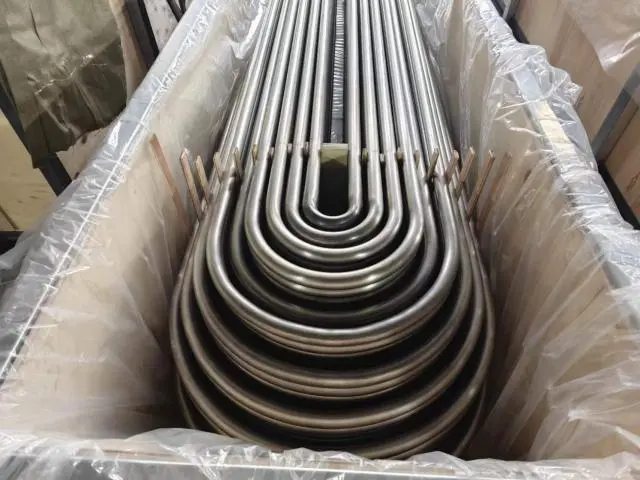
Understanding Inconel 625 Seamless Tubing: Properties and Applications
Chemical Composition and Mechanical Properties
The chemicals that make up Inconel 625 are carefully chosen to give it its great performance. 58% nickel, 20% to 23% chromium, 8% to 10% molybdenum, and 3.15 to 4.15% niobium make up this nickel-based superalloy. These parts work together to make a material that is strong and won't rust. It is not possible for Inconel 625 seamless tube products to have heat-affected zones when they are made. Thus, the walls are always the same width, and the tubes can hold more weight.
Industrial Applications Across Critical Sectors
The metal doesn't easily rust, pit, or crack from stress corrosion caused by salt because of how it was made. These tubes don't lose their shape when the temperature changes quickly because their melting point is between 1290°C and 1350°C and their tensile strength is more than 827 MPa. When you add niobium to a metal, it gets stronger without having to go through processes that strengthen it through precipitation. This makes it great for uses that need to be stable at high temperatures and not rust in water.
Comparing Inconel 625 Seamless Tubes with Alternatives: Making Informed Procurement Decisions
Industrial buyers have to make tough decisions when picking out high-performance metals for important tasks. The choice between seamless and connected setups has a big impact on how long the system will last and how much it will cost to keep up. At first, welded tubes are cheaper, but the metal is weaker where they are joined, which can make them less strong when they are under a lot of stress.
Seamless vs. Welded Construction Analysis
When you create an Inconel 625 seamless pipe, the material's grain structure stays the same across the cross-section. This means that there are no weak spots like there are with welded joins. It can handle higher pressures and is less likely to wear down when loaded and unloaded over and over again, which is common in airplane uses. Welded alternatives need a 15-20% drop in pressure to work properly, so they aren't as good for high-pressure systems that need to work.
Material Comparison with Competing Alloys
The 625 version of Inconel is better at preventing rust in wet conditions than the 718 version. It still works well at high temperatures. Inconel 625 is much less likely to get chloride pits than stainless steel 316. It has a Pitting Resistance Equivalent Number higher than 45. Because stainless steel breaks down quickly in salt water, this economic edge is very important.
Cost-Benefit Analysis for Long-Term Value
When you first buy it, Inconel 625 costs more than other stainless steels, but over time, it usually ends up being cheaper to own. The company saves a lot of money when things last longer, need repairs less often, and don't break down without warning. Industries that use strong chemicals say that these stainless steel setups last 300 to 500% longer than regular ones.
Procurement Insights: Tips for Buying Inconel 625 Seamless Tubing Globally
If you want to buy high-performance metals, you need to know what the seller can do, what certifications they need, and how to check the alloys' quality. Part of the global supply lines for Inconel 625 seamless tube units are specialized makers who are very good at melting and shaping the metal. So, picking the right seller is very important for the job to go well.
Supplier Qualification and Certification Standards
Foreign standards like DIN 17751 and ISO 6207, as well as certifications like ASTM B444 and ASTM B446, are kept up to date by the top manufacturers. The materials that get these approvals have to meet strict rules about their chemistry and mechanical features. People who need to buy things for big projects that need to be fully documented and tracked should make sure that the companies they buy from follow aircraft standards such as AMS 5581.
Quality Assurance and Testing Protocols
X-ray fluorescence spectroscopy is used to identify the material, sound testing is used to find flaws inside the structure, and hydraulic pressure testing is used to make sure the structure is solid. Materials test certificates and inspection reports from SGS, BV, or TUV are extra ways to make sure the quality of something for important uses.
TSM Technology can safely meet the needs of large-scale projects because it can make 100–200 tons of steel each month. The tools in their 50,000㎡ building are very accurate and can work with superalloys. To make sure the chemicals are all the same and there aren't many flaws, they use vacuum induction melting and vacuum arc remelting.
Optimizing Performance: Best Practices in Handling and Using Inconel 625 Seamless Tubes
To get the most out of Inconel 625, it needs to be handled and processed in a certain way. Because the metal hardens when it is worked, it needs to be cut in a certain way, and it can't be welded in the same way that regular stainless steels can.
Machining and Fabrication Techniques
When it is being machined, Inconel 625 seamless pipe components need strong tools and positive rake angles because they tend to work harden fast. Cutting speeds should stay low so that the material doesn't get too hot and lose its properties. The most accurate measurements can be kept with cutting tools made of cobalt or carbide that are very sharp.
Welding Procedures and Heat Treatment
When you weld Inconel 625, you need to pay close attention to both the hot pass temperature and the hot treatment after the joint. Welding with gas tungsten arc (GTAW) works better when the safety gas mix is right. By solution annealing at 1150°C and then quickly cooling, you can get the best mechanical properties and stress release.
Quality Control and Maintenance Strategies
For regular checks, you should look for flaws on the outside, use accurate measure tools to make sure the sizes are right, and do regular ultrasound tests to find flaws on the inside. Part of preventative maintenance programs is keeping an eye on rust and stress analysis. This helps figure out when parts need to be changed and keeps them from breaking down without notice.
Unlocking Value with Inconel 625 Seamless Tubing: Why It's the Preferred Choice for High-Performance Applications
Inconel 625 seamless tubing is useful for more than just its physical properties. It also cuts costs and helps operations in the long run. Companies in fields that have to deal with tougher conditions know they need these products to stay ahead of the competition and keep things running smoothly.
Performance Advantages in Extreme Environments
Case studies from oil rigs in the ocean show that the material can handle being in high temperatures, high pressures, and salty seawater all at the same time. In chemical processing plants, the amount of service shutdowns has gone down a lot since they switched from using old materials to Inconel 625 seamless tube systems. It's very important that it's not magnetic in places like computers and instruments where safety is important.
Economic Benefits and Return on Investment
Better resistance to rust directly means that machines last longer and cost less to fix. Aerospace companies say that alternatives with smaller walls save weight compared to alternatives with thicker walls. This makes the car use less gas. When welding seam failures are taken away, the cost of emergency repairs and stops in production go down.
Future Innovations and Market Trends
They are still in high demand because they are being used in new ways in green energy systems and in more advanced plans for nuclear plants. With additive manufacturing, you can make complicated forms that still have the material's own qualities. Inconel 625 is now an important material for the next wave of uses in industry because of these changes in technology.
Conclusion
Inconel 625 seamless tube technology is the best when it comes to high-performance metal engineering. It offers stable performance even in the roughest commercial settings. Its unique mix of not rusting, being strong, and not changing with temperature helps solve big problems in the power generation, aircraft, petrochemical, and military businesses. One of the problems with bound options is that they can't handle pressure as well as smooth options can. This is important for current industrial systems. Companies can use this high-tech stuff to make their most important tasks easier and save money in the long run by being careful about where they buy it, how they handle it, and how good the quality is.
FAQ
1.What makes seamless construction superior to welded alternatives?
When something is made without any seams, there are no hot spots or places where rusting could happen where the pieces meet. For safety reasons, welded choices usually need a 15-20% drop in pressure rating. This keeps the material properties the same across the whole tube cross-section and lets for higher pressure ratings.
2.How does Inconel 625 perform compared to stainless steel in marine environments?
If you need something for the navy, Inconel 625 is a better choice than stainless steel 316, which has a Pitting Resistance Equivalent Number of about 25. In other words, it won't rust, pit, or crack in salt water, which is an area where stainless steel breaks down quickly.
3.What quality certifications should buyers verify when procuring Inconel 625 tubing?
Most of the time, ASTM B444 and ASTM B446 are good standards to follow. AMS 5581 is needed for use on airplanes. International rules, such as DIN 17751 and ISO 6207, make sure that everything works with each other. Material Test Certificates and inspection records from third parties from reputable groups give you extra peace of mind about the quality.
Partner with TSM Technology for Premium Inconel 625 Seamless Tube Solutions
TSM Technology stands as your trusted Inconel 625 seamless tube manufacturer with 14 years of specialized experience in high-performance superalloys. Our state-of-the-art 50,000㎡ plant always makes high-quality goods because it has a lot of different certifications and strict testing methods, like ISO 9001, AS9100D, and AS9120 for airplane uses. Every month, we make up to 200 tons of parts, and the sizes can be changed from OD 6-219mm to wall thickness 0.5-15mm. This means that we can help with projects of any size. Our skilled engineers will help you pick the best materials and use them in the best way possible so that your important systems work at their best. Talk to our experts about your needs at info@tsmnialloy.com and find out why top manufacturers in more than 70 countries trust TSM Technology for their superalloy needs.
References
American Society for Testing and Materials. "Standard Specification for Nickel-Chromium-Molybdenum-Columbium Alloys Seamless Pipe and Tube." ASTM International, West Conshohocken, PA.
Boyer, R. R., and Cotton, J. D. "Materials Properties Handbook: Nickel Alloys." ASM International Materials Park, Ohio.
Davis, J. R. "Heat-Resistant Materials: Properties and Applications of Nickel-Based Superalloys." ASM International Handbook Committee.
Geddes, B., Leon, H., and Huang, X. "Superalloys: Alloying and Performance Optimization for High-Temperature Applications." TMS Publications, Warrendale, PA.
Reed, R. C. "The Superalloys: Fundamentals and Applications in Gas Turbine Technology." Cambridge University Press, Cambridge, UK.
Sims, C. T., Stoloff, N. S., and Hagel, W. C. "Superalloys II: High-Temperature Materials for Aerospace and Industrial Power." John Wiley & Sons, New York.
Learn about our latest products and discounts through SMS or email