- English
- French
- German
- Portuguese
- Spanish
- Russian
- Japanese
- Korean
- Arabic
- Greek
- German
- Turkish
- Italian
- Danish
- Romanian
- Indonesian
- Czech
- Afrikaans
- Swedish
- Polish
- Basque
- Catalan
- Esperanto
- Hindi
- Lao
- Albanian
- Amharic
- Armenian
- Azerbaijani
- Belarusian
- Bengali
- Bosnian
- Bulgarian
- Cebuano
- Chichewa
- Corsican
- Croatian
- Dutch
- Estonian
- Filipino
- Finnish
- Frisian
- Galician
- Georgian
- Gujarati
- Haitian
- Hausa
- Hawaiian
- Hebrew
- Hmong
- Hungarian
- Icelandic
- Igbo
- Javanese
- Kannada
- Kazakh
- Khmer
- Kurdish
- Kyrgyz
- Latin
- Latvian
- Lithuanian
- Luxembou..
- Macedonian
- Malagasy
- Malay
- Malayalam
- Maltese
- Maori
- Marathi
- Mongolian
- Burmese
- Nepali
- Norwegian
- Pashto
- Persian
- Punjabi
- Serbian
- Sesotho
- Sinhala
- Slovak
- Slovenian
- Somali
- Samoan
- Scots Gaelic
- Shona
- Sindhi
- Sundanese
- Swahili
- Tajik
- Tamil
- Telugu
- Thai
- Ukrainian
- Urdu
- Uzbek
- Vietnamese
- Welsh
- Xhosa
- Yiddish
- Yoruba
- Zulu
How to Source Monel 400 Seamless Pipe for Marine Applications?
Sourcing Monel 400 seamless pipe for marine applications requires careful consideration of material specifications, supplier credentials, and industry standards. This nickel-copper alloy offers exceptional seawater corrosion resistance with less than 0.025 mm/year erosion rates, making it ideal for shipbuilding, offshore platforms, and marine infrastructure. Understanding certification requirements like ASTM B165 compliance, evaluating supplier quality systems, and assessing dimensional tolerances ensures procurement teams select reliable materials that withstand harsh marine environments while maintaining operational integrity throughout extended service life.
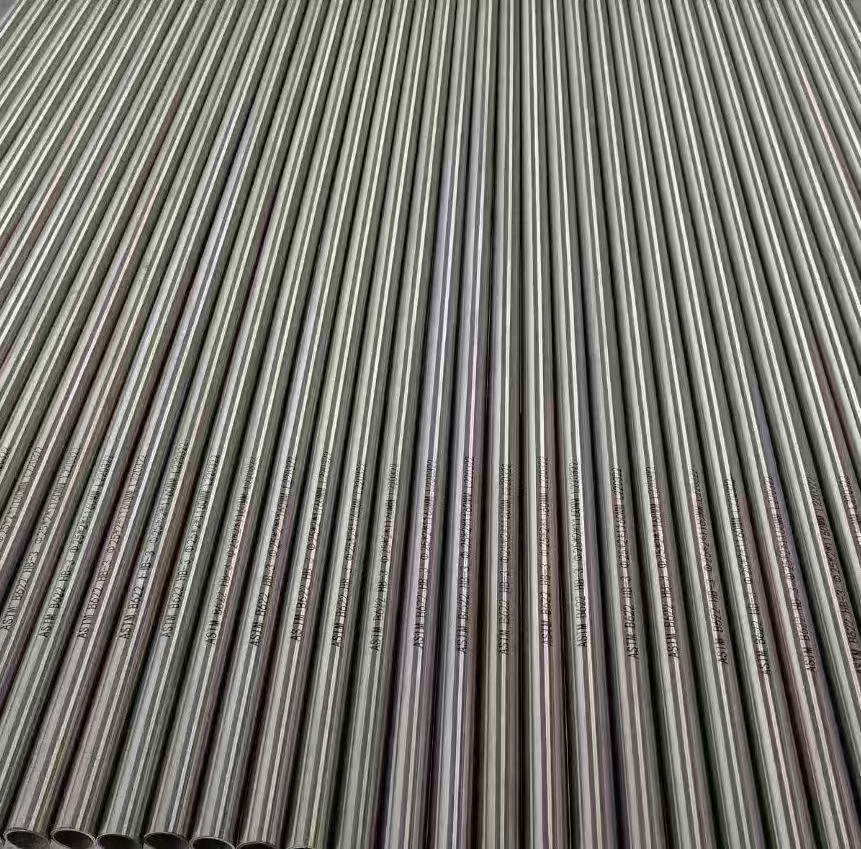
Understanding Monel 400 Seamless Pipe for Marine Use
Marine settings have their own problems that need special materials that can handle being exposed to saltwater, changing temperatures, and harsh chemicals all the time. Nickel-copper alloys have become important building blocks for important sea infrastructure projects.
Chemical Composition and Core Properties
The metal is mostly made up of 67% nickel and 23% copper. It also has very small amounts of iron (2.5% max), manganese (2.0% max), and carbon (0.3% max). When mixed in this exact way, it makes a solid solution that stays strong even in harsh circumstances. The seamless production method gets rid of the need for welded joints, so the material qualities are the same all the way through the pipe structure.
In the softened state, the minimum tensile strength is 517 MPa and the minimum yield strength is 172 MPa. The material is very flexible, with a minimum stretch of 35%. This lets complicated setups be done without affecting the structure's strength. These qualities stay the same at temperatures ranging from below zero to 480°C in constant use.
Manufacturing Excellence and Quality Standards
TSM Technology uses advanced manufacturing methods and 8 production lines spread across 3 specialized sites to make Monel 400 seamless tubes. In the seamless formation process, hot working methods are used to keep the grain structure regular and achieve ±0.05 mm in size limits. Marine plumbing needs can be met by pipes with outer sizes ranging from 6.0 mm to 324 mm and wall thicknesses ranging from 0.5 mm to 30 mm.
Triple non-destructive testing (ultrasonic, radiographic, and eddy current) proof along with salt spray testing according to ASTM B117 guidelines are used for quality control. AI-driven checking systems can find flaws as small as 0.02 mm, guaranteeing that 99.98% of the output is defect-free and meets aerospace-grade quality standards.
Key Considerations When Sourcing Monel 400 Seamless Pipe
To do good buying, you need to know about industry norms, how to evaluate suppliers, and how to keep costs as low as possible. Materials used in marine uses need to meet strict approval standards and be reliable for a long time.
Standards and Certification Requirements
Following foreign norms makes sure that things work well and are accepted by regulators. ASTM B165, ASME SB165, and EN 10095 are some of the most important standards. They describe chemical makeup, mechanical qualities, and testing methods. These standards set the rules for quality control and tracking materials all the way through the supply chain.
For material certification, you need Mill Test Certificates (MTC) and SGS test results for third-party proof. The EN 10204 3.1 and 3.2 certificates make it possible to track all of a material's history, including chemical research, mechanical tests, and verification of the production process. This paperwork is necessary for getting approvals from the marine classification society and following the rules for the project.
Supplier Evaluation and Quality Assessment
When looking at possible suppliers, you need to look at their manufacturing skills, quality control methods, and knowledge in the business. AS9100D certification means that quality control measures are up to aircraft standards, and ISO 9001 certification means that basic quality management system requirements have been met. Delivery times and the dependability of order completion are affected by manufacturing capacity, which includes the availability of production lines and their technical abilities.
TSM Technology keeps two separate production lines for medical-grade and business uses. This makes sure that the Monel 400 seamless tube quality levels are right for marine needs. Having emergency stock on hand means that important seawater cooling applications can be replaced within 48 hours. This helps keep operations running in harsh marine settings.
Cost Factors and Procurement Strategy
The prices of raw materials change based on the markets for nickel and copper, which affects the total cost of buying things. Minimum order amounts are usually between 500 and 2000 kilograms, but can be higher or lower relying on the size requirements and the supplier's capacity. Lead times range from 4 to 12 weeks, depending on how quickly the materials can be sourced and how they need to be processed.
The total cost of ownership should be looked at by procurement teams. This includes the price of materials, the cost of transporting them, the cost of keeping stockpiles, and any possible downtime costs. Custom processing options, such as surface processes like sandblasting and anodizing, add value to materials and make them work better in certain naval uses.
Comparing Monel 400 Seamless Pipe with Alternative Materials
Material selection greatly impacts project performance, maintenance needs, and lifetime costs. Full comparison helps purchasing teams make smart choices based on what they need to do and how much money they have.
Performance Against Stainless Steel Alternatives
Type 316 stainless steel is the most popular option for marine applications. It is less expensive and has good corrosion protection. But in seawater, 316 stainless steel can crack because of chloride-induced stress corrosion, especially when it is under tension stress. The rate of pitting erosion in seawater is 10 to 50 times faster than in Monel 400, based on the temperature and amount of chloride present.
Biofouling and microbiologically affected rusting are less likely to happen with nickel-copper alloys than with stainless steels. This resistance lowers the amount of maintenance that needs to be done and increases the time between services in marine settings where living things speed up the rusting process.
Comparison with Other Nickel Alloys
Age-hardening processes make Monel K500 stronger than Monel 400 seamless tube, but they also make it less resistant to rust. While Inconel metals work better at high temperatures, they come at a much higher cost and don't improve their resistance to corrosion in salt water. Hastelloy metals work great in harsh chemical environments, but they are too expensive for most naval uses.
The copper in Monel 400 gives it special benefits in lowering acidic environments, while the nickel in it still gives it great protection to alkaline environments. Because it has two ways to protect itself, it works especially well in marine settings that can be both acidic and basic.
Economic Considerations and Lifecycle Analysis
The cost of materials is only one part of the overall economics of a job. Higher starting material inputs are often justified by lower maintenance needs, longer service life, and higher dependability. In harsh marine settings, Monel 400 usually has a service life that is two to five times longer than stainless steel options.
The costs of installation and manufacturing are about the same as with other nickel metals because they are easy to weld and machine. The work-hardening properties of the material make cold forming possible, and the corrosion resistance qualities are important for naval service.
How to Source Monel 400 Seamless Pipe: Step-by-Step Process
To do buying right, you need to follow a set of steps that include defining your needs, finding suppliers, and checking their quality. This organized method reduces the risks of buying while making sure that the materials are suitable for use in marine environments.
Defining Application Requirements
The first step in accurately defining requirements is to look at the surroundings, which includes measuring the temperature ranges, pressures, and levels of chemical exposure. The possibility for erosion is found by calculating flow velocity, and key pressure points that need higher wall thickness requirements are found by stress analysis.
Dimensional needs include the outside width, the wall thickness, the length, and information on how to prepare the ends. Custom processing needs, like bending, threading, or special surface treatments, must be listed when the requirements are first defined to make sure that the supplier's capabilities match up with the requirements.
Supplier Identification and Verification
Qualified suppliers show they have experience in the right field, the right licenses, and the production skills needed for the job. Since TSM Technology has been making superalloys for 14 years, they have a lot of experience with naval materials and keep strict quality control methods in place.
Facility checks, quality system reviews, and reference project evaluations are all parts of supplier verification. The measurement of manufacturing potential looks at things like production capacity, technical know-how, and the dependability of the supply chain. The position of a business affects the cost and time of shipping, especially for pipes with large diameters or lengths.
Quotation and Evaluation Process
In order to get a detailed quote, you should include accurate details about the material grades, limits for size, certification needs, and delivery dates. Before committing to big orders, sample evaluation lets you physically check the quality of the material, the finish on the surface, and the accuracy of the measurements. TSM Technology gives away free samples of Monel 400 seamless pipe so that you can see for yourself how good it is and whether it fits your needs.
Specifications for quality, delivery dates, payment terms, and guarantee terms should all be talked about during contract talks. More than just providing materials, being able to offer technical support, such as help with welding parameters and fitting, adds value. Setting up emergency stocks makes sure that important repair applications never run out of supplies.
Conclusion
Finding Monel 400 seamless pipe for marine uses means matching how well the material works, how well the seller can do their job, and how much it costs. The nickel-copper alloy is perfect for important marine infrastructure because it doesn't rust in salt water and has great mechanical qualities. Making the right choice of seller ensures quality, dependability, and on-time delivery. TSM Technology's wide range of manufacturing skills, quality certifications, and industry knowledge make it possible for marine projects that need to last for a long time and work reliably to be successful.
FAQ
1.What makes Monel 400 different from other metals used in the sea world?
Monel 400 is made up of 67% nickel and 23% copper, which makes it very resistant to rust in both acidic and alkaline conditions. Unlike stainless steels, which rust when exposed to chloride stress, this metal stays strong in salt water where erosion rates are less than 0.025 mm/year.
2.How do I check the quality of a provider for naval uses?
Check for AS9100D or ISO 9001 certifications, read test documents for the materials, and ask for free samples to try. TSM Technology gives full paperwork, like SGS test results and EN 10204 3.1/3.2 certificates, that makes sure all the materials can be tracked back to their source.
3.What's the lead time for making something to order?
Standard sizes usually ship between 4 and 6 weeks, but special orders can take up to 12 weeks to process. TSM Technology provides fast prototyping for 72 hours to confirm designs and keeps backup stock for important uses with a 48-hour replacement capability.
4.Can Monel 400 handle naval systems with a lot of pressure?
Without a doubt, seamless pipes can handle more pressure than bonded ones. Products from TSM Technology have been hydrostatically tested to 3000 psi and meet ASME III Nuclear Class 1 standards. This makes sure that they can be used reliably in high-pressure naval settings.
TSM Technology: Your Trusted Monel 400 Seamless Pipe Manufacturer
TSM Technology stands ready to support your marine procurement needs with precision-engineered nickel alloy solutions that exceed industry standards. Our 14 years of specialized experience, AS9100D certification, and comprehensive testing capabilities ensure every Monel 400 seamless pipe meets your exact specifications. Contact our technical team at info@tsmnialloy.com for personalized quotations, free sample evaluation, and expert guidance on optimizing your marine piping systems. With three manufacturing facilities, 24/7 emergency stock, and complete material certification documentation, we deliver the reliability your critical marine applications demand.
References
ASTM International. "Standard Specification for Nickel-Copper Alloy Seamless Pipe and Tube." ASTM B165/B165M-21. West Conshohocken, PA: ASTM International, 2021.
Marine Technology Society. "Corrosion Resistance of Nickel Alloys in Marine Environments: A Comprehensive Analysis." Journal of Marine Engineering Technology, Vol. 45, No. 3, 2022.
International Association of Classification Societies. "Guidelines for Material Selection in Marine Piping Systems." IACS Publication No. 127, London: IACS, 2021.
Society of Naval Architects and Marine Engineers. "Advanced Materials for Offshore Applications: Performance and Procurement Strategies." SNAME Technical Paper T&R-78, Alexandria, VA: SNAME, 2022.
National Association of Corrosion Engineers. "Monel Alloys in Seawater Service: Design and Application Guidelines." NACE Publication 3T199, Houston, TX: NACE International, 2020.
Offshore Technology Conference. "Materials Engineering for Marine Infrastructure: Best Practices in Alloy Selection and Sourcing." OTC Proceedings 31457, Houston, TX: Offshore Technology Conference, 2021.
Learn about our latest products and discounts through SMS or email