- English
- French
- German
- Portuguese
- Spanish
- Russian
- Japanese
- Korean
- Arabic
- Greek
- German
- Turkish
- Italian
- Danish
- Romanian
- Indonesian
- Czech
- Afrikaans
- Swedish
- Polish
- Basque
- Catalan
- Esperanto
- Hindi
- Lao
- Albanian
- Amharic
- Armenian
- Azerbaijani
- Belarusian
- Bengali
- Bosnian
- Bulgarian
- Cebuano
- Chichewa
- Corsican
- Croatian
- Dutch
- Estonian
- Filipino
- Finnish
- Frisian
- Galician
- Georgian
- Gujarati
- Haitian
- Hausa
- Hawaiian
- Hebrew
- Hmong
- Hungarian
- Icelandic
- Igbo
- Javanese
- Kannada
- Kazakh
- Khmer
- Kurdish
- Kyrgyz
- Latin
- Latvian
- Lithuanian
- Luxembou..
- Macedonian
- Malagasy
- Malay
- Malayalam
- Maltese
- Maori
- Marathi
- Mongolian
- Burmese
- Nepali
- Norwegian
- Pashto
- Persian
- Punjabi
- Serbian
- Sesotho
- Sinhala
- Slovak
- Slovenian
- Somali
- Samoan
- Scots Gaelic
- Shona
- Sindhi
- Sundanese
- Swahili
- Tajik
- Tamil
- Telugu
- Thai
- Ukrainian
- Urdu
- Uzbek
- Vietnamese
- Welsh
- Xhosa
- Yiddish
- Yoruba
- Zulu
Seamless vs Welded Nickel Alloy Tube: ASTM Standards, Performance and Buying Guide
Choosing between a nickel alloy seamless tube and a welded nickel alloy tube can affect inspection, fabrication, delivery, and total project cost. Both forms can serve demanding chemical, marine, and heat-transfer systems. Yet their manufacturing routes create different quality considerations. This guide compares seamless vs welded nickel alloy tube options, explains ASTM B163 and ASTM B444, and helps you prepare a clear purchase request. Explore TSM Technology's nickel alloy seamless pipe and tube range while reviewing your requirements.
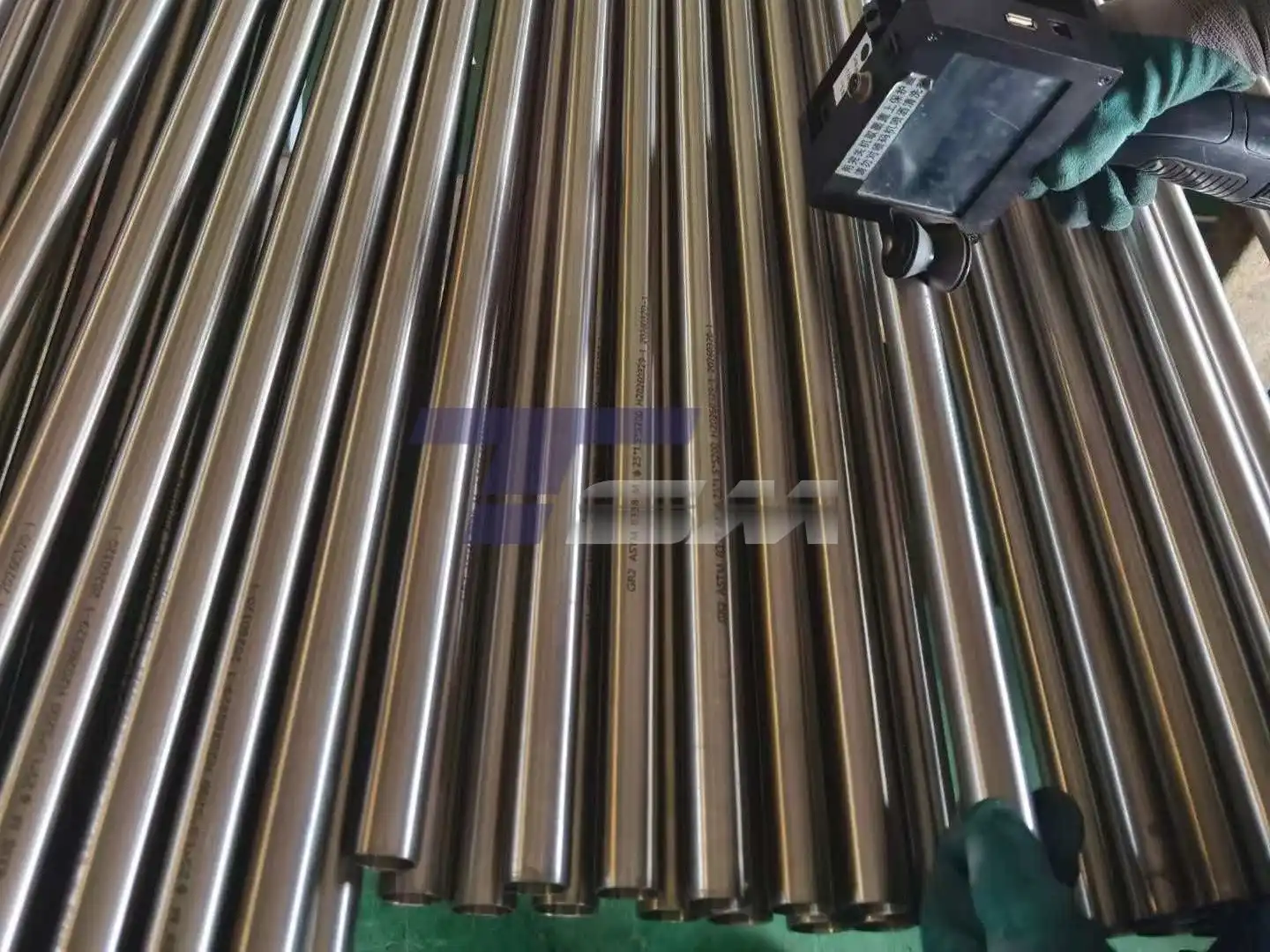
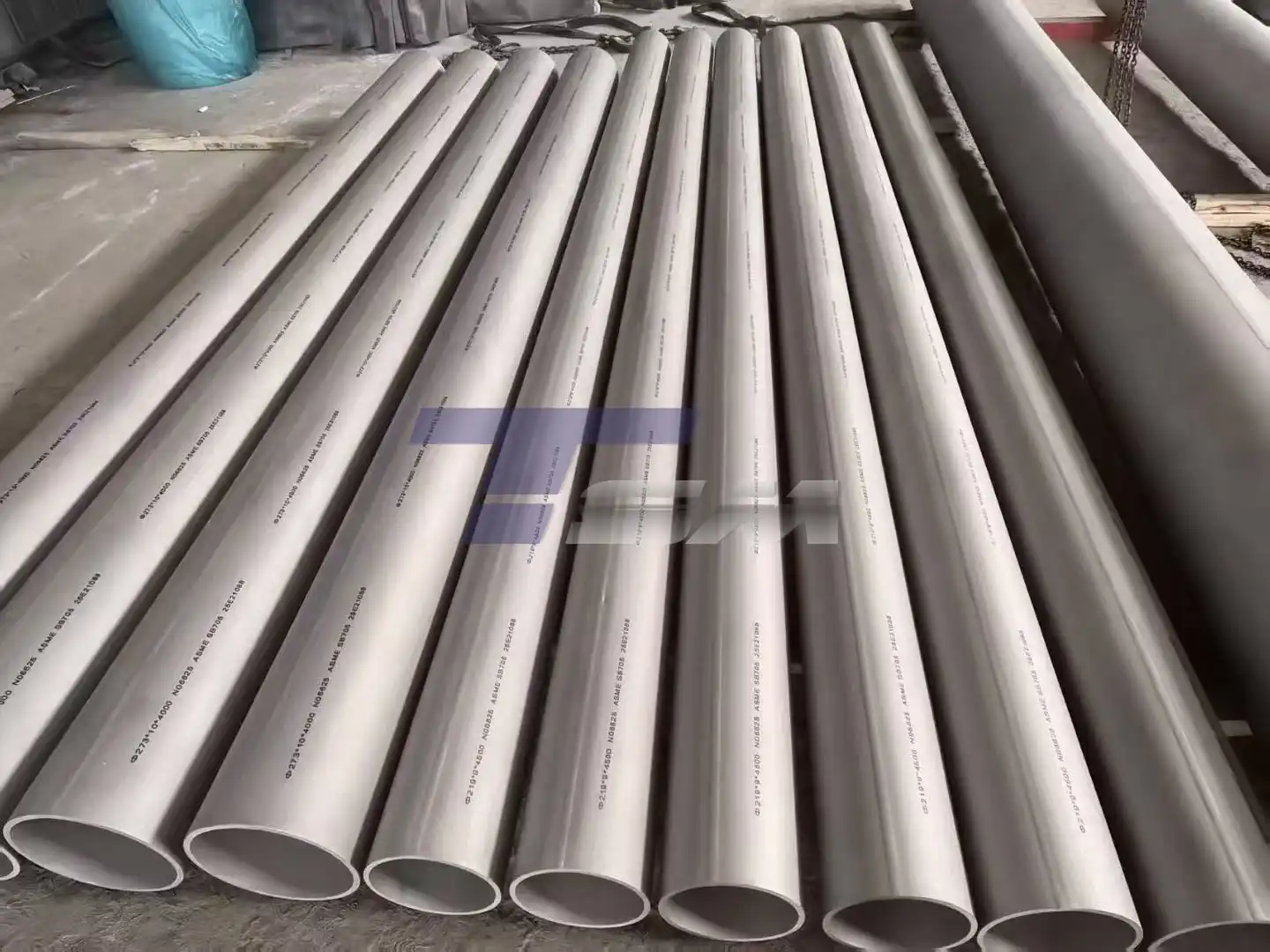
What Is the Difference Between Seamless and Welded Nickel Alloy Tube?
A seamless tube has no longitudinal welded joint. Producers form a hollow product through hot working, extrusion, piercing, or related processes. They may then cold-work and heat-treat it to reach the required size and condition.
Welded tube starts with a strip or formed sheet. Producers bring the edges together and join them along the length. Finishing steps can include sizing, heat treatment, and weld inspection.
Neither route guarantees better performance in every application. Material chemistry, manufacturing quality, product standards, and operating conditions matter more than a simple label.
| Decision factor | Seamless tube | Welded tube |
|---|---|---|
| Longitudinal seam | None | Present |
| Typical manufacturing route | Hot forming and possible cold working | Formed strip with longitudinal welding |
| Inspection focus | Entire tube body and dimensions | Tube body, weld region, and dimensions |
| Size availability | Depends on mill capability | May offer advantages for selected larger sizes |
| Commercial choice | Often more processing-intensive | Can be economical for suitable sizes and quantities |
How Are Seamless and Welded Nickel Alloy Tubes Made?
Seamless manufacturing
Manufacturers begin with a suitable billet or hollow. Hot extrusion or another forming process produces a tube without a weld seam. Cold drawing or pilgering may refine its diameter and wall thickness. Heat treatment controls the final metallurgical condition.
These steps require careful control. A seamless product can still develop surface defects, dimensional variation, or internal flaws. The purchase specification must define acceptable quality and testing.
Welded manufacturing
Welded tube typically begins with alloy strip. Forming equipment shapes it into a cylinder, and a welding process joins the edges. The manufacturer may finish or treat the weld area as the standard requires.
A sound weld can support demanding industrial service. The seam, heat-affected zone, weld procedure, and inspection method still need attention. A buyer should never assume that every welded product receives identical testing.
Practical takeaway: Ask your supplier for the manufacturing route and the applicable product specification. A generic phrase such as “nickel alloy tubing” is not enough.
ASTM B163 vs ASTM B444: Which Seamless Tube Standard Applies?
These two ASTM specifications do not describe the same material coverage. You should match the standard to the alloy grade and intended product before ordering.
ASTM B163 tube: condenser and heat-exchanger service
ASTM B163 covers seamless nickel and nickel alloy tubes for condenser and heat-exchanger use. The actual alloy must appear within the applicable edition's material coverage. Buyers should confirm dimensions, condition, tolerances, and tests against their purchase order.
Applications may involve heat transfer, cooling water, or process fluid. A suitable alloy choice depends on the medium, temperature, and risk of localized corrosion.
ASTM B444 tube: specific nickel-chromium-molybdenum alloys
ASTM B444 addresses cold-worked seamless pipe and tube for designated nickel-chromium-molybdenum alloy grades. Its scope includes UNS N06625, commonly called Alloy 625. It is not a general standard for every nickel alloy.
For an Inconel 625 seamless tube inquiry, you should state both the UNS designation and ASTM B444 when the project requires this specification.
What about welded nickel alloy tubes?
ASTM B704 covers specified welded nickel alloy tubes. ASTM B730 covers welded nickel and nickel-copper alloy tubes. ASTM B751 provides general requirements for certain welded nickel alloy tubes.
The appropriate welded standard depends on the alloy, product form, and scope. Do not list ASTM B163 or B444 as welded-tube specifications.
| Standard | Product type | Buyer reminder |
|---|---|---|
| ASTM B163 | Seamless condenser and heat-exchanger tube | Check covered alloys and service needs |
| ASTM B444 | Seamless pipe and tube for specified alloys | Includes UNS N06625 |
| ASTM B704 | Welded nickel alloy tube | Confirm listed UNS grade |
| ASTM B730 | Welded nickel and nickel-copper tube | Check nickel or nickel-copper grade |
| ASTM B751 / B829 | General requirements for applicable welded / seamless products | Use with the relevant product standard |
How Do Pressure, Corrosion, and Heat Affect Your Choice?
Pressure and mechanical loading
A missing weld seam can simplify one part of the integrity assessment. However, it does not automatically give a seamless tube a higher allowable pressure. Pressure ratings depend on the governing design code, alloy strength, temperature, dimensions, and joint factors.
Welded products can meet demanding pressure requirements when the design permits their use. Engineers must apply the appropriate code rules and qualified weld quality assumptions.
Corrosion and the weld zone
Nickel alloys resist different corrosive environments through their chemistry. Alloy 625 offers strong resistance in many chloride-containing environments. Other alloys may suit different acids or process conditions.
Welding changes the local thermal history. Depending on the alloy and fabrication method, weld metal and nearby material can have different corrosion behavior. Correct filler selection, procedure control, and any required heat treatment help manage this risk.
Seamless tubes avoid a longitudinal weld but still need appropriate material selection. A seamless product can corrode if the alloy is unsuitable for the fluid.
Temperature and thermal cycling
Both tube forms may serve high-temperature equipment. The selected grade, metallurgical condition, oxidation environment, and mechanical loads govern suitability.
Thermal cycling also affects joints, supports, and connected equipment. Ask the design engineer to review the complete system rather than judging tubing by manufacturing route alone.
Where Are Seamless and Welded Nickel Alloy Tubes Used?
Heat exchangers and condensers
Heat-transfer systems need a suitable surface, consistent dimensions, and verified fluid compatibility. ASTM B163 tubes address condenser and heat-exchanger service for covered grades.
For a heat exchanger, check the tube diameter, wall, length, tube-to-tubesheet joint, and cleaning method. The equipment specification may determine whether welded tube is acceptable.
Chemical and petrochemical processing
Process lines can encounter acids, chlorides, changing temperatures, and pressure. Buyers may consider Alloy 625, Alloy 825, or corrosion-resistant nickel-molybdenum alloys when their compatibility data support the selection.
A project may use seamless tube for a particular process line and welded tube elsewhere. This decision should come from the piping design, corrosion study, and approved material list.
Marine and offshore systems
Seawater equipment requires attention to deposits, crevices, temperature, and flow conditions. A suitable nickel alloy can offer valuable corrosion resistance.
Offshore purchasing teams should also review traceability, inspection records, and logistics. Replacing an installed tube can cost far more than the material alone.
High-temperature industrial equipment
Furnaces, thermal processing systems, and specialized energy equipment can need oxidation-resistant tubing. Confirm the correct high-temperature grade and condition before ordering.
Material names alone do not establish allowable service temperature. The engineering design must also assess sustained load and exposure time.
Which Tube Is More Cost-Effective?
Welded tubing may offer a lower initial cost in selected size ranges. Seamless tubing often requires more forming and finishing operations. Yet price depends on the alloy, outside diameter, wall, quantity, and mill availability.
Compare more than the unit price. Include inspection, testing, dimensional tolerance, fabrication, freight, and potential delivery delays.
- For a standard replacement: follow the equipment's approved specification.
- For a new design: compare both routes using the applicable pressure and corrosion rules.
- For urgent supply: confirm actual stock rather than assuming either form is faster.
- For custom sizes: ask about tooling, minimum quantities, and practical mill limits.
A cheaper quote is not useful if it leaves out required tests or material documents.
Nickel Alloy Tube Buying Guide: What Should Your RFQ Include?
A detailed request for quotation helps the supplier assess feasibility and avoid misunderstandings. Include the information below before requesting a price.
- Alloy and UNS: specify the exact grade, not only a trade name.
- Product form: seamless or welded tube, and pipe or tube designation.
- ASTM standard: include the required edition where your project specifies one.
- Dimensions: outside diameter, wall thickness, length, and tolerances.
- Condition: specify the required heat treatment and finish.
- Inspection: define the required nondestructive and pressure or leak tests.
- Documents: request material test certificates and traceability details.
- Commercial terms: state quantity, delivery location, and desired schedule.
Which tests should you request?
Possible tests include eddy-current testing, ultrasonic testing, hydrostatic testing, and other leak examinations. The correct method depends on product standard, geometry, and project requirements.
Some specifications allow alternative testing routes or additional purchaser options. State any 100% inspection requirement clearly in your RFQ. Do not assume every method comes standard.
RFQ tip: “Alloy 625, UNS N06625, seamless tube to ASTM B444” is much clearer than “nickel tube, high quality.” Add exact dimensions and inspection requirements.
How Can TSM Technology Support Your Tube Project?
TSM Technology provides nickel alloy materials for industrial buyers. Our Nickel Alloy Seamless Pipe page lists nickel, Inconel, Incoloy, Hastelloy, and Monel options.
Our published product information also covers finish choices and customized processing requests. Availability varies by grade, size, required standard, and order details.
Explore the broader Nickel Alloy Tubes range to compare relevant products. For welded tubing, confirm the required alloy, manufacturing route, and applicable standard with our team before placing an order.
Frequently Asked Questions
Is seamless nickel alloy tubing always stronger than welded tubing?
No. Strength depends on alloy, heat treatment, dimensions, manufacturing quality, and the design code. A sound welded tube may meet the project's mechanical requirements.
Is ASTM B163 the same as ASTM B444?
No. ASTM B163 addresses seamless condenser and heat-exchanger tubes for covered nickel alloys. ASTM B444 covers specific cold-worked seamless pipe and tube alloys, including UNS N06625.
Can welded nickel alloy tubes handle pressure?
Yes, when the appropriate product standard, quality, dimensions, and design code permit them. The engineer must calculate the required pressure rating.
What is the best nickel alloy for seawater tubing?
There is no universal choice. The answer depends on seawater temperature, flow, crevices, deposits, and system design. Review alloy-specific corrosion data.
Request a Nickel Alloy Tube Quotation
Your choice should start with operating conditions and project specifications, not with a blanket claim about seamless or welded construction. Share the grade, ASTM standard, dimensions, quantity, and testing requirements with TSM Technology.
Email info@tsmnialloy.com for product availability and a quotation. You can also review our nickel alloy seamless tube product page.
References
- ASTM International. ASTM B163, Standard Specification for Seamless Nickel and Nickel Alloy Condenser and Heat-Exchanger Tubes.
- ASTM International. ASTM B444-23, Standard Specification for Nickel-Chromium-Molybdenum-Niobium Alloys and Nickel-Chromium-Molybdenum-Silicon Alloy Pipe and Tube.
- ASTM International. ASTM B704-23, Standard Specification for Welded Nickel Alloy Tubes.
- ASTM International. ASTM B730-25, Standard Specification for Welded Nickel and Nickel Copper Alloy Tube.
- ASTM International. ASTM B751-21, Standard Specification for General Requirements for Nickel and Nickel Alloy Welded Tube.
- ASTM International. ASTM B829-24, Standard Specification for General Requirements for Nickel and Nickel Alloys Seamless Pipe and Tube.
Learn about our latest products and discounts through SMS or email