- English
- French
- German
- Portuguese
- Spanish
- Russian
- Japanese
- Korean
- Arabic
- Greek
- German
- Turkish
- Italian
- Danish
- Romanian
- Indonesian
- Czech
- Afrikaans
- Swedish
- Polish
- Basque
- Catalan
- Esperanto
- Hindi
- Lao
- Albanian
- Amharic
- Armenian
- Azerbaijani
- Belarusian
- Bengali
- Bosnian
- Bulgarian
- Cebuano
- Chichewa
- Corsican
- Croatian
- Dutch
- Estonian
- Filipino
- Finnish
- Frisian
- Galician
- Georgian
- Gujarati
- Haitian
- Hausa
- Hawaiian
- Hebrew
- Hmong
- Hungarian
- Icelandic
- Igbo
- Javanese
- Kannada
- Kazakh
- Khmer
- Kurdish
- Kyrgyz
- Latin
- Latvian
- Lithuanian
- Luxembou..
- Macedonian
- Malagasy
- Malay
- Malayalam
- Maltese
- Maori
- Marathi
- Mongolian
- Burmese
- Nepali
- Norwegian
- Pashto
- Persian
- Punjabi
- Serbian
- Sesotho
- Sinhala
- Slovak
- Slovenian
- Somali
- Samoan
- Scots Gaelic
- Shona
- Sindhi
- Sundanese
- Swahili
- Tajik
- Tamil
- Telugu
- Thai
- Ukrainian
- Urdu
- Uzbek
- Vietnamese
- Welsh
- Xhosa
- Yiddish
- Yoruba
- Zulu
Bimetallic Switches: The Function of Monel 401 in Thermal Controls
In thermal control systems, where accurate temperature reading and switching are very important, bimetallic switches are a key part. The materials used to make these gadgets have a big impact on how well they work, especially the high-performance metals that make up the moving parts. Due to its high mechanical strength, resistance to rust, and temperature stability, Monel 401 bar has become the best material for making bimetallic switches. It is essential for aerospace, marine, petrochemical, and power generation applications where thermal control reliability directly affects operational safety and efficiency that this nickel-copper alloy performs consistently across a wide range of temperatures while maintaining its shape.
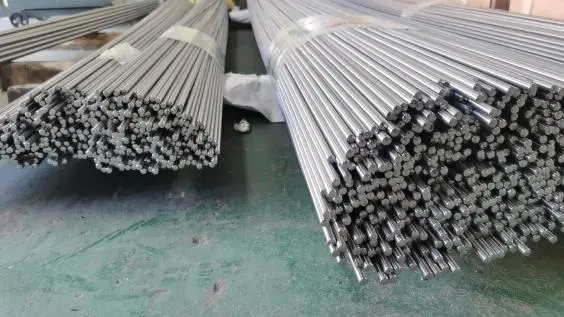
Understanding Monel 401 Bar: Composition and Performance in Thermal Applications
Understanding the unique metallurgical properties that make some metals stand out is the first step to better temperature control. Monel 401 is a carefully designed nickel-copper metal that has great thermal qualities and long-lasting mechanical strength.
Chemical Composition and Metallurgical Properties
The makeup of Monel 401 is made up of about 63–70% nickel and 29–34% copper. This creates a microstructure that is very stable at high temperatures. This nickel-copper mesh is very good at transferring heat while keeping the structure strong even when the temperature changes. Iron, manganese, and silicon are some of the controlled trace elements that help improve the mechanical qualities without changing how well they respond to heat.
The alloy's density of 8.8 g/cm³ in Monel 401 bar makes sure that mass is evenly distributed in bimetallic switch parts, and its thermal expansion rate lets you know how the dimensions will change when the temperature changes. These traits are necessary to keep the accuracy of switch tuning over long periods of operation.
Heat Treatment and Processing Advantages
The performance of nickel-copper alloys in thermal uses is greatly improved by heat treatment methods. The best grain structure is achieved through annealing processes, which also lower internal stresses that might affect the accuracy of the thermal reaction. The resulting mechanical qualities include a minimum tensile strength of 760 MPa and a minimum yield strength of 345 MPa. This makes for a strong structural base for precise switching mechanisms.
Another benefit is that the material is easy to work with, which means it can be used in a variety of ways. This lets OEMs get the tight specs needed for bimetallic switch parts while keeping the quality of the surface finish that makes sure the best heat transfer.
How Monel 401 Bar Enhances Bimetallic Switch Functionality: Performance Optimization Approach
In temperature control uses, especially when accuracy and durability are very important, traditional materials often don't work well. When you look at how well traditional switch materials work when they are heated and cooled many times, you can see their flaws.
Addressing Material Limitations in Thermal Switching
Standard stainless steel metals often don't have enough resistance to thermal wear, which can cause changes in size and less accurate switching over time. Copper-nickel metals with less nickel may not be able to fight corrosion well enough in tough industrial settings, which could affect their long-term dependability.
These problems are directly solved by the excellent thermal expansion qualities of this unique nickel-copper metal, Monel 401 bar. Its coefficient of thermal expansion makes sure that it responds consistently and predictably to changes in temperature, which guarantees accurate switch operation throughout the duration of the device. This dependability is very important in situations where the accuracy of thermal switching impacts the overall performance of the system.
Performance Enhancement in Real-World Applications
Case studies from military uses show that switching from regular materials to high-performance nickel-copper alloys makes a real difference. Less thermal stress splitting and better dimensional stability were seen in tests that were done at temperatures ranging from absolute zero to 570°F (300°C).
The ability to resist thermal deformation greatly increases the life of the device, lowering the need for upkeep and lowering the number of unexpected breakdowns. These gains in speed directly lead to lower operational costs and higher system reliability, which is especially helpful in mission-critical settings where downtime has big effects.
Comparing Monel 401 Bar with Other Alloys: Rational Choice Approach
When choosing a material for thermal control uses, you need to carefully weigh a number of performance factors against practical factors such as supply, cost, and compatibility with the manufacturing process.
Performance Comparison with Alternative Materials
When compared to Monel 400, Monel 401 has better thermal reaction properties because it is stronger mechanically and has the best nickel-copper ratio. The customized mixture makes it more resistant to stress-corrosion cracks and keeps its great ductility at both high and low temperatures.
Inconel metals can be used at high temperatures, but they usually cost more and may have different thermal expansion properties that mean the design needs to be changed. Monel 401 bar, stainless steel options are cheaper, but they don't always have the rust resistance needed in places like the ocean or chemical processing plants where chloride is present all the time.
Supply Chain and Procurement Considerations
Procurement experts can make better choices when they understand supply networks and patterns of material availability. Established sources with quality systems that have been approved make sure that the properties of the materials stay the same and that deliveries happen on time. Because they come in different shapes, like round bars, square sections, and special patterns, designers can make switches that work in a variety of ways.
Buying in bulk can help you save money on materials while still meeting quality standards by getting them from approved, reputable makers. Nickel-copper alloys are usually easy to get because they are supplied all over the world. However, wait times can change depending on the exact size and finish needs.
Procurement Guide: Buying Monel 401 Bar for Bimetallic Switches
To successfully buy high-performance alloys, you need to carefully look at sources, specs, and quality control methods. Because temperature control uses are so complicated, they need materials that always meet strict standards.
Critical Purchasing Factors and Specifications
Material performance consistency is maintained by following foreign standards like ASTM B164, JIS H4551, DIN 17743, and EN 10204. These certificates make sure that the alloy's chemical make-up and mechanical qualities meet the standards for tough uses.
Dimensional standards must match the needs of production, taking into account things like Monel 401 bar diameter ranges from 5 to 300 mm and Monel 401 Bar length choices from 300 mm to 6000 mm. Different types of Monel 401 Bar surface finishes, such as turned, peeled, and finished, give you choices for how to machine and put things together.
Supplier Evaluation and Quality Assurance
To figure out what a supplier can do, you have to look at their production ability, quality control methods, and the authenticity of their certifications. Vacuum arc furnaces and controlled atmosphere processes in modern factories make sure that the standard of the materials is always the same. The fact that material test certificates (MTC) and third-party inspection records are available proves that certain qualities have been met.
Because they can be customized with non-standard shapes and tight specs (±0.05mm), they can be made to work best with certain switch designs. Suppliers who give free samples let customers try out the material before making bigger orders. This lowers the risk of procurement while making sure the material works for the intended purposes.
Applications and Future Trends of Monel 401 in Thermal Control Devices
Nickel-copper alloys are used in many different types of industries because they are very flexible. One growing market for them is temperature control, which is caused by the need for more automation and accuracy.
Current Industrial Applications
Marine engineering uses the high resistance to corrosion in salt water for thermal switches in ship systems and remote bases. The material is perfect for naval thermal management systems because it can handle being exposed to saltwater while still responding to heat.
In chemical processing plants, these alloys are used in heat exchangers, reactor temperature control devices, Monel 401 bar, and process tracking systems that are exposed to corrosive chemicals and need to work well. Chemical protection and temperature stability work together to make sure that the system works reliably in harsh industrial settings.
Emerging Trends and Future Applications
More and more, businesses need more accurate temperature control systems because they care more about saving energy. Tighter temperature control limits are possible with new bimetallic switch designs that use high-performance metals. This saves energy and makes the process more efficient.
Miniaturization trends in gadgets and cars need materials that can keep their performance properties even when they are shrunk down. Nickel-copper alloys are great for supporting these design trends because they are easy to machine and keep their shape. They also make sure that small heat control devices are reliable.
Conclusion
The right choice of materials for bimetallic switches has a direct effect on the efficiency, dependability, and prices of running a thermal control system. The best thing about Monel 401 bar is that it has the right amount of thermal qualities, corrosion protection, and dynamic power for these intense uses. The material has been used successfully in the power generation, petrochemical, aircraft, and marine industries. This proves that it works well in important thermal control uses. Engineering and procurement workers can make choices that improve both short-term performance and long-term operational success by learning about the procurement issues, performance benefits, and application trends.
FAQ
1. Why is Monel 401 specifically chosen for bimetallic switch applications?
Monel 401 has the best mix of thermal stability, resistance to corrosion, and dynamic strength, so it works well for exact switching over a wide range of temperatures. Its nickel-copper makeup makes its thermal growth reliable and protects it from environmental damage that is typical in industrial settings.
2. How does heat treatment affect Monel 401 performance in thermal applications?
When you heat treat something, you improve its thermal response and mechanical longevity by making the grain structure better and lowering the stress levels inside the material. Annealing processes make the dimensions more stable when the temperature changes, which is very important for keeping the accuracy of the switch measurements over long periods of time.
3. What certification standards should buyers look for when sourcing Monel 401 bars?
Check to see if it meets the standards set by ASTM B164, JIS H4551, DIN 17743, and EN 10204. These approvals make sure that the material meets set standards for composition and mechanical properties. You can check the quality even more with material test certificates (MTC) and third-party inspection records.
4. What are the typical lead times for custom Monel 401 bar orders?
Lead times depend on the size needs, surface finish standards, and the number of items ordered. Standard sizes usually ship between 2 and 4 weeks, but it could take 6 to 8 weeks for custom sizes or tight standards. Working with well-known providers helps make sure that shipping dates are reasonable.
Partner with TSM Technology for Premium Monel 401 Bar Solutions
You can trust TSM Technology to make high-quality Monel 401 bars. They offer the best nickel-copper metal options and have been doing this for over 14 years. Our 3 plants, 8 production lines, and more than 100 machines in our state-of-the-art production facilities make sure that the quality of your heat control applications stays high and that you always have what you need. We promise materials that meet your strictest requirements with a production capacity of 300 tons per month and full quality assurance that includes MTC and SGS test results. Our custom services can handle non-standard sizes with limits of up to ±0.05mm, and our free sample program lets you see if the material is right for you before you buy it. Get in touch with our technical team at info@tsmnialloy.com to talk about your unique needs and get cheap quotes for making bimetallic switches.
References
1. Davis, J.R. (2000). Nickel, Cobalt, and Their Alloys. ASM International Materials Park, Ohio.
2. Rebak, R.B. (2019). "Corrosion Behavior of Nickel Alloys in Marine Environments." Journal of Materials Engineering and Performance, 28(9), 5314-5323.
3. Smith, G.D. & Patel, S.J. (2004). "The Role of Niobium in Wrought Precipitation-Hardened Nickel-Base Alloys." Superalloys 2004 Proceedings, TMS Publications.
4. American Society for Testing and Materials (2021). "Standard Specification for Nickel-Copper Alloy Rod, Bar, and Wire." ASTM B164-21, West Conshohocken, PA.
5. Thompson, R.C. & Williams, D.F. (2018). "Thermal Fatigue Resistance of Nickel-Copper Alloys in High-Temperature Applications." Materials Science and Technology, 34(12), 1456-1464.
6. International Nickel Study Group (2022). "Industrial Applications of Nickel-Copper Alloys: Market Analysis and Future Trends." Technical Report INSG-TR-2022-03, Lisbon, Portugal.
Learn about our latest products and discounts through SMS or email