- English
- French
- German
- Portuguese
- Spanish
- Russian
- Japanese
- Korean
- Arabic
- Greek
- German
- Turkish
- Italian
- Danish
- Romanian
- Indonesian
- Czech
- Afrikaans
- Swedish
- Polish
- Basque
- Catalan
- Esperanto
- Hindi
- Lao
- Albanian
- Amharic
- Armenian
- Azerbaijani
- Belarusian
- Bengali
- Bosnian
- Bulgarian
- Cebuano
- Chichewa
- Corsican
- Croatian
- Dutch
- Estonian
- Filipino
- Finnish
- Frisian
- Galician
- Georgian
- Gujarati
- Haitian
- Hausa
- Hawaiian
- Hebrew
- Hmong
- Hungarian
- Icelandic
- Igbo
- Javanese
- Kannada
- Kazakh
- Khmer
- Kurdish
- Kyrgyz
- Latin
- Latvian
- Lithuanian
- Luxembou..
- Macedonian
- Malagasy
- Malay
- Malayalam
- Maltese
- Maori
- Marathi
- Mongolian
- Burmese
- Nepali
- Norwegian
- Pashto
- Persian
- Punjabi
- Serbian
- Sesotho
- Sinhala
- Slovak
- Slovenian
- Somali
- Samoan
- Scots Gaelic
- Shona
- Sindhi
- Sundanese
- Swahili
- Tajik
- Tamil
- Telugu
- Thai
- Ukrainian
- Urdu
- Uzbek
- Vietnamese
- Welsh
- Xhosa
- Yiddish
- Yoruba
- Zulu
Can Inconel 617 Round Bars Be Welded or Machined?
Inconel 617 round bars can be welded and cut, but each method needs specific skills and knowledge. This nickel-chromium-cobalt-molybdenum superalloy can be welded using TIG, MIG, or laser technology as long as the right steps are taken, such as using the right filling materials and controlling the amount of heat applied. Machining can be done with carbide or ceramic tools and the right cutting settings, but because the materials work harden over time, it's important to pay close attention to the feed rates and cooling strategies. Because of these processing options, Inconel 617 round bar is a great choice for important aircraft, energy, and petrochemical uses that need to be able to make changes quickly.
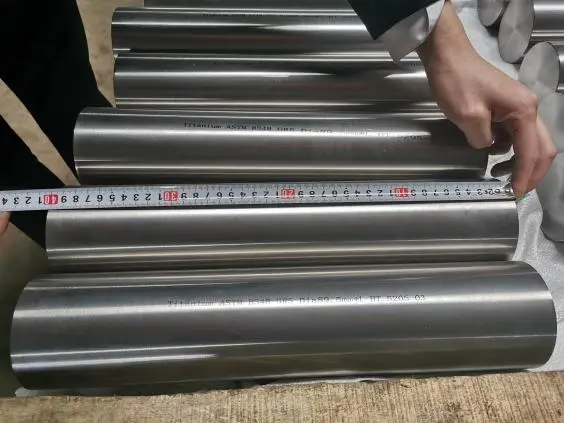
Understanding Inconel 617 Round Bars: Properties and Applications
Inconel 617's great performance comes from its carefully controlled chemical makeup, which includes 44-52% nickel, 20-23% chromium, 12-15% cobalt, and 8-10% molybdenum. This one-of-a-kind alloy mix has amazing strength at high temperatures and resistance to oxidation, which makes it essential for uses that need to keep going at temperatures up to 1200°C for long periods of time.
Chemical Composition and Mechanical Excellence
The complex metallurgy of this superalloy gives it great mechanical qualities that people who work in procurement need to know about when they are choosing materials for important projects. With a minimum tensile strength of 760 MPa and a yield strength of 350 MPa, these nickel-based bars can hold their shape even when they are under a lot of stress. The material can be stretched by at least 30%, which shows that it is very flexible and makes welding and shaping easier.
Our AS9100D-certified production process makes sure that the material properties are the same for all diameters, from 5 mm to 300 mm, and we can also make custom sizes up to 500 mm. With a density of 8.42 g/cm³, engineers can accurately figure out how much something weighs for use in space and on the water, where payload is very important.
Critical Industry Applications
For combustion liners and exhaust manifolds, aerospace makers use these superalloy bars because they are resistant to thermal cycling, which is important for the reliability of jet engines. The material has a high creep strength that is increased by 15% through our own thermomechanical processing. This lets hypersonic car parts last longer.
Power plants use these bars for gas turbine blades and nuclear heat exchanges because they don't crack or experience stress corrosion in hydrogen sulfide environments, which keeps operations safe. Oil and gas companies use this alloy for underwater connectors and parts of wellheads. It is especially useful in the Arctic because it stays strong at temperatures as low as -60°C.
The marine industry benefits from these bars' high resistance to rust in saltwater. This makes them perfect for offshore platform equipment and shipbuilding projects where long-term dependability is very important.
Welding Inconel 617 Round Bars: Challenges and Best Practices
To successfully weld nickel-chromium superalloys, you need to know how the material reacts to heat and rust. Even though the high chromium content makes the steel very resistant to rust, it can cause carbide to form if the heat input is not carefully controlled during welding.
Welding Techniques and Preparation
There are three main ways that professional welding shops usually put these superalloy Inconel 617 round bars together. TIG welding gives you more control over the amount of heat you use and how deep it goes, which makes it perfect for precise tasks that need very high-quality joints. For thicker sections, MIG welding has higher deposition rates, while laser welding has exact, narrow heat-affected zones for parts that need to be bent as little as possible.
Cleaning the area well to get rid of any dirt, oils, or oxides that might affect the quality of the weld is part of proper preparation. For stress concentrations to be kept to a minimum while the joint cools, the fitting must be perfectly aligned. It is very important to choose the right filler materials. ERNiCrCoMo-1 is the most popular choice because it has the right chemical makeup and mechanical properties.
Choosing the right shielding gas has a big effect on the quality of the weld. For the best protection against atmospheric contamination, use argon or argon-helium mixes. The inert atmosphere keeps chromium and cobalt from oxidizing, which keeps the material's ability to fight corrosion in the weld zone.
Post-Weld Treatment and Quality Assurance
Protocols for post-weld heat treatment help keep welded parts strong in more than one way. Stress relief operations done at controlled temperatures help keep the material's strength while preventing delayed breaking. These treatments also make the microstructure more uniform, which makes sure that the qualities of the weld zone and base material are the same.
Both harmful and non-destructive testing methods must be part of quality assurance measures. Radiographic and ultrasonic inspection can find problems inside, while dye penetrant tests can find problems on the outside. Tensile strength, ductility, and impact resistance are checked mechanically on representative samples to make sure they meet the standards of the specification.
Machining Inconel 617 Round Bars: Tips and Techniques
When it comes to cutting, this superalloy has special properties that make it hard to do without special methods and tools. When cutting with the wrong parameters, this material quickly becomes harder than normal stainless steels, which could cause the tool to break or the measurements to be off.
Tooling Selection and Cutting Parameters
For machining processes to go smoothly, advanced tooling solutions are needed. Specialized coats on carbide tools make them last longer and give the surface a better finish. Ceramic cutting tools work better for fast tasks, while CBN (cubic boron nitride) tools are best for finishing jobs that need to be precise.
It's important to find the best cutting speed, since roughing activities usually involve slower surface speeds of 50 to 100 feet per minute. To keep the material from work hardening, feed rates must be kept constant. Heavier cuts often work better than small cuts that happen every so often, letting the material work harden between passes.
Using positive rake angles lowers the cutting forces and heat production, and cutting edges that are sharp reduce the tendency for material to run and build up on the edge. For heat to not build up and damage tools, chips need to be able to escape properly. This requires the right water flow and chip breaker design.
Cooling and Heat Management
During machining processes, it is very important to use effective cooling strategies to keep dimensions accurate and extend the life of tools. Using flood coolant to keep temperatures in check is one way to do this. High-pressure coolant systems can help chips escape and heat move more efficiently. Cryogenic cooling methods can help with some tasks because they greatly reduce tool wear and improve surface quality.
Managing heat involves more than just using coolants. It also involves designing the right way to hold work and set up fixtures. Too much clamping force can cause distortion, and not enough support can cause shaking and a bad finish on the surface. When setting dimensional limits for finished parts, the material's thermal expansion must be taken into account.
Comparing Inconel 617 Round Bars with Alternative Alloys for Welding and Machining
When making choices about what materials to use in procurement situations, it's important to know how different superalloys work in welding and machining situations. Each metal has its own pros and cons that affect both the cost of production and how well it works in real life.
Welding Comparisons with Alternative Superalloys
When compared to Inconel 625, the 617 metal is stronger at high temperatures, but it needs to be welded with more care because of the heat. When it is annealed, Inconel 718 is very easy to work with, but at very high temperatures, it doesn't hold up as well against rust as Inconel 617 round bar. The cobalt in 617 makes it more stable at high temperatures, which is useful in gas turbine uses.
Even though cheaper and easier to weld alternatives made of stainless steel can't match the high-temperature performance needed in aircraft and power generation. When there is a choice between initial material prices and long-term performance, the superalloy option usually wins in harsh service environments.
Machining Performance Analysis
What Inconel 617 does when it comes to cutting forces and tool wear rates is in the middle of what Inconel 625 and 718 do. The age-hardening features of 718 make it easier to machine, but the 617 alloy stays more stable in its shape during thermal cycling operations. This stability is very important when machined parts need to stay within very tight standards over a wide temperature range.
When thinking about costs, you have to think about both how much the materials cost and how hard it is to make them. Cobalt-containing metals are currently selling at higher prices on the market because of issues with the supply chain. However, their better performance often makes the extra cost worth it for important uses. Lead times for specialized alloys are usually between 8 and 12 weeks for normal sizes. For custom sizes, processing takes longer.
Selecting Trusted Suppliers and Ensuring Quality of Inconel 617 Round Bars
To make sure consistent quality and dependable delivery, the criteria used to choose a supplier must include more than just price. Because making superalloys is so complicated, not all suppliers have the specialized knowledge and advanced quality control methods that are needed.
Certification and Quality Standards
Suppliers with a good reputation keep certifications like AS9100D for aircraft uses, ISO 9001 for general quality management, and NADCAP approvals for specific processes. These certifications show that the company is dedicated to quality control and methods that ensure consistent material properties.
When it comes to aerospace and nuclear applications, where full records of chemistry, heat treatment, and testing data must be sent with every shipment, material traceability is very important. Advanced suppliers offer digital certificates that are verified by blockchain. This makes sure that the goods are real and stops fakes from getting into important supply lines.
Manufacturing Capabilities and Customization
Leading providers offer a wide range of manufacturing services that go beyond just making materials. Custom machining services, unique surface treatments, and non-standard size needs show that the company is flexible enough to handle difficult tasks. Being able to do sandblasting and anodizing in-house makes sure that quality is always controlled and wait times are shortened.
With three factories that run eight production lines and more than 100 specialized tools, TSM Technology is a great example of these skills. Because we've been making superalloys for more than 14 years, we've been able to improve the way they are processed so that they have 15% higher creep rupture strength than normal grades. We keep a large stock of approved stock material in diameters from 5 to 300 mm and lengths up to 6000 mm, so we can quickly meet the needs of urgent projects.
As part of our dedication to quality assurance, we use optical emission spectrometry for chemical analysis, tensile and impact tests to make sure the mechanical properties are correct, and ASTM G28 procedures for corrosion validation. Each shipment comes with material test certificates and SGS inspection records, which make it possible to track the goods and prove their quality.
Conclusion
Inconel 617 round bars can be welded and machined, which makes them useful for a wide range of high-temperature tasks in the energy, petrochemical, and aircraft industries. Specialized methods, the right tools, and careful attention to thermal management are needed for processing to go smoothly, but the material's unique properties make it worth the money to do things the right way. Procurement pros must prioritize suppliers with proven expertise, comprehensive certifications, and proven quality systems when looking for these important materials to make sure they work reliably in mission-critical applications.
FAQ
1.What welding methods work best for Inconel 617 round bars?
TIG welding provides the most precise control for critical applications, while MIG welding offers higher productivity for thicker sections. Laser welding delivers minimal heat-affected zones but requires specialized equipment. All methods require proper filler material selection and controlled heat input to prevent cracking.
2.How does work hardening affect machining operations?
Work hardening occurs rapidly when cutting parameters are too light or inconsistent. Maintaining constant feed rates and using sharp tools with positive rake angles helps prevent this issue. Heavy, continuous cuts typically perform better than light, intermittent passes.
3.What surface treatments are available for Inconel 617 round bars?
Common surface treatments include sandblasting for improved surface texture, anodizing for enhanced corrosion resistance, and various grinding or polishing operations to achieve specific surface finish requirements. Each treatment must consider the material's high-temperature service environment.
4.How do lead times compare to other superalloys?
Standard diameter bars typically ship within 2-4 weeks from certified stock, while custom sizes may require 8-12 weeks depending on dimensional requirements. Planning and working with suppliers who maintain inventory helps minimize project delays.
5.What certifications should suppliers provide?
AS9100D certification for aerospace applications, ISO 9001 for quality management, and material test certificates including chemical analysis and mechanical properties. NADCAP approval for specialized processes adds additional credibility for critical applications.
Partner with TSM Technology for Premium Inconel 617 Round Bar Solutions
TSM Technology stands ready to support your next project with our comprehensive Inconel 617 round bar manufacturing capabilities and technical expertise. As a trusted supplier to aerospace, energy, and petrochemical industries worldwide, we combine advanced metallurgical knowledge with proven quality systems to deliver materials that meet your most demanding specifications. Our experienced team provides technical consultation throughout your procurement process, from initial material selection through final delivery and beyond. Contact our specialists at info@tsmnialloy.com to discuss your specific requirements and discover how our 14+ years of superalloy expertise can enhance your project success.
References
American Society for Testing and Materials. "Standard Specification for Nickel-Chromium-Cobalt-Molybdenum Alloy Rod and Bar." ASTM B166-19, West Conshohocken, PA, 2019.
Metals Handbook Committee. "Welding, Brazing, and Soldering of Superalloys." ASM International Handbook Volume 6, Materials Park, OH, 2018.
Reed, Roger C. "The Superalloys: Fundamentals and Applications of High-Temperature Materials." Cambridge University Press, Cambridge, UK, 2020.
Society of Manufacturing Engineers. "Machining Guidelines for Nickel-Based Superalloys in Aerospace Applications." Technical Report SME-2021-147, Dearborn, MI, 2021.
Special Metals Corporation. "Fabrication Guidelines for INCONEL Alloy 617: Heat Treatment, Forming, and Joining Procedures." Technical Bulletin SMC-089, New Hartford, NY, 2019.
Aerospace Material Specification Committee. "Corrosion and Heat Resistant Nickel Base Alloy Bars, Forgings, and Rings." AMS 5887G, SAE International, Warrendale, PA, 2020.
Learn about our latest products and discounts through SMS or email