- English
- French
- German
- Portuguese
- Spanish
- Russian
- Japanese
- Korean
- Arabic
- Greek
- German
- Turkish
- Italian
- Danish
- Romanian
- Indonesian
- Czech
- Afrikaans
- Swedish
- Polish
- Basque
- Catalan
- Esperanto
- Hindi
- Lao
- Albanian
- Amharic
- Armenian
- Azerbaijani
- Belarusian
- Bengali
- Bosnian
- Bulgarian
- Cebuano
- Chichewa
- Corsican
- Croatian
- Dutch
- Estonian
- Filipino
- Finnish
- Frisian
- Galician
- Georgian
- Gujarati
- Haitian
- Hausa
- Hawaiian
- Hebrew
- Hmong
- Hungarian
- Icelandic
- Igbo
- Javanese
- Kannada
- Kazakh
- Khmer
- Kurdish
- Kyrgyz
- Latin
- Latvian
- Lithuanian
- Luxembou..
- Macedonian
- Malagasy
- Malay
- Malayalam
- Maltese
- Maori
- Marathi
- Mongolian
- Burmese
- Nepali
- Norwegian
- Pashto
- Persian
- Punjabi
- Serbian
- Sesotho
- Sinhala
- Slovak
- Slovenian
- Somali
- Samoan
- Scots Gaelic
- Shona
- Sindhi
- Sundanese
- Swahili
- Tajik
- Tamil
- Telugu
- Thai
- Ukrainian
- Urdu
- Uzbek
- Vietnamese
- Welsh
- Xhosa
- Yiddish
- Yoruba
- Zulu
Cutting Monel 400 Plate: Waterjet vs. Plasma vs. Laser
Understanding the pros and cons of waterjet, plasma, and laser technologies is important for getting the best results when choosing the best way to cut Monel 400 plate. Because this unique metal is made up of nickel and copper, it needs to be carefully thought out when it comes to heat effects, precision needs, and keeping the material's integrity. Each cutting technology has its own benefits that work best with certain manufacturing goals. This is why the selection process is so important for keeping the corrosion resistance and mechanical qualities of this material, which are very useful in chemical processing, aerospace, and marine uses.
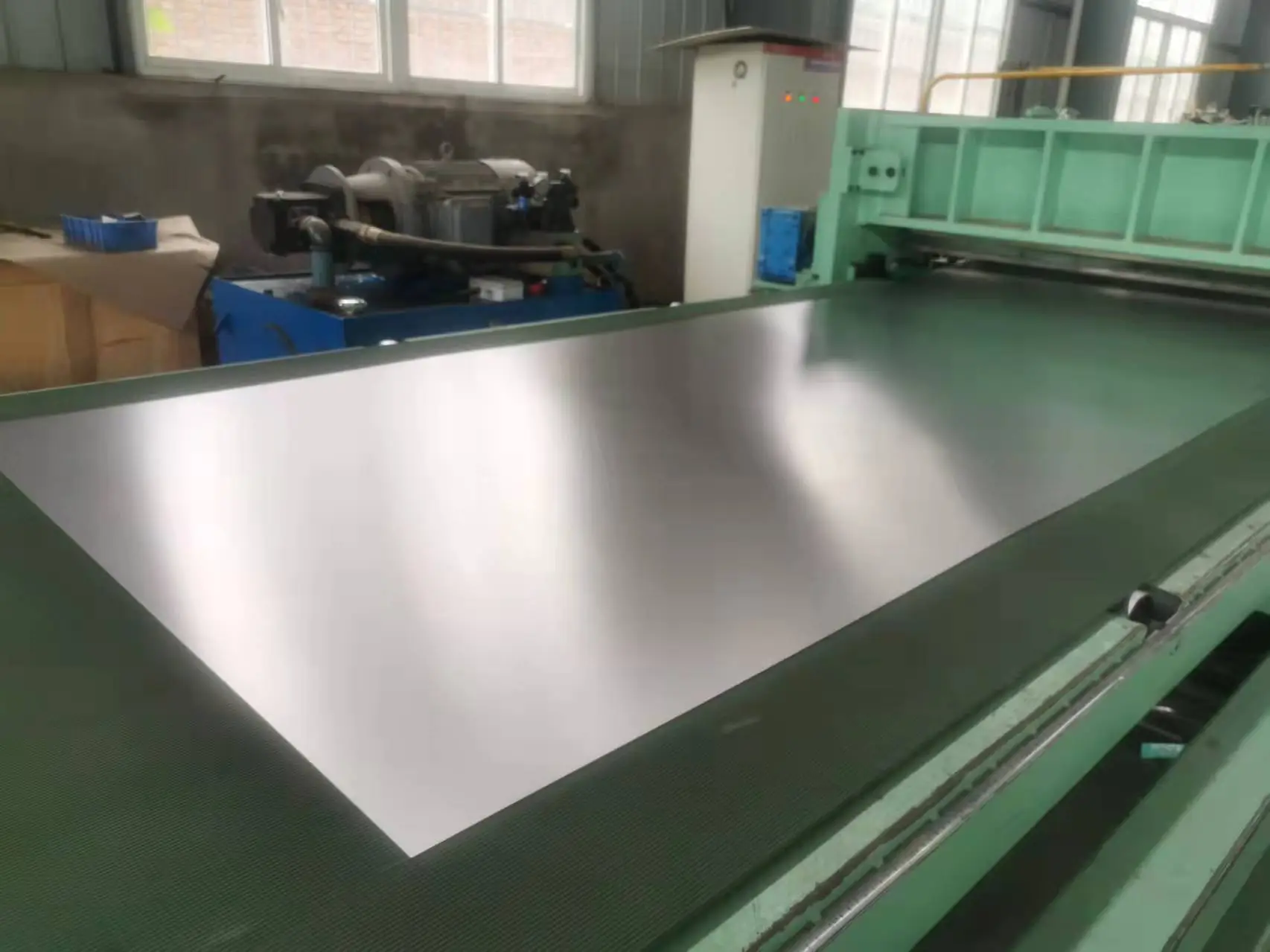
Understanding the Unique Characteristics of Monel 400 Plate
Monel 400 is a popular choice in many demanding industries because of its unique properties. However, these properties also have a big impact on the choice of cutting method. The performance qualities of this nickel-copper metal are very good and must be kept the same during the manufacturing process.
Chemical Composition and Corrosion Resistance
Due to its chemical makeup, which includes about 63% nickel and 28–34% copper, monel 400 is naturally resistant to rust and works well in sea settings and chemical processing. The metal is still the best at resisting rust in saltwater; corrosion rates are usually less than 0.025 mm per year when exposed to saltwater. This high protection comes from the formation of a protective oxide layer that stops more pitting and rusting.
The material doesn't just fight rust; it also resists stress-corrosion cracking in chloride settings. This makes it essential for chemical processing equipment and ships that are out at sea. But this strong chemical makeup also makes cutting difficult because the material tends to work-harden, which can make grinding more difficult and require special tools techniques.
Mechanical Properties and Cutting Implications
With a tensile strength between 550 and 650 MPa and great toughness, Monel 400 makes cutting it a unique task that affects the choice of method. The metal doesn't change much in mechanical qualities from very cold temperatures to high temperatures of up to 550°C. However, this stability can make thermal cutting processes more difficult.
The material's thermal conductivity of 21.8 W/m³K and mass of 8.80 g/cm³ affect how heat moves away during cutting. Because of these features, thermal cutting methods need to be carefully managed to avoid making microstructural changes that aren't needed and could hurt the material's performance in important situations.
Overview of Cutting Technologies for Monel 400 Plate
There are three main cutting technologies used in modern factories to work with nickel-copper metals, such as Monel 400 plate. Each has its own set of rules for how it works and how well it does its job. Knowing about these technologies helps you make decisions that are in line with the needs of the project and the standards of quality you expect.
Waterjet Cutting Technology
Ultra-high-pressure water streams (usually up to 60,000 PSI) and abrasive bits are used in waterjet cutting to make exact cuts through Monel 400 without putting it under thermal stress. The metallurgical structure of the material stays completely intact during this cold cutting process. This keeps the alloy's valuable rust resistance and mechanical qualities.
For the process to work, water is pushed through a gem opening, making a focused stream that moves rough particles at speeds close to three times the speed of sound. This kinetic energy takes material very efficiently while keeping the dimensions very accurate, usually within ±0.003 inches for most uses.
Plasma Arc Cutting Process
Plasma cutting technology makes a charged gas spark that can reach temperatures above 20,000°C. This makes it possible to quickly cut through thick pieces of Monel 400. The process includes sending an electric arc through a gas, which turns it into plasma that quickly melts and takes the material.
Plasma cutting is very fast, especially for plates that are 25 to 150 mm thick. However, the high temperature input can change the texture of the material by creating heat-affected zones. When selecting plasma cutting for uses where rust protection is still important, these thermal effects need to be carefully thought through.
Laser Cutting Capabilities
Laser cutting uses focused coherent light beams to heat and vaporize materials, which makes it possible to cut smaller Monel 400 plates with great accuracy and edge quality. These days, fiber laser systems can cut much faster than older methods while still being accurate to within ±0.05 mm in terms of size.
Because nickel-copper metals are shiny, they are hard to cut with a laser because you have to choose the right wavelength and power density. Surface darkening can be avoided and heat-affected zones can be kept to a minimum with the right parameter control. However, thermal input must still be taken into account to keep the material's properties.
Comparative Analysis: Waterjet vs. Plasma vs. Laser for Monel 400 Plate
When choosing the right cutting method, you need to look at how well it works, how much it costs, and how good the results are. Each technology has its own benefits that make it a good fit for certain manufacturing and application needs.
Precision and Surface Quality Comparison
Waterjet cutting for Monel 400 plate always produces better edges with little need for post-processing, and the finished surfaces look like they were made. The material's corrosion-resistant qualities are fully kept because there are no heat-affected zones. This makes it perfect for naval uses where material integrity is very important.
Laser cutting is very good at keeping measurements accurate for smaller pieces, usually up to 25 mm thick, and it has very low kerf width. The focused beam makes clean cuts with little waste, but the substructure of the material isn't damaged by the heat because the parameters are carefully optimized.
Although plasma cutting can process materials quickly, it leaves bigger kerfs and needs extra finishing steps for jobs that need precise standards. Because the process is thermal, it can leave heat-affected zones 1-3 mm from the cut edge. In important situations, this could make the rust resistance worse.
Speed and Productivity Analysis
Different technologies have very different cutting speeds. Plasma cutting is the fastest for thick parts. Plasma devices can cut plates between 50 and 100 mm thick at speeds of 500 to 1500 mm/min, which makes them a good choice for high-volume production.
Laser cutting is very fast for smaller materials; for plates less than 25 mm thick, it can usually reach 800–2000 mm/min. The technology's ability to cut complicated shapes without having to change tools makes it easier to make complex parts.
Waterjet cutting moves more slowly—about 100 to 400 mm/min, based on the thickness of the material—but it gets rid of the need for secondary processes because the edges are so good. The technology can cut parts up to 200 mm thick without lowering the quality, which often makes up for slower cutting speeds by cutting down on processing time overall.
How to Choose the Right Cutting Method for Your Monel 400 Plate Needs?
To choose the best cutting technology, you need to carefully look at the project's parameters, quality standards, and operating limitations. This way of making decisions has a direct effect on how efficiently the manufacturing process works, how well materials are used, and how well the end product works.
Thickness and Geometric Considerations
The width of the material is the most important thing to consider when choosing a technology, and each way has a range of best performance values. Waterjet cutting works great for thicknesses from 5 to 150 mm, so the quality is the same no matter what the part thickness is. Because of this, waterjet is especially useful for centers that work with a wide range of plate sizes.
Laser cutting works best on smaller pieces, usually up to 25 mm thick. This is where its speed and accuracy benefits are most clear. Laser cutting's excellent beam control and small kerf width make it useful for cutting complicated shapes with tight limits.
Plasma cutting for Monel 400 plate is more appealing for pieces that are larger than 50 mm because it is faster, which is more important than quality. Because the technology can quickly work with thick plates, it can be used for construction tasks that don't need to be very precise.
Quality and Performance Requirements
The cold cutting process of waterjet cutting is best for tasks that need to keep the material's mechanical and rust resistance. Marine settings, tools used in chemical processing, and aerospace parts all benefit from not having any heat-affected zones that could lower the performance of the material.
Laser or plasma cutting may be ideal for manufacturing situations that can handle some heat while putting speed first, as long as any thermal effects are properly treated after the cut. Figuring out the final use helps choose the best balance between cutting speed and protecting the material's properties.
Best Practices and Welding Guidelines After Cutting Monel 400 Plate
Maintaining the structure of the material during the manufacturing process includes more than just cutting. It also includes the right way to handle, weld, and check for quality. These steps make sure that the finished parts keep the great qualities that make this luxury alloy worth mentioning.
Post-Cutting Treatment and Handling
When you handle something the right way, you keep it from getting dirty or damaged, which could weaken its resistance to rust. Using stainless steel tools and keeping the work area clean keeps iron from getting on it, which could lead to corrosion in marine settings.
For parts that have been heated, stress relief annealing at 1050°F for one to two hours may be needed, followed by controlled cooling to get rid of any leftover stresses that were created during cutting. It's especially important to do this process on plasma-cut parts where heat input caused large heat-affected zones.
Welding Considerations and Techniques
To successfully solder cut Monel 400 parts together, you need to choose the right filler metal and control the amount of heat that goes into the material to keep its qualities. The chemical make-up and mechanical qualities of AWS ERNiCu-7 filler metal are compatible with most uses.
As part of properly preparing a joint, the cut sides must be cleaned to get rid of any oxides or other contaminants that could cause weld flaws. Because the material tends to crack when heated, the welding factors must be carefully controlled, and the joints must be designed in a way that allows for thermal growth during the welding process.
Quality control procedures must verify both dimensional accuracy and metallurgical integrity through appropriate non-destructive testing methods. Ultrasonic testing, dye penetrant inspection, and measurement verification make sure that the product meets all the standards that apply, such as ASTM B127 and ASME SB127 requirements.
Conclusion
When choosing the right cutting method for Monel 400 plate, you have to balance the need for accuracy with the need for speed and the need to protect the material's properties. Waterjet cutting is perfect for important jobs because it preserves the purity of the material and produces better results. Laser cutting is very accurate and quick for cutting thinner parts, while plasma cutting is fast for handling thick plates with average quality needs. By understanding these trade-offs, you can make smart choices that improve the efficiency of production while keeping the great qualities that make this nickel-copper alloy useful in a wide range of difficult industrial settings.
FAQ
1.Which cutting method best preserves Monel 400's corrosion resistance?
By not adding any heat and keeping the original metallurgical structure, waterjet cutting completely preserves the rust resistance qualities. The cold cutting method stops heat-affected zones from forming, which would weaken the material's high resistance to chemical and salty conditions.
2.Can plasma cutting be used for marine applications?
Plasma cutting can be used in naval settings as long as the heat-affected areas are properly dealt with through post-cutting processes or design choices that take into account the fact that corrosion resistance may be lower near the cut edges. Important areas that are exposed to salt water may need extra protection or waterjet cutting to work at their best.
3.What thickness limitations apply to laser cutting of Monel 400?
Laser cutting usually works best on Monel 400 plates that are up to 25 mm thick, but some high-power systems may be able to handle bigger pieces. The material's ability to bounce light and conduct heat make it difficult to work with a laser, and the problems get worse as the thickness goes up.
4.How does cutting method selection impact welding operations?
The choice of cutting method has a direct effect on how the weld is prepared and how well it works. Plasma-cut edges may need to be ground down to get rid of heat-affected areas, while waterjet-cut edges usually don't need much prep work. Laser-cut edges usually weld very well as long as the right parameters are used during the cutting process.
Partner with TSM Technology for Premium Monel 400 Plate Solutions
You can trust TSM Technology as a Monel 400 plate maker because they offer complete solutions that mix high-quality materials with expert cutting advice. We have been making nickel alloys for 14 years and have advanced production skills spread across 3 facilities and 8 production lines. This means that we can always produce materials that meet ASTM B127, ASME SB127, and EN 10095 standards. We offer full material approval, including MTC and SGS test results, unique surface treatments, and expert advice on how to choose the best cutting method for your needs. Email our expert team at info@tsmnialloy.com to talk about your needs and get unique suggestions that improve the performance of the material and the efficiency of production.
References
American Society for Welding. In 2017, the AWS D1.6/D1.6M Structural Welding Code for Stainless Steel said, "Welding of Nickel and Nickel Alloys."
The International ASTM. "Standard Specification for Nickel-Copper Alloy Plate, Sheet, and Strip." ASTM B127-19, West Conshohocken, PA, 2019.
Company for International Nickel. The 2018 Technical Bulletin T-7 from Special Metals Corporation is called "Engineering Properties of Monel Alloy 400."
Institute for Manufacturing Technology. "Comparative Analysis of Thermal and Non-Thermal Cutting Processes for Nickel Alloys." Journal of Manufacturing Science and Engineering, Vol. 142, 2020.
A group of manufacturing engineers. The Manufacturing Engineering Handbook, 8th Edition, 2019, has an article called "Precision Cutting Technologies for Corrosion-Resistant Alloys."
Council for Welding Research. The WRC Bulletin 485 from 2018 in New York is called "Heat-Affected Zone Characteristics in Nickel-Copper Alloys."
Learn about our latest products and discounts through SMS or email