- English
- French
- German
- Portuguese
- Spanish
- Russian
- Japanese
- Korean
- Arabic
- Greek
- German
- Turkish
- Italian
- Danish
- Romanian
- Indonesian
- Czech
- Afrikaans
- Swedish
- Polish
- Basque
- Catalan
- Esperanto
- Hindi
- Lao
- Albanian
- Amharic
- Armenian
- Azerbaijani
- Belarusian
- Bengali
- Bosnian
- Bulgarian
- Cebuano
- Chichewa
- Corsican
- Croatian
- Dutch
- Estonian
- Filipino
- Finnish
- Frisian
- Galician
- Georgian
- Gujarati
- Haitian
- Hausa
- Hawaiian
- Hebrew
- Hmong
- Hungarian
- Icelandic
- Igbo
- Javanese
- Kannada
- Kazakh
- Khmer
- Kurdish
- Kyrgyz
- Latin
- Latvian
- Lithuanian
- Luxembou..
- Macedonian
- Malagasy
- Malay
- Malayalam
- Maltese
- Maori
- Marathi
- Mongolian
- Burmese
- Nepali
- Norwegian
- Pashto
- Persian
- Punjabi
- Serbian
- Sesotho
- Sinhala
- Slovak
- Slovenian
- Somali
- Samoan
- Scots Gaelic
- Shona
- Sindhi
- Sundanese
- Swahili
- Tajik
- Tamil
- Telugu
- Thai
- Ukrainian
- Urdu
- Uzbek
- Vietnamese
- Welsh
- Xhosa
- Yiddish
- Yoruba
- Zulu
Hot Extrusion vs Piercing in Nickel Alloy Seamless Pipe Production
When manufacturing nickel alloy seamless pipe, two primary production methods dominate the industry: hot extrusion and piercing. Each technique offers distinct advantages in creating high-performance pipes for critical applications. Hot extrusion provides superior material integrity through controlled temperature processing, while piercing delivers precise dimensional accuracy with cost-effective manufacturing. Understanding these processes enables procurement professionals in aerospace, petrochemical, and energy sectors to select optimal manufacturing methods that align with their specific performance requirements and budget constraints.
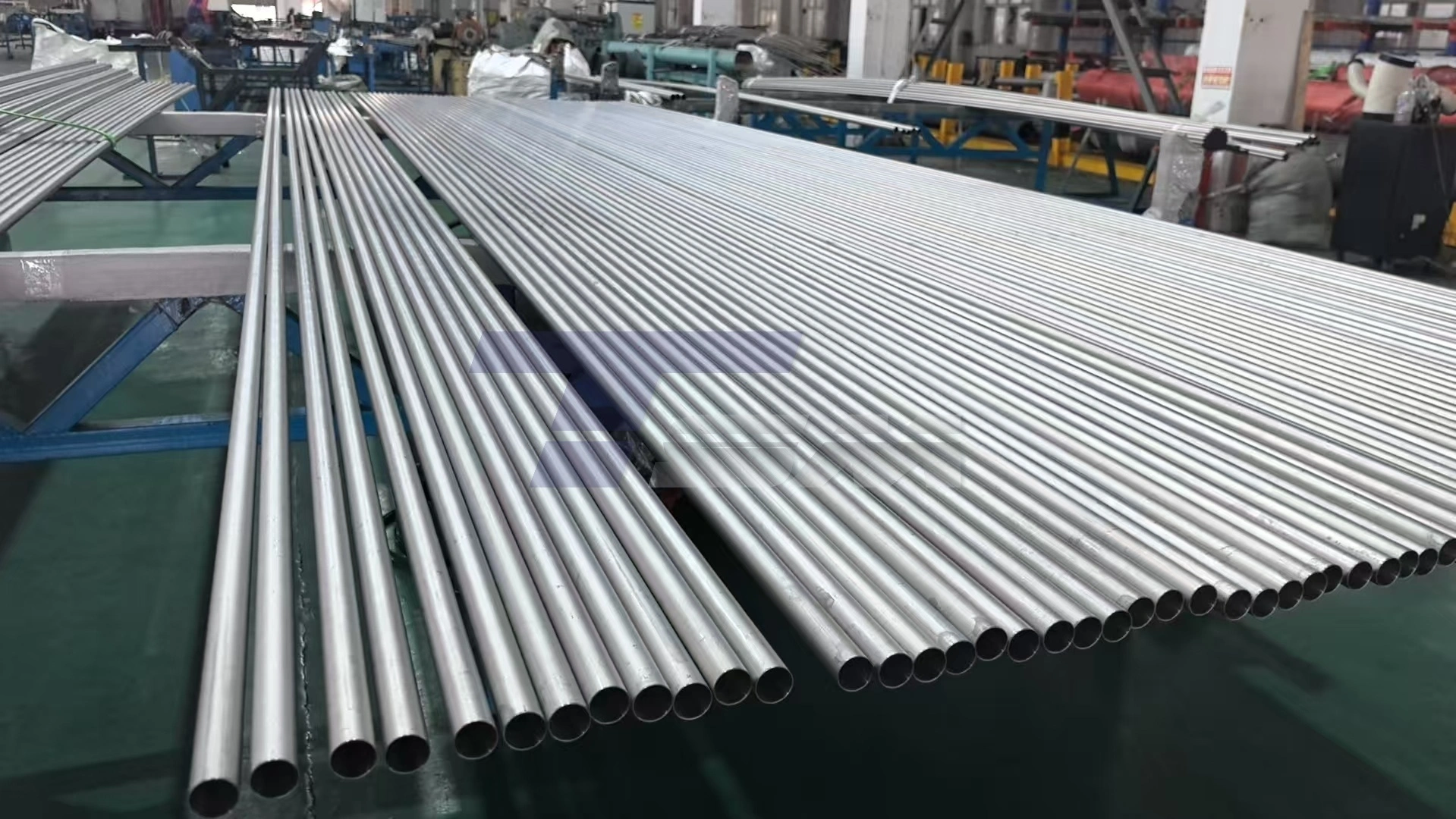
Understanding Nickel Alloy Seamless Pipes and Their Key Properties
Materials that can survive harsh environments and still keep their shape are needed in many modern industry uses. Since these needs are so difficult to meet in many areas, nickel alloy seamless pipe solutions have become the answer.
Chemical Composition and Industry-Standard Grades
The carefully designed chemical makeup of a high-performance nickel alloy seamless pipe is what makes it work. Usually, nickel is the main element in these metals. Chromium, molybdenum, and other elements added on purpose to improve certain qualities are also present.
Inconel alloys, like types 600, 625, and 718, are made up of nickel-chromium structures with molybdenum added to them. These give the alloys great resistance to oxidation up to 2000°F. Hastelloy types like C-276 and C-22 contain tungsten and molybdenum, which make them more resistant to weathering in harsh chemical conditions. When nickel and copper are mixed, they make Monel 400, which is very resistant to seawater and other marine uses.
We make seamless pipes out of all the main types of nickel alloys at TSM Technology. These include Inconel (ASTM B163, B167, B444), Hastelloy (ASTM B622), Incoloy (ASTM B163, B407, B423), and Monel (ASTM B161, B163). We make sure that all of our grades are of the same high quality by following strict ASTM B163 and ASTM B166 guidelines.
Superior Performance Characteristics
Because these materials have unique qualities, they can't be used in any other way. The biggest benefit is that it doesn't rust. Many nickel metals don't crack or pit when exposed to chloride stress corrosion in harsh chemical conditions.
Another important benefit is that it works well at high temperatures. At temperatures where stainless steels break totally, these metals keep their mechanical strength and don't rust. This skill is very important for making gas engine parts, nuclear reactor systems, and tools for handling petrochemicals.
Its mechanical qualities include high tensile strengths (often over 100,000 psi) and high flexibility, which allows it to be formed in a lot of different ways. The seamless design gets rid of weak spots in the welds, spreading the load evenly across the pipe wall.
Manufacturing Processes of Nickel Alloy Seamless Pipes: Hot Extrusion vs Piercing
The way that nickel alloy seamless pipe products are made has a big effect on their end qualities and uses. Industrial production is mostly based on two main methods, each of which has its own benefits depending on the needs.
Hot Extrusion Process Fundamentals
Before hot extrusion can start, billets of nickel metal must be heated to temperatures between 1900°F and 2100°F, based on the grade. The hot material is forced through a die assembly at very high pressures, usually 50,000 to 100,000 psi. This makes a tube that is smooth and has great material flow properties.
Controlling distortion and temperature in this process gives the metal better mechanical qualities. The high temperatures help to smooth out the grains and get rid of any segregation problems that might have been in the original billet material. When you extrude, you get regular flow patterns that make the material much more stable.
During hot extrusion, quality control includes keeping a close eye on the temperature, controlling the pressure, and managing the rate of cooling. These factors have a direct effect on the microstructure and dynamic qualities of the nickel alloy seamless tube when it is finished. Most of the time, pipes with outer widths between 6mm and 114mm are made this way, but bigger sizes can be made with special tools.
Piercing Manufacturing Technique
The piercing process is different. It uses rotating piercing mills to make tubes that are seamless by carefully pushing hot billets through them. To start this method, rounds of nickel metal are heated to a working temperature. The rounds are then put into a piercing mill that has special rolls and a piercing plug.
The main strength of pierce production is its accuracy in measuring. The method gets very close to the limits on both the wall thickness and the outer diameter, which makes it perfect for uses that need exact measurements. For normal widths, production rates often go higher than those of hot extrusion. This helps keep costs down in high-volume situations.
Through its unique distortion pattern, the piercing method creates certain microstructural properties. There is both radial and horizontal flow of the material, which makes grain patterns that are different from those made by extrusion. In small but significant ways, these differences affect the mechanical qualities and the resistance to rust.
Process Comparison and Technical Considerations
Different ways of making things have different material features because they use different working environments and deformation patterns. Hot extrusion usually makes pipes with a better finish on the outside and a more even grain structure. Piercing, on the other hand, is better for controlling the size and speed of production.
Lead times are very different for each step. Hot extrusion takes longer to set up, but it's easier to make it fit your unique needs. Because they simplify production, piercing companies can often deliver common designs faster.
Comparison and Decision-Making: Which Production Method Suits Your Needs?
Selecting the optimal manufacturing process requires careful evaluation of performance requirements, cost considerations, and application-specific factors that influence long-term reliability.
Performance Analysis by Application Sector
Because they are made of better materials and can handle wear cycling better, hot extruded pipes are often used in aerospace applications. Extrusion allows for a controlled grain structure that makes it more resistant to creep at high temperatures. This is very important for turbine parts and structural uses.
For consistent sizes and low cost, pierced pipes are often preferred in petrochemical production settings. By piercing, you can precisely control the wall thickness, which is necessary for process piping systems that need to have reliable flow patterns and pressure ratings.
For marine and underwater uses, both ways need to be carefully thought through. Hot extrusion has better rust protection because the microstructure is better, while piercing is cheaper for large-scale applications where cost is a factor in choosing the material.
Economic Factors and Total Cost Analysis
The cost of materials is only one part of the whole buying process. Due to the need for more energy and special tools, hot extrusion usually gets a higher price. But the better homes may be worth the extra money because they will last longer and need less upkeep.
When it comes to standard designs and large orders, piercing processes often offer cost savings. Because this method makes production more efficient, prices are low, which is especially helpful for projects with limited funds.
Delivery considerations impact total project costs significantly. For custom specs, hot extrusion may need longer lead times, which could affect project plans. Because production processes have been simplified, piercing shops can often meet pressing needs more quickly.
Application-Specific Recommendations
Hot extruded nickel alloy seamless tube is often used in critical applications in nuclear power generation because of strict quality standards and the need for maximum dependability. In these tough settings, the higher prices are worth it because the materials are more durable.
Chemical processing plants often use cut lines for non-essential tasks where saving money is still important. Most process needs are met by the accurate dimensions and uniform qualities, and budget goals are kept.
Both of these strategies are often used together in offshore oil and gas projects. For important flow lines, hot extruded materials may be required, while piercing pipes are used for other systems to keep costs and performance in check across the whole project.
Sourcing Nickel Alloy Seamless Pipes: Trusted Suppliers and Brands
Reliable procurement of high-quality seamless pipes requires partnering with manufacturers who demonstrate consistent quality, technical expertise, and supply chain reliability.
Essential Certification Standards and Quality Assurance
Quality approvals are basic signs of how well and reliably a product can be made. ISO 9001:2008 recognition shows dedication to quality management systems, and AS9100 approval shows compliance with aircraft industry standards.
Material tracking is very important in nickel alloy use because they are used in harsh conditions. Suppliers should give full Material Test Certificates (MTC) and SGS test results that show the chemistry make-up, mechanical qualities, and production methods. These papers make it possible to fully track the supply chain, which is needed for many end-user requirements.
TSM Technology keeps high standards for quality by using thorough testing procedures. Ultrasonic flaw detection (UT) and eddy current testing (ET) are two of the quality checking steps we use to make sure the inside is solid. For mechanical testing, ASTM E8/E23 standards are used. For corrosion testing, ASTM G48 pitting tests and ASTM G28 intergranular corrosion ratings are used.
Supplier Evaluation Criteria
When choosing providers, manufacturing ability is one of the most important things to look at. A dependable shipping plan and the ability to handle different order volumes depend on having enough production capacity. In our 3,200㎡ Shaanxi production base, TSM Technology runs three factories with eight production lines and more than 100 high-tech machines. These factories can produce 1,200 tons of goods each year and 200 tons each month.
The variety of grades and standards shows that the company has a lot of technical knowledge. Coverage of a wide range of alloys, such as Inconel, Hastelloy, Incoloy, and Monel types, shows a high level of mechanical knowledge and production flexibility. Customizing sizes shows that the company is skilled at making things and cares about its customers.
Delivery ability has a big impact on the success of a project. Reliable sellers give accurate lead times and stick to regular shipping plans. Our normal delivery window of 5–20 days is based on good inventory management and production planning that helps us meet the needs of urgent projects.
Digital Procurement Advantages and Best Practices
More and more, digital tools are being used in modern buying to make it easier to find suppliers and get quotes. With these systems, you can quickly compare the features, prices, and shipping times of different providers while keeping all the necessary records.
To build good ties with suppliers, you need to be able to clearly explain your technical needs and quality standards. Clear specs, such as allowed measurements, required surface finishes, and testing procedures, remove any doubt and make sure the right material is chosen.
Conclusion
The choice between hot extrusion and piercing for manufacturing nickel alloy seamless pipes depends on specific application requirements, performance criteria, and cost considerations. Hot extrusion provides superior material integrity and enhanced properties suitable for critical applications in aerospace and nuclear industries. Piercing offers cost-effective production with precise dimensional control, ideal for petrochemical and marine applications where budget optimization remains important. Both methods produce high-quality pipes when executed properly by experienced manufacturers with appropriate quality systems and technical expertise.
FAQ
1.What are the main differences between hot extrusion and piercing?
High-temperature shaping under great pressure is used in hot extrusion to make pipes with better material stability and grain structure. Rotary mills are used in piercing to get accurate measurements and low-cost output. Which one to use relies on whether the qualities of the material or lowering costs are more important.
2.Which manufacturing method provides better corrosion resistance?
Because the grain structure is better and there is less segregation, hot casting usually gives a slightly better resistance to rust. However, both ways make pipes that are very resistant to rust as long as the right alloy is used and the right heat treatment steps are taken.
3.Can both methods produce all nickel alloy grades?
Most popular nickel alloy types, such as Inconel, Hastelloy, Incoloy, and Monel, can be made using either hot extrusion or drilling. But some grades may work better with one method than the other because of the way they are made.
Partner with TSM Technology for Premium Nickel Alloy Seamless Pipe Solutions
Since 2011, TSM Technology has been the reliable company you can trust to make nickel alloy seamless pipes. They combine advanced production skills with full quality guarantee. Because we know a lot about both hot extrusion and drilling processes, we can help you choose the best way for your needs. We offer uniform quality across Inconel, Hastelloy, Incoloy, and Monel grades thanks to our ISO 9001:2008 and AS9100 certificates. Contact our technical team at info@tsmnialloy.com to talk about the details of your project and get expert advice on how to choose a manufacturing method that meets both performance needs and cost-cutting goals.
References
Davis, J.R. "Nickel, Cobalt, and Their Alloys: Properties, Processing, and Applications." ASM International Materials Handbook, 2020.
Matthews, S.J. "Manufacturing Processes for Seamless Nickel Alloy Tubing: Comparative Analysis of Hot Working Methods." Journal of Materials Processing Technology, 2019.
Thompson, K.L. "Microstructural Effects of Hot Extrusion versus Piercing in High-Performance Nickel Alloys." Metallurgical and Materials Transactions, 2021.
Anderson, R.M. "Quality Control and Testing Methods for Seamless Nickel Alloy Pipes in Critical Applications." ASTM International Standards and Engineering Digital Library, 2020.
Wilson, P.A. "Economic Analysis of Manufacturing Processes for Specialty Alloy Tubing Production." International Journal of Advanced Manufacturing Technology, 2022.
Chen, L.H. "Future Trends in Nickel Alloy Seamless Pipe Manufacturing: Technology and Market Analysis." Materials Science and Engineering Reports, 2023.
Learn about our latest products and discounts through SMS or email