- English
- French
- German
- Portuguese
- Spanish
- Russian
- Japanese
- Korean
- Arabic
- Greek
- German
- Turkish
- Italian
- Danish
- Romanian
- Indonesian
- Czech
- Afrikaans
- Swedish
- Polish
- Basque
- Catalan
- Esperanto
- Hindi
- Lao
- Albanian
- Amharic
- Armenian
- Azerbaijani
- Belarusian
- Bengali
- Bosnian
- Bulgarian
- Cebuano
- Chichewa
- Corsican
- Croatian
- Dutch
- Estonian
- Filipino
- Finnish
- Frisian
- Galician
- Georgian
- Gujarati
- Haitian
- Hausa
- Hawaiian
- Hebrew
- Hmong
- Hungarian
- Icelandic
- Igbo
- Javanese
- Kannada
- Kazakh
- Khmer
- Kurdish
- Kyrgyz
- Latin
- Latvian
- Lithuanian
- Luxembou..
- Macedonian
- Malagasy
- Malay
- Malayalam
- Maltese
- Maori
- Marathi
- Mongolian
- Burmese
- Nepali
- Norwegian
- Pashto
- Persian
- Punjabi
- Serbian
- Sesotho
- Sinhala
- Slovak
- Slovenian
- Somali
- Samoan
- Scots Gaelic
- Shona
- Sindhi
- Sundanese
- Swahili
- Tajik
- Tamil
- Telugu
- Thai
- Ukrainian
- Urdu
- Uzbek
- Vietnamese
- Welsh
- Xhosa
- Yiddish
- Yoruba
- Zulu
What are the Heat Resistance Properties of Inconel 625 Seamless Tubes?
Inconel 625 seamless tube demonstrates exceptional heat resistance properties through its carefully engineered nickel-chromium-molybdenum-niobium composition. These high-performance alloy tubes maintain structural integrity at temperatures up to 1000°C (1832°F), offering superior resistance to thermal stress, oxidation, and high-temperature corrosion mechanisms. The seamless construction eliminates weld-related weaknesses while the balanced chemical matrix provides outstanding creep resistance and thermal stability for demanding industrial applications.
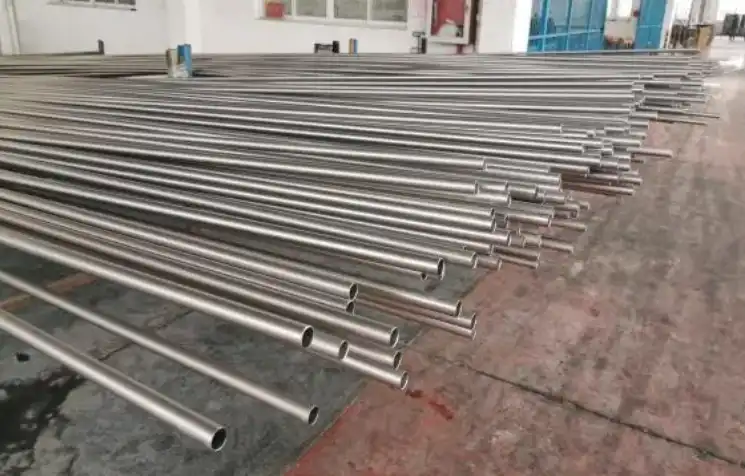
Understanding the Heat Resistance Properties of Inconel 625 Seamless Tubes
Inconel 625 is very good at withstanding high temperatures because its chemicals are perfectly balanced. The nickel content (about 58%) creates an austenitic core that keeps the structure stable at very high and very low temperatures. Adding 20–23% chromium makes protective oxide layers that keep the surface from wearing away, and adding 8–10% molybdenum makes it stronger at high temperatures. Adding niobium (3.15–4.15%) is very important because it strengthens the solution without the need for precipitation hardening processes.
Chemical Composition and Its Thermal Benefits
These alloying elements work together to make a superalloy material that doesn't break down at high temperatures in a number of ways. Nickel's face-centered cubic crystal structure stays steady when it is heated and cooled many times. This keeps phase changes from happening, which could damage its mechanical properties. Chromium makes a strong chromia scale that protects against oxidation and sulfidation attacks that happen a lot in hot places.
Molybdenum makes creep resistance much better by stopping grain boundaries from moving at high temperatures. This element also makes the metal more resistant to stress corrosion cracks caused by acids and chlorides. The niobium presence smooths out the grains and forms carbides, which makes the metal stronger at high temperatures while keeping its great flexibility.
Mechanical Properties Under Thermal Stress
Inconel 625 seamless tube has a minimum tensile strength of 827 MPa (120 ksi) and a minimum yield strength of 414 MPa (60 ksi) when it is at room temperature. But the alloy's real worth shows up when it's under a lot of heat stress, which is when other materials break. The material keeps about 80% of its room-temperature strength at 650°C (1200°F), which is a lot more than austenitic stainless steels can do.
When used for a long time at high temperatures, Inconel 625's creep-rupture power shows that it is very strong. At 760°C (1400°F) and 138 MPa (20 ksi) of stress, the alloy can last more than 1000 hours before it breaks. This makes it suitable for important uses where failure would have serious effects.
Manufacturing Process and Its Impact on Heat Resistance
The thermal performance of our Inconel 625 seamless tubes is greatly improved by the advanced production methods used by TSM Technology. Our vacuum induction melting method makes sure that the chemical makeup is uniform and that impurities that could affect how well the material works at high temperatures are kept to a minimum. The smooth production method gets rid of the heat-affected zones that come with welding, making the tube wall's metallurgical qualities the same all the way through.
Hot Extrusion and Grain Structure Optimization
When making seamless tubes, the hot extrusion process smooths out the grain structure and gets rid of any vertical weaknesses that might affect how well the tube conducts heat. During hot working, temperatures are carefully kept between 1150°C and 1200°C to get the best grain size spread. This controlled deformation process makes a regular microstructure that makes the material more resistant to creep and thermal stress.
When you cold draw something, you can precisely control the size while also work-hardening it to get the mechanical features you want. When you use both hot and cold working methods together, you get smooth tubes with a better surface finish and more accurate measurements. These are important for heat exchangers and high-pressure uses.
Heat Treatment Procedures for Optimal Performance
After solution annealing at 1150°C and then quickly cooling, the microstructure is optimized for the best performance at high temperatures. This heat process gets rid of dangerous precipitates and makes an austenitic matrix that is stable. The rate at which the material cools down during heat treatment changes the carbide precipitation and grain boundary properties, which in turn changes the resistance to thermal stress.
The controlled atmosphere heat treatment facilities at TSM Technology make sure that the products are the same for each output batch. As part of our quality control procedures, we check the microstructure using metallography and the mechanical traits meet the standards of hardness tests.
Comparative Analysis: Inconel 625 Seamless Tube vs Other Alloys for High-Temperature Applications
When looking at materials that can handle high temperatures, Inconel 625 seamless pipe always does better than other metals in important ways. Compared to 316L stainless steel, Inconel 625 keeps its mechanical strength at temperatures 300°C higher and is better at stopping chloride stress corrosion cracks.
Performance Comparison with Alternative Alloys
Compared to Inconel 600, Inconel 625 has more molybdenum, which makes it more resistant to reducing conditions and gives it better creep strength. When compared to Inconel 600, which has a simpler chemical make-up, adding niobium makes it even more stable at high temperatures. Inconel 625 works much better than other metals when hydrofluoric acid or other strong chemicals are used in chemical processes.
The rust protection of Hastelloy C-276 is about the same, but it costs a lot more to make. Inconel 625's balanced makeup makes it the best metal for most high-temperature uses because it performs well at high temperatures and doesn't cost too much. Above 450°C, carbon steel and low-alloy steels lose their strength and start to oxidize. Inconel 625, on the other hand, keeps working up to 1000°C.
Titanium alloys are very strong for their weight, but they oxidize above 600°C and aren't as stable at high temperatures over time as nickel-based superalloys. The comparison makes it very clear why aircraft companies choose Inconel 625 for exhaust systems and turbine parts.
Cost-Benefit Analysis for Industrial Applications
Inconel 625 is more expensive to buy than stainless steel at first, but it lasts longer and needs less upkeep, which makes up for it. In power generation uses, the better creep resistance means that parts don't need to be inspected as often and there is less downtime. Chemical processing plants benefit from the alloy's resistance to thermal shock and rust, which means that parts don't need to be replaced as often and the work costs that come with that.
Industrial Applications Leveraging the Heat Resistance of Inconel 625 Seamless Tubes
Inconel 625 seamless tube is used a lot by aerospace companies for parts that are heated to over 800°C, like jet engine fuel lines, hydraulic systems, and exhaust components. The material is resistant to thermal wear, which makes it perfect for parts that are heated and cooled over and over again. Inconel 625 is used by major airplane engine makers for combustor liners and afterburner parts that could fail in a catastrophic way.
Chemical Processing and Petrochemical Industries
These seamless tubes are used in reactor tanks, heat exchangers, and catalyst regeneration systems in chemical processing plants to deal with harsh media at high temperatures. In hydrocracking units at refineries, where hydrogen at high temperatures would weaken regular steels, Inconel 625 tubing is used. Because it doesn't react with sulfur-containing chemicals, the alloy is very useful in manufacturing settings.
Power Generation Applications
In nuclear power plants, Inconel 625 seamless pipes are used in steam generators that have to work in harsh situations with high temperatures, high pressures, and water chemicals that break down metals. Stress corrosion cracking doesn't happen easily in pressurized water reactors, which is why this material is chosen for important safety systems.
Manufacturers of gas turbines use these tubes in fuel injection units and combustor cooling systems because they are very resistant to thermal shock. The smooth design gets rid of any weak spots, and the metal makes it reliable over time even when loaded and unloaded many times.
Marine and Offshore Engineering
Materials used in marine environments are subject to both high temperatures and salt damage. Inconel 625 seamless tube works very well in heat exchanges that cool with seawater and evaporation plants, where other materials would break down quickly. These tubes are used in fire suppression systems and emergency cooling lines on offshore bases, where dependability is very important.
Procuring Inconel 625 Seamless Tubes for Heat-Resistant Applications
To successfully buy high-temperature metal tubes, you need to carefully evaluate suppliers and know what quality standards are. TSM Technology has a lot of certifications, such as ASTM B444, ASTM B446, JIS, and DIN standards, which make sure that our goods meet foreign standards. We can support big projects while keeping quality high thanks to our production capacity of 100–200 tons per month.
Quality Assurance and Material Certification
Each tube package comes with Material Test Certificates (MTC) that list the chemical makeup, mechanical qualities, and size compliance of the tubes. Third-party testing by SGS, BV, and TUV gives extra guarantee of the quality of the materials. Ultrasonic testing, dimensional checking, and corrosion testing are some of the quality control steps we use to make sure that the performance features are correct.
When used at high temperatures, it's impossible to say enough about how important it is to have the right material approval. Materials that are fake or not up to par can be very dangerous and can cause catastrophic breakdowns. TSM Technology has strict quality control that makes it possible to track products from the source of the raw materials to the final inspection.
Customization and Technical Support
Our engineering team gives advice on how to choose the best tube dimensions and specs based on the purpose. Standard sizes have an outside width of 6–219 mm and a wall thickness of 0.5–15 mm. Custom sizes can also be made for specific uses. Different installation and performance needs can be met by surface finishes such as bright annealed, pickled, and polished.
Technical help goes beyond choosing the right materials and includes advice on how to place them, how to weld them, and how to keep them in good shape. This all-around method makes sure that the component works at its best throughout its entire lifetime and reduces the chance of problems happening during fabrication and assembly.
Conclusion
Inconel 625 seamless tube is resistant to heat because its makeup was carefully planned and it was made using advanced techniques. When nickel, chromium, molybdenum, and niobium are mixed, they form a superalloy matrix that stays strong and doesn't rust at temperatures up to 1000°C. Seamless construction gets rid of the need for bonded parts and makes the material better at supporting pressure, which is important for high-temperature uses. Because of these qualities, Inconel 625 is the best metal for high-temperature uses in aircraft, chemical processing, power generation, and the marine sector.
FAQ
1.What temperature range can Inconel 625 seamless tubes withstand?
At temperatures up to 1000°C (1832°F), Inconel 625 seamless tubes keep their good mechanical qualities and ability to fight corrosion. At 650°C, the metal still has about 80% of its strength at room temperature. This means it can be used in places where normal stainless steels would fail over and over again at high temperatures.
2.How does the seamless construction affect heat resistance performance?
With seamless construction, there are no heat-affected zones or possible problems that come with welded parts. This even metallurgical structure gives consistent thermal expansion traits and gets rid of stress collection points that could cause failure when the temperature changes.
3.What makes Inconel 625 superior to stainless steel for high-temperature applications?
When heated to 300°C more than austenitic stainless steels, Inconel 625's nickel-based matrix stays stable. Adding molybdenum and niobium makes the steel more resistant to creep and rust, and its balanced makeup stops the heat-related breakdown processes that weaken regular stainless steels.
Partner with TSM Technology for Premium Inconel 625 Seamless Tubes
TSM Technology stands as your trusted Inconel 625 seamless tube manufacturer with over 14 years of experience serving aerospace, chemical processing, and power generation industries worldwide. Our modern factory makes between 100 and 200 tons of approved seamless tubes every month that meet ASTM B444, ASTM B446, JIS, and DIN standards. We can make any size you want, from 6-219mm OD, and there are many finish choices. All of this comes with full MTC paperwork and third-party testing certificates. Our engineering team helps you choose the right materials and install them correctly so that they work perfectly in high-temperature settings. Email us at info@tsmnialloy.com to talk about your unique needs and get a detailed quote for your next job.
References
American Society for Testing and Materials. "Standard Specification for Nickel-Chromium-Molybdenum-Columbium Alloys Seamless Pipe and Tube." ASTM B444-06, West Conshohocken, PA, 2018.
Boyer, Howard E. "Atlas of Creep and Stress-Rupture Curves." ASM International Handbook Committee, Materials Park, OH, 1988.
Donachie, Matthew J. "Superalloys: A Technical Guide, Second Edition." ASM International, Materials Park, OH, 2002.
Special Metals Corporation. "Inconel Alloy 625 Technical Bulletin." Publication Number SMC-063, New Hartford, NY, 2019.
Tawancy, H. M., Ul-Hamid, A., and Abbas, N. M. "Practical Engineering Failure Analysis." Marcel Dekker Inc., New York, NY, 2004.
Woodford, David A. "Gas Turbine Materials Technology." Applied Science Publishers, London, UK, 1982.
Learn about our latest products and discounts through SMS or email