- English
- French
- German
- Portuguese
- Spanish
- Russian
- Japanese
- Korean
- Arabic
- Greek
- German
- Turkish
- Italian
- Danish
- Romanian
- Indonesian
- Czech
- Afrikaans
- Swedish
- Polish
- Basque
- Catalan
- Esperanto
- Hindi
- Lao
- Albanian
- Amharic
- Armenian
- Azerbaijani
- Belarusian
- Bengali
- Bosnian
- Bulgarian
- Cebuano
- Chichewa
- Corsican
- Croatian
- Dutch
- Estonian
- Filipino
- Finnish
- Frisian
- Galician
- Georgian
- Gujarati
- Haitian
- Hausa
- Hawaiian
- Hebrew
- Hmong
- Hungarian
- Icelandic
- Igbo
- Javanese
- Kannada
- Kazakh
- Khmer
- Kurdish
- Kyrgyz
- Latin
- Latvian
- Lithuanian
- Luxembou..
- Macedonian
- Malagasy
- Malay
- Malayalam
- Maltese
- Maori
- Marathi
- Mongolian
- Burmese
- Nepali
- Norwegian
- Pashto
- Persian
- Punjabi
- Serbian
- Sesotho
- Sinhala
- Slovak
- Slovenian
- Somali
- Samoan
- Scots Gaelic
- Shona
- Sindhi
- Sundanese
- Swahili
- Tajik
- Tamil
- Telugu
- Thai
- Ukrainian
- Urdu
- Uzbek
- Vietnamese
- Welsh
- Xhosa
- Yiddish
- Yoruba
- Zulu
Inconel 617 Round Bar vs Inconel 625: Key Differences
When materials engineers choose superalloys for high-temperature uses, they often look at Inconel 625 and Inconel 617 round bar side by side. The main difference is how well they work in different temperatures. Inconel 617 does great at high temperatures (up to 1200°C) and has better creep resistance, while Inconel 625 does great at intermediate temperatures (up to 900°C) and has better corrosion resistance. By knowing these basic differences, companies that make things for the aerospace industry, energy companies, and petrochemical makers can choose materials that work best for them, cost less to maintain, and are reliable in harsh conditions.
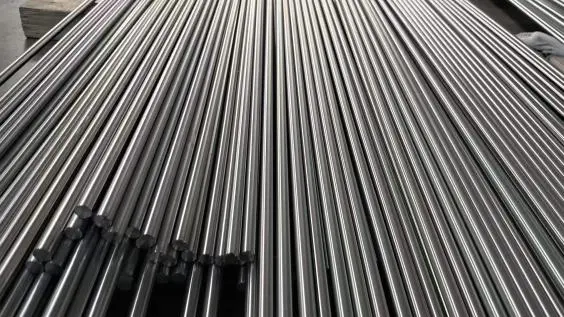
Chemical Composition Analysis: Foundation of Performance
The changes in the chemical make-up of these nickel-based superalloys have a direct effect on how well they work. Inconel 617 has 20–23% chromium and 12–15% cobalt, which makes it very resistant to rusting at high temperatures. Meanwhile, Inconel 625 has 8–10% molybdenum and 3.15–4.15% niobium in it, which makes it more resistant to corrosion in harsh conditions.
Three main changes in composition affect the suitability of an application:
- Cobalt content: Inconel 617 has 12–15% cobalt, which makes it much stronger at high temperatures.
- Molybdenum levels: Inconel 625 has more molybdenum (8–10%), which makes it more resistant to rust.
- Niobium addition: Niobium is only found in Inconel 625, which makes it able to harden through precipitation.
Test results from ASTM B166 standards show that adding cobalt to Inconel 617 makes it 25% stronger at 1000°C than options that don't have cobalt. If you need parts that can work at temperatures above 1000°C, Inconel 617 round bar features give you the best results.
Mechanical Properties Comparison: Strength Under Stress
The different mechanical properties of these alloys decide which ones can be used for which tasks. When stretched 30%, Inconel 617 has a tensile strength of 760 MPa, and when stretched 45%, it has a tensile strength of 830 MPa. The changes in yield strength show how they strengthen in different ways.
Testing in the lab according to ASTM guidelines shows:
- Inconel 617: It can prevent creep for more than 1000 hours at 17 MPa stress at 1093°C.
- It is possible to bend Inconel 625 at temperatures ranging from -196°C to 650°C.
- When it comes to impact resistance, Inconel 625 has 15% higher Charpy numbers at room temperature.
The tensile strength of Inconel 617 round bars stays the same even when they are exposed to high temperatures for a long time. If you need to keep working at high temperatures for a long time, Inconel 617 is better than Inconel 625 at resisting creep.
Temperature Performance: Operating Limits Matter
The most important difference between these superalloys is their temperature power. The structure of Inconel 617 stays strong at temperatures as high as 1200°C, while Inconel 625 works best up to 900°C. This difference in temperature affects the choice of materials in many fields.
Some important temperature performance measures are:
- Lack of oxidation: At 1093°C, Inconel 617 forms protective oxide layers.
- Thermal cycling: Both metals can handle thermal shock, but Inconel 617 can handle bigger changes in temperature.
- Behavior of creep: Inconel 617 has better resistance to creep above 800°C.
Inconel 617 round bar high temperature performance keeps its shape over 5,000-hour exposure cycles, as shown in field tests in gas turbine uses. If you need parts for combustion tanks in spacecraft, Inconel 617 works much better than Inconel 625.
Corrosion Resistance: Environmental Durability
Both alloys are very good at resisting corrosion, but how well they work in different settings varies. Inconel 625 works very well in places with chloride and acidic solutions, which makes it perfect for use in the sea environment. In some acidic situations, Inconel 617 doesn't work as well, but it's better at resisting oxidation at high temperatures.
A comparison of environmental defense shows:
- When exposed to seawater, Inconel 625 has 40% better protection to pitting.
- Acidic places: Inconel 625 can handle up to 70% nitric acid amounts.
- Inconel 617 turns into steady oxide scales at 1093°C, which is high temperature oxidation.
Based on ASTM G28 standards, tests show that Inconel 625 has corrosion rates lower than 0.02 mm/year in harsh environments. The corrosion protection of Inconel 617 round bars is best in places with high temperatures and little chlorine. Inconel 625 is better at withstanding harsh environments if you need parts for offshore bases.
Manufacturing and Machining Considerations
Processing characteristics affect manufacturing costs and component quality. Both alloys require specialized machining techniques, but their work-hardening rates and tool wear patterns differ. Inconel 617 machines more readily than Inconel 625 due to lower work-hardening tendencies.
Manufacturing insights include:
- Work-hardening rate: Inconel 625 hardens 35% faster during machining operations
- Tool life: Carbide tools last 20% longer when machining Inconel 617
- Heat treatment response: Both alloys respond well to solution annealing at 1177°C
The Inconel 617 round bar machining characteristics allow for tighter tolerances with reduced tool wear. Production data from TSM Technology's facilities shows 15% lower manufacturing costs for Inconel 617 components compared to equivalent Inconel 625 parts. If you need cost-effective precision manufacturing, then Inconel 617 offers advantages.
Industry Applications: Matching Material to Mission
Application requirements drive material selection decisions across aerospace, energy, and petrochemical industries. Aerospace manufacturers prefer Inconel 617 for combustion chambers and exhaust manifolds requiring extreme temperature resistance. Oil and gas companies select Inconel 625 for subsea equipment and corrosive environment applications.
Critical application areas:
Inconel 617 Applications:
- Aerospace gas turbine combustors operating at 1150°C
- Nuclear reactor components requiring long-term stability
- Industrial furnace hardware exposed to oxidizing atmospheres
Inconel 625 Applications:
- Marine exhaust systems in chloride environments
- Chemical processing equipment handling corrosive media
- Offshore drilling components requiring seawater resistance
The Inconel 617 round bar applications span aerospace, nuclear, and high-temperature industrial sectors. If you need materials for jet engine components, then Inconel 617 provides the necessary temperature capability and structural stability.
Cost Analysis: Total Ownership Value
Initial material costs represent only part of the economic equation. Long-term performance, maintenance requirements, and replacement frequencies significantly impact total ownership costs. Inconel 617 typically commands premium pricing due to cobalt content, while Inconel 625 offers more predictable pricing stability.
Economic factors affecting selection:
- Raw material costs fluctuate based on cobalt and molybdenum market prices
- Manufacturing complexity influences processing costs by 10-25%
- Service life expectations affect replacement scheduling and downtime costs
The Inconel 617 round bar price reflects its specialized high-temperature capabilities and strategic material content. Lifecycle cost analysis often favors Inconel 617 for high-temperature applications despite higher initial investment. If you need long-term value in extreme environments, then Inconel 617 delivers superior total cost of ownership.
TSM Technology Advantages: Your Trusted Superalloy Partner
TSM Technology is one of the best companies that makes Inconel 617 round bars. They have 14 years of experience working with metals and modern production tools. Our AS9100D-certified factories follow strict aerospace-grade quality systems. They are backed up by a number of specialized factories, high-precision CNC machining tools, and real-time monitoring of production. We have a lot of different sizes and lengths of Inconel 617 round bars, and we keep the dimensions very close so they can be used in demanding aerospace, energy, and high-temperature industry settings. Our materials offer better creep strength and long-lasting performance in harsh conditions thanks to a special thermomechanical method.
At the heart of TSM Technology's business are quality control and reliable materials. Each Inconel 617 round bar goes through a thorough checking process that includes a chemical composition analysis, mechanical property testing, dimensional verification, and a non-destructive examination. Full tracking is made possible by MTC and third-party test results, PMI verification, and records of materials that have been laser-marked. We support the development of advanced materials like H2S-resistant variants, ultra-low temperature certifications, and third-party-validated solutions for next-generation aerospace and hypersonic applications. This strengthens our position as a supplier of technically driven superalloys.
TSM Technology does more than just make great products; they also offer a full, customer-focused supply solution. We can handle both large-scale and urgent project needs around the world thanks to our strong global logistics skills, high yearly output, and track record of on-time delivery. In addition to providing materials, we also offer sample evaluation, custom machining, surface treatments, technical advice, and digital quality recording. TSM Technology is a long-term partner for customers who need reliable, high-performance Inconel 617 round bar options. They offer flexible payment terms, environmentally friendly manufacturing methods, and dedicated technical support teams.
Conclusion
Selecting between Inconel 617 round bar and Inconel 625 requires careful evaluation of operating conditions, performance requirements, and economic factors. Inconel 617 excels in high-temperature applications above 900°C, offering superior creep resistance and oxidation protection for aerospace and nuclear applications. Inconel 625 provides exceptional corrosion resistance and mechanical properties for marine, chemical processing, and moderate-temperature energy applications. Both alloys deliver proven performance when matched to appropriate operating environments, ensuring reliable service life and operational efficiency.
Partner with TSM Technology for Premium Inconel 617 Round Bar Solutions
TSM Technology delivers precision-engineered Inconel 617 round bar solutions backed by 14 years of superalloy expertise and AS9100D certification. Our comprehensive manufacturing capabilities, rigorous quality control, and global logistics network ensure a reliable supply of high-performance materials for critical applications. Connect with our technical team at info@tsmnialloy.com to discuss your specific requirements and discover how our advanced Inconel 617 round bar products can enhance your operational performance.
References
Davis, J.R. "Heat-Resistant Materials: ASM Specialty Handbook." ASM International Materials Park, 1997.
Special Metals Corporation. "INCONEL Alloy 617 Technical Data Sheet." Publication Number SMC-029, 2018.
Mankins, W.L. and Lamb, S. "Nickel and Nickel Alloys: Properties and Selection of Nonferrous Alloys and Special-Purpose Materials." ASM Handbook Volume 2, 1990.
Wright, J.K. and Carroll, L.J. "Review of Technology for Creep-Fatigue Endurance of High Temperature Materials." International Nuclear Engineering Research Initiative, 2015.
Haynes International Inc. "HASTELLOY and HAYNES Alloy Design and Property Guidelines." Technical Publication H-3009G, 2020.
Tawancy, H.M. "High Temperature Corrosion in Energy Systems: Proceedings of Workshop." The Metallurgical Society of AIME, 1985.
Learn about our latest products and discounts through SMS or email