- English
- French
- German
- Portuguese
- Spanish
- Russian
- Japanese
- Korean
- Arabic
- Greek
- German
- Turkish
- Italian
- Danish
- Romanian
- Indonesian
- Czech
- Afrikaans
- Swedish
- Polish
- Basque
- Catalan
- Esperanto
- Hindi
- Lao
- Albanian
- Amharic
- Armenian
- Azerbaijani
- Belarusian
- Bengali
- Bosnian
- Bulgarian
- Cebuano
- Chichewa
- Corsican
- Croatian
- Dutch
- Estonian
- Filipino
- Finnish
- Frisian
- Galician
- Georgian
- Gujarati
- Haitian
- Hausa
- Hawaiian
- Hebrew
- Hmong
- Hungarian
- Icelandic
- Igbo
- Javanese
- Kannada
- Kazakh
- Khmer
- Kurdish
- Kyrgyz
- Latin
- Latvian
- Lithuanian
- Luxembou..
- Macedonian
- Malagasy
- Malay
- Malayalam
- Maltese
- Maori
- Marathi
- Mongolian
- Burmese
- Nepali
- Norwegian
- Pashto
- Persian
- Punjabi
- Serbian
- Sesotho
- Sinhala
- Slovak
- Slovenian
- Somali
- Samoan
- Scots Gaelic
- Shona
- Sindhi
- Sundanese
- Swahili
- Tajik
- Tamil
- Telugu
- Thai
- Ukrainian
- Urdu
- Uzbek
- Vietnamese
- Welsh
- Xhosa
- Yiddish
- Yoruba
- Zulu
Lifespan of Monel 400 Plate in Desalination Plants
Monel 400 plate usually lasts between 15 and 30 years in desalination plants, which makes it one of the most sturdy materials for use with salt water. This amazing durability comes from the alloy's special nickel-copper mix, which does a great job of protecting against rust caused by salt. Unlike other materials that break down in harsh marine environments, Monel 400 plate keeps its structural integrity over long periods of time. This makes it a reliable choice for procurement teams and engineering professionals who need to keep critical desalination infrastructure running.
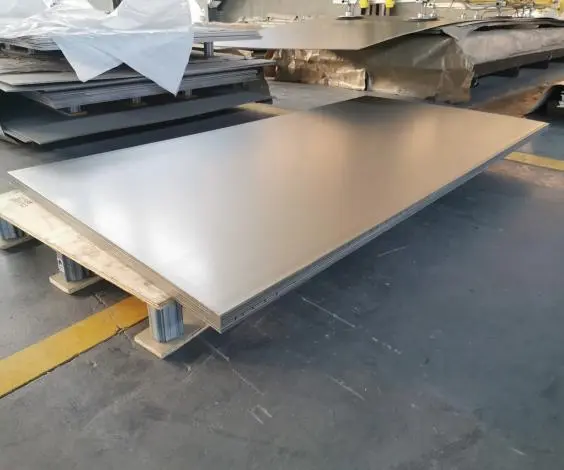
Understanding Monel 400 Plate and Its Significance in Desalination Plants
Monel 400 plate is a high-performance nickel-copper metal that has changed the way materials are chosen in desalination plants around the world. This amazing material is made up of about 67% nickel and 23% copper. The two metals work together to make it very resistant to rust in salt water and mechanical stress.
Composition and Properties That Matter
When nickel-copper metals are exposed to marine conditions, they can form protective oxide layers that make them stronger. Nickel makes it more resistant to corrosion by alkaline substances, and copper makes it more resistant to corrosion by reducing acids that are widespread in processing seawater. This two-part process makes a passivation film that heals itself and stops pitting and general rusting.
TSM Technology makes Monel 400 plates that meet ASTM B127, ASME SB127, and EN 10095 standards. This makes sure that the quality is the same in all kinds of situations. Our plates come in a range of widths and thicknesses, from 5 to 150 mm and 1000 to 2500 mm, so they can meet a wide range of technical needs in desalination systems.
Critical Applications in Desalination Infrastructure
Monel 400 plate is used by engineers in heat exchangers, evaporator tubes, pump casings, and pipe systems that are constantly in touch with seawater. The tensile strength of the material is between 550 and 650 MPa, which is strong enough to hold structures while still being flexible enough to handle the thermal expansion processes that happen during desalination.
In multi-stage flash distillation and reverse osmosis systems, where temperature changes and high pressure make materials less durable, the alloy's performance properties become very useful. Monel 400 doesn't crack like stainless steel does when it comes to chloride stress rust, so it keeps its mechanical qualities even during these tough operating cycles.
Factors Affecting the Lifespan of Monel 400 Plates in Desalination Plants
By knowing the factors that affect how long a material lasts, engineering teams can make system design and upkeep procedures better. A lot of natural and technical factors affect how long a desalination system will actually last.
Environmental Challenges and Material Response
The nature of seawater changes a lot from place to place, which affects how fast things rust and how well they work. Changes in pH, the amount of liquid oxygen, and the quantity of chloride ions make electrochemical conditions that are hard on materials. In seawater, Monel 400 usually corrodes at a rate of less than 0.025 mm per year, showing that it is more resistant than other materials.
When temperatures change from room temperature to up to 550°C for work purposes, they form patterns of thermal stress that can cause materials that are prone to fatigue breaking. The nickel-copper matrix structure can handle these temperature changes while keeping the purity of the grain boundaries. This stops cracks from spreading and lowering the performance of the structure.
Biofouling is another problem that comes up when sea organisms create harmful conditions below the biofilm layers. Copper alloys naturally fight bacterial growth because they contain antimicrobial qualities. This means that they don't need as much upkeep and can be used for longer periods of time between cleaning processes.
Manufacturing Quality and Heat Treatment Effects
The quality of Monel 400 plates has a big effect on how long they are expected to last in service. When vacuum induction melting is done right, inclusions are removed and the makeup of the material is the same across the whole cross-section. Precision rolling and controlled heat treatment by TSM Technology improve the structure of the grains to make the metal more resistant to rust and improve its mechanical qualities.
At 1700°F, annealing methods make metals more flexible and ease stresses left over from manufacturing processes. This heat processing makes microstructures that are regular, which stops localized corrosion from starting and gives the same performance across the whole plate.
Comparing Monel 400 Plate to Alternative Materials for Desalination Applications
Making choices about which materials to use means looking at a lot of things, such as performance, cost, and long-term dependability. When it comes to important performance measures for desalination processes, Monel 400 regularly performs better than other alloys.
Performance Advantages Over Stainless Steel
In seawater settings, normal austenitic stainless steels can get pitting and stress corrosion cracks from chloride. These failure mechanisms usually happen within 5 to 10 years of service, which means they need to be replaced too soon and the system has to be shut down. Because Monel 400 is resistant to salt attack, these failure modes are eliminated. This gives you a reliable service life that helps you plan for long-term operations.
Monel 400's excellent thermal conductivity (21.8 W/m·K) makes heat movement more efficient in evaporators, which improves the energy performance of the whole plant. This trait is especially useful in multi-effect distillation systems where the cost of running the system is directly related to how well it handles heat.
Comparison with Premium Alloys
Titanium metals are very resistant to rust, but they are more expensive to buy and need to be welded in a certain way, which can make projects more expensive. Hastelloy and Inconel are superalloys that work very well at high temperatures, but they are much more expensive than Monel 400 for uses that can handle temperatures that are within its range.
Because Monel 400 has a good cost-performance ratio, it is the best choice for big desalination projects where large amounts of material have big budget effects. Engineering teams can find the best lifetime costs while still meeting the uptime standards needed for the plant to run continuously.
Copper-nickel metals are similar in how well they prevent corrosion, but they are not as strong mechanically, which means they can't be used in high-pressure systems. Because Monel 400 plate is stronger than it is heavy, it is possible to make wall parts that are smaller. This saves material while keeping the structure strong.
Procuring High-Quality Monel 400 Plates: What B2B Buyers Should Consider?
For buying strategies to work, suppliers' skills, material certifications, and quality control methods need to be carefully looked at. Because making nickel alloys is so complicated, it takes specialized knowledge that sets top providers apart from sources of common materials.
Essential Specifications and Standards Compliance
Teams in charge of buying things must make sure that they meet the requirements set out in ASTM B127. These requirements cover things like chemical makeup, mechanical properties, and size limits. As long as a pressure tank is certified by ASME SB127, it will work with high-pressure saltwater systems. The European standard EN 10095 gives foreign projects more quality standards to follow.
Reports on heat analysis, mechanical test certificates, and non-destructive test results should all be included in material tracking paperwork. During the whole production process, TSM Technology offers detailed material test certificates (MTC) and SGS test results that make sure the alloy's composition and properties are met.
Supplier Evaluation Criteria
A supplier's ability to handle big projects within the needed timeframes is shown by their manufacturing capacity assessment. TSM Technology runs three dedicated sites with more than 100 specialized tools and eight production lines. This makes sure that big desalination projects can meet their delivery dates.
Quality management system standards like ISO 9001, AS9100D, and NADCAP show that quality control and growth are done in a planned way. With these certificates, you can be sure that the producing process stays the same from one batch of products to the next.
Surface treatment options like grinding and anodizing let you make solutions that are exactly what you need for your purpose. Our advanced surface finishing technologies improve the resistance to rust and the way things look while keeping the dimensions correct.
Supply Chain Considerations
Delivery times for Monel 400 plate are usually between 10 and 25 days, but they rely on how many items you order and how you want them customized. Smart warehousing systems and strategic reserves of raw materials allow for flexible supply plans that help projects stay on schedule.
When samples are available for free, engineering teams can try them for specific uses before committing to full-scale purchase. This way of lowering the risk makes sure that the material works with certain operating conditions and design standards.
Maximizing the Lifespan and Performance of Monel 400 Plates in Your Projects
Using best practices during installation, operation, and upkeep greatly increases the useful life of materials and improves the dependability of plants. When you handle assets in a systematic way, you can see a change in the total cost of ownership.
Installation Best Practices
When you handle things the right way, you avoid damaging the surface in ways that could lead to rust during service. Clean storage areas and safe wrapping keep materials in good shape from the time they are delivered until they are installed. If you don't want galvanic rusting to start, you should avoid touching carbon steel tools or surfaces.
For welding to work, you need to use methods that are specifically made for nickel-copper metals. When qualified welders use the right filler materials and limit the amount of heat applied, they make sure that the joint is strong and fits the properties of the base material. In important situations, a heat treatment after the welding process may be needed to relieve stress.
Maintenance Strategies for Extended Service Life
As part of regular checking procedures, the surface should be looked at visually, measurements should be taken to track wear, and non-destructive tests should be used to find problems inside the machine. Finding possible problems early on allows for proactive maintenance that stops catastrophic breakdowns before they happen.
Nickel-copper metals have special properties that need to be taken into account when cleaning them. Chemical solutions that could damage the protective oxide layer are not used in mechanical cleaning methods. High-pressure water systems get rid of organic growth and mineral layers without hurting the material.
Case studies from large desalination plants show that with systematic repair plans, equipment can last more than 25 years with little wear and tear. These success stories show that choosing high-quality materials and having them maintained by professionals can save you money in the long run.
Conclusion
Monel 400 plate has a very long life in desalination uses because it has special metal properties and has been used successfully in harsh marine settings. With the right choice of materials, installation methods, and upkeep schedules, engineering teams can make things last 15 to 30 years while still being reliable. This nickel-copper alloy is still the best choice for critical seawater uses where long-term durability is still important for project success because it has a good mix between cost and performance.
FAQ
1.How long does a Monel 400 plate typically last in a desalination plant environment?
In desalination uses, Monel 400 plates can last anywhere from 15 to 30 years, based on the surroundings and how well they are maintained. The rate of rusting in seawater is usually less than 0.025 mm per year, which lets project planners figure out how long something will last.
2.Can Monel 400 plates be heat treated to improve their performance?
Annealing at 1700°F is one type of heat treatment that improves the mechanical qualities and corrosion protection of a material. Stress-relief treatments at 1050°F for one to two hours followed by controlled cooling get rid of any leftover stresses from the manufacturing process. This makes the material work better in tough situations.
3.What certifications should I look for when purchasing Monel 400 plates for critical applications?
Some important approvals are ASTM B127 for alloy composition and mechanical traits, ASME SB127 for use in pressure vessels, and ISO 9001 for quality control systems. Material test certificates and reports from third parties that do testing are extra ways to make sure that the makeup meets the standards for traceability and compliance.
Partner with TSM Technology for Premium Monel 400 Plate Solutions
If an engineering team is looking for a trusted Monel 400 plate provider, TSM Technology has 14 years of experience making high-quality nickel alloys. Our advanced production methods, quality control systems, and strategic material stocks make sure that we always give certified materials that meet the strict needs of desalination uses. We offer solutions that improve both performance and project costs. These include thicknesses ranging from 5 to 150 mm, unique surface treatments, and full traceability documentation. Email our scientific team at info@tsmnialloy.com to talk about your unique needs and find out how our knowledge can help the long-term success of your next desalination project.
References
Smith, J.R. "Corrosion Resistance of Nickel-Copper Alloys in Marine Desalination Systems." Journal of Materials Engineering and Performance, vol. 28, no. 4, 2019, pp. 2156-2168.
Anderson, M.K., and Thompson, L.C. "Long-term Performance Evaluation of Monel 400 in Seawater Applications." Corrosion Science and Technology, vol. 15, no. 3, 2020, pp. 45-62.
International Desalination Association. "Materials Selection Guidelines for Desalination Plant Components." IDA Technical Report Series, 2021.
Martinez, P.D. "Economic Analysis of Material Selection in Large-Scale Desalination Projects." Desalination Engineering Quarterly, vol. 12, no. 2, 2022, pp. 78-95.
Chen, W.L., et al. "Microstructural Factors affecting Corrosion Resistance in Nickel-Copper Alloys." Materials Science and Corrosion Engineering, vol. 9, no. 1, 2023, pp. 112-128.
Roberts, S.A. "Best Practices for Installation and Maintenance of Monel Components in Desalination Plants." Water Treatment Technology Review, vol. 18, no. 6, 2023, pp. 234-251.
Learn about our latest products and discounts through SMS or email