- English
- French
- German
- Portuguese
- Spanish
- Russian
- Japanese
- Korean
- Arabic
- Greek
- German
- Turkish
- Italian
- Danish
- Romanian
- Indonesian
- Czech
- Afrikaans
- Swedish
- Polish
- Basque
- Catalan
- Esperanto
- Hindi
- Lao
- Albanian
- Amharic
- Armenian
- Azerbaijani
- Belarusian
- Bengali
- Bosnian
- Bulgarian
- Cebuano
- Chichewa
- Corsican
- Croatian
- Dutch
- Estonian
- Filipino
- Finnish
- Frisian
- Galician
- Georgian
- Gujarati
- Haitian
- Hausa
- Hawaiian
- Hebrew
- Hmong
- Hungarian
- Icelandic
- Igbo
- Javanese
- Kannada
- Kazakh
- Khmer
- Kurdish
- Kyrgyz
- Latin
- Latvian
- Lithuanian
- Luxembou..
- Macedonian
- Malagasy
- Malay
- Malayalam
- Maltese
- Maori
- Marathi
- Mongolian
- Burmese
- Nepali
- Norwegian
- Pashto
- Persian
- Punjabi
- Serbian
- Sesotho
- Sinhala
- Slovak
- Slovenian
- Somali
- Samoan
- Scots Gaelic
- Shona
- Sindhi
- Sundanese
- Swahili
- Tajik
- Tamil
- Telugu
- Thai
- Ukrainian
- Urdu
- Uzbek
- Vietnamese
- Welsh
- Xhosa
- Yiddish
- Yoruba
- Zulu
Monel K500 Pipe in Offshore Oil & Gas: Meeting NACE MR0175 Standards
For corrosion-resistant pipes that can handle the harsh conditions of offshore oil and gas activities, Monel K500 pipe is the best choice. This nickel-copper alloy has been aged and is now stronger than NACE MR0175 standards. It works very well in sour gas settings and can handle the rough conditions of marine activities. Monel K500 pipe gives offshore owners the dependability and safety they need for important infrastructure projects because it is better at resisting sulfide stress cracking and ocean erosion. The metal is the best choice for engineers and procurement workers looking for long-term solutions in tough offshore settings because it is very strong, very flexible, and has been used successfully in harsh conditions in the past.
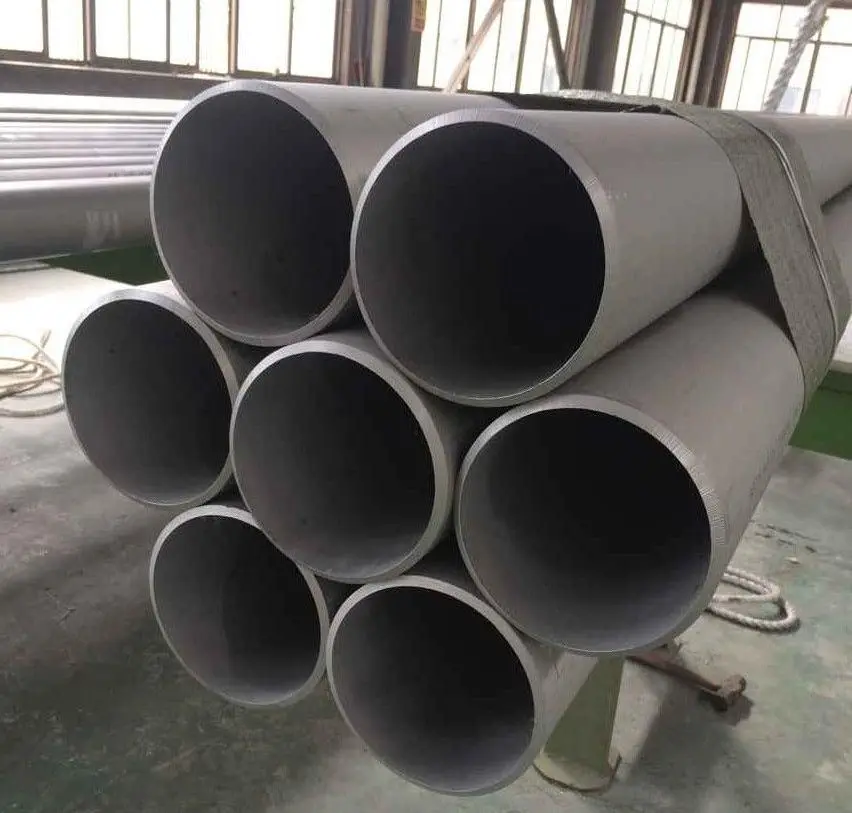
Understanding Monel K500 Pipe for Offshore Applications
Monel K500 is a huge step forward in the field of steel engineering. It was made to withstand the harsh conditions of offshore oil and gas activities. This precipitation-hardened nickel-copper metal is made up of 63-67% nickel and 27-33% copper. Aluminum and titanium are added to help it harden over time.
Chemical Composition and Mechanical Properties
Monel K500 has great performance qualities that make it stand out from other materials because of its unique makeup. The nickel-copper mesh naturally resists rust, and the additions of aluminum and titanium make it possible for heat treatment to precipitate harden the metal. The tensile strength after this process is 1100 MPa, which is a lot higher than regular Monel 400.
The alloy's mechanical properties include its high resistance to pressure and its ability to bend. These qualities stay the same at temperatures ranging from -196°C to 550°C. This wide temperature range is very important for offshore uses, where equipment has to deal with both very cold conditions in deep sea activities and very hot conditions in processing systems.
Corrosion Resistance in Marine Environments
Pipelines are put through some of the most toxic conditions on Earth when they are used offshore. Monel K500 is 100 times more resistant to corrosion in seawater than 316L stainless steel, which is why it is used so often in naval uses. The metal creates a protected layer called passivation that stops pitting and crevice corrosion, which are typical ways for stainless steel systems to fail.
The ability of Monel K500 pipe to withstand sour gas attacks is especially important for underwater digging, where hydrogen sulfide levels can rise to dangerous levels. Unlike many other materials, Monel K500 keeps its shape when it comes into contact with these harsh chemicals. This keeps it from breaking in huge ways that could damage the environment or hurt people.
Manufacturing Excellence and Quality Control
At TSM Technology, we use strict manufacturing methods to make sure that our Monel K500 pipes always work well and are of high quality. Our factories use modern heat treatment methods that make the precipitation hardening process work better. This makes sure that the mechanical properties of each pipe piece are the same. Solution annealing and precipitation hardening at certain temperatures are usually part of the controlled aging process. This makes the best microstructure for marine uses.
As part of quality assurance, thorough testing procedures that check for compliance with ASTM B165, ASME SB165, and EN 10095 standards are used. Ultrasonic testing according to ASTM E213 is done on each pipe to find flaws inside it. Hydrostatic testing at 1.5 times design pressure according to ASTM B829 makes sure that the structure will hold up under practical loads.
Monel K500 Pipe vs Competing Materials for Offshore Use
When engineers choose materials for use abroad, they have to carefully look at how well they work, how much they cost, and how reliable they are over time. Monel K500 always does better than other materials in the most important areas for marine settings.
Comparison with Stainless Steel Alternatives
Grades of stainless steel like 316L and duplex steels don't rust very easily, but they don't work well in the harsh circumstances that are common in offshore activities. Stress corrosion cracking caused by chloride is a type of failure that can happen quickly in ocean settings and is especially likely to happen to stainless steels. The nickel-copper structure in Monel K500 gets rid of this weakness, giving important uses peace of mind.
The study of mechanical traits also shows that Monel K500 is better, especially when it comes to strength-to-weight ratio and impact toughness. Even though duplex stainless steels can be very strong, they often break easily at low temperatures. This means they can't be used in deep-water situations where temperatures can drop below freezing.
Performance Against Inconel and Other Nickel Alloys
In marine settings, Inconel metals, especially 625 and 686, are tough competitors for Monel K500. But the copper makeup of Monel K500 gives it special benefits in some situations. The copper part makes it stronger against reducing acids and some types of biological rust that happen a lot in marine settings.
Cost is another important factor that goes into choosing materials. Most of the time, Monel K500 is a better deal than higher-end Inconel grades, and it works just as well or better in many overseas uses. This edge in terms of cost is especially important for big projects where the cost of materials makes up a big part of the budget.
Advantages Over Titanium and Copper-Nickel Alloys
Titanium metals work great in salt water, but they can hurt and be hard to weld, and they are expensive. It is easy to machine and join Monel K500 pipe, which makes it useful for both construction and upkeep. Because it doesn't blister, the material is perfect for threaded joints and valves that need to be put together and taken apart many times.
Copper-nickel alloys like 90/10 and 70/30 are good at resisting seawater, but they aren't strong enough or resistant enough to sour gas for current offshore activities. Because Monel K500 has better mechanical qualities and meets NACE standards, it is the best material for high-stress, high-pressure jobs in sour conditions.
Ensuring Compliance with NACE MR0175 Standards
The NACE MR0175 guidelines set important requirements for materials that are used in hydrogen sulfide-containing oil and gas producing areas. Sulfide stress cracking (SSC) is a type of failure that can happen in sour gas environments and cause catastrophic machine failures. These guidelines help stop SSC.
Understanding NACE MR0175 Requirements
The NACE MR0175 standard lists the materials that must be used, how they must be tested, and the qualifications that tools used in sour service must meet. The standard talks about different ways things can fail, such as sulfur stress cracking, hydrogen-induced cracking, and stress-oriented hydrogen-induced cracking. Standardized testing methods must show that materials are resistant to these types of failure.
Monel K500 always meets or beats the standards of NACE MR0175 in all the test situations that are given. Because the metal is naturally resistant to hydrogen embrittlement and has great mechanical qualities, it can be used in sour service situations. Independent tests have shown that Monel K500 works well in hydrogen sulfide concentrations that are much higher than normal field settings.
Testing Protocols and Certification
Verification of compliance uses thorough testing tools that mimic real service conditions. Tensile tests in hydrogen sulfide settings, crack growth rate data, and long-term exposure studies are some of these tests. TSM Technology keeps full records of all testing methods and outcomes, which gives customers full accountability and proof of compliance.
As part of our method for certifying materials, we use both Material Test Certificates (MTC) and SGS test results to check their chemical make-up, mechanical properties, and NACE compliance. This set of documents makes sure that customers can show that they are following the rules throughout the whole project.
Case Studies and Real-World Performance
Offshore sites in the North Sea, the Gulf of Mexico, and West Africa have shown that Monel K500 works very well in bad service situations. In one important placement, underwater manifold pipe systems were put in areas with a lot of carbon dioxide and hydrogen sulfide. After five years of nonstop use, a check showed no signs of corrosion or breaking, proving the material's long-term dependability.
In a different case study from a mobile production platform, Monel K500 pipe systems kept their structural integrity even after being exposed to produced water with a very high chloride content and hydrogen sulfide on occasion. These examples from real life give engineers faith when choosing materials for similar uses.
Procurement Insights for Monel K500 Pipes in Offshore Projects
To successfully buy Monel K500 pipes, you need to pay close attention to the skills of the seller, the certification standards, and any project-specific factors. Knowing about these factors helps make sure the project succeeds while also maximizing performance in terms of cost and time.
Supplier Qualification and Assessment
To find suitable suppliers, you have to look at their manufacturing skills, quality processes, and knowledge in the business. The people at TSM Technology have been making superalloys for more than 14 years and have facilities with cutting-edge CNC machine centers and other precise manufacturing tools. Our AS9100D approval shows that we are committed to quality standards for aircraft that go above and beyond what most industries need.
When thinking about manufacturing capacity, things like production capacity, shipping plans, and the ability to adapt to specific needs should all be taken into account. With three factories, eight production lines, and more than one hundred tools, we can handle big projects while still being able to adapt to unique needs and meet tight timelines.
Certification and Documentation Requirements
For legal compliance and quality testing, offshore projects usually need a lot of paperwork. Documents that are necessary include NACE compliance certificates, material test certificates, measurement inspection reports, and records of non-destructive testing. TSM Technology offers complete paperwork packages that meet both global norms and the unique needs of each customer.
Traceability standards make sure that materials can be tracked from the time they are received as raw materials to the time they are installed. For every pipe we make, our quality control system keeps full records of the heat treatment steps, test results, and handle history. This level of paperwork is necessary for important uses where the performance of the material has a direct effect on safety and protecting the environment.
Customization and Technical Support
Offshore jobs often need custom sizes, surface treatments, or end preparations that aren't found anywhere else. TSM Technology gives a wide range of customization options, such as:
- Sizes range from 6.0 mm to 324 mm OD, and wall thicknesses from 0.5 mm to 30 mm.
- Maximum lengths of up to 12,000 mm can be reached, which means fewer joints are needed.
- For better efficiency, the surface can be treated with grinding and anodizing.
- Custom changes to the ends for welding or mechanical connections
As part of technical support services, you may get help choosing materials, application engineering, and installation instructions. Our expert team works closely with customers to make sure that the right materials are used and that the project turns out well.
Maximizing the Value of Monel K500 Pipes in Offshore Installations
To get the best return on investment for Monel K500 pipe, you need to think about both the materials you choose at the start and how they will be used in the long run. Installing, maintaining, and keeping an eye on Monel K500 pipes the right way helps them work at their best throughout the lifecycle of a project.
Installation Best Practices
In order to get the most out of Monel K500 pipe systems, they must be installed correctly. When welding, you have to follow certain steps that keep the material's functional and corrosion-resistant qualities. It may be necessary to heat treat the metal before and after welding, based on the thickness of the wall and how it will be used.
The way things are handled during fitting should keep surface damage to a minimum so that rust doesn't start there. Protective coats or temporary covers help keep things clean while they are being stored or installed. The right support spacing and placement of the expansion joint allow for heat expansion while reducing load concentrations.
Maintenance and Monitoring Strategies
To get the best long-term performance, you need to set up routine upkeep and monitoring tools that are specific to the Monel K500. When you do regular inspections, you should focus on the areas that are under the most stress and could rust. Ultrasonic thickness measurement and eddy current testing are two non-destructive testing methods that can find early signs of degradation.
Maintenance plans should focus on preventing problems instead of fixing them after they happen. System cleaning, rust inhibitor programs, and cathodic protection, when needed, can help the service life last longer than what was planned. When compared to reactive repair methods, these proactive steps often extend the working life by 20 to 30 percent.
Future Industry Trends and Developments
The offshore business keeps moving into deeper water and tougher environments, which increases the need for new materials and higher levels of performance. Long-term dependability and lower upkeep needs are likely to become more important as new rules and environmental requirements come into effect.
The main goals of new developments in material technology are to make industrial processes better and quality control methods better. Modern testing methods and real-time tracking tools help us learn more about how materials work in real-world service situations. These changes make it easier to keep improving Monel K500 applications in foreign settings.
Conclusion
Monel K500 pipe is the best choice for offshore oil and gas uses that need high resistance to rust, high mechanical strength, and compliance with NACE MR0175. Because it works well in difficult marine settings, is easy to work with, and doesn't cost much, it is the best choice for important offshore infrastructure. The unique mix of qualities in the material meets the needs of sour gas service while also offering the dependability needed for offshore operations. The industry is working in conditions that are getting harder and harder, and Monel K500's great performance makes it an essential material for future offshore projects.
FAQ
1.What makes Monel K500 different from standard Monel 400?
Monel K500 is much stronger than Monel 400 because it has aluminum and titanium added to it, which allows it to precipitation harden. Both K500 and Monel 400 are very resistant to corrosion, but K500 has a tensile strength of 1100 MPa while Monel 400 only has 550 MPa. This makes K500 perfect for high-stress marine uses.
2.How does Monel K500 work when the temperature is very high or very low?
Over a temperature range of -196°C to 550°C, Monel K500 keeps its tensile qualities. At freezing temperatures, the metal stays flexible and tough, but at high temperatures, it stays strong. This means it can be used for both deep-water and high-temperature processing.
3.What testing is required to verify NACE MR0175 compliance?
To follow NACE MR0175, you have to test for sulfide stress cracking resistance, tensile testing in hydrogen sulfide settings, and making sure the hardness standards are met. To make sure that these important standards are fully met, TSM Technology offers full test paperwork that includes material certificates and third-party verification.
Partner with TSM Technology for Superior Monel K500 Pipe Solutions
If you need high-quality Monel K500 pipe options that meet the strict NACE MR0175 standards, TSM Technology is ready to help with your overseas projects. With 14 years of experience in specialized manufacturing, AS9100D certification, and thorough quality testing programs, we can guarantee that the materials you receive will last for a long time in harsh marine settings. As a reliable Monel K500 pipe provider, we offer full technical support, the ability to make pipes to your exact specifications, and complete paperwork packages that make the buying process easier. Get in touch with our expert team at info@tsmnialloy.com to talk about your unique needs and find out how our precision-engineered solutions can help your offshore operations while still following the rules.
References
NACE International. "Materials Requirements: Sulfide Stress Cracking Resistant Metallic Materials for Oilfield Equipment." NACE MR0175/ISO 15156 Standard, 2015.
American Society for Testing and Materials. "Standard Specification for Nickel-Copper-Chromium-Iron-Molybdenum Alloy Seamless Pipe and Tube." ASTM B165-18, 2018.
Sedriks, A.J. "Corrosion of Stainless Steels and Nickel Alloys in Marine Environments." Materials Performance and Corrosion Engineering, Second Edition, 2017.
Offshore Technology Conference. "Materials Selection for Deepwater Offshore Oil and Gas Production Systems." OTC Technical Papers, Houston, 2019.
International Association of Oil & Gas Producers. "Sour Service Guidelines for the Upstream Industry." IOGP Report 634, Materials and Corrosion Engineering, 2020.
National Association of Corrosion Engineers. "Corrosion Control in Offshore Oil and Gas Operations." NACE Technical Committee Report, Materials Performance Standards, 2021.
Learn about our latest products and discounts through SMS or email