- English
- French
- German
- Portuguese
- Spanish
- Russian
- Japanese
- Korean
- Arabic
- Greek
- German
- Turkish
- Italian
- Danish
- Romanian
- Indonesian
- Czech
- Afrikaans
- Swedish
- Polish
- Basque
- Catalan
- Esperanto
- Hindi
- Lao
- Albanian
- Amharic
- Armenian
- Azerbaijani
- Belarusian
- Bengali
- Bosnian
- Bulgarian
- Cebuano
- Chichewa
- Corsican
- Croatian
- Dutch
- Estonian
- Filipino
- Finnish
- Frisian
- Galician
- Georgian
- Gujarati
- Haitian
- Hausa
- Hawaiian
- Hebrew
- Hmong
- Hungarian
- Icelandic
- Igbo
- Javanese
- Kannada
- Kazakh
- Khmer
- Kurdish
- Kyrgyz
- Latin
- Latvian
- Lithuanian
- Luxembou..
- Macedonian
- Malagasy
- Malay
- Malayalam
- Maltese
- Maori
- Marathi
- Mongolian
- Burmese
- Nepali
- Norwegian
- Pashto
- Persian
- Punjabi
- Serbian
- Sesotho
- Sinhala
- Slovak
- Slovenian
- Somali
- Samoan
- Scots Gaelic
- Shona
- Sindhi
- Sundanese
- Swahili
- Tajik
- Tamil
- Telugu
- Thai
- Ukrainian
- Urdu
- Uzbek
- Vietnamese
- Welsh
- Xhosa
- Yiddish
- Yoruba
- Zulu
Monel K500 vs Inconel 625: Key Differences in Properties and Applications
To choose between Inconel 625 and Monel K500, you need to know how well each nickel-based metal works in certain situations. Monel K500 tube works very well in coastal and saltwater settings because it is very resistant to rust caused by chloride and has very high mechanical strength after precipitation hardening. In contrast, Inconel 625 is used a lot in high-temperature situations where heat stability and resistance to rust are important. Both materials are used in the aerospace, petrochemical, and power generation industries, but their different metallurgical properties mean that procurement professionals and materials engineers need to carefully consider how to use them to get the best performance, durability, and cost-effectiveness in harsh industrial settings.
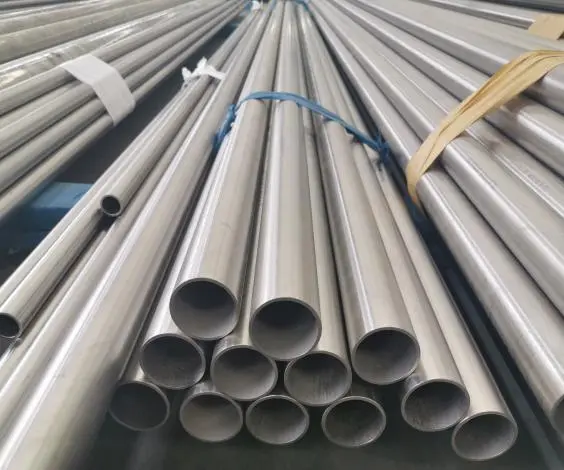
Understanding the Material Properties of Monel K500 and Inconel 625
Chemical Composition and Metallurgical Characteristics
Monel K500 is a precipitation-hardened nickel-copper metal that has about 63-67% nickel and 27-33% copper. It can age-harden because it also has aluminium and titanium in it. After the right heat treatment, this mixture, which meets UNS N05500 norms, has a tensile strength of about 1100 MPa. The metal stays structurally sound from very cold temperatures (-196°C) to about 550°C, which makes it useful in a wide range of situations.
As a solid-solution stronger superalloy, Inconel 625 is a different way to work with metals. Nickel is the main element in its make-up, with chromium (20–23%), molybdenum (8–10%), and niobium (3.15–4.15%) adding to its strength. When these elements are put together, they make a material that is very resistant to weathering and keeps its mechanical qualities at temperatures above 980°C. The molybdenum presence makes it more resistant to pitting and crevice corrosion in salt settings. Niobium, on the other hand, makes it stronger without the need for precipitation hardening.
Mechanical Strength and Performance Parameters
Because of how they are strengthened, these metals have very different mechanical properties. Monel K500 gets its extra strength from intermetallic phases that are managed to form during the ageing process. After being heated in a solution at 900–980°C and then aged at 540–650°C, the material becomes about HRC 35 hard and its yield strength reaches 750 MPa. This process turns the annealed material, which is pretty soft, into a high-strength part that can handle big mechanical loads and cycle stresses.
Inconel 625 is strong and flexible at the same time because it uses solid-solution thickening instead of precipitation hardening. The alloy's tensile strength is usually between 830 and 930 MPa at room temperature, but its most important property shows up at high temperatures. Monel K500 starts to lose its strength above 500°C, but Inconel 625 keeps most of its mechanical qualities well past 800°C. This makes it essential for gas engine parts, heat processing equipment and nuclear plant uses that are exposed to high temperatures for long periods of time.
Corrosion Resistance Profiles
In real life, the corrosion resistance of these materials sets them apart. Monel K500 is very resistant to ocean and coastal atmospheres. It works better than most stainless steels in places with a lot of salt. The high copper content naturally protects against biofouling and stress-corrosion cracks in systems that use saltwater. Nickel-copper tubing is perfect for marine heat exchangers, refrigeration equipment, and parts of offshore platforms that will be exposed to seawater for a long time because of this property.
Inconel 625, compared to Monel K500 tube, is more resistant to rust in a wider range of chemical conditions. Its chromium content creates an oxide layer that protects against oxidising acids, and its molybdenum content protects against reducing acids and chloride solutions. It can handle hydrofluoric acid, phosphoric acid, and other chemical acids better than Monel K500. Even in high-temperature chloride settings, stress-corrosion cracking resistance is very good. This is a very important benefit for petroleum processing units and gas turbine exhaust systems, where both temperature and corrosive species can be hard on materials.
Key Applications Where Monel K500 and Inconel 625 Tubes Excel?
Marine and Offshore Engineering Applications
Materials that can stand up to constant contact to salt water are needed in marine settings. The outside width of Monel K500 tubes can be between 6.0 and 114 mm, and the wall thickness can be between 0.5 and 15 mm. These tubes meet strict standards for propeller shafts, pump housings, and seawater cooling systems. The alloy's nonmagnetic features keep guidance equipment from getting messed up, and shipbuilders like how it doesn't wear down easily in high-speed water flow uses.
Nickel-copper pipes are used a lot on offshore oil platforms to move water, process hydrocarbons, and support the structure. When you combine mechanical strength with rust resistance, you can make wall parts that are smaller than with regular materials. This cuts down on weight without lowering safety standards. In splash zones, where wet and dry cycles speed up rust, Monel K500 works better than duplex stainless steels. It also has better wear resistance when exposed to wave-induced shocks and heat cycling.
Aerospace and Defense Industry Requirements
Aerospace companies choose materials based on strict performance factors, such as having a high strength-to-weight ratio, being stable at high and low temperatures, and having quality records that can be tracked. Inconel 625 tubing is used in important places like fuel lines, exhaust systems and parts of aeroplane engines that are heated above what most metals can handle. The material doesn't scale at high temperatures because it doesn't react to oxidation. This means that the dimensions and flow properties stay the same over time. Certification that meets flight standards makes sure that every batch meets strict requirements for chemical make-up, mechanical features, and internal health, which is checked using ultrasound and radiography methods.
For defence purposes, materials must be able to work effectively in harsh circumstances. Monel K500 is used in parts of landing gear, stopping gear systems for aircraft ships, and submarine hull penetrations where it has to deal with high mechanical loads and seawater resistance. The precipitation-hardened state gives yield strength similar to many steels while keeping great low-temperature toughness, which is very important for equipment that works in the cold or at high elevations.
Chemical Processing and Petrochemical Industries
Acidic, alkaline, and mixed-chemistry process streams can cause a lot of different kinds of rust problems in chemical plants and refineries. Inconel 625 tubing is used in hydrofluoric acid alkylation units, sulphuric acid concentrators, and phosphoric acid evaporators, all of which could have catastrophic spills if the material failed. The metal doesn't need to be heated after welding to stop intergranular rust, which makes it easier to make things and fix things. This superalloy keeps surfaces of heat exchanger tubes cleaner for longer than other materials, which lowers fouling and increases thermal efficiency over longer service intervals.
In chemical processing, Monel K500 tube is used for neutral to alkaline solutions, especially those that contain chlorides. The alloy's unique resistance profile makes it useful for brine evaporators, salt production facilities, and chlorine water systems. When made from the right nickel-copper metals, process pipes that move seawater for cooling, deal with crude oil that is high in salt, or handle wastewater that has changing chemicals will work reliably. The substance can fight off both uniform corrosion and localised attack types, such as pitting and fissure corrosion.
Power Generation and Energy Sector Deployment
Power plants, whether they use nuclear, fossil fuel, or green energy, need materials that can stand up to harsh conditions. In nuclear plants, Inconel 625 tubes are used in steam generators, in coal-fired boilers' superheater sections and in combined-cycle gas turbines' high-pressure pipes. The metal doesn't grow at temperatures where stress breakage needs to be taken into account in the design process. This means that the dimensions stay the same even after decades of constant use. During restart and shutdown, thermal cycle puts parts under repeated stress, but the wear resistance of the superalloy stops cracks from starting and spreading.
Getting energy from geothermal sources is hard because the fluids are acidic and contain minerals and gases that are dissolved in them. Monel K500 wellhead parts and production tubes can handle the chloride-rich brines that are found in geothermal sources. Strength and resistance to rust work together to make patterns that use the least amount of material while still being highly reliable. Material choice has a direct effect on lifetime costs through shorter repair times, fewer unexpected shutdowns, and longer equipment service life. This is becoming more and more clear to buying teams in the energy industry.
Comparing Monel K500 vs Inconel 625: Procurement and Cost Considerations
Material Cost Factors and Market Dynamics
People who work in procurement have to deal with complicated price systems that are affected by the cost of raw materials, the difficulty of making something, and factors in the supply chain. Inconel 625 usually costs more because it is a superalloy and has special melting needs because it has more nickel in it. The extra alloying elements, like molybdenum and niobium, and the controlled processes needed to get uniform qualities both add to the cost of the material. During times of high industrial activity, market demand from the energy and military sectors puts pressure on prices.
In situations where its efficiency is good enough, Monel K500 tube is cheaper than other materials. Nickel-copper alloys are usually cheaper than complex superalloys because their base makeup is easier, even though they need to be precipitation-hardened. There are ways to save money when you buy in bulk, especially when you buy standard tube sizes that meet ASTM B163/ASME SB163 and ASTM B165/ASME SB165 standards. When buyers compare the original cost of a material to its total lifetime costs, they often find that picking the right metal, rather than the cheapest one, gives them better value through longer service life and less upkeep.
Supply Chain and Lead Time Management
Changes in the global supply chain affect when materials are available and when they will be delivered. Long wait times can be less of a problem if you work with qualified makers like TSM Technology, which keeps a large collection of products with a wide range of specs and wall thicknesses. Most of the time, standard seamless tubes can be shipped faster than soldered or custom-processed versions. Longer purchase processes are needed for projects that need custom sizes, specific heat treatment conditions, or extra processing services like cutting, bending, or welding.
To make sure that goods get to where they need to go on time, international buying teams work with providers that offer reliable global transport. Custom Monel K500 tubes with specific size needs or metalworking conditions usually take 4 to 8 weeks to deliver from the time the order is placed, based on production plans and inventory levels. Planning purchase activities around project timelines avoids expensive delays and gives enough time for quality control checks, document verification, and review of arriving materials before they are used in production or installation.
Quality Assurance and Certification Requirements
For buying to be reliable, there must be strict quality paperwork. Materials that are going to be used in space, nuclear power plants, or pressure vessels need to be fully traceable from the heat of the raw material to the finished product. The chemical makeup, mechanical property test results, and non-destructive study findings in mill test records are all important pieces of quality proof. Third-party inspection services provide independent confirmation when project requirements call for more control than what is provided by the maker.
Acceptance criteria, such as required surface finish, measurement limits, and testing methods, should be clearly spelt out in the procurement specs. In smooth tube goods, ultrasonic testing finds internal breaks, and in welded designs, radiography examination confirms the stability of the weld. Knowing how the manufacturing method, product shape, and application needs are connected helps people make smart purchasing choices. When buyers work with experienced sellers, they get access to technical knowledge that helps them understand design needs, find the right product forms, and make sure that they are in line with industry standards and their own quality control systems.
Conclusion
Before choosing between Monel K500 and Inconel 625, you need to know a lot about the pros and cons of each metal. Monel K500 tube is very useful in coastal, offshore, and moderate-temperature settings where it needs to be resistant to rust in salt water and strong. Inconel 625 is used in high-temperature areas that need more rust protection and thermal stability than Monel K500 can provide. Instead of just looking at the original cost of materials, procurement workers need to think about how the product will be used, what its technical needs are, and how much it will cost over its entire life. Partnering with experienced makers makes sure that you can get the right products, full quality paperwork, and expert help at all stages of the buying and using process. Both metals are very important in the aerospace, petroleum, naval, and power production industries. If you choose the right one, it will last for decades in harsh industrial settings.
FAQ
At high temperatures, which metal works better?
When used in high-temperature situations, Inconel 625 works much better than Monel K500. Monel K500 keeps its traits up to about 550°C, but Inconel 625 keeps its strength and resistance to rust well past 800°C. Inconel 625 should be used for gas turbine parts, exhaust systems and thermal processing equipment that needs to be exposed to high temperatures for a long time to make sure it stays reliable and doesn't change size.
Is Monel K500 better than Inconel 625 at resisting rust in salt water?
In most naval uses, Monel K500 is better at resisting rust in salt water than Inconel 625. The nickel-copper mix naturally protects against rust caused by chlorine, biofouling, and stress-corrosion cracks in saltwater. Monel K500 has a history of working well in saltwater, which makes it a good choice for marine heat exchangers, irrigation equipment, and offshore platform parts.
In general, how long does it take to get custom Monel K500 tubes?
Custom orders for Monel K500 tubes usually take between 4 and 8 weeks to arrive, but this depends on the size requirements, the conditions that need to be met during the heat treatment process, and the current production plans. Standard measurements that are in stock may be able to ship more quickly. Purchasing teams should plan material orders so that they fit in with project schedules and give enough time for production, quality testing, and making sure that all the necessary paperwork is ready.
Partner with TSM Technology for Premium Nickel Alloy Solutions
Choosing the right metal tube has a direct effect on how well your project works and how reliable it will be in the long run. You can trust TSM Technology as a Monel K500 tube maker because they offer complete solutions backed by 14 years of manufacturing experience and the ability to ship products all over the world. We have a huge selection of seamless pipes, welded tubes, and thin-walled tubing with outside diameters from 6 to 500 mm and wall thicknesses that can be changed. The lengths we have in stock go up to 15,000 mm. According to ASTM B165/ASME SB165 standards, each product goes through strict PMI makeup analysis and UT/RT non-destructive testing. Get in touch with our technical team at info@tsmnialloy.comto talk about your specific needs, get detailed quotes, or look into customisation options like cutting, welding, and bending services that make the buying process easier and make sure materials arrive ready for your tough applications.
References
Davis, J.R. (2000). Nickel, Cobalt, and Their Alloys. ASM International Handbook Committee, Materials Park, Ohio.
American Society for Testing and Materials. (2021). ASTM B163-21: Standard Specification for Seamless Nickel and Nickel Alloy Condenser and Heat-Exchanger Tubes. ASTM International, West Conshohocken, PA.
Special Metals Corporation. (2004). Monel Alloy K-500: Technical Bulletin. Special Metals Corporation, Huntington, West Virginia.
Haynes International. (2020). Inconel Alloy 625: Principal Features and High Temperature Properties. Haynes International Technical Report, Kokomo, Indiana.
Rebak, R.B. (2015). Nickel Alloys for Corrosive Environments in Oil and Gas Applications. Advanced Materials Research, Vol. 794, pp. 285-298.
Craig, B.D. and Anderson, D.S. (1995). Handbook of Corrosion Data for Monel and Inconel Alloys in Marine and Chemical Environments. ASM International, Materials Park, Ohio.
Learn about our latest products and discounts through SMS or email