- English
- French
- German
- Portuguese
- Spanish
- Russian
- Japanese
- Korean
- Arabic
- Greek
- German
- Turkish
- Italian
- Danish
- Romanian
- Indonesian
- Czech
- Afrikaans
- Swedish
- Polish
- Basque
- Catalan
- Esperanto
- Hindi
- Lao
- Albanian
- Amharic
- Armenian
- Azerbaijani
- Belarusian
- Bengali
- Bosnian
- Bulgarian
- Cebuano
- Chichewa
- Corsican
- Croatian
- Dutch
- Estonian
- Filipino
- Finnish
- Frisian
- Galician
- Georgian
- Gujarati
- Haitian
- Hausa
- Hawaiian
- Hebrew
- Hmong
- Hungarian
- Icelandic
- Igbo
- Javanese
- Kannada
- Kazakh
- Khmer
- Kurdish
- Kyrgyz
- Latin
- Latvian
- Lithuanian
- Luxembou..
- Macedonian
- Malagasy
- Malay
- Malayalam
- Maltese
- Maori
- Marathi
- Mongolian
- Burmese
- Nepali
- Norwegian
- Pashto
- Persian
- Punjabi
- Serbian
- Sesotho
- Sinhala
- Slovak
- Slovenian
- Somali
- Samoan
- Scots Gaelic
- Shona
- Sindhi
- Sundanese
- Swahili
- Tajik
- Tamil
- Telugu
- Thai
- Ukrainian
- Urdu
- Uzbek
- Vietnamese
- Welsh
- Xhosa
- Yiddish
- Yoruba
- Zulu
Understanding Monel K500: A High-Strength Nickel-Copper Alloy for Critical Applications
Monel K500 tube has been used for a long time to solve problems with rust in naval settings and to make parts that can handle a lot of mechanical stress. Because it was strengthened by precipitation, this nickel-copper metal is very strong and doesn't react badly with seawater, acids, or bases. This information is used by engineers and buying workers in the energy, chemical processing, aircraft, and marine industries where failure is not a choice. Knowing what this metal is made of, how it works, and its strategic benefits helps people make decisions about which material to use for their most important tasks.
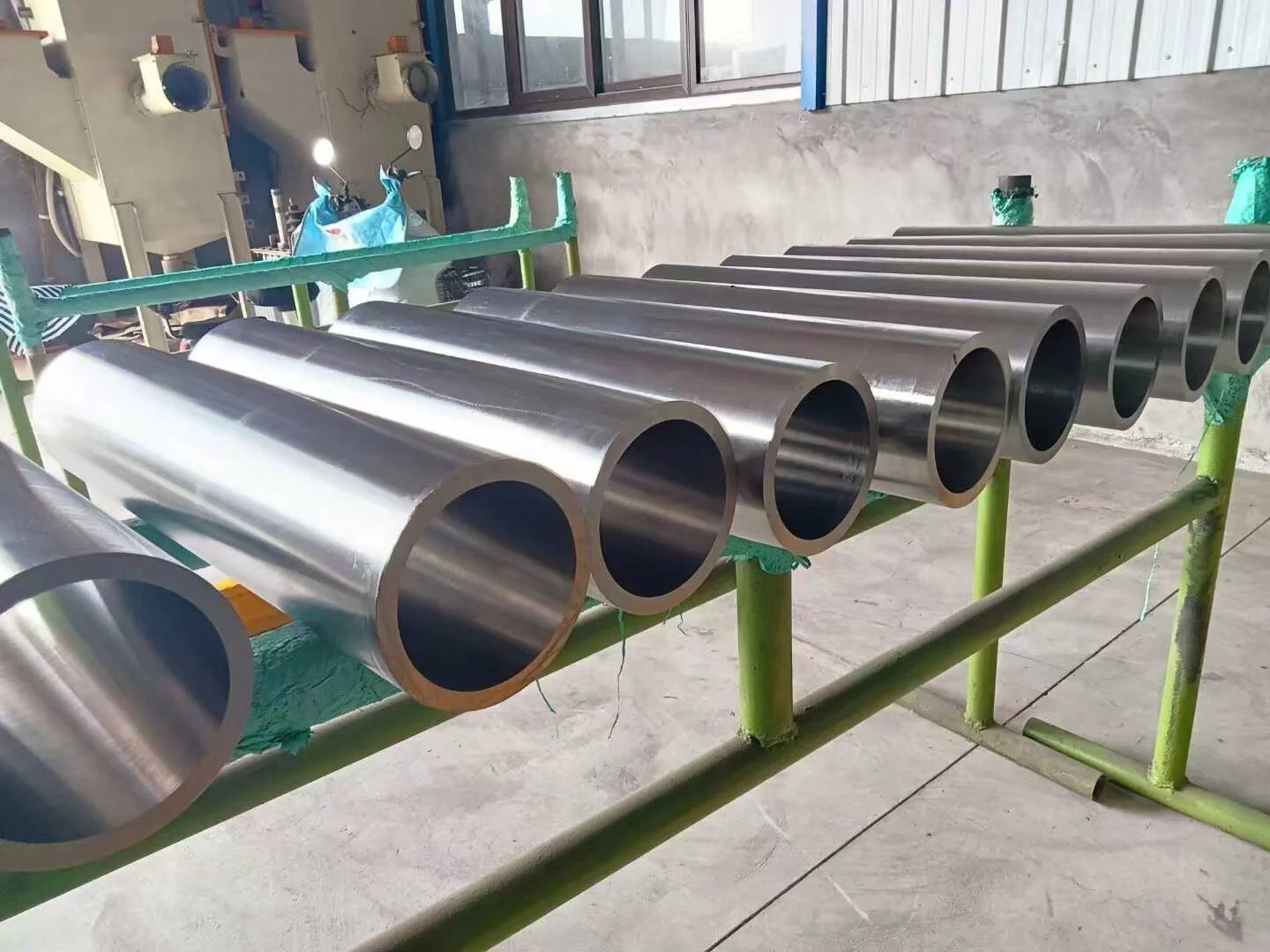
What is Monel K500 Tube? Composition, Properties, and Manufacturing Process?
Core Composition and Alloying Elements
The nickel-copper metal family includes Monel K500 tubing, which is called UNS N05500. The base makeup is made up of about 63-67% nickel and 27-33% copper, which makes it very resistant to rust. The addition of aluminium (2.3–3.15%) and titanium (0.35-0.85%) in a planned way makes this metal different from regular Monel 400. These elements make precipitation hardening possible, a heat treatment method that makes metals much stronger without weakening their ability to fight rust. The mixture also has small amounts of iron, manganese, and carbon, and each of these adds different dynamic qualities. This carefully balanced science makes a material that works reliably in places where other alloys don't.
The nickel-copper mesh naturally protects against stress corrosion cracks caused by chloride, which is a typical way for things to fail in chemical processes and marine environments. When the steel ages, the aluminium and titanium add-ons create intermetallic precipitates that make it much stronger and harder while still letting it bend easily.
Mechanical Properties and Performance Characteristics
When heated the right way, Monel K500 gets amazing dynamic qualities that make it stand out from other materials. The tensile strength is around 1100 MPa (160 ksi), and the yield strength is usually more than 790 MPa (115 ksi). Hardness levels around HRC 35 when they are old give pump shafts and valve parts great resistance to wear. With stretch values between 15 and 25 percent, the material stays flexible, so it can be cold-formed when needed.
In addition to its high strength, this metal has great resistance to wear, which is very important for machinery that spins and parts that are loaded and unloaded many times. Even at cold temperatures as low as -196°C, the non-magnetic qualities stay stable. This makes it useful for specialised instruments and naval uses where magnetic interference is a problem. For short-term contact, thermal stability goes up to 550°C, but the best rust protection is below 480°C.
Manufacturing Methods and Heat Treatment Protocols
We make Monel K500 tubes in a number of different ways, based on the needs of the final product. To make a seamless tube, first bars are cast, and then hollow shapes are made by hot extrusion or hot cutting. It is possible to get outside sizes from 6.0 mm to 114 mm and wall thicknesses from 0.5 mm to 15 mm through cold drawing processes, which also improve the surface finish. For some width and wall types, the longest length that can be made is 15,000 mm. This gives long-run pipe systems a lot of options.
Using TIG or laser welding to join tubes together keeps the alloy's structure and lowers the cost of making tubes with bigger sizes. After being shaped, tubes are heated in a solution at 980 to 1010°C for a short time. This breaks up any solidified materials and reduces the stress from the shaping process. The alloying elements stay in solid solution when they cool quickly. The next step is the age hardening process, which is usually done at 540–650°C for 6–16 hours. This lets the stiffening stages form in a controlled way. This two-step heat process gives the best mix of strength and protection to rust. As part of our quality control, we analyse the PMI makeup and test it with ultrasound waves that meet ASTM B163/ASME SB163 and ASTM B165/ASME SB165 standards.
Key Applications of Monel K500 Tubes in Industrial Sectors
Marine and Offshore Engineering Applications
Even though seawater is one of the most active places for rust in engineering, Monel K500 tube does very well in it. When shipbuilders want to make propeller shafts, they choose this material because it is strong and doesn't rust or crack easily. The metal is better at resisting biofouling than copper-nickel options. This means that offshore platforms and water plants need less upkeep. This material is used to make condenser tubes that reliably move heat in naval power generation systems.
Sulphide stress cracks and erosion-corrosion from high-velocity brine flows are two more problems that offshore oil and gas sites have to deal with. Monel K500 pipe systems can handle these needs while keeping their structural integrity when they are vibrated by waves. Manufacturers of subsea equipment use this metal to make valve bodies, pump parts, and sensor housings that have to work perfectly at the bottom of the ocean. When mechanical strength and rust resistance work together, they lower lifetime costs by stretching service gaps and stopping breakdowns before they happen.
Aerospace and Defense Components
The materials that aircraft makers use for landing gear parts, bolts, and structure supports have to meet strict standards. These needs are met by monel K500, which has great resistance to wear and constant mechanical qualities across a wide range of temperatures. Because the metal isn't magnetic, it's perfect for parts that are close to navigational tools and communication systems. When working with flow air systems, heat exchangers in auxiliary power units gain from being stable at high temperatures and not rusting.
The material's resistance to certain chemicals and its ability to keep its power under shock loading are both used in defence uses. The high strength-to-weight ratio and proven dependability in tough working conditions are used in helicopter rotor hubs and actuator parts. Traceability and certification compliance are built into aerospace-grade materials, which are in line with the quality assurance standards that materials engineers and QA teams need.
Chemical Processing and Petrochemical Industries
Chemical companies and refineries use harsh fluids that break down everyday things quickly. Monel K500 tubes can handle hydrofluoric acid jobs that would destroy stainless steels. In alkylation units, the heat exchanger tubes can handle both the acidic medium and the changing temperatures without stress corrosion cracks. Process pipe for phenol and acidic liquids stays in good shape after decades of use.
Petrochemical plants like the material because it doesn't crack easily when exposed to hydrogen sulphide and chloride stress corrosion. When used with sour gas, pump shafts show better wear protection than strengthened stainless steels. Being able to do accurate PMI testing helps engineering managers make sure that the right materials are used during repair and recovery tasks, which keeps expensive metal mix-ups from happening.
Power Generation and Energy Equipment
Monel K500 is used in nuclear power plants in reactor cooling systems. Its safety margins are based on its resistance to radiation and rust. When hit with neutrons, the material stays more structurally stable than austenitic stainless steels. The alloy's resistance to acid rust and ability to handle sudden changes in temperature during starting and stop processes are good for steam generator tubes.
Using geothermal power plants is hard because the mud they use has dissolved gases and minerals in it. This nickel-copper metal can withstand weathering, rust, and hydrogen sulphide attack, so it can be used to make wellhead parts and downhole tools. Monel K500 is being used more and more in offshore wind turbine platforms for hydraulic parts and systems that cool down in seawater. This is because it is resistant to rust in marine environments, which is useful in green energy uses. When choosing materials for important spinning tools, project engineers like seeing a record of how well the materials have worked in the past.
Guide to Procuring Monel K500 Tubes: What B2B Clients Need to Know?
Understanding Specifications and Standards
For buying Monel K500 tube to go well, the standards that apply must be made clear from the start. The standards for seamless tubes are set by ASTM B163 and ASME SB163, and the standards for seamless pipes are set by ASTM B165 and ASME SB165. These guidelines spell out the limits for chemical makeup, mechanical properties, tolerances for size, and testing procedures. Custom uses may use AMS specs for aircraft parts or client-specific standards that include extra testing.
TSM Technology has a large selection of common sizes in stock and can also make special sizes. Outside widths range from 6 mm to 114 mm, and wall thicknesses range from 0.5 mm to 15 mm. This makes them suitable for a wide range of pressure levels and flow needs. Long pipe runs can be made with lengths up to 15,000 mm, but shorter pieces are usually better for shipping and handling. Straight tube can be used with custom pipe parts like elbows, tees, and reducers to make full system solutions. There are different kinds of heat treatments, such as solution annealing, ageing, and making your own thermal profiles to fit the needs of your application.
Quality Assurance and Material Traceability
Aerospace, nuclear, and industrial clients require detailed paperwork that proves the origin and technical qualities of the material. Mill test papers show the chemical and test results that are specific to heat and can be linked back to the original bars. Using X-ray fluorescence to positively identify materials proves the makeup of the metal during the receiving check, finding any possible mix-ups before they are installed. Ultrasonic testing finds breaks inside the material, and eddy current checking finds flaws on the surface that can't be seen with the naked eye.
We use full quality control throughout the whole production process. Chemical compliance is checked by PMI composition analysis, and tensile qualities, hardness, and flexibility are checked by mechanical tests. Structural stability is maintained through non-destructive testing, such as ultrasound and x-ray analysis. Documentation packages have test results, material certificates, and measurement inspection records that meet the standards of EN 10204 3.1. Quality assurance teams and government bodies in the aircraft, energy, and chemical processing industries are happy with this level of tracking.
Pricing Factors and Procurement Strategy
Material prices are affected by more than just the base metal content. Wall width affects output yield and the difficulty of making something. For precise forming, thin-wall tube costs more. The need for heat treatment raises the cost of processing, but the better mechanical qualities of old material make the cost worth it. Economies of scale are possible with volume agreements, and big projects can get number breaks.
Purchasing workers can benefit from building ties with sellers who keep Monel K500 tube stock on hand. Lead times for mill-direct production can last for weeks or months, based on demand around the world and how much capacity is being used. Stocking wholesalers offer faster shipping, but their prices are higher because they have to pay more to keep goods on hand. Strategic buyers plan ahead for what they will need and place blanket orders with planned drops that balance cash flow with the supply of materials. We work with our clients to make sure that supply deals are set up in a way that meets project deadlines and keeps total buying costs as low as possible.
Why Choose Monel K500 Tubes for Your Critical Applications?
The combination of high strength, excellent rust protection, and a history of dependability makes this nickel-copper metal a smart choice for tough jobs. When machine problems have big effects on safety, the environment, or money, choosing the right materials is very important. Monel K500 tubing is reliable because it has been used successfully in the marine, aircraft, chemical, and energy industries for decades.
Beyond the qualities of the main materials, the success of a project depends on the skills of the suppliers. TSM Technology has been making and selling speciality nickel alloys to precision engineering companies around the world for 14 years. Our expert team helps you choose the right materials by giving you advice on comparing alloys, getting the best results from heat treatment, and the best ways to make things. Just-in-time delivery plans are supported by custom processing services like cutting, bending, and welding. This lowers the cost of keeping goods on hand.
Supply lines that work reliably can be found in North America, Europe, or the Asia-Pacific areas thanks to global transportation. Our well-established quality control systems and certifications give you peace of mind that the goods you buy will meet the highest standards in the business. When you combine technology know-how, production capacity, and customer service, you get relationships that go beyond single deals. Materials engineers and procurement heads like working with providers who understand the problems they face in their applications and can help them find solutions that make things more reliable.
Conclusion
For technical purposes, Monel K500 tube is a tried-and-true choice when great strength and excellent rust protection are needed. The precipitation-hardened nickel-copper metal has dynamic qualities similar to high-strength steels and can withstand harsh conditions like seawater, acids, and alkaline ones that break down other materials. Aerospace engineers, naval engineers, chemical makers, and people who make energy tools depend on this material for parts that can't fail because the results would be too bad. Knowing what something is made of, how it's made, and its relative benefits helps you make smart purchasing choices that improve performance and lower operational costs. Working with providers with a lot of knowledge makes sure that you can get good materials, expert help, and on-time deliveries that support your most important operations.
FAQ
Why does Monel K500 work better in naval settings than stainless steel?
The nickel-copper mesh stops the pitting and crack rust caused by chloride that happens in seawater and makes stainless steel less reliable. Monel K500 keeps its passive film stability over a bigger range of pH and temperature conditions. This means that it doesn't have the stress corrosion cracking problems that are common with austenitic stainless grades. Better biofouling protection lowers the number of times that upkeep needs to be done, and higher strength lets wall designs be smaller.
Can heat treatment be done after the tubes have been installed?
Age hardening at 540–650°C is possible for assembled parts that have already been made, but it's hard to heat big structures evenly. Solution annealing needs higher temps, which can bend parts that have been fused together. We suggest stating the final heat treatment condition when you buy something to make sure it has the best qualities before you put it. To keep microstructural changes from happening by accident, metallurgical advice should be used to create post-weld heat treatment methods.
What approvals should people look for when they are looking for Monel K500 tubing?
The material must meet the requirements of ASTM B163 or B165, and it must have mill test papers that show its chemical and mechanical qualities. For aerospace uses, AMS standards and more tracking are needed. ISO 9001 certification shows that a seller has quality control systems in place, while ASME U-stamp or PED certification shows that the provider can make things. Third-party inspection services offer independent confirmation when the needs of the project call for more security than what is provided by the provider.
Partner with TSM Technology for Premium Monel K500 Tube Solutions
TSM Technology can help you with your important material needs by making approved Monel K500 tubes to very high standards. We have a large selection of seamless and welded tubes with wall thicknesses ranging from 0.5 mm to 15 mm and outside diameters ranging from 6.0 mm to 114 mm. As an expert Monel K500 tube provider, we offer unique heat treatment, precise cutting, and full material approval paperwork to support uses in energy, chemical processing, aircraft, and the marine industry. Our engineering team works with your materials experts to find the best alloys and make the best parts. Email us at info@tsmnialloy.com to talk about your needs, get test results, or get quotes for future projects that need materials that are known to prevent rust.
References
Davis, J.R. (2000). Nickel, Cobalt, and Their Alloys. ASM International Materials Park.
American Society for Testing and Materials (2021). ASTM B163/B163M - Standard Specification for Seamless Nickel and Nickel Alloy Condenser and Heat-Exchanger Tubes. ASTM International.
Tuthill, A.H. and Schillmoller, C.M. (1983). Guidelines for Selection of Marine Materials. International Nickel Company Technical Series No. 10,040.
Boyer, H.E. (1987). Atlas of Stress-Corrosion and Corrosion Fatigue Curves. ASM International.
Special Metals Corporation (2004). Monel Alloy K-500 Technical Bulletin. Special Metals Corporation Publication SMC-061.
Rebak, R.B. and Szklarska-Smialowska, Z. (1996). The Mechanism of Stress Corrosion Cracking of Monel-400 in High Temperature Aqueous Solutions. Corrosion Science Journal Vol. 38 Issue 6.
Learn about our latest products and discounts through SMS or email