- English
- French
- German
- Portuguese
- Spanish
- Russian
- Japanese
- Korean
- Arabic
- Greek
- German
- Turkish
- Italian
- Danish
- Romanian
- Indonesian
- Czech
- Afrikaans
- Swedish
- Polish
- Basque
- Catalan
- Esperanto
- Hindi
- Lao
- Albanian
- Amharic
- Armenian
- Azerbaijani
- Belarusian
- Bengali
- Bosnian
- Bulgarian
- Cebuano
- Chichewa
- Corsican
- Croatian
- Dutch
- Estonian
- Filipino
- Finnish
- Frisian
- Galician
- Georgian
- Gujarati
- Haitian
- Hausa
- Hawaiian
- Hebrew
- Hmong
- Hungarian
- Icelandic
- Igbo
- Javanese
- Kannada
- Kazakh
- Khmer
- Kurdish
- Kyrgyz
- Latin
- Latvian
- Lithuanian
- Luxembou..
- Macedonian
- Malagasy
- Malay
- Malayalam
- Maltese
- Maori
- Marathi
- Mongolian
- Burmese
- Nepali
- Norwegian
- Pashto
- Persian
- Punjabi
- Serbian
- Sesotho
- Sinhala
- Slovak
- Slovenian
- Somali
- Samoan
- Scots Gaelic
- Shona
- Sindhi
- Sundanese
- Swahili
- Tajik
- Tamil
- Telugu
- Thai
- Ukrainian
- Urdu
- Uzbek
- Vietnamese
- Welsh
- Xhosa
- Yiddish
- Yoruba
- Zulu
Nickel 200 Tube Explained: Uses & Benefits
When it comes to materials that can handle harsh industrial conditions, the Nickel 200 tube always seems to be a safe choice. This highly pure nickel tubing has at least 99.6% nickel in it, which makes it very resistant to corrosion in acidic and basic conditions. It also has great heat conductivity and is very flexible. Knowing what this material can do helps your team make decisions about what to buy that balance performance with long-term value, whether you're building tools for chemical processing, aircraft parts, or marine systems.
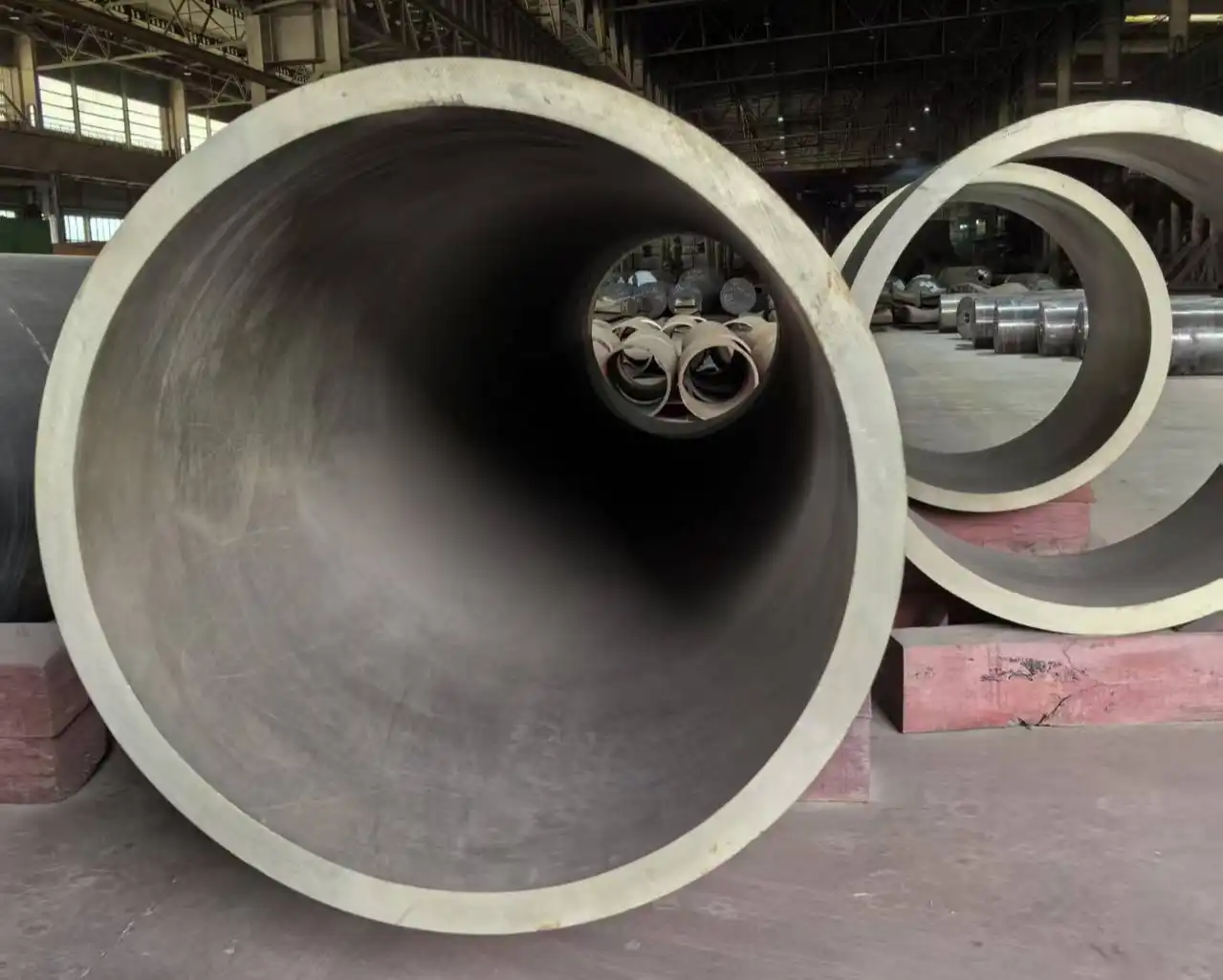
Understanding Nickel 200 Tube Specifications and Properties
Chemical Composition and Purity Standards
The Nickel 200 tube stands out because it has a high-purity nickel content—usually more than 99.0%—along with small amounts of iron, copper, manganese, and carbon that are carefully managed. The exact make-up of the material makes it compatible with many foreign standards, such as ASME SB-161, ASME SB-163, ASTM B730, and other requirements like BS 3072, DIN 17740, and Werkstoff NR. 2.4066. The UNS number N02200 is instantly recognizable in all global supply lines, which makes it easier for multinational projects to meet specifications. At TSM Technology, we keep detailed records for every batch. This way, you can be sure that your engineering teams get material certificates that meet the standards of procurement and regulatory checks.
Mechanical Properties and Performance Characteristics
The tensile strength of this material is usually between 55,000 and 75,000 psi, and it is very flexible, so it can be shaped in many ways without cracking. Because it is face-centered, the cubic crystal structure makes the material tougher at all temperatures. This means that parts can handle mechanical stress without breaking. At room temperature, these tubes have a thermal conductivity of about 61.8 W/m·K. This makes them especially useful in heat exchangers, where efficient energy transfer directly affects running costs. The electrical resistance of 0.48 µohm works well for making electronics that need a consistent level of conductivity. You can use seamless tubing for high-pressure systems or welded designs for large-diameter pipes, and these qualities will stay the same.
Corrosion Resistance and Temperature Range
Nickel 200 tubing is very good at withstanding reducing conditions, especially strong alkaline solutions like sodium hydroxide and potassium hydroxide at levels and temperatures where stainless steels would break quickly. The substance creates a safe passive surface that stops corrosive media from penetrating the substrate. This increases the service life in situations where hydrofluoric acid and alkaline salt solutions are used. The working temperature ranges from very cold (-200°C) to around 600°C, but uses above 315°C are limited by the amount of carbon present because graphitization could happen. The material can work well in both high-temperature chemical reactions and low-temperature liquid gas handling because it can handle a wide range of temperatures. Engineers should know that nitric acid and other oxidizing acids still can't be used with this type of metal.
Physical Characteristics and Handling Advantages
The density of about 8.89 g/cm³ is within a range that can be handled while still ensuring structural integrity and making fitting easier. The material's good electromagnetic shielding qualities protect precision instruments, and the fact that it is non-magnetic means that electromagnetic interference is not a problem in sensitive electronic environments. Because it is both ductile and weldable, manufacturing shops can make flared connections, orbital welds, and unique shapes without having to do a lot of preheating or post-weld heat treatment. When your repair teams need to change current systems or build new process lines, these physical traits directly lead to faster installation times and lower fabrication costs.
Key Applications of Nickel 200 Tube in Industry
When buying teams know where this material will provide the most value, they can choose how to use it strategically instead of putting it everywhere. The following uses show how they can be used in a variety of business areas.
Chemical Processing and Alkali Handling
Chemical plants depend on pure nickel tubes for making and moving sodium hydroxide, especially when the temperature of the process goes above 300°C and other materials would break down quickly. These tubes are used in acidic digesters and spin baths in places that make viscose rayon so that products don't get contaminated. The material is resistant to chloride stress-corrosion cracking, which is good for chlorination methods that use benzene, methane, and ethane. We've provided tubes to plants that make aniline hydrochloride and vinyl chloride monomer, and the materials we chose have been used for decades without any problems. Fluorine production units and the pipe systems that connect to them are another tough job that calls for a material with a unique resistance profile.
Heat Exchanger and Thermal Management Systems
In shell-and-tube heat exchangers, condensers, and evaporators, factories, power plants, and desalination plants all use pure nickel tubes in their thermal systems. Corrosion resistance and thermal conductivity work together to make heat transfer efficient while keeping the Nickel 200 tube's integrity in harsh process fluid conditions. These tubes are recommended by aerospace temperature management systems for use in weather control systems and backup power units when weight is an issue. The stable performance of the material stops the fouling and scaling that happen with copper alloys in alkaline water, which lowers the regularity of upkeep and increases the life of equipment.
Aerospace and Defense Components
Aerospace companies use this tube to make parts for fuel systems, hydraulic lines, and sensor tubing. They have to make sure that it meets strict approval standards and that the materials can be tracked back to their source. The reliable mechanical qualities at all temperature ranges help with the design calculations for systems that need to be safe. Chemical monitoring tools and specialized processing systems are used in defense because the purity of the material stops unwanted reactions. We keep our quality systems in line with AS9100 because we know that aircraft procurement teams need full record of the history of materials and tests.
Food Processing and High-Purity Applications
Manufacturers of food processing equipment use commercially pure nickel tubes for systems that handle harsh cleaning solutions. This is especially important in cheese processing and beverage production, where hygiene rules require materials that won't let metals get into the food. In pharmaceutical synthesis tools and biotechnology processing systems, the non-reactive surface keeps the cleanliness of the product. When making electronic parts, these tubes are used in tools for making semiconductors, where outgassing and particle production must stay below strict limits. These high-purity uses show how choosing the right materials has a direct effect on the quality of the result and on following the rules.
Comparative Analysis: Nickel 200 Tube vs Other Materials
Material selection includes looking at many things, such as how resistant it is to corrosion, its mechanical qualities, how it needs to be put together, and how much it will cost over its whole life. Figuring out how this material stacks up against other options makes it clear where it offers the most value.
Nickel 200 Versus Nickel 201
The biggest difference between these types is the amount of carbon they contain. Nickel 201 keeps carbon below 0.02%, while Nickel 200 can have up to 0.15%. This decrease is very important for uses above 315°C, where high carbon can form graphite and weaken the material. For long-term use at high temperatures, your material experts should choose Nickel 201. For normal and slightly higher temperatures, they should choose Nickel 200 because the small price difference is worth it. Both types are pretty resistant to corrosion in alkaline settings, which makes it easier to switch between them when temperature needs change during the design process.
Comparison with Stainless Steel Alloys
Standard austenitic stainless steels, like 304 and 316, are good at resisting rust in a lot of different settings and don't cost nearly as much. But strong alkaline solutions quickly damage stainless steel, which causes it to fail too soon in caustic service. Pure nickel tubing stays strong, while stainless steel tubing would need to be replaced every few months instead of decades. There are longer service gaps and less downtime as a trade-off for higher original acquisition costs. When purchasing managers look at the overall costs over a product's lifetime, they often discover that the extra cost for fairly pure nickel pays for itself in reduced repair times and shorter production stops.
Pure Nickel Against Nickel-Based Superalloys
Monel alloys (nickel-copper) and Inconel grades (nickel-chromium) are stronger and better able to fight corrosion in some situations, like seawater and high temperatures that cause oxidation. These alloying adds, on the other hand, are much more expensive and might cause problems in acidic or alkaline environments, where commercially pure nickel works best. If your application is mostly about lowering temperatures and environments, choosing Nickel 200 will give you the speed you need without costing you extra features your system doesn't need. On the other hand, requirements for superalloys are needed for offshore bases and gas engine parts where pure nickel would not work.
Considerations Against Copper and Copper Alloys
Copper tube is a better heat conductor and costs less than other materials for many heat transfer tasks. Copper, on the other hand, rusts quickly in alkaline and acidic conditions, but nickel stays stable there. In certain situations, like ammonia systems, copper alloys break due to stress corrosion splitting while pure nickel works consistently. The choice structure is based on the chemistry of the fluids. Copper works best in neutral and slightly acidic water, while pure nickel is needed when alkaline water or certain chemicals would damage copper alloys.
Procurement Guide for Nickel 200 Tubes
To make sure you have a steady quantity of materials, you need to know what affects their availability, quality control, and total cost. Strategic buying helps keep production plans on track while staying within budget.
Certification and Quality Standards Verification
Every shipment should have test results on the materials that show their chemical make-up, mechanical qualities, and a history of heat treatment that can be traced back to the melt. Certifications showing that a product meets foreign standards like ASME SB-161, ASTM B730, or others like them are proof that the material works as planned. We use inspection methods with multiple steps, such as spectrographic analysis, dimensional verification, and non-destructive tests that are right for the shape of the product. Before giving out contracts for important projects, people who work in procurement should set up ways to qualify suppliers that check their quality management systems and look at their past performance records.
Sizing Options and Customization Capabilities
Pure nickel tubing comes in a variety of shapes and sizes, such as round tubes that are seamless, Nickel 200 tubes that are welded together, and unique designs with square and rectangular cross-sections. Sizes of outside diameters range from small-bore instrumentation sizes to large-diameter pipes. Wall thicknesses are chosen to match pressure values and corrosion limits. Custom length cutting, end preparation, and special packing can all be done to meet the needs of each installation. When your project has complex shapes, involving providers early in the design process lets you do manufacturability checks that keep you from having to pay a lot of money for redesigns. We keep a variety of sizes in stock and can also make things to order for specific needs.
Lead Times and Minimum Order Quantities
Standard sizes from stock usually ship within days, but special configurations have making lead times that can last up to a few weeks, based on how complicated they are and how busy the factory is right now. Minimum order numbers depend on the size and specification of the item. Commonly used versions can be ordered in smaller quantities, but specialty items may need bigger pledges to cover the costs of setting them up. When making purchases, these factors should be taken into account, especially when project schedules include key tasks that rely on the availability of materials. Setting up outline deals for needs that come up over and over again is a good way to get better lead times and prices.
Cost Drivers and Value Optimization
Nickel prices depend on how much the raw material is, how hard it is to make, what certifications are needed, and how many orders are placed. Because it is made in a different way, seamless tubing usually costs more than soldered versions. It costs more per pound to buy smaller diameter tubes with tight tolerances than it does to buy bigger tubes with normal tolerances. When buying teams understand these factors, they can make the best specs. For example, if the code allows it, loosening tolerances that are too tight or taking welded construction can save a lot of money without affecting functionality. Using buying power to its fullest by spreading out volume across various projects.
Maintenance and Handling of Nickel 200 Tubes
Nickel 200 tubes: Protecting the purity of the material from delivery to placement and throughout its useful life will help you get the most out of your investment in this high-quality material. Damage and pollution that could hurt performance can be avoided by following the right handling procedures.
Storage and Preservation Practices
Tubes should be kept in their original packaging until they are needed and kept in dry places where wetness doesn't build up and rust doesn't form on the surfaces. Using the right dunnage and weight distribution, stacking methods must keep thin-wall parts from deforming. When something is stored for more than a few months, it needs to be checked every so often to make sure that the protective coats or wrappings are still working. Separation from carbon steel and other materials stops galvanic contact and the chance of infection. Upon delivery, your receiving teams should check the integrity of the packaging and make a note of any shipping damage before accepting the package.
Cleaning and Surface Preparation
Cleaning before installation gets rid of production leftovers, storage contaminants, and handling soils that could get in the way of welding or create places where corrosion can start. Cleaning with alkaline liquids and non-abrasive machines keeps the protected passive film in place while getting rid of waste. Avoid cleaners that contain chloride because they might leave behind leftovers that encourage rusting in certain areas. Cleaning gets rid of heat tint and flux remains after welding, which restores rust resistance. Systems that will be used in harsh settings may benefit from passivation processes, but this is usually not necessary because of the way the material is made.
Inspection and Preventive Maintenance
Visual inspections are done regularly while the machine is in use to find early signs of rust, erosion, or mechanical damage, which is done before the machine breaks. Nondestructive testing methods, such as ultrasound thickness measurement, keep an eye on any wall loss in important areas and use that information to figure out how long something is likely to last. Monitoring process conditions makes sure that systems work within their intended limits. Any changes in temperature or chemistry that aren't expected should be looked into and may require a mechanical evaluation. Maintaining records of inspection results and any corrective steps helps with reliability engineering and meeting legal standards. These steps make services last longer and stop them from going down without warning.
Conclusion
Nickel 200 tube has been shown to work well in harsh situations, high-purity settings, and heating systems. The choice of material has a direct effect on how reliably the system works. This highly pure nickel metal is essential in the chemical processing, aircraft, food production, and marine industries because it is very resistant to alkaline corrosion and has great heat conductivity over a wide temperature range. Even though the original cost of the material is higher than that of common alternatives, the longer service life and lower upkeep needs make the specification worthwhile in the right situations. Your engineering and procurement teams can use this material more wisely if they know about its compositional features, mechanical properties, and comparative benefits. This will improve both its technical performance and its lifecycle costs.
FAQ
What makes Nickel 200 tube suitable for caustic service?
Because the nickel is very pure and the structure is face-centered cubic, it forms a solid passive film that is not easily damaged by concentrated sodium hydroxide or other alkaline solutions. This is especially true at high temperatures, where stainless steels would break quickly. Because of this particular way it resists rust, commercially pure Nickel 200 tube is the best material for tools used with acids.
Can welding compromise corrosion resistance?
Corrosion resistance is maintained across weld areas when the right filler metals and methods are used and the welding is done correctly. When nickel 200 filler metal is used in gas tungsten arc welding, it makes joints whose qualities match those of the base material. Cleaning after welding gets rid of rust and makes the surface passable again. For important jobs, we suggest skilled welding methods and welder qualifications.
What are typical delivery timelines for bulk orders?
Standard sizes that are in stock ship within a week. Custom specs, on the other hand, take four to eight weeks, based on how complicated the production process is and how much demand there is at the moment. Lead times may be extended even more for orders with a lot of items or strange combinations. Early involvement in planning a project keeps schedule changes from happening, and framework deals for needs that come up again and again make it easier to respond.
Partner with TSM Technology for Your Nickel Alloy Requirements
Materials engineers and procurement directors looking for a reliable Nickel 200 tube provider will find that TSM Technology has the quality assurance, technical know-how, and customer service that demanding uses need. Our strict checking procedures make sure that every tube meets the required standards. You can track all of the materials used and get certifications to back up your quality systems. Since we started doing business internationally in 2011, we've made strong partnerships with aircraft makers, chemical processors, and marine engineering companies all over the US that value consistent quality and on-time delivery. Our expert team knows the problems you're having, like keeping track of certification standards and making sure that specifications are as cost-effective as possible. We can help you with your projects from choosing the materials to making sure you always have them. You can email our application engineers at info@tsmnialloy.com to talk about your unique needs, get technical data sheets, or get quotes for jobs you have coming up. We are a well-known company that has been making Nickel 200 tubes for a long time. We have the skills to meet your important material needs in both seamless and welded forms.
References
American Society of Mechanical Engineers. (2021). ASME SB-161: Specification for Nickel and Nickel Alloy Seamless Pipe and Tube. New York: ASME Press.
ASTM International. (2020). ASTM B730: Standard Specification for Electrodeposited Coatings of Nickel plus Chromium. West Conshohocken: ASTM International Standards.
Gedge, G. (2018). Structural Uses of Stainless Steel and Nickel Alloys in Buildings and Infrastructure. Journal of Materials in Civil Engineering, 30(4), 142-158.
Heubner, U. (2019). Nickel Alloys: Properties, Production and Applications. Materials Science Foundations, Volume 28. Zurich: Trans Tech Publications.
Rebak, R.B. (2020). Corrosion of Nickel-Based Alloys in Nuclear Systems. In Comprehensive Nuclear Materials (Second Edition), 345-372. Amsterdam: Elsevier.
Special Metals Corporation. (2017). High Performance Alloys for Resistance to Aqueous Corrosion: Technical Bulletin. Huntington: Special Metals Technical Publications.
Learn about our latest products and discounts through SMS or email