- English
- French
- German
- Portuguese
- Spanish
- Russian
- Japanese
- Korean
- Arabic
- Greek
- German
- Turkish
- Italian
- Danish
- Romanian
- Indonesian
- Czech
- Afrikaans
- Swedish
- Polish
- Basque
- Catalan
- Esperanto
- Hindi
- Lao
- Albanian
- Amharic
- Armenian
- Azerbaijani
- Belarusian
- Bengali
- Bosnian
- Bulgarian
- Cebuano
- Chichewa
- Corsican
- Croatian
- Dutch
- Estonian
- Filipino
- Finnish
- Frisian
- Galician
- Georgian
- Gujarati
- Haitian
- Hausa
- Hawaiian
- Hebrew
- Hmong
- Hungarian
- Icelandic
- Igbo
- Javanese
- Kannada
- Kazakh
- Khmer
- Kurdish
- Kyrgyz
- Latin
- Latvian
- Lithuanian
- Luxembou..
- Macedonian
- Malagasy
- Malay
- Malayalam
- Maltese
- Maori
- Marathi
- Mongolian
- Burmese
- Nepali
- Norwegian
- Pashto
- Persian
- Punjabi
- Serbian
- Sesotho
- Sinhala
- Slovak
- Slovenian
- Somali
- Samoan
- Scots Gaelic
- Shona
- Sindhi
- Sundanese
- Swahili
- Tajik
- Tamil
- Telugu
- Thai
- Ukrainian
- Urdu
- Uzbek
- Vietnamese
- Welsh
- Xhosa
- Yiddish
- Yoruba
- Zulu
Nickel 200 Tube Material Properties
Understanding the properties of Nickel 200 tube is important for successful buying when looking at material options for harsh industrial settings. This nickel tubing is commercially pure and has a nickel content of more than 99%. It also has small amounts of iron, copper, manganese, and other elements that make it very strong and resistant to rust. The face-centered cubic crystal structure makes these tubes very flexible and easy to shape. This makes them perfect for tough jobs in the chemical processing, aircraft, and marine industries. This material meets important performance needs in many industrial areas thanks to its ability to work at temperatures ranging from -196°C to 600°C and its thermal conductivity of 61.8 W/m·K at 20°C.
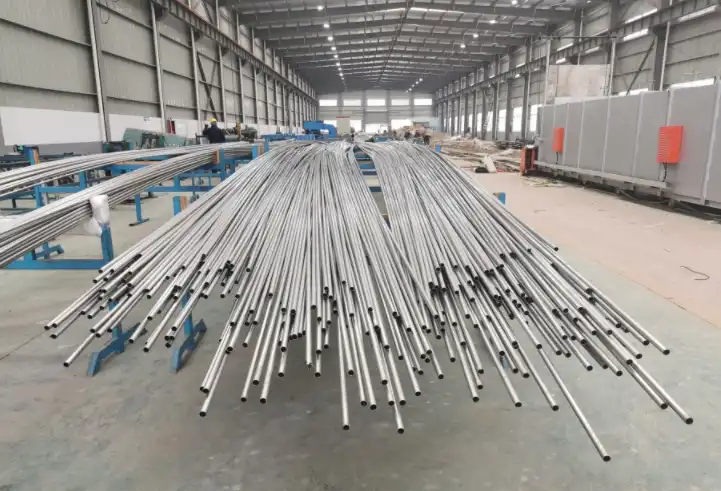
Understanding Nickel 200 Tube Material Properties
Chemical Composition and Purity Standards
This kind of widely pure nickel tube has a nickel content of at least 99.6%, which meets international standards like UNS N02200, ASTM B161/B163, ASME SB-161/SB-163, and similar standards like BS 3072, DIN 17740, and Werkstoff Nr. 2.4066. The minor elements in this high-purity mixture are kept in check: the iron content stays below 0.40%, the copper content stays below 0.25%, and the manganese content stays below 0.35%. The carbon content is kept as low as possible (0.15% at most) on purpose to keep the resistance to rust and stop carbide precipitation during service.
These trace elements help improve function in certain ways. Copper makes things less likely to rust in reducing conditions, and keeping the amount of iron in them under control improves their mechanical qualities without changing how they rust. The sulfur content, which is limited to 0.01% at most, keeps the steel from becoming weak during welding and high-temperature work.
Mechanical Properties and Structural Characteristics
Commercially pure nickel tubing has great mechanical qualities that make it last a long time and be easy to shape. Different types of steel have different tensile strengths at room temperature. Tensile strengths are usually between 55,000 and 85,000 psi (380 and 585 MPa), and yield strengths are between 15,000 and 45,000 psi (105 and 310 MPa). When the material is annealed, it can stretch a lot, often more than 40%. This makes complicated shaping operations easier and lowers the risk of cracking during production.
The face-centered cubic crystal structure makes the material naturally flexible and resistant to impact, even at very low temperatures close to -196°C. This feature of the structure is very useful for aircraft uses that need to work reliably even when temperatures change a lot. Hardness values usually fall in the Brinell range of 80 to 120, which is good for wear protection while still allowing for easy machining of accurate parts.
Corrosion Resistance Profile
Nickel 200 tube that is sold in stores is very good at preventing corrosion from alkaline media, especially sodium hydroxide solutions at temperatures and concentrations that make stainless steels break quickly. The substance is very resistant to strong acids and bases, which makes it necessary for processes that handle sodium hydroxide above 300°C. This is possible because a solid passivation film forms on the nickel surface, which stops acidic media from getting through.
The tube works really well in reducing conditions like those with pure ammonia, organic acids, and a lot of salt solutions. But materials engineers should know that commercially pure nickel doesn't stand up well to oxidizing acids like nitric acid and doesn't work well in places where oxidizing acids are strong. In coastal settings, the material doesn't crack from chloride-induced stress corrosion, but some nickel-copper alloys may work better in certain seawater circumstances.
Thermal and Electrical Characteristics
With a thermal conductivity of 61.8 W/m·K at room temperature, commercially pure nickel tubing is a good choice for heat exchanger uses that need to move heat quickly. This material is very good at conducting electricity and resisting rust, which makes it perfect for heat exchanges in chemical processing that deal with corrosive media.
The electrical resistivity of 0.48 μΩ·m makes it possible for controlled electrical conductivity to be used in processes like making electronics and in electromagnetic protecting parts. The material stays non-magnetic over a wide range of normal working temperatures. This is very important for electronics and aircraft instruments that need to keep magnetic interference to a minimum.
It's easy to see how heat treatment changes economically pure nickel tubes. After cold working, annealing at temperatures between 700°C and 900°C makes the metal more flexible again and removes any remaining stresses. Unlike nickel alloys that harden over time, this material doesn't go through precipitation hardening or phase changes within its normal service temperature range. This makes heat treatment procedures easier to follow.
Comparing Nickel 200 Tubes with Alternative Materials
Nickel 200 vs. Stainless Steel and Copper
When looking at materials for tubes that will be used in corrosive environments, commercially pure nickel has clear benefits over other options. Nickel 200 tubing is better at resisting alkaline corrosion and chloride-induced stress corrosion cracks than austenitic stainless steels like 316L. Stainless steels work well in acidic acid conditions, while commercially pure nickel has trouble. This makes it easy to make a choice based on the process chemistry.
Copper tube has a higher thermal conductivity (about 400 W/m·K), but it doesn't prevent corrosion well enough for chemical processes. Copper or commercially pure nickel should be chosen based on whether heat efficiency or corrosion protection is more important in the design. When working with hot, dirty saltwater in cooling systems for seawater, commercially pure nickel lasts longer than copper alloys.
Nickel 200 vs. High-Performance Nickel Alloys
When you compare pure nickel sold in stores to Inconel and Hastelloy metals, you can learn important things about their performance and cost. Inconel 625 and other similar superalloys are better at withstanding high temperatures and oxidation above 600°C. This makes them ideal for high-temperature chemical processing and parts for aircraft turbines. Commercially pure nickel tubing, on the other hand, is a lot cheaper and works well enough for uses below 600°C in lowering conditions.
Hastelloy C-276 works great in harsh mixed-acid conditions where commercially pure nickel would not, especially when chlorides, sulfuric acid, and reactive salts are present. To choose between these materials, you need to carefully look at the process conditions and the cost. For alkaline service and moderately temperature-reducing environments, procurement workers should select commercially pure nickel. Premium alloys should be saved for the toughest circumstances.
Application-Specific Material Selection
In real life, examples of applications show when commercially pure nickel tubing is the best value. Commercially pure nickel works better and lasts longer than stainless steel options in caustic evaporators that deal with high temperatures and sodium hydroxide concentrations above 50%. The higher purity and ease of fabrication make it possible to make complicated heat exchanger shapes that would be hard to make with less flexible materials.
Moderate strength, good formability, and steady low-temperature performance make this tubing a good choice for hydraulic lines and instrumentation in aerospace uses that need lightweight, corrosion-resistant tube. Marine desalination plants use commercially pure nickel tubes in certain heat recovery sections and brine heaters because it doesn't rust and is worth the extra money.
Procurement Insights: Selecting and Buying Nickel 200 Tubes
Quality Grades and Certification Standards
Smart buying includes more than just comparing prices. It also looks at quality grades, certification standards, and how reliable a seller is. Specifications like ASTM B161, B163, B730 and ASME SB-161, SB-163 must be followed by commercially pure nickel tubes. These standards spell out the chemical make-up, mechanical qualities, size limits, and testing needs. International norms like BS 3072–3076, DIN 17740–17754, and others make sure that the global supply chain works well together.
Materials engineers and procurement leaders should make sure that sellers give full material certifications that include chemical analysis results, mechanical test data, records of heat treatment, and information on how the material can be tracked. Third-party inspection certificates from well-known testing labs give more trust in important aerospace and nuclear uses where the material's history can't be hacked.
Supplier Evaluation and Quality Verification
When looking for providers of commercially pure Nickel 200 tubes, you need to look at their manufacturing skills, quality control systems, and customer service after the sale. Suppliers with a good reputation keep certifications like ISO 9001 for quality management and approvals specific to their business, like AS9100 for aircraft use or API certifications for oil and gas service. Non-destructive testing methods like eddy current inspection, ultrasound testing, and hydrostatic testing should be part of the supplier's inspection procedures so that manufacturing flaws can be found.
The ability to make things deserves close examination. When a supplier makes both seamless and welded tubes, it's easier to match the tube design to the needs of the application. For the toughest corrosion and pressure service, seamless tubing doesn't have to worry about weld seams. On the other hand, welded construction can save you money for bigger sizes and some structural uses. Procurement teams can better handle supply chain risks when they know about the supplier's production methods, quality control processes, and capacity limits.
Over the 14 years that TSM Technology has been selling internationally, we have created strict methods for quality control and inspection. Before it is shipped, every commercially pure nickel product goes through a thorough professional review. This makes sure that materials engineers get certified, traceable materials that meet the standards.
Procurement Strategy and Logistics Considerations
When looking for reasonably pure nickel tubing, procurement teams should find a mix between saving money and making sure the supply chain is strong. Different suppliers have very different minimum order amounts. Smaller specialty wholesalers can often handle prototypes and small production runs that big mills turn down. Options for customization, such as specific sizes, tempering conditions, and end preparations, should match the needs of engineering while taking wait time into account.
Knowing how the market is changing right now helps procurement pros deal better and plan their stocking strategies. Nickel prices change based on global commodity markets. For large users, long-term supply deals with price adjustment methods are appealing. Total landed costs are affected by logistics issues like packing standards, shipping methods, and the need for import paperwork. These issues should be made clear when evaluating suppliers. When you work with dependable suppliers who understand your technical needs and shipping limitations, you can gain a competitive edge in fields where the supply of materials affects production schedules.
Application and Maintenance of Nickel 200 Tubes in Industrial Settings
Industrial Applications Across Key Sectors
Commercially pure nickel tubing is used in many industrial settings where resistance to rust and mechanical stability are important. Chemical processing plants use this material a lot for caustic soda evaporator tubing, because other materials would break down quickly in places with more than 50% sodium hydroxide and temperatures above 300°C. The tubing also works well in chlorination processes, the production of vinyl chloride monomer, and the production of aniline hydrochloride, all of which have specific needs for corrosion protection.
Aerospace and defense companies use commercially pure nickel for hydraulic tubes, sensor lines, and some structural parts that need to be resistant to rust and work reliably at cryogenic temperatures. Because it isn't magnetic, it's useful in computer and scientific settings where magnetic interference needs to be avoided. The high-purity makeup and easy cleanability make it good for food handling equipment that meets strict hygiene standards and doesn't rust when cleaned with chemicals or food acids.
Commercially pure nickel tubing is used in power plants for heat exchangers, feedwater systems, and other equipment where the resistance to rust makes the investment worthwhile. Desalination plants for saltwater, offshore platform systems, and shipboard equipment that is exposed to corrosive marine atmospheres and process fluids are all examples of marine uses.
Installation and Welding Best Practices
When tubes are installed and welded correctly, they stay intact and last a long time. Gas tungsten arc welding (GTAW/TIG), gas metal arc welding (GMAW/MIG), and resistance welding can all be used to join commercially pure nickel tubes. The material is very easy to weld, so it can be used to make complicated structures without having to be heated first. For the weld joint to stay corrosion-resistant and have good mechanical qualities, it should be filled with commercially pure nickel metals (ERNi-1 or AWS standard equivalents).
The material is very flexible, which makes it good for bending tubes. Tight radius bends can be made without the walls thinning or cracking as long as the right steps are taken. Annealed temper gives you the most shape-ability for complicated shapes. Before installation, the surface should be cleaned so that any contamination that could weaken its resistance to rust is removed. This should be done using the right cleaning methods that don't leave iron bits or other contaminants embedded in the surface.
As part of routine upkeep, things are checked for corrosion, mechanical harm, and problems with how they work that could affect how well they work. For cleaning, you should only use mildly acidic or alkaline solutions that are safe for commercially pure nickel. Strong oxidation agents could damage the material, so stay away from them. Visual inspection, eddy current examination, and ultrasound thickness measuring are all non-destructive testing methods that can help find damage before it happens. These preventative maintenance methods improve performance while cutting down on unplanned breaks and expensive fixes that need to be done right away.
Future Trends and Innovations in Nickel 200 Tube Usage
The business world is always changing, which is creating new needs for materials that don't rust, like commercially pure Nickel 200 tubes. Tougher rules on pollution and trash collection raise the need for solid materials that don't rust and help people follow the rules while also lowering the costs over a product's entire life. As efficiency gains concentrate corrosive media and raise working temperatures, chemical makers look for materials that can handle more harsh process conditions.
Improvements in environmentally friendly ways of making things affect the choice of materials and how well suppliers are rated. More and more, people who work in procurement are thinking about how the production of materials affects the environment. They prefer sellers who show they are responsible with finding materials, making products that use less energy, and having recycling programs. New ways of making things, like additive manufacturing, show promise for making complicated metal parts. However, for most uses, standard tube production methods are still the best choice.
For long-term sourcing, strategic procurement factors include making sure that supply chain methods match the needs of the industry in the future and building relationships with dependable providers. As flight companies try to make planes that are lighter and more efficient, the need for materials with the best strength-to-weight ratios and reliable rust resistance grows. As power creation moves toward green energy systems, materials that don't rust can be used in geothermal energy, hydrogen production, and energy storage.
When procurement teams build strong relationships with their suppliers, they can get access to new materials, make sure that priorities are set when supplies are tight, and work together to solve problems when application problems come up. These views into the future help B2B clients gain a competitive edge and ensure a steady supply of materials as industries change.
Conclusion
Commercially pure nickel tubing is very good at resisting rust, being reliable mechanically, and being easy to shape for tough industrial uses. Materials engineers and procurement workers can improve performance and cut costs by learning about the properties of materials, systematically reviewing options, and using smart buying habits. The material has a history of success in chemical processing, aircraft, marine, and power generation. This shows that it is useful in situations where corrosion protection and mechanical integrity must be maintained. As industries change and rules about the environment get stricter, commercially pure nickel tubes will still be a good choice for forward-thinking companies that want to be the best at what they do and use sustainable methods.
FAQ
What distinguishes Nickel 200 from Nickel 201 tubing?
The main change is the amount of carbon present. Nickel 201 has less carbon than Nickel 200 (0.02% maximum vs. 0.15% for Nickel 200), which makes it better for use at temperatures above 315°C where carbon precipitation could lead to graphitization and intergranular rust. Nickel 200 works well in temperatures below 315°C and costs less than other options.
Can commercially pure nickel tubing handle acidic environments?
Most mineral acids, especially reactive acids like nitric acid, can't really damage the material. At normal temperatures and amounts, it works well to lower acids. Alkaline settings are the best places to use commercially pure nickel because it works much better than other materials.
How do I verify supplier certifications and material authenticity?
Ask for full material test reports that include chemical analysis and details on the material's mechanical properties that can be linked to particular production lots. Check that the approvals are based on well-known standards such as ASTM B161/B163. Independent lab inspection papers from a third party give you extra peace of mind for important uses that need to know the exact history of a material.
Partner with TSM Technology for Premium Nickel 200 Tube Supply
TSM Technology is ready to meet your needs for commercially pure Nickel 200 tube with approved products, skilled technical advice, and on-time delivery. As a well-known seller of nickel alloys to precision engineering companies and machine shops around the world since 2011, we follow strict quality control procedures to make sure that every tube meets both customer and standard requirements. Before shipping, our professional inspection team checks the properties of the materials, the correctness of the measurements, and the quality of the surface.
Whether you need seamless round tubing for aerospace components, welded rectangular tubing for chemical processing heat exchangers, or custom sizes for unique uses. All of our solutions come with full material certifications and quality documentation that can be tracked. Email our materials experts at info@tsmnialloy.com to talk about your unique needs, get more technical information, or get quotes for your next job. Visit tsmnialloy.com to look through our full list of superior alloy products and learn how our 14 years of experience dealing internationally can help your business save money on purchases.
References
American Society for Testing and Materials. (2022). "Standard Specification for Nickel Seamless Pipe and Tube." ASTM International, West Conshohocken, PA.
Davis, J.R. (2000). "Nickel, Cobalt, and Their Alloys." ASM Specialty Handbook, ASM International, Materials Park, OH.
Rebak, R.B. (2018). "Corrosion Performance of Nickel Alloys in Aggressive Chemical Environments." Journal of Materials Engineering and Performance, Vol. 27, pp. 2599-2608.
Metals Handbook Committee. (2019). "Properties and Selection: Nonferrous Alloys and Special-Purpose Materials." ASM Handbook Volume 2, ASM International.
Special Metals Corporation. (2021). "Nickel 200 and 201 Technical Bulletin." Publication Number SMC-027, Special Metals Corporation, New Hartford, NY.
Schweitzer, P.A. (2007). "Metallic Materials: Physical, Mechanical, and Corrosion Properties." CRC Press, Boca Raton, FL.
Learn about our latest products and discounts through SMS or email