- English
- French
- German
- Portuguese
- Spanish
- Russian
- Japanese
- Korean
- Arabic
- Greek
- German
- Turkish
- Italian
- Danish
- Romanian
- Indonesian
- Czech
- Afrikaans
- Swedish
- Polish
- Basque
- Catalan
- Esperanto
- Hindi
- Lao
- Albanian
- Amharic
- Armenian
- Azerbaijani
- Belarusian
- Bengali
- Bosnian
- Bulgarian
- Cebuano
- Chichewa
- Corsican
- Croatian
- Dutch
- Estonian
- Filipino
- Finnish
- Frisian
- Galician
- Georgian
- Gujarati
- Haitian
- Hausa
- Hawaiian
- Hebrew
- Hmong
- Hungarian
- Icelandic
- Igbo
- Javanese
- Kannada
- Kazakh
- Khmer
- Kurdish
- Kyrgyz
- Latin
- Latvian
- Lithuanian
- Luxembou..
- Macedonian
- Malagasy
- Malay
- Malayalam
- Maltese
- Maori
- Marathi
- Mongolian
- Burmese
- Nepali
- Norwegian
- Pashto
- Persian
- Punjabi
- Serbian
- Sesotho
- Sinhala
- Slovak
- Slovenian
- Somali
- Samoan
- Scots Gaelic
- Shona
- Sindhi
- Sundanese
- Swahili
- Tajik
- Tamil
- Telugu
- Thai
- Ukrainian
- Urdu
- Uzbek
- Vietnamese
- Welsh
- Xhosa
- Yiddish
- Yoruba
- Zulu
What are the Key Properties of Inconel 625 Tubing Per ASTM B444?
It is important to know the features of ASTM B444 Inconel 625 tube when looking for high-performance materials for important uses. This nickel-chromium-molybdenum metal tube is very resistant to corrosion, has a high tensile strength of at least 827 MPa, and works reliably at temperatures up to 1000°C. These tubes are highly valued by engineers and purchasing managers because they are very resistant to chloride stress corrosion cracking, oxidation, and pitting. These are very important qualities in industries like aerospace, petroleum, marine, and power production, where failure of materials can have very bad results.
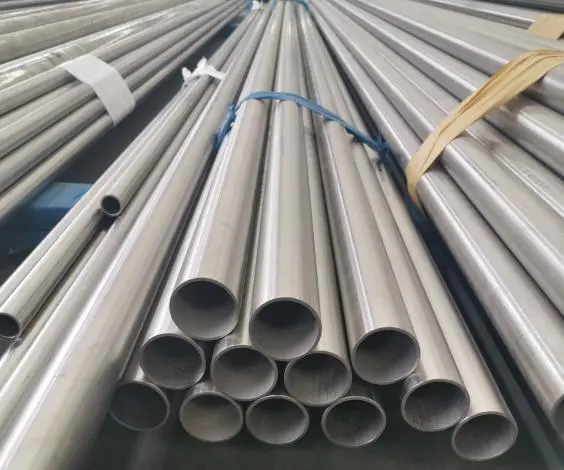
Overview of ASTM B444 Inconel 625 Tubing Specification
Understanding the ASTM B444 Standard Framework
ASTM B444 covers nickel-chromium-molybdenum-niobium alloy tubing that has been cold worked and is made from UNS N06625 material. Unlike welded options that are covered in different specifications, this standard requires seamless construction. This gets rid of the problems with weld-seam stability that happen in high-pressure sour gas environments and supercritical boilers. The standard lists two different grades: Grade 1 is annealed to provide general rust resistance and tensile strength up to 593°C, and Grade 2 is solution annealed at least 1093°C to provide better creep resistance above this temperature.
When buying things from other countries, buyers often come across both ASTM B444 and its metric version, ASTM B444M. Both meet the same material standards, but ASTM B444M uses SI units to talk about sizes and qualities, which makes it easier to talk to suppliers in Europe and Asia. Knowing the difference between these two terms keeps technical conversations clear and makes sure that buy orders have correct specs.
Manufacturing and Heat Treatment Requirements
First, high-purity nickel metal bars are remelted using a vacuum arc. Next, they are melted in a controlled atmosphere to keep the chemical balance exact. While the metal is hot, it is rolled and pierced to make hollow tubes. This is followed by cold drawing to get the exact dimensions needed. This cold-working method improves the mechanical qualities while keeping the uniform structure that is needed to keep the pressure inside.
The steps for heat treatment depend on the grade. Solution annealing for Grade 2 needs temperatures above 1093°C to get the right grain structure, while annealing temperatures for Grade 1 usually hit 871°C at the very least. These heating processes reduce the stresses inside the material that come from cold working and make the microstructure better for the setting it will be used in. As part of the finishing process, pickling is used to get rid of surface oxides. This leaves a clean, passivated surface that is needed for rust protection.
Core Chemical and Mechanical Properties of Inconel 625 Tubes
Chemical Composition and Elemental Functions
The unique performance features of ASTM B444 Inconel 625 tube come from its carefully controlled chemistry. An austenitic structure with a nickel content of at least 58% makes the metal flexible and tough across a wide range of temperatures. Chromium levels between 20.0% and 23.0% create the protective oxide layer that keeps things from rusting or oxidizing in harsh settings.
A molybdenum percentage of 8 to 10 percent makes it much more resistant to pitting and crevice corrosion, especially in chloride-containing solutions that are typical in marine and petrochemical settings. Niobium increases of 3.15 to 4.15% do two things: they improve the matrix through precipitation hardening and keep the material stable so that it doesn't become sensitive when it's welded or exposed to high temperatures. This mix gets rid of the intergranular rust risks that many stainless steels have after being heated and cooled many times.
Mechanical Performance Characteristics
ASTM B444 requires a minimum tensile strength of 827 MPa, which makes sure that the structure stays strong when it's under operating loads. As long as the minimum yield strength is 414 MPa, there are enough safety gaps to prevent plastic deformation during pressure spikes or thermal expansion. Minimum elongation values of 30% show that the material is flexible, which means it can handle impact loads and mounting pressures without breaking.
These qualities of the alloy stay the same across its entire working temperature range, from very cold temperatures to over 1000°C. The density of 8.44 g/cm³ changes hydraulic formulas for fluid systems. The melting range of 1290–1350°C gives large safety gaps for high-temperature uses. When designing a system, it's important to think about how thermal expansion works so that changes in size can be accommodated without putting too much stress on flanged joints or support structures.
Corrosion Resistance and Environmental Durability
What makes this material unique is that it is almost immune to chloride-ion stress-corrosion cracking, a type of failure that commonly happens in marine and sour gas settings and kills regular stainless steels. Its high molybdenum and niobium content makes it very resistant to cracking in still waters, which makes it perfect for control lines under the sea and pipes on offshore platforms.
Oxidation resistance makes things last longer in high-temperature burning settings, where regular materials would break down quickly. The metal is resistant to both oxidizing and reducing acids, so it can be used safely to make superphosphoric acid and to reprocess nuclear fuel, where mistakes in choosing the right material can have disastrous results. This makes it so that different process units in the same building don't have to have as many different material requirements.
Comparative Analysis: ASTM B444 Inconel 625 Tubes vs Other High-Performance Alloys
Performance Against Alternative Nickel Alloys
The rust resistance of ASTM B444 Inconel 625 tube and Inconel 600 is very different from one another. Inconel 600 is very good at resisting oxidation, but it doesn't have enough molybdenum to be resistant to pitting in salt conditions. Inconel 718 is stronger at high temperatures because it can precipitation-harden, but it is less resistant to corrosion and needs more complicated heat treatment methods that make fixes harder in the field.
When used in acidic settings, the material works better than austenitic stainless steels like 316L. Inconel 625 stays strong at all temperatures, while 316L cracks when exposed to chloride stress corrosion above 60°C in seawater. Type 904L stainless steel has about the same level of resistance to rust, but it is weaker and can't handle high temperatures as well, so it can't be used in situations with both high temperatures and high pressures.
Evaluation Against Non-Nickel Alternatives
Inconel 625 is stronger at high temperatures than Incoloy 825, even though Incoloy 825 is made of nickel, iron, and chromium and is generally resistant to rust. Titanium metals are very resistant to rust and have a low density. However, their strength drops quickly above 400°C, and they are hard to work with because they can become weak from hydrogen during welding.
Material choices are affected by how much they cost. Even though ASTM B444 tubing costs more than stainless steels, the cheaper total cost of ownership is often justified by the longer service life, less frequent upkeep, and lack of catastrophic failures. This material choice is especially good for projects that need to last a long time in harsh settings, since the costs of replacement and production delays often outweigh the original material saves from cheaper options.
Practical Insights for Procuring ASTM B444 Inconel 625 Tubes
Supply Chain Considerations and Lead Time Planning
When planning when to buy things, it's important to know how much they can produce. Reliable makers, such as TSM Technology, keep their monthly production capacity at 200 tons, which means they can reliably meet both standard and unique requirements. Standard lead times are usually between 5 and 20 days, but they can be longer if the measurements are complicated or if there are a lot of orders. This is because of the need for special tools and quality control processes.
Minimum order amounts depend on the provider and the size of the ASTM B444 Inconel 625 tube. MOQs for smaller diameter tubes with standard wall thicknesses are usually cheaper. On the other hand, large-diameter or heavy-wall configurations may need bigger pledges to cover the costs of setting up production. Building connections with makers who offer flexible MOQs can help you save money on purchases, especially when you are making prototypes or working on small projects where material costs take up a lot of your budget.
Supplier Certification and Quality Verification
International quality standards are met when you choose authorized makers. The ISO9001:2008 certification shows that the company manages quality in a planned way, and the TÜV certification shows that the company can make things. Material Test Certificates that meet EN10204.3.1 standards list the chemical make-up and mechanical qualities of each output heat. This makes it possible to track materials used in important projects.
Here are the quality verification steps every procurement professional should require:
- Chemical composition verification through spectroscopic analysis shows that the amounts of nickel, chromium, molybdenum, and niobium meet the standards of ASTM B444. This means that the expected corrosion resistance and mechanical qualities are met.
- Mechanical testing including tensile, yield, and elongation measurements confirms that the material's strength meets the minimum requirements. This keeps the structure from breaking under practical loads.
- Nondestructive examination using eddy current or ultrasonic testing can find internal breaks or changes in wall thickness that could weaken the stability of the pressure containment.
- Dimensional inspection verifying outer diameter, wall thickness, and length tolerances makes sure that the parts fit correctly with each other and prevents having to make expensive changes in the field during installation.
- Surface quality assessment examining finish condition and oxide removal shows that the pickling processes did a good job of getting surfaces ready for service settings where they will be resistant to corrosion.
These testing procedures keep you safe from low-quality materials and create the paper trails needed to follow the rules in aircraft, nuclear, and pressure tank applications. TSM Technology maintains comprehensive quality control incorporating all these testing methods, with results documented in Material Test Certificates that are sent with every package.
Logistics and Regulatory Compliance
When you buy things from other countries, you need to pay attention to export rules, import taxes, and shipping processes. The right package keeps the surface from getting damaged during shipping, and protective coatings or caps may be needed for long-term keeping before installation. Understanding customs classification codes and the paperwork that is needed to cross foreign lines can help you avoid delays.
There are more benefits to buying in bulk than just lower unit prices. Combining shipments lowers the cost of freight per unit, and keeping smart inventory buffers in place guards against problems in the supply chain. You should weigh these benefits against the costs of keeping an inventory and the length of time that a material will last, especially in wet places where surface oxidation can happen during long-term storage despite protection measures.
Application Areas and Performance Benefits of ASTM B444 Inconel 625 Tubing
Critical Applications Across Industrial Sectors
The material's high-temperature hardness and resistance to oxidation are used in aerospace and military. The exhaust systems, fuel lines, and heat exchanger tubes for engines must be able to handle thrust shaking and temperatures above 800°C without breaking down or deforming. Weld-seam failure risks are eliminated by the uniform construction in these high-stakes situations where material failure could put people or mission success at risk.
Offshore oil and gas activities depend on how well this metal works in sour gas conditions with carbon dioxide and hydrogen sulfide. High pressure, high temperatures, and acidic fluids all make it hard for subsea control lines, wellhead components, and process pipes on top of the ground. Because it doesn't crack under sulfur stress, the material doesn't fail in a catastrophic way like carbon steels and lower-alloy materials do in these situations.
Chemical processing plants use the ASTM B444 Inconel 625 tube for heat exchanges that handle aggressive media, reaction tanks, and transfer pipes. Making superphosphoric acid, reprocessing nuclear fuel, and making specific chemicals are all made easier by the fact that it doesn't rust in both oxidizing and reducing settings. This flexibility makes it easier to keep track of materials while still ensuring reliable performance in a wide range of process settings.
Real-World Performance and Service Life
Marine building projects show that the material will last for a long time in salt water. Copper-nickel metals erode and corrode at high speeds, and stainless steels crack when exposed to chloride. Inconel 625 tubing, on the other hand, stays structurally sound even after decades of being exposed to salt water all the time. This proven dependability is good for heat exchanges, desalination systems, and saltwater cooling circuits on ships.
Nuclear steam engines, fossil-fuel boiler tubes, and green energy heat transfer systems are all used to make electricity. This material is very useful in situations where there are a lot of stresses happening at the same time because it can handle high temperatures, doesn't rust, and is strong mechanically. Lower upkeep intervals and longer service lives make up for higher starting material costs, giving owners total value throughout the lifecycle of their facilities.
Maintenance Practices and Service Life Extension
For the plan to work, the right heat treatment during fitting is very important. After welding, solution annealing can help repair corrosion protection in areas that were damaged by the heat. Stabilization annealing at 1800°F stops sensitization when parts will experience wet rust after being exposed to high temperatures, but ASTM B444 doesn't always require this process.
Regular inspections should include looking at the surface to see if it's wearing away, measuring the size of the object to see if it's being worn away by erosion or rust, and using nondestructive tests to find problems below the surface before they become big enough to break. Setting up standard measures during commissioning lets you do trending analysis that estimates how much service life is left. This helps condition-based maintenance strategies that find the best time to replace something while still leaving safety gaps.
Conclusion
ASTM B444 Inconel 625 tube performs better than any other material when it comes to resistance to rust, ability to withstand high temperatures, and dynamic strength. The standard has strict rules for chemical composition, mechanical properties, and seamless construction. These rules make sure that the quality is the same from supplier to seller and from batch to batch. Understanding these important features—like how chromium, molybdenum, and niobium work together to fight rust and how they can withstand temperatures up to 1000°C—helps you choose materials that meet scientific needs and don't break the bank. This metal has a track record that makes it the best choice for critical tubing applications where failure would have terrible effects. It can be used in rocket propulsion, offshore energy production, chemical processing, or naval engineering.
FAQ
What distinguishes ASTM B444 Grade 1 from Grade 2 tubing?
Grade 1 is annealed at lower temperatures, no more than 871°C, which improves its tensile strength and resistance to rust for use at temperatures up to 593°C. Solution annealing at a minimum temperature of 1093°C forms grain structures in Grade 2 that don't break or creep at temperatures above 593°C. Choose Grade 2 if your product will be exposed to high temperatures for a long time and needs the material to stay the same size over a long length of time.
Can ASTM B444 tubes be welded without losing corrosion resistance?
Welding is possible with the right filling metals and methods, but the properties of the heat-affected zone may change in some places. Post-weld solution annealing at temperatures above 1093°C gets rid of precipitates and returns the regular grain structure, which makes the metal resistant to corrosion again. For uses that involve thermal cycles or wet corrosive contact, stabilization annealing adds to the safety against sensitization.
How do you verify supplier authenticity and material certification?
Ask for Material Test Certificates that meet the requirements of EN10204.3.1. These certificates should show the results of chemical analysis and mechanical tests that can be linked to particular production heats. Check the supplier's ISO9001:2008 and other industry-specific certifications. For large orders, you might want to use third-party checking services. For important uses where performance directly affects safety or following the rules, you should ask for witness testing during production.
Partner with TSM Technology for Certified ASTM B444 Inconel 625 Tube Solutions
TSM Technology has an approved stock of high-performance tubing with outer sizes from 6 to 114 mm and wall thicknesses from 0.5 to 15 mm. They are ready to meet your needs. Our ability to make 200 tons of steel every month guarantees a steady supply for projects of any size. Our ISO9001:2008, TÜV, and MTC acc EN10204.3.1 certifications show that we are dedicated to quality excellence. We are a reliable ASTM B444 Inconel 625 tube source for aircraft, petrochemical, marine, and power generation uses around the world. Our shipping times range from 5 to 20 days, and we can make changes to the sizes of the tubes to meet the specific needs of each project. You can email our expert team at info@tsmnialloy.com with your requirements to talk about them, ask for Material Test Certificates, or get full quotes that are specific to your needs.
References
ASTM International. (2023). ASTM B444/B444M Standard Specification for Nickel-Chromium-Molybdenum-Columbium Alloys and Nickel-Chromium-Molybdenum-Silicon Alloy Seamless Pipe and Tube. West Conshohocken, PA: ASTM International.
Special Metals Corporation. (2022). Inconel Alloy 625 Technical Bulletin. Huntington, WV: Special Metals Corporation Engineering Materials Division.
Davis, J.R. (Ed.). (2000). Nickel, Cobalt, and Their Alloys. Materials Park, OH: ASM International Handbook Committee.
Lai, G.Y. (2007). High-Temperature Corrosion and Materials Applications. Materials Park, OH: ASM International.
American Society of Mechanical Engineers. (2021). ASME Boiler and Pressure Vessel Code Section II: Materials. New York, NY: ASME Press.
Boyer, H.E. & Gall, T.L. (Eds.). (1985). Metals Handbook Desk Edition. Materials Park, OH: American Society for Metals.
Learn about our latest products and discounts through SMS or email