- English
- French
- German
- Portuguese
- Spanish
- Russian
- Japanese
- Korean
- Arabic
- Greek
- German
- Turkish
- Italian
- Danish
- Romanian
- Indonesian
- Czech
- Afrikaans
- Swedish
- Polish
- Basque
- Catalan
- Esperanto
- Hindi
- Lao
- Albanian
- Amharic
- Armenian
- Azerbaijani
- Belarusian
- Bengali
- Bosnian
- Bulgarian
- Cebuano
- Chichewa
- Corsican
- Croatian
- Dutch
- Estonian
- Filipino
- Finnish
- Frisian
- Galician
- Georgian
- Gujarati
- Haitian
- Hausa
- Hawaiian
- Hebrew
- Hmong
- Hungarian
- Icelandic
- Igbo
- Javanese
- Kannada
- Kazakh
- Khmer
- Kurdish
- Kyrgyz
- Latin
- Latvian
- Lithuanian
- Luxembou..
- Macedonian
- Malagasy
- Malay
- Malayalam
- Maltese
- Maori
- Marathi
- Mongolian
- Burmese
- Nepali
- Norwegian
- Pashto
- Persian
- Punjabi
- Serbian
- Sesotho
- Sinhala
- Slovak
- Slovenian
- Somali
- Samoan
- Scots Gaelic
- Shona
- Sindhi
- Sundanese
- Swahili
- Tajik
- Tamil
- Telugu
- Thai
- Ukrainian
- Urdu
- Uzbek
- Vietnamese
- Welsh
- Xhosa
- Yiddish
- Yoruba
- Zulu
Quality Control of Nickel Fasteners: Tensile Testing & Proof Load
Controlling the quality of nickel fasteners is essential for ensuring efficient business operations in the power generation, naval, petrochemical, and aircraft industries. It is made sure that these important parts can handle harsh settings and tough working conditions by using thorough testing methods, like tensile testing and proof load tests. These specialized fastening solutions are used in more and more modern industrial applications. To keep safety standards and operating integrity, strict quality control processes are needed. When procurement workers understand these testing methods, they can make smart choices when choosing sources and checking the certifications of materials for mission-critical uses.
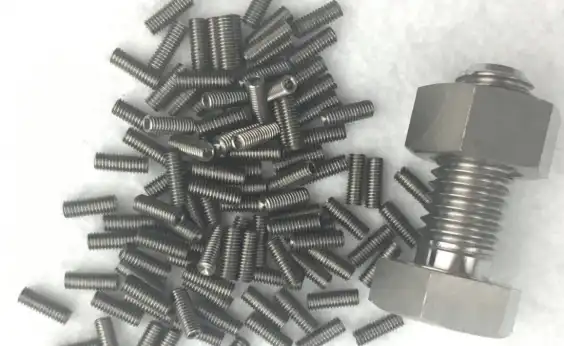
Understanding Quality Control in Nickel Fasteners
Controlling the quality of nickel screws involves thorough testing and checking procedures that make sure the products work well in harsh industrial settings. The all-encompassing method takes into account the chances of material inconsistency, rust, and mechanical failure, all of which can lower safety and durability in a wide range of situations.
Critical Components of Quality Assurance
Tensile tests and proof load ratings are very important parts of the quality control system for Nickel fasteners. These testing methods give concrete information to show that nickel fasteners meet or go beyond the requirements set by ASTM, DIN, JIS, BS, and GB/T. The information gathered during these tests is used to certify Nickel fasteners and keep track of their whereabouts.
Implementation Benefits for Industrial Applications
By using these quality controls during the purchasing and production stages, B2B clients can lower their risks, stay in compliance, and ensure the supply chain stays honest. Over 70 tools spread out over 8 production lines are used in TSM Technology's factories to make sure that quality is maintained throughout the whole process. A planned approach to quality control builds trust in the choice of materials used in many industry settings around the world, especially when a broken part could have terrible effects.
Tensile Testing of Nickel Fasteners: Principles and Procedures
Tensile testing is one of the most basic ways to tell how strong a fastener is by pulling on it until it breaks. This thorough testing method tells us important things about the qualities of yield strength, final tensile strength, and elongation that have a direct effect on how well the material works in real-life situations.
Testing Methodology and Standards Compliance
From preparing the material to analyzing the data, the testing process for nickel fasteners is very strict. This makes sure that it meets international standards and can be repeated. In testing labs, measured equipment is used to apply controlled loads to Nickel fasteners and watch how the material reacts as the stress-strain curve grows. Usually, examples of Nickel fasteners are put on universal testing tools and tensile loads are applied that get higher and higher until the material breaks.
Practical Applications in Material Selection
Knowing the results of a tensile test helps people who buy things decide if a material is right for the job, especially when the job needs good mechanical performance. A new case study about marine-grade nickel fasteners showed that tensile testing made sure that the fasteners would last in harsh ocean settings. The fasteners, which were made from Monel alloy, had better performance qualities that kept them from breaking too soon in offshore platform uses. This shows how important tension testing is for making sure that important industrial parts are of high quality.
Proof Load Testing: Verifying Load Capacity and Safety
Proof load testing directly proves that nickel-based fixing parts can handle certain loads without permanently changing shape. This testing method is different from tensile testing because it focuses on safety limits instead of final failure points. This gives important information for evaluating operational safety.
Procedural Standards and Load Requirements
The testing method follows specific steps spelled out in ASTM and ISO standards. These standards list normal and peak load values for nickel fasteners that ensure practical safety. Proof loads for Nickel fasteners are usually between 85% and 95% of the material's yield strength. This depends on the metal and what it will be used for. Testing centers put these loads on structures for set amounts of time while keeping an eye out for permanent damage or structural changes.
Industrial Application Benefits
Proof load testing makes sure that a product is reliable and stops it from breaking down too soon in important industry settings. This helps seller evaluation processes work well. Thanks to the test results, procurement officials can now compare how well different seller offers work. Proof load verification is part of TSM Technology's thorough testing procedures for all fastener products. This makes sure that they meet the requirements for EN10204 3.1/3.2 certification and third-party review standards.
Material Properties and Types of Nickel Fasteners Relevant to Quality Control
Nickel fasteners come in a lot of different types of materials, such as pure nickel, special alloys, and versions that have had the surface cleaned. Each group has its own set of mechanical traits and corrosion resistance patterns that affect how quality is judged and what tests need to be done.
Alloy Composition Impact on Testing
Some of the best alloys, like Monel, Inconel, Incoloy, Hastelloy, and nickel fasteners, have special properties that change the way they are tested. These materials are resistant to oxidation at high temperatures, have great mechanical qualities at high temperatures, are better at resisting stress-corrosion cracks, and are very tough when used in cryogenic environments. When setting testing standards and acceptance criteria, quality control processes need to take these different traits into account.
Comparative Analysis for Optimal Selection
Comparing nickel-based and stainless steel bolts shows that each type of material has its own quality control issues and ways of acting. Nickel metals usually survive corrosion better in chloride settings, which is why they are the best choice for naval and chemical processing uses. Material selection advice helps buyers and makers choose the best products for stability in use and compliance with the rules of their business.
Procurement Considerations for High-Quality Nickel Fasteners
A strategic method that matches quality assurance with supply chain operations and cost management is needed for procurement to work well. Multiple factors that affect long-term business success and component dependability are looked at as part of the process.
Quality Certification Requirements
Quality standards, such as ISO 9001, RoHS, REACH, and Nickel fasteners compliance, make sure that rules are followed and that materials can be tracked all the way through the supply chain. All of TSM Technology's fastener goods come with full paperwork, such as material test records, dimensional inspection reports, and chemical composition analyses. As part of the approval process, materials are tested thoroughly to make sure they meet standards for quality and accuracy in production.
Supplier Evaluation Criteria
To find reliable suppliers, you need to look at things like lead times, minimum order amounts, and shipping options. TSM Technology has flexible MOQ requirements that start at 100 pieces, and shipping times that range from 10 to 25 days, based on the details of the order. With a production capacity of 100,000 to 300,000 pieces, the supply chain can support both small projects and big industrial sites with confidence. Custom manufacturing options within well-established quality control frameworks give users more options for unique uses that need non-standard sizes or material requirements.
Conclusion
Tensile testing and proof load verification are used to make sure that nickel fasteners are of good quality so that they work reliably in harsh industrial settings. These testing methods give us important information that helps us choose materials, evaluate suppliers, and make sure that operations are safe. The all-around method to quality control takes into account the special problems that the aircraft, petrochemical, marine, and power generation industries have, where broken parts can have very bad results. Using strict testing guidelines during the whole buying process helps people make smart decisions and ensures long-term operating success.
FAQ
1. What is the difference between tensile testing and proof load testing?
To find out a fastener's final strength and elongation qualities, tensile testing measures how well it resists stress until it breaks completely. Proof load testing uses set loads below the failure point to make sure that fasteners can handle practical loads without permanently deforming. It focuses on safety limits instead of ultimate capacity.
2. How do nickel alloy fasteners compare to stainless steel options?
Nickel metal fasteners usually don't rust as easily in chloride settings and keep their mechanical traits better at high temperatures. Stainless steel fasteners might work in most situations, but nickel metals work really well in places like the ocean, chemical processes, and high temperatures where regular materials might break down too soon.
3. What quality certifications should I look for when procuring nickel fasteners?
Some important qualifications are EN10204 3.1/3.2 material test certificates, ISO 9001 quality management compliance, and inspection records from a third party. Environmental laws like RoHS and REACH may also need to be met, along with industry-specific approvals for uses in aircraft, nuclear, or marine environments.
Partner with TSM Technology for Premium Nickel Fastener Solutions
You can trust TSM Technology to make nickel fasteners because they offer high-quality parts that are backed by strict testing procedures and 14 years of experience in the field. Our 3 state-of-the-art companies have 8 production lines that work together to make sure that the quality is always the same and that your important applications get delivered on time. We offer full material traceability through EN10204 3.1/3.2 approval and third-party inspection records. We can meet your buying needs with sizes from M2.5 to M32 and custom lengths up to 1990mm. Email our expert team at info@tsmnialloy.com to talk about your unique fastener needs and to get free samples to try out.
References
1. American Society for Testing and Materials. "Standard Test Methods for Tension Testing of Metallic Materials." ASTM E8/E8M-21, Annual Book of ASTM Standards, Vol. 03.01.
2. International Organization for Standardization. "Mechanical Properties of Fasteners Made of Carbon Steel and Alloy Steel - Part 1: Bolts, Screws and Studs with Specified Property Classes." ISO 898-1:2013.
3. Special Metals Corporation. "High-Performance Alloys for Resistance to Aqueous Corrosion." Publication SMC-026, Technical Bulletin on Nickel Alloy Applications.
4. ASM International Handbook Committee. "Properties and Selection: Nonferrous Alloys and Special-Purpose Materials." ASM Handbook Volume 2, 10th Edition.
5. National Association of Corrosion Engineers. "Materials Requirements for Sulfur Service." NACE MR0103/ISO 17945 Standard for Oil and Gas Industry Applications.
6. Aerospace Industries Association. "Fastener Quality Assurance Requirements for Aerospace Applications." AIA-NAS-410 Certification and Inspection Guidelines.
Learn about our latest products and discounts through SMS or email