- English
- French
- German
- Portuguese
- Spanish
- Russian
- Japanese
- Korean
- Arabic
- Greek
- German
- Turkish
- Italian
- Danish
- Romanian
- Indonesian
- Czech
- Afrikaans
- Swedish
- Polish
- Basque
- Catalan
- Esperanto
- Hindi
- Lao
- Albanian
- Amharic
- Armenian
- Azerbaijani
- Belarusian
- Bengali
- Bosnian
- Bulgarian
- Cebuano
- Chichewa
- Corsican
- Croatian
- Dutch
- Estonian
- Filipino
- Finnish
- Frisian
- Galician
- Georgian
- Gujarati
- Haitian
- Hausa
- Hawaiian
- Hebrew
- Hmong
- Hungarian
- Icelandic
- Igbo
- Javanese
- Kannada
- Kazakh
- Khmer
- Kurdish
- Kyrgyz
- Latin
- Latvian
- Lithuanian
- Luxembou..
- Macedonian
- Malagasy
- Malay
- Malayalam
- Maltese
- Maori
- Marathi
- Mongolian
- Burmese
- Nepali
- Norwegian
- Pashto
- Persian
- Punjabi
- Serbian
- Sesotho
- Sinhala
- Slovak
- Slovenian
- Somali
- Samoan
- Scots Gaelic
- Shona
- Sindhi
- Sundanese
- Swahili
- Tajik
- Tamil
- Telugu
- Thai
- Ukrainian
- Urdu
- Uzbek
- Vietnamese
- Welsh
- Xhosa
- Yiddish
- Yoruba
- Zulu
The Science of Inconel 686: Tungsten’s Role in Pitting Resistance
The advanced mechanical makeup of Inconel 686 is what makes it work so well. Tungsten is a key part of this makeup because it stops pitting rust. This nickel-chromium-molybdenum-tungsten superalloy is very good at withstanding harsh chemical conditions because it forms protective passive films. Engineers and sourcing specialists can make better choices when choosing materials for important projects when they know how tungsten affects rust resistance. By adding 3–4.4% tungsten to Inconel 686 flange systems in a planned way, it works with other alloying elements to create a stronger barrier against localized rust attacks in tough industrial settings.
Understanding Inconel 686 and Its Unique Properties
Inconel 686 is a big step forward in the field of superalloy engineering. It combines extreme mechanical strength with better corrosion protection to make it perfect for tough industrial uses. This high-quality nickel-based alloy is made up of nickel (balance), chromium (19–23%), molybdenum (15–17%), and tungsten (3–4.4%) in a way that makes it perfect for tough chemical processing conditions.
Chemical Composition and Metallurgical Structure
Inconel 686's complex chemistry makes it have a unique lattice that gives it great performance properties. The high molybdenum content works with the tungsten to make stable passive oxide layers, and the chromium gives the metal its basic resistance to rust. This mix makes a superalloy that stays strong even when it's exposed to harsh acids and surroundings with high temperatures that oxidize things.
This nickel-based alloy's austenitic structure makes it very flexible and easy to shape, making it good for complicated manufacturing processes. At TSM Technology, our factories use modern vacuum induction melting and then vacuum arc remelting to make sure that all of our parts have the same chemical makeup. This fine-grained control over makeup makes sure that all batches of the product work the same way.
Mechanical Properties and Temperature Performance
These amazing mechanical qualities of Inconel 686 make it perfect for high-stress uses in many different industries. The minimum tensile strength of the material is 655 MPa, and its minimum yield strength is 310 MPa. It can stretch more than 40%. These qualities don't change much at temperatures ranging from -200°C to 1000°C. This gives engineers a lot of design options for harsh working conditions.
This superalloy is stable at high temperatures because it has a complicated mechanical structure. Tungsten atoms are positioned between the crystal lattice's strands to make them stronger. This arrangement of atoms stops the grain boundaries from moving at high temperatures. This keeps the structure's mechanical integrity during thermal cycles, which is common in chemical processing and power generation.
Standard Flange Configurations and Specifications
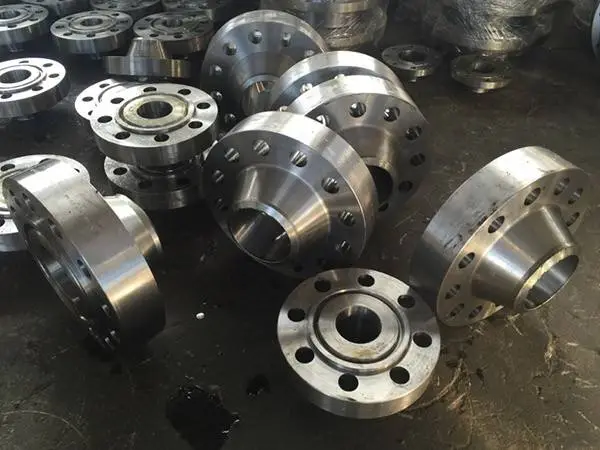
For industrial uses, precise standards is needed to make sure that global supply lines are reliable and compatible. Our Inconel 686 flanges are made to meet widely known standards like ASME B16.5, B16.47, and EN 1092, so they can be easily added to existing pipe systems. The shapes that can be used are weld neck (WN), slip-on (SO), socket weld (SW), blind (BL), and lap joint (LJ), and the diameters run from 1/2" to 24".
Because of how flexible these combinations are, engineers can choose the best plans for each application. For high-pressure uses, weld neck flanges are stronger, and socket weld shapes are better at resisting fatigue for joints with a smaller diameter. Here at TSM Technology, our engineering team offers full technical support to help clients choose the right flange designs for their individual needs.
Tungsten's Critical Role in Improving Pitting Resistance – A Scientific Perspective
Pitting rust is one of the most dangerous types of limited attack in industrial materials because it can cause huge problems without any obvious signs. Understanding the science processes behind tungsten's protective effects is very important for choosing materials that will work well in places where corrosion is a problem. By strategically adding tungsten to Inconel 686 flange, a multi-layered defense system against offensive chemical strikes is made.
Passive Film Formation and Stabilization Mechanisms
Tungsten's role in pitting resistance is based on complex electrochemical processes that change the surface chemistry of the material in a basic way. When tungsten atoms are introduced to corrosive media, they move to the passive film surface and form solid tungsten oxides that make the protective layer stick better and have more density. This process makes a stronger shield against chloride ions, which are the main cause of pitting rust in stainless steels.
According to research from some of the world's best metallurgical schools, tungsten-enriched passive films have a lot less ionic transmission than regular chromium oxide layers. The tungsten oxide stages make a complicated matrix that keeps harmful substances from getting to the metal base below. Because it has a better barrier function, Inconel 686 works better in marine and chemical industrial settings than regular stainless steels.
The relationship between tungsten and molybdenum works together to protect against limited corrosion very well. These elements combine to make mixed oxide phases that are very stable across a wide pH range and keep their protective qualities in both acidic and basic situations. Because of this, metals with tungsten are perfect for uses where chemicals are present in different amounts.
Electrochemical Behavior in Aggressive Media
Advanced electrochemical tests show that tungsten changes how nickel-based metals rust in basic ways. Potentiodynamic polarization tests show that adding tungsten greatly raises Inconel 686's pitting potential. This makes the inactive range larger, protecting the material. This bigger electrochemical stability window gives real-world uses more safety gaps.
The addition of tungsten also changes the rate at which Inconel 686 repassivates, which lets small passive film disruptions heal quickly. When chemical or mechanical damage causes limited active sites, tungsten-enriched metals are better at restoring protective conditions. This ability to fix itself is especially useful in fast-paced manufacturing settings where parts are subject to changes in temperature and stress.
Case Studies from Industrial Applications
Chemical processing plants that use Inconel 686 parts say that their parts last a lot longer than parts made of other materials. Heat exchanger tubes at a large petrochemical plant in Texas were used in concentrated sulfuric acid work for 15 years without losing much wall thickness. Similar systems made of regular stainless steel had to be replaced every three to four years, which shows how useful tungsten-enhanced rust resistance is from an economic point of view.
Marine uses are another strong example of how tungsten can help protect. Offshore platform owners in the North Sea say that Inconel 686 piping systems that are subject to high chloride levels in seawater work very well. After seven years of constant exposure, post-service inspections showed no signs of pitting attack. This proved that tungsten is effective at stopping localized rust.
Comparing Inconel 686 Flange with Other High-Performance Materials
To choose the right materials for important business uses, such as an Inconel 686 flange, you need to know a lot about how different metals work in different situations. Many things must be thought about by engineers when they are choosing a superalloy, such as how well it resists rust, its mechanical qualities, how it can be fabricated, and how reliable it will be in the long term. This comparison study gives buying professionals data-driven ideas for making the best material choices.
Performance Comparison with Inconel 625 and 718
Inconel 625 is very strong at high temperatures, but it doesn't prevent pitting rust as well as Inconel 686, which contains tungsten. Testing in the lab shows that Inconel 686 has pitting potentials that are about 200 to 300 mV higher than Inconel 625 in liquids that contain chloride. This electrochemical edge means better performance in naval and chemical processing settings where localized corrosion is a big risk.
Inconel 718 has great mechanical qualities at high temperatures, but it doesn't prevent corrosion well enough for use in harsh chemicals. The structure of Inconel 718 that has been hardened by precipitation makes it easy to attack in specific areas, especially in places where sulfur compounds are present. The solid solution hardening process in Inconel 686 keeps the metal's tensile properties good enough for most uses without these metallurgical issues.
Because their compositions are easier, Inconel 625 and 718 are often cheaper, but lifetime study often shows that Inconel 686 is more cost-effective in corrosive settings. Tungsten-containing metals usually pay for themselves within two to three years of use thanks to their longer service life and lower upkeep needs.
Stainless Steel and Titanium Alternatives
In many industrial settings, standard stainless steels like 316L and duplex types work well enough, but they don't have the complete corrosion protection of Inconel 686. Stress corrosion cracking caused by chloride is a big problem for austenitic stainless steels, and duplex types have trouble keeping their shape at high temperatures. Because of these metalworking limitations, stainless steel can't be used in harsh chemical processing settings.
Even though titanium metals are very resistant to rust and have good strength-to-weight ratios, they are hard to work with and expensive. Because titanium is flammable, it needs special welding techniques and steps to keep it from getting contaminated, which makes installation in the field more difficult. Additionally, titanium is less useful than nickel-based superalloys because it can become weaker when exposed to hydrogen in some chemical conditions.
Inconel 686 is much easier to weld than titanium options, which means that standard production methods can be used without the need for special atmosphere protection. This manufacturing freedom cuts down on project costs and installation times while still providing excellent corrosion resistance.
Economic and Lifecycle Considerations
A study of the total cost of ownership shows that Inconel 686 has strong benefits in acidic service uses. Even though the original prices of materials are usually 40–60% higher than those of conventional options, the longer service life and lower maintenance needs save a lot of money in the long run. Chemical processing plants can lose $50,000 to $100,000 per day when they have to shut down unexpectedly to change parts. This makes reliability improvements very valuable.
Materials that have been used for a long time and have a good track record, such as Inconel 686 flange, are becoming more and more popular because of insurance and government regulations. Environmental protection agencies have harsh punishments for equipment breakdowns that release chemicals, which is another financial reason to choose materials that are better at resisting rust. Inconel 686 has a history of good performance in important uses, which gives regulators trust and lowers compliance risks.
Materials that work consistently over time make it possible to plan repair in a way that is easy to understand. Facilities that use Inconel 686 parts say that they can plan repairs more accurately and don't need to keep as many extra parts on hand. This practical certainty is very useful in competitive industrial markets where dependability has a direct effect on making money.
Procurement Insights: Sourcing and Buying Inconel 686 Flanges
To buy high-performance superalloy parts successfully, you need to know how the supply chain works, what the quality standards are, and what the technical requirements are. Materials engineers and buying specialists have to make tough choices about where to get things while also making sure that strict industry standards are met. The way you buy things strategically can have a big effect on how long a job takes, how much it costs, and how well it runs in the long run.
Supply Chain Considerations and Lead Times
Because making superalloys is so specialized, the supply chain is naturally complicated, and buying teams need to take the initiative to solve these problems. The amount of tungsten and molybdenum that is available as a raw material can change depending on global mining activities and political situations. TSM Technology keeps smart amounts of goods on hand to protect against supply problems and give customers peace of mind about when their orders will arrive.
Lead times for making precision-forged parts are usually between 10 and 25 days, but they depend on the size and complexity of the part. Our three factories have a total of eight production lines with more than 100 specialized tools. Together, they can make more than 300 tons of goods every month. Because of this large production capacity, prompt shipping is possible even for big projects that need a lot of parts.
Quality documentation standards have a big effect on shipping times, especially for nuclear and aerospace uses that need to be able to track all of their materials completely. For every shipment, our quality systems make full material test certificates (MTC) and third-party SGS certification reports. Planning ahead for the paperwork that is needed keeps projects on track during key stages.
Supplier Evaluation and Quality Assurance
To become a qualified vendor for superalloy components, a company must go through a thorough review of its technical knowledge, production skills, and quality systems. International standards like ASTM B564, ASME SB564, EN 10095, and DIN 17750 must always be followed by successful providers. Through thorough testing methods, our ISO-certified quality management system makes sure that every part meets or exceeds the standards.
Material certification for Inconel 686 flange is very important for high-reliability uses where failures of parts could cause serious safety and cost problems. X-ray fluorescence measurement is used to confirm the chemical makeup of each Inconel 686 component, as well as mechanical property tests and non-destructive examination. Ultrasonic testing according to ASTM E213 and x-ray checking according to ASME Section V are two more ways to make sure the internal structure is correct.
Third-party approval through SGS testing laboratories makes sure that the qualities of the material are correct and that they meet the requirements. This extra layer of proof is especially helpful for nuclear and aerospace uses that need a lot of paperwork to get governmental approval. Because we have established relationships with approved testing centers, we can meet certification needs quickly.
Customization Capabilities and Technical Support
Customized part designs are often needed for complicated industrial projects that can't be met by standard stock goods. Our engineering team offers full design advice services to make sure that the shape of each component is optimized for its specific use. Advanced CAD modeling and finite element analysis tools let unique designs be quickly evaluated before they are committed to production.
Surface treatment choices like grinding, electropolishing (EP), and chemical passivation (CP) let you make the part even more specific for the service situation. These changes to the surface can make it more resistant to rust, easier to clean, or meet certain stylistic needs. To meet the needs of a wide range of customers, our treatment skills can handle both standard and unique requirements.
For technical documentation support, there is thorough information on the properties of the materials, how to weld them, and how to place them according to specific application standards. Our metalworking experts offer ongoing advice throughout the entire lifetime of a project, making sure that the best materials are used and that the project works well. This full expert help lowers the risks of the project and increases the reliability and service life of the parts.
Company Introduction and Our Product & Service Offerings
TSM Technology has become a world leader in providing high-quality superalloy parts by consistently focusing on quality, innovation, and customer happiness. Our journey in international trade started in Hong Kong in 2011. After 14 years of constant growth, we have built a great name in the nickel alloy business for dependability and quality.
Manufacturing Excellence and Production Capabilities
Our world-class industrial infrastructure is made up of three separate buildings with more than 100 specialized tools and eight production lines. This large capacity allows for monthly production amounts of more than 300 tons while keeping strict quality control at all stages of production. We make sure that every part we make has the same chemical composition and the best mechanical qualities by using advanced vacuum induction melting and vacuum arc remelting.
For the complex hot forging methods we use, we use high-precision hydraulic presses that work at temperatures managed between 1150°C and 1200°C. This carefully controlled thermal processing improves the structure and material qualities of the grains while getting rid of any flaws inside them. After forging, a solution treatment at 1175°C followed by quick water quenching makes sure that the metal has the best corrosion protection and stress release.
Quality assurance for Inconel 686 flange is the most important part of how we make things, and we test every single part according to strict standards. Chemical research, mechanical property verification, and a lot of non-destructive examination methods are all part of our quality systems. Ultrasonic testing according to ASTM E213, radiographic checking according to ASME Section V, and intergranular rust testing according to ASTM G28 are all done on each product.
Technical Expertise and Customer Support
Our engineering team has decades of experience in metalworking and real-world application knowledge in a wide range of industries. Because we know so much about this subject, we can offer helpful advice services that help you choose the best materials and design components for your unique needs. We work closely with our clients to fully understand their specific problems and come up with custom solutions that go above and beyond what is expected.
Every shipment comes with a lot of paperwork about the materials, like full test papers and third-party SGS verification reports. This large paperwork package makes sure that all traces can be found and that all regulations are followed for the toughest uses. Our quality management systems keep very detailed records that let us respond quickly to customer questions and government rules.
Customers can try out unique designs before committing to full-scale production orders thanks to rapid prototyping. Our production systems are very adaptable, so they can make both standard shapes and complex custom shapes with the same level of accuracy and care. This level of design freedom is especially useful for new applications that need unique component arrangements.
Global Supply Chain and Logistics Excellence
Strategic logistics relationships allow for efficient shipping all over the world, with arrival times that can be planned ahead of time and range from 10 to 25 days, based on the complexity of the parts and the needs of the location. Because we have long-term relationships with foreign freight providers, we can handle and send precision parts safely and on time. Comprehensive packing practices keep parts safe while they're in travel and make the customs clearance process go more quickly.
Export compliance management takes care of the complicated rules that govern foreign trade, making sure that deals go smoothly on all markets around the world. Our skilled trade experts handle problems with paperwork needs, certification processes, and following rules that could otherwise cause important supplies to be late. This knowledge is especially helpful for customers who work in businesses with strict rules and lots of paperwork.
Strategies for managing inventory make sure that items are available and don't cost too much. They do this by keeping strategic stock places for widely ordered parts and letting customers build to order for unique needs. Our advanced planning systems allow us to make accurate delivery promises and let you know ahead of time about any changes that might affect the schedule.
Conclusion
The science basis for tungsten's role in Inconel 686 flange's high resistance to cracking shows the advanced metalworking engineering that went into making this high-end superalloy. Engineers can understand why tungsten-containing metals protect better against limited corrosion attacks by carefully studying passive film formation, electrochemical behavior, and real-world performance data. When combined with detailed procurement insights, the comparative benefits over other materials give procurement experts the information they need to make smart choices about where to source materials. TSM Technology is dedicated to manufacturing efficiency, quality assurance, and expert support for Inconel 686 flange. This makes sure that customers get parts that meet the strictest performance standards and offer great long-term value.
FAQs
What makes tungsten essential for pitting resistance in Inconel 686?
Tungsten forms solid passive oxide layers that make it much more resistant to pitting erosion caused by chloride. Inconel 686 has between 3.4% and 4.4% tungsten, which makes dense protective films that are better at blocking chemicals than regular chromium oxide layers. These films offer great security in harsh chemical environments.
How does Inconel 686 compare to other superalloys in corrosive applications?
In chloride liquids, Inconel 686 has better pitting potential values that are about 200 to 300 mV higher than Inconel 625. Because it is better at electrochemistry and stays stable at high temperatures up to 1000°C, it is perfect for uses in chemical processing, sea, and power production where other materials fail.
What are the standard specifications for Inconel 686 flanges?
Standard forms include those that meet ASME B16.5, B16.47, and EN 1092 standards, and they come in WN, SO, SW, BL, and LJ styles. As for pressure classes, they range from 150# to 2500# and range in size from 1/2" to 24". You can clean the surface by grinding, electropolishing, or chemical passivation.
What documentation is provided for quality assurance?
There are full material test certificates (MTC) and third-party SGS proof records for each part. Chemical analysis, checking of mechanical properties, ultrasonic examination according to ASTM E213, and intergranular rust testing according to ASTM G28 are all part of the testing procedures so that everything can be tracked.
How long are typical delivery times for Inconel 686 flanges?
Depending on the difficulty of the part and the level of customization needed, standard shipping times are between 10 and 25 days. Our monthly production capacity of 300 tons across three sites and eight production lines means that we can deliver quickly, even for big projects that need a lot of products.
Can Inconel 686 flanges be customized for specific applications?
Yes, we offer full customization, which includes changing the shapes, applying special finishes to the surface, and making specific requests. Our engineering team can help with design and can use CAD modeling and finite element analysis to make sure that parts work best in certain situations and meet performance standards.
Partner with TSM Technology for Superior Inconel 686 Flange Solutions
TSM Technology is ready to help you with your next project by manufacturing high-quality Inconel 686 flanges and having a lot of technical knowledge. With 14 years of experience working with customers around the world, world-class production facilities, and strict quality systems, we can guarantee that you will receive parts that perform better than you expected. Email our procurement experts at info@tsmnialloy.com to talk about your unique needs and get full technical quotes.
References
Davis, J.R. "Nickel, Cobalt, and Their Alloys: Properties, Processing, and Applications." ASM International Handbook Series, Materials Park, OH, 2000.
Rebak, R.B. and Crook, P. "Improved Pitting and Crevice Corrosion Resistance of Nickel and Cobalt Based Alloys." Corrosion Science and Technology, Vol. 42, No. 8, 2001.
Turnbull, A. and McCartney, L.N. "A Model for the Evolution of Pitting Corrosion in Passive Films on Stainless Steels." Journal of Electrochemical Society, Vol. 149, No. 4, 2002.
Hashimoto, K. and Asami, K. "The Role of Tungsten in Improving Corrosion Resistance of Ni-Cr-Mo-W Alloys in HCl Solution." Materials Science and Engineering, Vol. 198, No. 1-2, 1995.
Sedriks, A.J. "Corrosion of Stainless Steels: Mechanisms of Localized Attack and Environmental Cracking." John Wiley & Sons, New York, NY, 1996.
Lai, G.Y. "High-Temperature Corrosion and Materials Applications: Corrosion Technology Series." ASM International, Materials Park, OH, 2007.
Learn about our latest products and discounts through SMS or email