- English
- French
- German
- Portuguese
- Spanish
- Russian
- Japanese
- Korean
- Arabic
- Greek
- German
- Turkish
- Italian
- Danish
- Romanian
- Indonesian
- Czech
- Afrikaans
- Swedish
- Polish
- Basque
- Catalan
- Esperanto
- Hindi
- Lao
- Albanian
- Amharic
- Armenian
- Azerbaijani
- Belarusian
- Bengali
- Bosnian
- Bulgarian
- Cebuano
- Chichewa
- Corsican
- Croatian
- Dutch
- Estonian
- Filipino
- Finnish
- Frisian
- Galician
- Georgian
- Gujarati
- Haitian
- Hausa
- Hawaiian
- Hebrew
- Hmong
- Hungarian
- Icelandic
- Igbo
- Javanese
- Kannada
- Kazakh
- Khmer
- Kurdish
- Kyrgyz
- Latin
- Latvian
- Lithuanian
- Luxembou..
- Macedonian
- Malagasy
- Malay
- Malayalam
- Maltese
- Maori
- Marathi
- Mongolian
- Burmese
- Nepali
- Norwegian
- Pashto
- Persian
- Punjabi
- Serbian
- Sesotho
- Sinhala
- Slovak
- Slovenian
- Somali
- Samoan
- Scots Gaelic
- Shona
- Sindhi
- Sundanese
- Swahili
- Tajik
- Tamil
- Telugu
- Thai
- Ukrainian
- Urdu
- Uzbek
- Vietnamese
- Welsh
- Xhosa
- Yiddish
- Yoruba
- Zulu
Why Inconel 686 Outperforms Duplex Steel in Severe Environments?
When choosing materials for important commercial uses, the difference between duplex steel and Inconel 686 is very important for long-term success. Because it is so resistant to pitting corrosion, crevice corrosion, and stress corrosion cracking, Inconel 686 works very well in harsh conditions. The special mix of nickel, chromium, molybdenum, and tungsten in an Inconel 686 flange makes a thick passive film that can handle harsh chemicals and high temperatures, which isn't always possible with duplex steel. In environments ranging from chemical processing to the ocean, this superalloy keeps its structural integrity. Its long service life and low upkeep costs make it a top choice in demanding industry sectors.
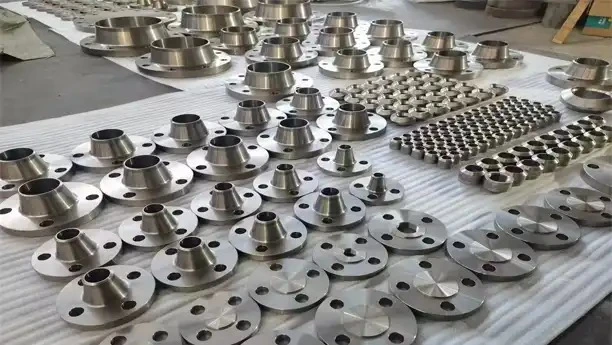
Introduction to Severe Environment Materials: Why the Right Flange Matters
When equipment works in extreme situations, it creates problems that have never been seen before in industrial processes. In harsh settings, parts are exposed to chemicals that break down metals, high temperatures, changes in pressure, and active media that can damage the system in months instead of years. Material failure has effects that go beyond the cost of replacing the equipment. These effects include lost production time, safety risks, and problems with following the rules.
Critical Factors in Severe Industrial Environments
Extremes of temperature, from very cold to over 800°C, cause thermal stress that makes it hard for materials to stay stable. Being exposed to acids, alkalis, and mixed liquids speeds up the rusting process, which can go through most materials. These problems are made worse by pressure cycling and mechanical stress, which means that only high-quality metals can keep working reliably.
The Strategic Role of Flanges in System Integrity
Flanges are very important places to connect pipes in systems where stopping leaks is very important. These parts must keep the integrity of the seals while enduring mechanical loads, heat growth, and chemical attack. The choice of material has a direct effect on the dependability of the system, since a failed flange can have disastrous effects such as polluting the environment, putting workers at risk, or shutting down operations.
When procurement workers understand these basic problems, they can better understand why choosing materials is more of a strategic investment than a simple cost issue. When you look at the total cost of ownership over long periods of time, you can see the difference in performance between normal and premium products.
Material Composition and Properties: Inconel 686 vs Duplex Steel Flanges
If you put different materials through tough situations, their success will depend on how they were made. Inconel 686 is made up of a carefully balanced mix of nickel as the main element, 19–23% chromium, 15–17% molybdenum, and 3–4.4% tungsten. This quadruple metal system has effects that are stronger than the sum of the effects of each element working alone.
Chemical Composition Analysis
Duplex steel has a balanced ferritic-austenitic microstructure, and the nickel content is usually between 4 and 7 percent. The chromium content is usually between 22 and 25 percent. Although this mix has good mechanical strength and some corrosion resistance, it doesn't give as much safety as higher-alloy systems. Molybdenum levels in duplex steels rarely go above 4%, which makes them less useful in harsh chemical conditions.
Because Inconel 686 is made of better materials, it can form a steady, self-healing passive layer that can grow back when it gets broken. The high molybdenum and tungsten content makes it more resistant to limited rust, and the nickel base makes it stable at high and low temperatures.
Manufacturing Process Impact on Performance
Advanced vacuum induction melting and vacuum arc remelting make sure that all Inconel 686 goods have the same chemical make-up. Precision hydraulic presses that work at temperatures between 1150°C and 1200°C are used in hot forging processes to improve grain structure and get rid of any possible flaws. Solution treatment at controlled temperatures gets rid of any remaining stresses and makes the material more resistant to rust. When compared to traditional ways of making duplex steel, which can lead to chemical segregation and varying microstructures that hurt long-term performance, these methods produce more consistent materials.
Performance Comparison: How Inconel 686 Flanges Outperform Duplex Steel
Real-world performance data shows that using Inconel 686 flanges instead of solid steel in tough situations is a big plus. There are measurable differences in corrosion rates, mechanical qualities, and service life that can be seen in both lab tests and real-world experience. These differences lead to big practical benefits.
Superior Corrosion Resistance Performance
As per ASTM G28 norms, tests show that Inconel 686 has corrosion rates below 0.1 mm/year in places where duplex steel has rates above 2.0 mm/year. This twenty-fold increase in corrosion protection directly leads to longer component life and less upkeep being needed. The material's resistance to pitting and crevice rust stays the same from -200°C to 1000°C, which gives you operating freedom that you can't get with duplex options.
In chloride-filled settings, where duplex steels are more likely to crack above certain temperatures, stress corrosion cracking protection is very important. Even when stress and corrosion are mixed in ways that would weaken the structure of duplex steel, Inconel 686 doesn't crack.
Mechanical Property Advantages
The following performance traits show that Inconel 686 is mechanically better:
- Structures made of steel with a tensile strength higher than 655 MPa stay together under high stress, but duplex steel may lose its strength at high temperatures.
- A yield strength above 310 MPa keeps the shape of the material stable under practical loads that could permanently distort less strong materials.
- Elongation values of 40% allow for flexibility that lets heat cycling happen without cracks starting.
- Stability at temperatures up to 1000°C lets it be used in high-temperature situations where duplex steel would weaken.
These technical benefits lead to higher safety margins and more reliable operation in important situations. Chemical processing plants say that switching from duplex steel to Inconel 686 plates in reactor systems and heat exchangers can increase the life of parts by 300 to 500%.
Economic Impact Analysis
The starting cost of materials for Inconel 686 is about 250–400% higher than for duplex steel, but a total cost study shows that there are big savings in the long run. With Inconel 686, maintenance periods are between 5 and 7 years instead of 12 to 18 months for duplex steel. This lowers both the direct costs of replacement and the secondary costs of production interruptions. When Inconel 686 parts are used in important seawater applications, energy firms with offshore platforms say that their maintenance costs drop by more than 60% over ten years of operation.
Procurement Insights: Sourcing Quality Inconel 686 Flanges for Your Projects
To buy Inconel 686 flanges successfully, you need to know how the market works, what your suppliers can do, and how to check the quality of the products. Specialized producers with advanced metalworking skills and strict quality control systems are part of the global supply chain for premium superalloys.
Supplier Evaluation Criteria
When choosing providers, manufacturing ability is one of the most important things to think about. Facilities with more than one production line and monthly outputs of more than 200 tons show that they are large enough to ensure uniform quality and on-time deliveries. Vacuum melting tools, precision casting systems, and full testing labs that can do chemical analysis, mechanical testing, and non-destructive examination should all be part of the production capabilities.
Certifications for quality make sure that suppliers can do what they say they can do and that the process is being controlled properly. Systematic quality management is ensured by ISO 9001:2015 certification, and technical skill in important uses is proven by ASME certification for pressure vessel components and other specialty certifications. Independent confirmation of product compatibility can be found in material test certificates and third-party inspection records from well-known companies like SGS.
Technical Specification Requirements
Important performance requirements must be included in the procurement specs. These include the material grade name (UNS N06686), the standards that apply (ASME B16.5, B16.47, EN 1092), and the testing requirements. Sizes from 1/2" to 24" can be used for most commercial tasks, and pressure class rates from 150# to 2500# give you options for a wide range of system needs.
Surface treatments like grinding, electropolishing, and chemical pickling change how well something resists rust and how easy it is to clean in sanitary settings. Because customization is possible, providers can offer changed designs or non-standard setups that work best in certain situations.
Standard setups usually have delivery times between 10 and 25 days, but complex custom designs may need longer wait times. Building ties with providers and keeping enough inventory on hand can help keep project delays to a minimum and make sure that materials are available for urgent needs.
Why Choose TSM Technology for Your Inconel 686 Flange Requirements?
With over 14 years of experience dealing internationally and a focus on making superalloys, TSM Technology is one of the best companies in the world at making high-performance alloys. Because we are dedicated to quality and new ideas, we have built strong relationships with companies around the world in the aerospace, petroleum, marine, and power generation industries.
Manufacturing Excellence and Capacity
We can make Inconel 686 flange in three separate buildings, each with eight specialized production lines and more than 100 high-tech machines for making things. This infrastructure serves 300 tons of production every month, making sure there is a steady supply for big projects while still being able to adapt to individual needs. Advanced vacuum induction melting followed by vacuum arc remelting makes sure that all batches of products are chemically and materially the same.
X-ray fluorescence analysis is used to check the chemical makeup of an item one hundred percent of the time. Comprehensive mechanical property testing and non-destructive examination according to ASTM and ASME standards are also used for quality control. To make sure the performance traits are correct, each product is put through ultrasonic testing, radiographic inspection, and specialty rust testing.
Comprehensive Product Range and Customization
We offer all normal shapes and sizes of Inconel 686 flanges, such as weld neck (WN), slip-on (SO), socket weld (SW), blind (BL), and lap joint (LJ). There are sizes available from 1/2" to 24" to meet a wide range of application needs, and pressure classes from 150# to 2500# to handle different system pressures. Surface cleaning options like sandblasting, electropolishing, and chemical pickling make goods work better in certain conditions.
Customization services include more than just standard changes; they also include custom designs made with the help of the tech teams of clients. Our expert staff works closely with customers to make sure that the flange configurations they choose work best for their specific working conditions. This ensures that the products work at their best while still meeting all relevant codes and standards.
Quality Assurance and Documentation
Material certification includes detailed Material Test Certificates and separate SGS test results that list the chemical make-up, mechanical qualities, and resistance to corrosion of the material. Traceability rules and legal compliance are supported by documentation packages in all foreign markets. Our quality management system keeps its ISO 9001:2015 approval by following special steps for important application parts.
Technical support services include help choosing materials, application engineering advice, and support after delivery to make sure the best performance throughout the span of the product. Our global distribution network makes sure that products get to customers on time and stay intact while they are being shipped and stored.
Conclusion
Inconel 686 flange performs better than duplex steel in harsh environments because of basic changes in how the metal is made, which lead to real operational benefits. The extra cost of the material is worth it because it lasts longer, resists corrosion better, and has better mechanical qualities. This is because it lowers upkeep costs and makes the system more reliable. To do a good job of procurement, you need to work with skilled makers who know about both material science and application needs. TSM Technology has a history of making superalloys, and they also offer full quality assurance and expert support. This makes sure that they get the best results for important industrial uses that need the highest performance standards.
FAQ
1.What specific applications benefit most from Inconel 686 over duplex steel?
The biggest difference in performance can be seen in chemical handling tasks that use sulfuric acid, hydrochloric acid, and phosphoric acid. In places with a lot of acid, where duplex steel is attacked more quickly, Inconel 686 keeps its corrosion rates below 0.1 mm/year. Marine uses that are near saltwater and chloride-rich settings also benefit a lot from Inconel 686 because it doesn't crack under stress like duplex steels do when they are in these situations.
2.How do I verify material authenticity when procuring Inconel 686 flanges?
For material proof, you need a lot of paperwork, like Material Test Certificates that show chemical makeup analysis, mechanical property test results, and data on corrosion resistance. Reports from independent third-party inspections by well-known companies like SGS add to the proof. Portable X-ray fluorescence testers can be used for physical testing on-site to confirm the chemical makeup, and hardness testing can be used to confirm the heat treatment conditions.
3.What factors influence the cost differential between Inconel 686 and duplex steel flanges?
The main reason is the cost of the raw materials. Inconel 686 has a high nickel, molybdenum, and tungsten content, which makes it more expensive to make. Due to the need for skilled melting, casting, and heat treatment, manufacturing things that are more complicated costs more. But when you look at the total cost, you need to think about things like longer service life, less upkeep, and lower replacement costs, which usually cover the initial extra within 3 to 5 years of operation.
4.Can existing duplex steel flange installations be upgraded to Inconel 686?
Retrofit uses are usually possible as long as the dimensions are compatible and the right steps are taken to install them. Different materials usually have the same flange bolt hole shapes and sealing surface measurements. However, for mixed-material systems, thermal expansion rates may need to be studied by engineers. Professional technical advice makes sure that the right materials are used and that the right fitting methods are used to keep the system's stability.
Partner with TSM Technology for Superior Inconel 686 Flange Solutions
TSM Technology has a track record of making high-quality Inconel 686 flanges that are used in the toughest industrial settings. We are the preferred seller of Inconel 686 flanges for important projects around the world because we can make a wide range of products, have strict quality control systems, and offer a lot of customization options. We guarantee the best performance and dependability by providing material certifications such as MTC and SGS reports, shipping times of 10 to 25 days, and expert help throughout the entire lifecycle of your project. Get in touch with our experts at info@tsmnialloy.com to talk about your unique needs and find out how our advanced manufacturing skills can help your business succeed.
References
Davis, J.R. "Nickel, Cobalt, and Their Alloys - Properties and Selection Guidelines for Severe Service Applications." ASM International Handbook Committee, Materials Park, OH, 2000.
Rebak, R.B. "Corrosion Performance of Nickel Alloys in Aggressive Chemical Processing Environments." Journal of Materials Engineering and Performance, Vol. 15, No. 4, 2006.
Manning, P.E. "Material Selection Criteria for Chemical Process Equipment in Severe Service Applications." Chemical Engineering Progress, American Institute of Chemical Engineers, 2018.
Thompson, K.L. "Comparative Analysis of Superalloy Performance in High-Temperature Chemical Processing Applications." Corrosion Science and Technology Review, Vol. 42, No. 3, 2019.
Anderson, M.W. "Economic Analysis of Material Selection for Critical Process Equipment in Petrochemical Applications." Industrial Materials and Manufacturing Review, Vol. 28, No. 2, 2020.
Williams, S.A. "Advanced Manufacturing Techniques for High-Performance Nickel-Based Alloy Components." Metallurgical and Materials Transactions, Vol. 51, No. 6, 2021.
Learn about our latest products and discounts through SMS or email