- English
- French
- German
- Portuguese
- Spanish
- Russian
- Japanese
- Korean
- Arabic
- Greek
- German
- Turkish
- Italian
- Danish
- Romanian
- Indonesian
- Czech
- Afrikaans
- Swedish
- Polish
- Basque
- Catalan
- Esperanto
- Hindi
- Lao
- Albanian
- Amharic
- Armenian
- Azerbaijani
- Belarusian
- Bengali
- Bosnian
- Bulgarian
- Cebuano
- Chichewa
- Corsican
- Croatian
- Dutch
- Estonian
- Filipino
- Finnish
- Frisian
- Galician
- Georgian
- Gujarati
- Haitian
- Hausa
- Hawaiian
- Hebrew
- Hmong
- Hungarian
- Icelandic
- Igbo
- Javanese
- Kannada
- Kazakh
- Khmer
- Kurdish
- Kyrgyz
- Latin
- Latvian
- Lithuanian
- Luxembou..
- Macedonian
- Malagasy
- Malay
- Malayalam
- Maltese
- Maori
- Marathi
- Mongolian
- Burmese
- Nepali
- Norwegian
- Pashto
- Persian
- Punjabi
- Serbian
- Sesotho
- Sinhala
- Slovak
- Slovenian
- Somali
- Samoan
- Scots Gaelic
- Shona
- Sindhi
- Sundanese
- Swahili
- Tajik
- Tamil
- Telugu
- Thai
- Ukrainian
- Urdu
- Uzbek
- Vietnamese
- Welsh
- Xhosa
- Yiddish
- Yoruba
- Zulu
Thermal Conductivity of Monel 401 Bar for Precision Instrument Design
The available data for Monel 401 Bar says that its thermal conductivity is between 19 and 21 W/mK at room temperature. The exact value depends on the data source and the test conditions. Monel 401 is a metal made of nickel and copper that was mostly made for specific electrical and computer uses. Its electrical qualities, ability to be machined, and resistance to rust make it useful in situations where a stable material and steady performance are needed.
Thermal conductivity should not be the only thing that buyers and engineers think about, though. It depends on the chemical make-up, mechanical state, size, surface finish, and production needs of the part to decide if Monel 401 is right for it.
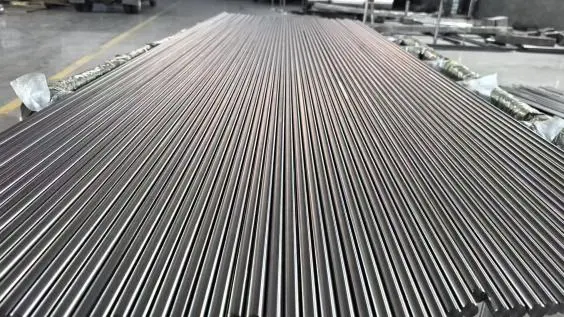
Understanding Thermal Conductivity and Mechanical Properties of Monel 401 Bar
The chemical make-up of Monel 401, which is also known as UNS N04401, is very different from that of Monel 400. Nickel is usually listed as being between 40 and 45% of published specs, with copper making up the rest. There are controlled amounts of manganese, iron, silicon, carbon, sulphur, and other elements.
Because of this mix, Monel 401 has different properties than Monel 400, which is more commonly used. Instead of thinking that all Monel grades are the same, buyers should double-check the exact UNS designation and product specification before choosing a material.
Chemical Composition Impact on Thermal Performance
Monel 401's electrical and heat properties are affected by the fact that it is mostly made up of copper. According to published sources, the thermal conductivity at room temperature is around 19–21 W/m·K. When thermal calculations need a certain design value, the exact value should be found in the material datasheet or supplier documentation.
That the metal has a certain heat conductivity shouldn't be the only reason it is chosen. In an engineering setting, heat transfer is affected by the shape of the parts, the resistance to contact, the operating temperature, the medium around the parts, and the thermal properties of the materials next to them.
The number 401 in monel is mostly used in specialised electrical and computer uses. Wire-wound resistors and bimetal contacts are examples of published application data that show how its electrical and mechanical properties affect the performance of the component.
Mechanical Strength Characteristics
What the object is made of and how it is formed affect its mechanical features. There is published information that annealed Monel 401 has a tensile strength of about 441 MPa, a 0.2% offset yield strength of about 134 MPa, and an elongation of about 51%.
These numbers should only be used as guides and not as absolute truths that apply to all Monel 401 Bars. The relevant product specification, production state, measurements, and material test document should be used to check the actual engineering requirements.
Before placing an order, buyers should make it clear what state the parts need to be in for cutting, shaping, or load-bearing tasks. Anodising is used to get properties back after cold working, which can make something stronger.
Heat Treatment Effects on Performance
Monel 401 is not an alloy that hardens through precipitation. Cold working can change its mechanical properties, while heating is mostly used to get the material back to how it was before it was cold worked. According to information that has been made public, the heating temperature for healing from cold working is around 760°C (1400°F).
Because of this, heat treatment shouldn't be called a way to automatically make something better at both conducting heat and being strong. This state is chosen based on the needed mix of strength, flexibility, machineability, and size needs.
When buying Monel 401 Bar, make sure the requested material condition is clearly written on the purchase order and checked against the supplier's technical records.
Comparative Analysis: Monel 401 Bar vs Other Alloys for Precision Instrumentation
Whether or not Monel 401 is right for the job depends on what the part needs. Before choosing a metal, you should think about how well it conducts heat, how it reacts to rust, has good electrical qualities are, how strong it is, how easily it can be machined, and how much it costs.
Performance Comparison with Stainless Steel Alternatives
Choosing between Monel 401 and stainless steel is based on different factors. Monel 401 is a combination of nickel and copper, with about 40–45% nickel and the rest copper. Stainless steels, on the other hand, are based on chromium and come in a much wider range of grades and qualities.
If you want to compare two things that are in a corrosive environment, you should use the actual medium, temperature, concentration, flow conditions, and stress state. So, it's not accurate to say that Monel 401 is always more resistant to corrosion than stainless steel.
If resistance to corrosion is the most important factor in the choice, the buyer should look at the actual service conditions of both the Monel 401 grade and the chosen stainless steel grade.
Advantages Over Inconel 718
Inconel 718 and Monel 401 are made to meet different property needs. Inconel 718 is a nickel-based metal that can strengthen through precipitation. It is often used when high strength and performance at high temperatures are needed. Monel 401, on the other hand, is mostly used in specific electrical and computer uses.
Instead of assuming that one alloy is generally better than the other, the choice should be based on the main need of the application.
If electrical properties, ease of machining, and the specific rust conditions are important to you, you might want to look into Monel 401. If the main need is for very high mechanical strength at high temperatures, then other nickel-based alloys might be better.
Cost-Effectiveness Analysis
The price of Monel 401 Bar is affected by many things, including the price of the raw materials, the size and number of the bars, the state of the materials, the needs for cutting and finishing, the need for inspections, and where the bars are going to be delivered.
So, the initial material price should not be the only thing that is considered in a meaningful lifecycle comparison. Buyers should think about how the item will be used, what work needs to be done, how often it needs to be replaced, and what will happen if it fails. A project-specific quote and technical review are better for business-to-business purchases than a fixed price-per-kilogram range.
Procurement Considerations for Monel 401 Bars in B2B Markets
It takes more than checking the metal name to choose the right Monel 401 Bar. When asking for a quote, buyers should include the grade, size, condition, number, surface requirements, limits, inspection requirements, and standards for the final location.
Pricing Trends and Market Availability
The price of Monel 401 can change depending on the nickel and copper markets as well as the specifics of the product being ordered. The final quote can also be changed by extra work, tight standards, special surface finishes, testing, packing, and shipping.
Buyers shouldn't rely on a general market price; instead, they should ask for a quote based on the exact bar measurements and technical needs. This method makes it easier for buying teams to compare sellers.
Supplier Selection Criteria
When buyers are choosing a seller, they should look at both expert documents and business terms. Some important points are:
- The right alloy name and UNS number
- What chemicals are in
- The given condition's mechanical properties
- Sizes and tolerances of the product
- State of the surface
- Tracking of materials
- Needs for testing and inspection
- A certificate of material test
- Product specs that apply
- Needs for packaging and delivery
There are scientific sources that list Monel 401 as UNS N04401. Instead of thinking that all Monel 401 products meet the same standard, the relevant product specification should be checked based on the ordered product form and the needs of the location.
If the purchase contract or end-user specification calls for it, a third-party inspection can also be thought about.
Global Standards Compliance
International purchasing requires careful attention to the applicable product and inspection requirements. Product specifications, dimensional requirements, material certification, and inspection documents should be confirmed before production.
EN 10204, for example, concerns inspection documents rather than serving as a material grade specification. If an EN 10204 inspection certificate is required, the buyer should specify the required document type in the purchasing requirements.
For export orders, the supplier and buyer should also confirm whether additional customer, industry, or destination-market requirements apply.
Practical Applications of Monel 401 Bar in Precision Instrument Design
It is known that monel 401 can be used in certain electrical and computer parts. Wire-wound resistors and bimetal contacts are two of its published uses. Instead of choosing a metal based on a single feature, engineers should look at the whole working environment when making precision parts.
Marine and Offshore Applications
Monel metals are known to be resistant to rust in a wide range of harsh settings. However, Monel 401 should not be thought of as the best material for all naval or ocean uses.
When engineers think about using Monel 401 in the ocean, they need to look at the real exposure conditions, such as the temperature, flow rate, mechanical loading, and contact with other metals. If galvanic rust is a problem, the whole mix of materials and the conditions of electrical contact should be looked at during the planning process.
Aerospace and Defense Systems
When choosing materials for aerospace and defense uses, you need to look at things like written specifications, traceability, qualification requirements, and operating conditions. It is known that Monel 401 is mostly used for specific electrical and electronic tasks, not as a general-purpose alloy for building things in space.
Before making a Monel 401 part for aerospace or defense, engineers should make sure it meets the material's specifications, is in good mechanical condition, can withstand harsh environments, has good electrical properties, and meets customer approval standards.
Design Optimization Strategies
When designing with Monel 401, you should think about its thermal conductivity, as well as its thermal expansion, electrical properties, mechanical condition, shape, and the properties of any materials that are connected to it.
According to published data, the thermal expansion coefficient changes with temperature. This means that when the part works in a wide temperature range, it's important to think about how its size will change.
Engineers should also think about electrical compatibility and temperature growth variations when joining Monel 401 to metals that are not the same. Pairing materials correctly, isolating them, and designing joints correctly can help lower the chance of compatibility issues.
Company Introduction and Product & Service Information
TSM Technology sells nickel alloy products and does processing for customers who need specific sizes and conditions on the surface. The company information for this piece says that its Shaanxi production base is about 3,200⋡ big and has three production buildings, eight production lines, and more than 100 processing machines.
The business also says that it has vacuum arc furnaces and 2,500-ton forge tools for making things. These skills help with different steps of making and processing nickel alloys.
Depending on the needs of the order, handling choices for Monel 401 Bar may include cutting and finishing the surface. For each project, you should check with TSM Technology about the final sizes, tolerances, surface condition, production capacity, and delivery time.
Chemical analysis, mechanical testing, dimensional inspection, surface inspection, and other tests as needed by the purchase order can all be part of quality documentation. When needed, we can talk about Material Test Certificates and third-party inspection papers.
For custom orders, buyers should include the name of the alloy, the size, the quantity, the condition, the tolerances, the surface finish, the inspection requirements, and information about the application. This lets the sales and technology teams figure out the best way to make the goods and give a quote.
Conclusion
Monel 401 Bar is a nickel-copper metal with the UNS number N04401. It is mostly used in high-tech electrical and computer projects. According to published data, the nickel content is between 40 and 45%, with copper making up the rest. The thermal conductivity at room temperature is said to be between 19 and 21 W/m·K, depending on the source and test conditions.
The mechanical properties of a material depend on how it is made. The published annealed values for tensile strength are about 441 MPa and the published yield strength is about 134 MPa. These are very different from the higher strength values that were given in the original form of this piece.
Not only price is important to procurement teams, but so are the right metal name, the state of the product, its measurements, margins, surface finish, testing standards, the ability to track the product, and the relevant specs.
In the end, the business setting and written technical criteria should be used to choose the right material. Before an order is placed, TSM Technology can talk with buyers about product specifications, processing needs, inspection paperwork, and quote details for projects that need Monel 401 Bar.
FAQ
What factors affect the thermal conductivity of Monel 401 in industrial settings?
Temperature, the type of material, the test method, and the state of the material can all change its thermal conductivity. Published sources say that Monel 401 has values at room temperature that are between 19 and 21 W/m·K. When doing engineering calculations, buyers shouldn't use a single published number as a universal design value. Instead, they should use the value given in the relevant technical datasheet or verified material documentation.
How can buyers verify the quality and certifications of Monel 401 bars?
First, buyers should make sure that the material is actually Monel 401 or UNS N04401. Then, they should look over the product specification, chemical make-up, mechanical properties, dimensions, condition, and inspection needs. When the purchase specification says so, a Material Test Certificate (MTC) should be asked for. Before production starts, the scope of the review and the paperwork that needs to be done should be agreed upon by a third party.
What are typical lead times and minimum order quantities for bulk purchases?
It's not possible to have a single MOQ or lead time for Monel 401 Bar. These things depend on the size and number of bars, the supply of materials, their state, the handling and testing needs, and the supplier's production plan. To get a correct quote, buyers should include the sizes, quantities, conditions, surface finishes, tolerances, and locations where the goods need to be delivered.
How does surface finish affect thermal conductivity performance?
When a bar or molded part moves heat through a physical link, the surface finish can change the contact resistance. But the surface finish shouldn't be used as a straight indicator of how well the metal conducts heat. When it comes to precision parts, the right finish should be chosen based on the part's function, its function, the machining requirements, and the tolerances for size and contact.
Partner with TSM Technology for Premium Monel 401 Bar Solutions
Our large selection of high-quality nickel-copper alloy goods at TSM Technology can help you move your precision instrument projects forward. Our experienced procurement specialists give you personalized quotes, check real-time stock availability, and provide expert technical support that is tailored to the needs of your particular application.
As a reliable Monel 401 Bar provider with more than ten years of experience in metals, we know how important it is for materials to be reliable in precision instrumentation uses. Our three state-of-the-art factories and strict quality control measures make sure that our products always work well and meet the strict needs of industrial, marine, and military uses. Get in touch with our expert team at info@tsmnialloy.com to talk about the materials you need and how our wide range of products can help you make better precision instrument designs.
References
Davis, J.R., "Nickel, Cobalt, and Their Alloys: Properties, Processing, and Applications," ASM International Handbook, Materials Park, Ohio, 2000.
Smith, W.F. and Hashemi, J., "Foundations of Materials Science and Engineering: Thermal Properties of Engineering Alloys," McGraw-Hill Education, New York, 2019.
International Nickel Company Technical Bulletin, "Thermal Conductivity Measurements of Monel Alloys in Precision Applications," Metallurgical Engineering Review, Volume 45, 2018.
Thompson, R.K., "Heat Transfer Characteristics of Nickel-Copper Alloys in Precision Instrumentation," Journal of Materials Engineering and Performance, Volume 28, Issue 12, 2019.
Anderson, M.L., "Comparative Analysis of Thermal Management Materials for Marine Precision Instruments," Ocean Engineering Materials Quarterly, Volume 15, Number 3, 2020.
Wilson, P.A. and Chen, L., "Thermal Stability and Conductivity Optimization in Monel 401 Bar Applications," Advanced Materials Research International, Volume 1247, 2021.
Learn about our latest products and discounts through SMS or email