- English
- French
- German
- Portuguese
- Spanish
- Russian
- Japanese
- Korean
- Arabic
- Greek
- German
- Turkish
- Italian
- Danish
- Romanian
- Indonesian
- Czech
- Afrikaans
- Swedish
- Polish
- Basque
- Catalan
- Esperanto
- Hindi
- Lao
- Albanian
- Amharic
- Armenian
- Azerbaijani
- Belarusian
- Bengali
- Bosnian
- Bulgarian
- Cebuano
- Chichewa
- Corsican
- Croatian
- Dutch
- Estonian
- Filipino
- Finnish
- Frisian
- Galician
- Georgian
- Gujarati
- Haitian
- Hausa
- Hawaiian
- Hebrew
- Hmong
- Hungarian
- Icelandic
- Igbo
- Javanese
- Kannada
- Kazakh
- Khmer
- Kurdish
- Kyrgyz
- Latin
- Latvian
- Lithuanian
- Luxembou..
- Macedonian
- Malagasy
- Malay
- Malayalam
- Maltese
- Maori
- Marathi
- Mongolian
- Burmese
- Nepali
- Norwegian
- Pashto
- Persian
- Punjabi
- Serbian
- Sesotho
- Sinhala
- Slovak
- Slovenian
- Somali
- Samoan
- Scots Gaelic
- Shona
- Sindhi
- Sundanese
- Swahili
- Tajik
- Tamil
- Telugu
- Thai
- Ukrainian
- Urdu
- Uzbek
- Vietnamese
- Welsh
- Xhosa
- Yiddish
- Yoruba
- Zulu
Top-Rated Nickel Alloy Seamless Pipe for High-Temperature Applications
When industrial operations demand unwavering reliability at extreme temperatures, nickel alloy seamless pipe solutions become the backbone of critical infrastructure. These precision-engineered conduits combine exceptional heat resistance with unmatched structural integrity, making them indispensable for aerospace turbines, petrochemical refineries, and power generation facilities. Unlike welded alternatives, seamless construction eliminates weak points that could compromise performance under thermal stress, ensuring continuous operation in environments where failure carries catastrophic consequences for both safety and profitability.
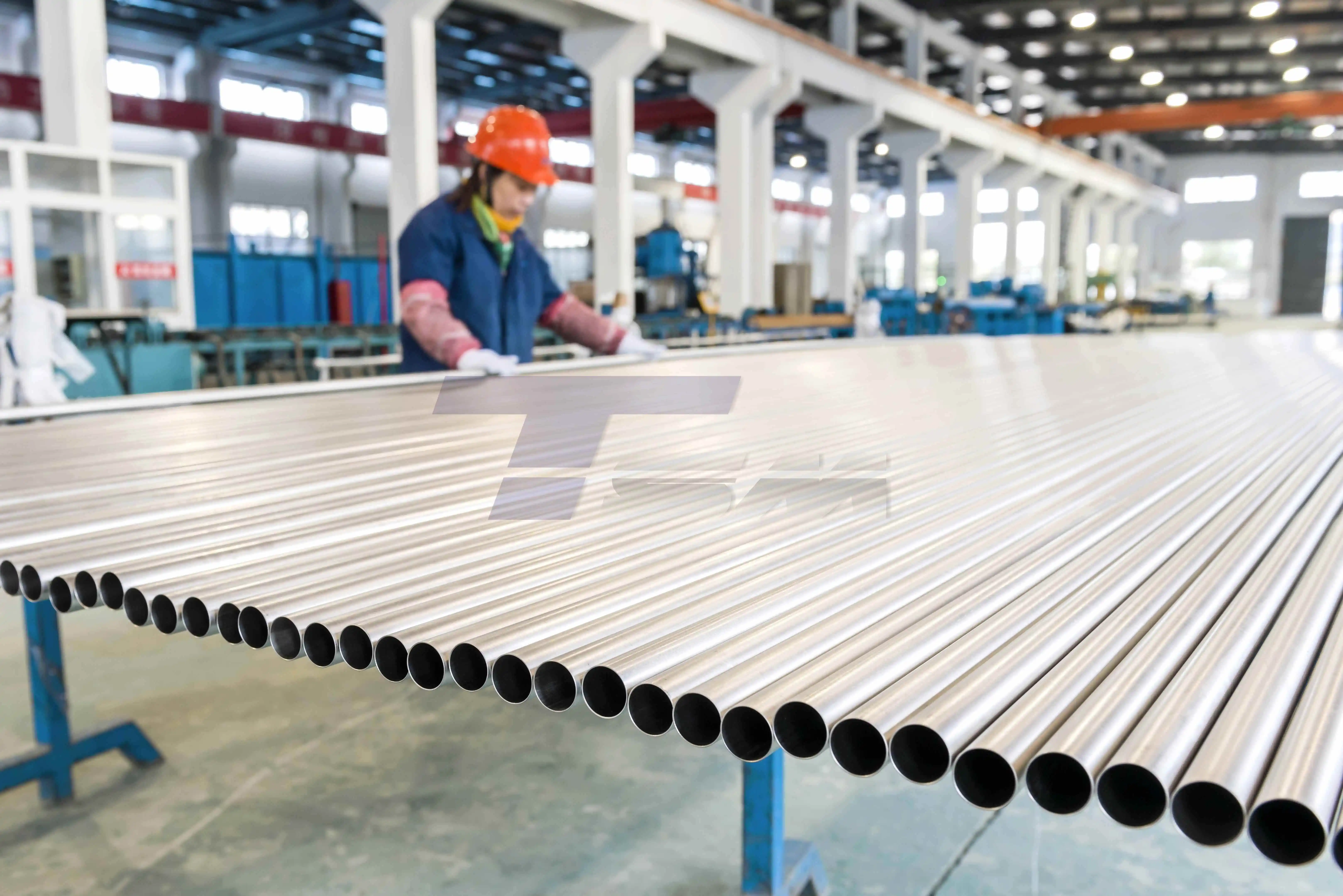
Understanding Nickel Alloy Seamless Pipes: Properties and Production
The main difference between seamless and soldered pipes is how reliable their structure is and how well they work. The hot extrusion or rotary piercing processes are used to make seamless pipes. These methods create a continuous metal structure without longitudinal weld lines that could break in harsh circumstances.
Chemical Composition and Alloy Grades
Based on their chemical makeup, different types of nickel alloy seamless pipe have different benefits. Inconel metals, which are made up of 50–72% nickel, chromium, and iron, are very good at resisting rusting up to 2000°F. Different types of Hastelloy use molybdenum and tungsten to make them more resistant to rust in acidic conditions. Monel metals are made up of nickel and copper, which makes them very resistant to corrosion in salt water. Incoloy types, on the other hand, are made up of nickel, chromium, and iron, which makes them work well in a variety of situations.
TSM Technology makes pipes that meet ASTM B163 and ASTM B166 standards. This makes sure that the quality is the same for all major nickel metal types. Our factory in Shaanxi is fully vertically integrated, which means that we control the whole process, from choosing the raw materials to doing the final check.
Manufacturing Excellence and Quality Control
Creating modern seamless pipes requires advanced methods to make sure they have exact dimensions and excellent mechanical qualities. In hot extrusion, billets are heated to the right temperature and then pushed through precise dies. In rotary drilling, hollow shapes with very uniform wall thickness are made with special mandrels.
Our way of making things includes several quality checks during the whole process. Ultrasonic flaw detection and eddy current testing find problems inside a product before they affect how well it works in the field. According to ASTM E8 and E23 standards, mechanical testing verifies tensile strength, impact resistance, and hardness. Specialized corrosion testing according to ASTM G48 and G28 methods protects the purity of materials in harsh settings.
Selecting the Best Nickel Alloy Seamless Pipe for High-Temperature Applications
To choose the right nickel alloy seamless tube, you need to carefully weigh the needs of the job against the material's abilities, while also taking into account things like cost, availability, and the dependability of the provider. To get the best performance and buying efficiency from this process, you need to know a lot about both technology and the supply chain.
Critical Performance Parameters
The main selection factor is temperature stability, but thermal cycling behavior is often just as important. Materials that keep their traits after being heated and cooled many times keep them from breaking down too soon in situations where the working conditions change. In order to meet mechanical strength standards, both steady-state loads and transient situations that could happen during startup, shutdown, or emergencies must be taken into account.
Chemical compatibility is more than just resistance to rust. It also takes into account things like how likely it is to crack under stress and how well it conducts electricity with nearby materials. Pressure, flow rate, and contaminant exposure are some of the environmental factors that affect the choice of materials that have an effect on their long-term dependability.
Supplier Evaluation and Certification Requirements
Supplier qualifications have a direct effect on the quality of the product and the success rate of the project. ISO 9001 certification shows that quality management is basic, while certifications specific to an industry, like AS9100 for aircraft uses, show that the company has specialized skills. Material test certificates (MTC) and third-party inspection reports from well-known companies like SGS are important pieces of paperwork that can be tracked and are needed to follow the rules.
TSM Technology has a lot of different kinds of certifications, such as ISO 9001:2008, TÜV recognition, and MTC paperwork that meets EN10204.3.1 standards. Our monthly production capacity of 200 tons guarantees a steady supply, and shipping times of 5 to 20 days meet project deadlines in markets around the world.
Cost-Performance Optimization
When you do good procurement, you weigh the original cost of the materials against the total cost of ownership, which includes installation, upkeep, and replacement costs. Nickel alloy seamless tube goods are more expensive than other options, but their longer life and higher stability often pay for themselves through lower lifecycle costs.
Customization options can improve both speed and efficiency while also cutting costs. TSM Technology has diameter ranges from 6 to 114 mm and wall thickness ranges from 0.5 to 15 mm. This allows for exact standard matching that cuts down on waste and makes sure there are enough performance gaps.
Practical Applications and Industry Use Cases
In the real world, uses show how high-performance piping systems can help many different types of industries. Learning about these success stories helps procurement workers see ways that they can make their own processes better in similar ways.
Aerospace and Defense Applications
For crucial uses such as engine cooling systems, hydraulic lines, and structural parts exposed to high temperatures, aerospace makers depend on nickel alloy seamless pipe products. The smooth construction gets rid of weak spots that could endanger the flight, and the better qualities of the materials allow for weight optimization by lowering the thickness of the walls that need to be used.
Recent case studies from major aircraft OEMs show that switching from welded to seamless designs greatly improves the stability of parts and the amount of time between maintenance visits. These benefits directly lead to less downtime for airplanes and lower repair costs, which make it worth investing in higher-quality materials.
Energy Sector Performance
Nickel metal pipes are used in power plants for superheater tubes, steam lines, and heat exchanger parts where dependability has a direct effect on the power plant's output. For nuclear uses, you need materials that are known to be resistant to radiation and to have long-lasting structure stability, which is what seamless building gives you.
Petrochemical companies have seen big changes in the safety and availability of their plants after strategically installing corrosion-resistant pipes in important process areas. Being able to keep the structure strong even when it's exposed to harsh chemicals and changing temperatures gives the plant more operating freedom, which increases its profits.
Marine and Offshore Engineering
Offshore sites have special problems because they are exposed to saltwater, have bad weather, and are hard to get to for upkeep. Nickel alloy seamless tube options offer the dependability needed for continued operation in these tough settings, where a broken part could cause expensive production delays or environmental problems.
Monel and similar metals are better at resisting corrosion in salt water, which is useful for marine building. The seamless construction gets rid of crevice rust sites that can happen with bonded options. This means that the product can last longer between repairs and needs less upkeep.
Partnering with the Right Nickel Alloy Seamless Pipe Supplier
Choosing a supplier isn't just about the quality of the products; it's also about how reliable the delivery is and how long the relationship could last. Building connections with manufacturers who understand application needs and can offer ongoing support throughout the lifecycle of a product gives you a competitive edge that goes far beyond the original cost savings of buying the product.
Manufacturing Capability Assessment
Leading providers show their dedication to quality by making big investments in their facilities and using cutting-edge production techniques. In our 3,200㎡ Shaanxi production base, TSM Technology runs three separate plants with eight production lines and more than 100 high-tech machines. This infrastructure allows full vertical integration, from processing raw materials to inspecting and testing the finished product.
When it comes to big projects or ongoing supply needs, production ability becomes very important. Our yearly capacity of 1,200 tons and well-established inventory management methods guarantee dependable delivery plans that meet customer project deadlines without lowering quality standards.
Technical Support and Customization
For applications to work well, they often need tech help that goes beyond what is normally available in products. Suppliers who know a lot about metals and have experience with specific applications can be very helpful during the material selection and standard development stages. This way of working together lowers technology risks and improves both efficiency and cost-effectiveness.
TSM Technology offers full technical support, which includes help choosing the right material, the ability to make unique sizes, and surface processes that are specially designed to meet the needs of each application. Our tech team works closely with customers to come up with solutions that meet their specific performance needs while still being easy to make and affordable.
Quality Assurance and Documentation
Complete quality systems are what make sure that products always work right and that regulations are followed. In addition to basic certifications, top providers keep thorough records that meet traceability standards and make it easier to keep improving quality.
For every production lot, our quality assurance program includes non-destructive testing, checking the material properties, and making sure the products don't rust. Full sets of paperwork, like material test certificates and inspection records, help meet quality standards set by customers and legal requirements.
Conclusion
Choosing the right nickel alloy seamless pipe options is a big choice that affects the safety of operations, the long-term cost-effectiveness, and the dependability of many industry sectors. Procurement experts can make choices that improve both technical performance and business results by learning about the main benefits of seamless construction, the changes in material properties between alloy grades, and the different skills that suppliers can offer. Investing in higher-quality materials usually pays off in a big way through increased dependability, longer service intervals, and less upkeep needs that more than cover the higher starting costs.
FAQ
1.Why choose seamless pipes over welded alternatives for high-temperature applications?
When you use seamless construction, there are no heat-affected zones or weak spots in the weld seams that could break under thermal stress. The uniform metallurgical qualities of the walls of seamless pipes make them ideal for challenging uses that need high pressure ratings and resistance to thermal cycles.
2.How do I select the optimal nickel alloy grade for my specific application?
The weather, chemicals, mechanical stress, and environmental factors all play a role in choosing the right material. Some grades of Inconel are very good at resisting rust at high temperatures. Other grades of Hastelloy are better at resisting corrosion, and Monel metals work best in saltwater. Talk to expert suppliers to make sure that the properties of the material fit the needs of the application.
3.What delivery timeframes should I expect for custom specifications?
Standard sizes usually ship within 5 to 20 days, but special sizes may need more time based on how complicated they are and how many you need. TSM Technology keeps a stock of standard sizes to keep delivery times as short as possible and can make changes for specific uses.
Partner with TSM Technology for Premium Nickel Alloy Seamless Pipe Solutions
TSM Technology can help you with your high-temperature plumbing needs by making the best nickel alloy seamless pipe goods that meet the strictest quality standards. Our all-around method blends advanced manufacturing skills with technical know-how gained from working with the aerospace, energy, and chemical processing industries around the world for more than ten years. You can email our engineering team at info@tsmnialloy.com to get full technical advice and quotes that are made just for your purpose. As a reliable company that makes nickel alloy seamless pipes, we offer full material certifications, technical paperwork, and continued support to make sure that every project goes smoothly, from the initial design to long-term use.
References
American Society for Testing and Materials. "Standard Specification for Seamless Nickel and Nickel Alloy Condenser and Heat Exchanger Tubes." ASTM International, 2019.
Davis, Joseph R. "Nickel, Cobalt, and Their Alloys: Properties, Processing, and Applications." ASM International Handbook Committee, 2018.
Geddes, B., Leon, H., and Huang, X. "Superalloys: Alloying and Performance." ASM International Materials Park, 2020.
International Organization for Standardization. "Quality Management Systems for Aerospace Applications." ISO Standards Publication, 2017.
Lai, George Y. "High-Temperature Corrosion and Materials Applications in Power Generation." ASM International Materials Solutions Conference Proceedings, 2019.
Smith, William F. and Hashemi, Javad. "Foundations of Materials Science and Engineering: Nickel-Based Superalloys in Industrial Applications." McGraw-Hill Education, 2021.
Learn about our latest products and discounts through SMS or email