- English
- French
- German
- Portuguese
- Spanish
- Russian
- Japanese
- Korean
- Arabic
- Greek
- German
- Turkish
- Italian
- Danish
- Romanian
- Indonesian
- Czech
- Afrikaans
- Swedish
- Polish
- Basque
- Catalan
- Esperanto
- Hindi
- Lao
- Albanian
- Amharic
- Armenian
- Azerbaijani
- Belarusian
- Bengali
- Bosnian
- Bulgarian
- Cebuano
- Chichewa
- Corsican
- Croatian
- Dutch
- Estonian
- Filipino
- Finnish
- Frisian
- Galician
- Georgian
- Gujarati
- Haitian
- Hausa
- Hawaiian
- Hebrew
- Hmong
- Hungarian
- Icelandic
- Igbo
- Javanese
- Kannada
- Kazakh
- Khmer
- Kurdish
- Kyrgyz
- Latin
- Latvian
- Lithuanian
- Luxembou..
- Macedonian
- Malagasy
- Malay
- Malayalam
- Maltese
- Maori
- Marathi
- Mongolian
- Burmese
- Nepali
- Norwegian
- Pashto
- Persian
- Punjabi
- Serbian
- Sesotho
- Sinhala
- Slovak
- Slovenian
- Somali
- Samoan
- Scots Gaelic
- Shona
- Sindhi
- Sundanese
- Swahili
- Tajik
- Tamil
- Telugu
- Thai
- Ukrainian
- Urdu
- Uzbek
- Vietnamese
- Welsh
- Xhosa
- Yiddish
- Yoruba
- Zulu
Why Inconel X750 Tubes Are Ideal for High-Stress and High-Temperature Applications
When engineers have to work in harsh conditions like scorching heat, constant mechanical stress, and toxic surroundings, the choice of material becomes mission-critical. In these tough situations, the Inconel X-750 tube stands out as a tried-and-true choice. This precipitation-hardened nickel-chromium metal keeps its shape at temperatures where other materials would break. It works well in rotors for spacecraft, nuclear reactors, and systems that process oil and gas. Its unique combination of strength retention, oxidation resistance, and thermal stability addresses the core challenges facing materials engineers and procurement directors across critical industries.
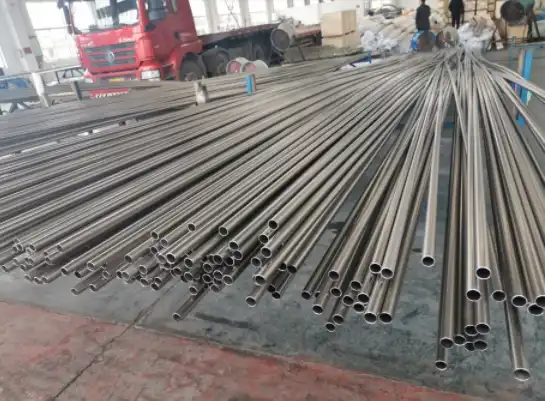
Understanding Inconel X-750 Tubes and Their Key Properties
Chemical Composition and Material Foundation
This precipitation-hardened nickel-chromium metal is made up of about 70% nickel, 15% chromium, and 7% iron. Aluminum, titanium, and niobium are added to help it harden over time. The carefully balanced mix gives it great strength and resistance to rust at temperatures ranging from very cold to 1300°F. Tubes are usually sold in sizes that meet ASTM B163 and AMS 5542 standards. This makes sure that everything is the same for important uses. The alloy's controlled chemistry makes its performance traits predictable, which is important for businesses that depend on approval.
Mechanical Performance Through Heat Treatment
Certain heat treatment methods make tensile strength, wear resistance, and creep strength of Inconel X-750 tube much better. The gamma-prime phase is created by solution annealing at 2050°F for 20 hours and then precipitation hardening at 1300°F for the same amount of time. This gives the material its high temperature strength. Tensile forces of more than 180 ksi are reached at room temperature, and they stay at 110 ksi at 1200°F. When engineers choose parts for cyclic loading situations, like turbine blades that go through startup-and-shutdown cycles or exhaust systems that go through heat transients, wear resistance of Inconel X-750 tube is better than with austenitic stainless steels.
Thermal Stability and Oxidation Resistance
Being resistant to oxidation and continuing to work well at high temperatures makes the metal perfect for harsh settings. The chromium content creates safe oxide layers that stop the material from breaking down even more, and the nickel content keeps it stable in both oxidizing and reducing environments. Controlled grain size and even phase distribution are microstructural features that improve the material's mechanical behavior and resistance to stress-corrosion cracks. Testing according to ASTM G36 shows that it is very resistant to cracks caused by chloride, which is good for marine and chemical processing uses.
Advantages of Inconel X-750 Tubes in High-Stress and High-Temperature Applications
Superior Strength Under Cyclic Loading
Looking at real-world success data is the only way to understand why this stuff works so well. Many other options don't work as well as Inconel X-750 tube because it has better tensile strength and fatigue resistance, especially in situations where it is loaded and unloaded many times, like in aircraft and industrial machines. Low-cycle fatigue testing shows that the alloy can handle 50,000 cycles at stresses of more than 60 ksi at 1200°F. This is a level of performance that can't be reached with 300-series stainless steels or even some competing superalloys.
When aerospace OEMs use this material for turbine shroud supports and fuel nozzle housings, they get reliable results from design validation tests. When heated to high temperatures, the precipitation-hardened microstructure stops dislocations from moving. This keeps the dimensions stable during thermal cycling that would cause other materials to grow.
Comprehensive Corrosion Protection
It is more resistant to corrosion and rust than stainless steels and as good as specialized alloys like Hastelloy C-276. This means it will last for a long time in chemically aggressive or marine settings. Equipment made from austenitic stainless steels needs to be serviced much less often than equipment made from sulfur-containing feedstocks in petrochemical plants. Even in settings that go back and forth between oxidizing and reducing conditions, which breaks down less solid materials quickly, the alloy keeps its protective oxide layers.
Resistance to chloride pitting and crevice erosion in seawater makes Inconel X-750 tube useful in marine engineering. Offshore platform owners say that the integrity of the Inconel X-750 tubes is kept beyond 15-year service intervals in heat exchangers that use seawater as a cooling medium.
High-Temperature Capability
The metal is very stable at temperatures above 1300°F, which is very important for uses that need to withstand high temperatures, like turbine engines and heat exchanges. Creep-rupture testing shows that the material keeps its load-bearing ability for 10,000 hours at 1200°F and 60 ksi stress, which is important for power generation equipment that needs to keep running without stopping for repair. With this temperature capability, engineers can push the limits of operation while still keeping safety gaps.
Fabrication Flexibility
Nickel-chromium tubing is flexible and affordable for both OEMs and end users because it can be made in a way that fits specific industry needs. Suppliers offer both seamless and welded designs in outside diameters ranging from 0.125 inches to 6 inches, and wall thicknesses that can handle both high-pressure and vacuum service. Tight size tolerances are needed for aircraft parts, and precision cold drawing can achieve them. Welding methods approved by AWS D17.1 allow for safe repairs in the field.
Key Use Cases for Inconel X-750 Tubes in B2B Industries
Aerospace and Defense Applications
Precipitation-hardened nickel metal tubing is widely used in industries with strict standards and working needs. In aircraft, they are needed for turbine parts and exhaust systems, and they have to meet strict safety and efficiency standards set by AS9100 and NADCAP. Jet engine makers use this material for combustor casings, turbine interstage seals, and afterburner tubes because it can handle the combined pressures of heat and vibration. Defense uses include parts that move missiles and weather control systems for airplanes that need to work reliably in temperatures ranging from -65°F to 1400°F.
Material traceability that meets the pyrometry requirements of AMS 2750 and full mill test records that meet the requirements of AMS 2808 are the proof that aerospace quality teams need. Even though it's not as easy to machine as austenitic stainless steels, it can still be done with the right tools and cutting settings, which lets you make complex shapes.
Power Generation Equipment
These tubes are used in gas engines and nuclear reactors to make electricity, and they have to be able to withstand high temperatures and rust. The metal is resistant to primary water stress-corrosion cracking, a type of failure that has caused problems in nuclear operations. This makes it useful for steam generator tubes in pressurized water reactors. Gas turbine managers choose the material for fuel delivery systems and combustion transition pieces that will be exposed to high temperatures and need to stay the same size after thousands of starts up.
Combined-cycle plants that use heat recovery steam generators find that the material's resistance to oxidation makes Inconel X-750 tube life longer in hot areas where waste gases can damage coating systems. The strict rules for compliance in this industry are met by nuclear quality documents such as ASME Section III certifications and NQA-1 quality programs.
Chemical and Petrochemical Processing
Chemical and petrochemical plants like using tubes for pipes and heat exchanges that are put through rough media and changes in temperature. For radiant coil supports and transfer line parts, this material is used in places that make ethylene and handle process temperatures up to 1800°F during cracking operations. The metal is good for ammonia synthesis plants because it doesn't break down easily when exposed to hydrogen or nitride, which happens to carbon and low-alloy steels.
When precipitation-hardened nickel metals are used, the catalyst tubes in fluid catalytic cracking units last longer in refineries that process high-sulfur crude oils. The material stays strong in places with a lot of hydrogen, even at temperatures and pressures that cause carbon steels to rust. This means that expensive shutdowns and replacements are not needed.
Marine and Offshore Engineering
Materials used in marine uses need to be able to withstand both mechanical stress and rust from seawater. Shipbuilders ask for these tubes to be used in important parts of the propulsion system, like seawater cooling systems and seals on the propeller shaft. Offshore drillers use the material in blowout preventer control systems and underwater production equipment that needs to be reliable in high pressure, high temperature, and corrosive environments. The alloy's ability to avoid sulfur stress cracking makes it useful in places where sour gas is produced.
How to Choose the Right Inconel X-750 Tube Supplier and Procurement Considerations
Certification and Quality Assurance
When looking for a trustworthy provider, you should look at certifications like ISO 9001, AS9100, and compliance with ASTM B163 standards to make sure the quality of the materials and their tracking. Materials engineers should make sure that providers keep approved test records for each production lot that list the chemicals used, the mechanical properties, and the settings for the heat treatment. Third-party inspection tools, such as positive material recognition, measurement verification, and non-destructive testing, give more confidence for important uses.
Procurement Planning Factors
To make sure that decisions are in line with project timelines and budgets, wait times and minimum order amounts must be taken into account, along with Inconel X-750 tube. Standard sizes usually ship in four to six weeks, but special sizes may take twelve to sixteen weeks, based on how busy the mill is. Project delays can be avoided by planning purchases around these facts. Building ties with wholesalers and keeping an eye on inventory levels gives you the freedom to respond quickly to urgent needs or to make prototypes.
Technical Support and Customization
Working with seasoned makers and approved distributors guarantees that you can get real products and help from experts. Strategic benefits come from suppliers who offer custom manufacturing services, such as specialized heat treatments and changes to the size of the parts. Precision cutting, end preparation, and testing to client standards are just a few of the capabilities that lower the need for secondary processing. Comprehensive technical support that covers welding procedures, forming operations, and compatibility with mating materials improves purchase outcomes by avoiding mistakes in specifications that cost a lot of money.
Material substitution analysis compares performance traits and total cost of ownership, which helps buying teams show that they need to spend more on high-quality materials. Suppliers who offer application engineering help can model how stresses are distributed, guess how long an alloy will last, and suggest the best alloy conditions for a given set of working conditions.
Comparison of Inconel X-750 Tubes with Alternative Alloys for High-Stress Applications
Comparison with Inconel 625 and 718
When you compare Inconel X-750 tube to Inconel 625 and 718, you can see that it has a better mix of strength and heat stability, making it perfect for long-term use at high temperatures. Inconel X-750 tube has better stress-rupture qualities above 1100°F, while 718 has higher final tensile strength at room temperature. The solid-solution-strengthened 625 is very resistant to rust, but it has lower yield strength at high temperatures, so Inconel X-750 tube is better for parts that hold weight. Inconel X-750 tube is different from 625 because it can age-harden, which makes it stronger than solid-solution metals.
Evaluation Against Stainless Steel Options
While stainless steel tubes might be cheaper, precipitation-hardened nickel metals offer better protection to fatigue and corrosion, making them worth the investment in harsh settings. Type 321 stainless steel is often used in high-temperature applications. It can survive rust up to 1500°F, but at 1200°F, its stress-rupture strength is only 30% that of properly heat-treated Inconel X-750 tube. This difference in performance means that walls need to be stronger, they weigh more, and designers have less freedom when they use stainless steel options.
Inconel X-750 tube has a low thermal expansion rate and a high thermal conductivity compared to austenitic stainless steels. This makes it better for applications that involve thermal cycling because it lowers thermal stress and increases wear life.
Position Relative to Hastelloy Alloys
Compared to Hastelloy C-276, Inconel X-750 tube has better protection to oxidation and better mechanical qualities for cyclic stress situations. Hastelloy is better for some chemical processing tasks because it is very resistant to reducing acids. However, Inconel X-750 tube has yield strengths that are twice as high as Hastelloy's at room temperature because it hardens over time. Inconel X-750 tube is better for equipment designs that need both corrosion resistance and structural strength. On the other hand, Hastelloy's properties may be better for uses that only need corrosion resistance.
Performance measures, such as tensile qualities according to ASTM E8, impact strength according to ASTM E23, and oxidation tests according to ASTM G54, let you compare things in a quantitative way. Specific benchmarks for each application help procurement professionals compare options based on practical needs, prices, and legal requirements. A life-cycle cost study that takes into account repair gaps, replacement frequency, and downtime costs often shows that premium materials are more cost-effective in the long run, even if they cost more at first.
Conclusion
To choose the right material for a vital purpose, you have to weigh technical performance, regulatory compliance, and the total cost of ownership. It has been shown that the Inconel X-750 tube can meet the tough needs of aircraft engines, power generation systems, and petrochemical processing equipment. Because it stays strong at high temperatures, doesn't rust, and lasts for a long time even after being used over and over, engineers can be sure that the parts they select will last for a long time. When procurement professionals work with qualified providers, they can get approved materials, technical know-how, and the ability to customize products, all of which are necessary for projects to go well. Knowing these things about the materials and how to choose a source helps people make decisions that will improve the performance of tools while lowering risk in mission-critical situations.
FAQ
1. What temperature range can Inconel X-750 tubes withstand?
Nickel-chromium tubing that has been precipitation-hardened keeps its shape and load-bearing ability from very low temperatures to about 1300°F in constant service, and it can be exposed to temperatures up to 1800°F for short periods of time. When the right heat treatment is done, the material's strength traits stay the same across this temperature range. This means it can be used in places where temperatures change a lot.
2. How does corrosion resistance compare to standard stainless steels?
The metal works much better than 300-series stainless steels in chloride-containing settings because it doesn't get pitting or stress-corrosion cracking, which quickly wears down austenitic stainless materials. Tests show that it works better in both oxidizing and reducing environments, and it works especially well in situations with sulfur chemicals, sea exposure, or acidic condensates.
3. Are custom sizes and heat treatments available?
Reliable providers allow for a lot of modification, such as non-standard sizes, different heat treatment cycles, and end preparation to meet the needs of each application. Sizes that can be made range from small-diameter sensor tubing to large-bore pressure tank parts. Wall thicknesses are adjusted to meet pressure ratings, and forming operations are changed to fit the needs of the project.
4. What certifications should buyers verify?
Material certifications, such as mill test records that show the chemical makeup according to ASTM E1473, the mechanical properties according to ASTM E8, and proof of heat treatment according to AMS 2750, are very important for keeping track of things. Controlling the manufacturing process is made possible by quality system standards like ISO 9001, AS9100 for aircraft uses, and ASME code stamps for pressure equipment.
Partner with TSM Technology for Certified Inconel X-750 Tube Solutions
TSM Technology offers high-quality nickel-based superalloys with strict quality control and full material tracking. Since we've been making Inconel X-750 tubes for over 14 years and have done business all over the world, we know how important it is to choose the right material for high-stress, high-temperature uses. Our quality assurance method makes sure that every tube meets or goes beyond the standards set by the industry. We have full records to back up our claims for meeting the needs of the aircraft, nuclear, and petrochemical industries.
Our wait times are reasonable, and our minimum order amounts are open. We also offer custom manufacturing services, such as specialized heat treatments and exact dimensional standards. Our technical team helps materials engineers and procurement directors make sure that standards are best for each working situation by providing application engineering support. Our knowledge makes sure you get materials that are designed to work successfully for long periods of time, whether you're looking for parts for turbine kits, heat exchanger bundles, or chemical processing systems.
You can talk to our team about your project needs, get full technical data sheets, or get a quote by emailing info@tsmnialloy.com. You can look at all of our high-quality metal goods at tsmnialloy.com. Working with a dependable Inconel X-750 tube provider who knows a lot about the material and provides quick service gives you the peace of mind your important projects need.
References
1. Davis, J.R. (2000). Nickel, Cobalt, and Their Alloys. ASM International, Materials Park, Ohio.
2. Donachie, M.J. and Donachie, S.J. (2002). Superalloys: A Technical Guide, Second Edition. ASM International, Materials Park, Ohio.
3. Special Metals Corporation (2004). Inconel Alloy X-750 Technical Data Sheet. Special Metals Corporation Publication Number SMC-067.
4. Eiselstein, H.L. and Tillack, D.J. (1991). The Invention and Definition of Alloy 625. Superalloys 718, 625 and Various Derivatives, The Minerals, Metals and Materials Society.
5. Meetham, G.W. and Van de Voorde, M.H. (2000). Materials for High Temperature Engineering Applications. Springer-Verlag, Berlin Heidelberg.
6. ASM International Handbook Committee (1990). Properties and Selection: Nonferrous Alloys and Special-Purpose Materials, ASM Handbook Volume 2. ASM International, Materials Park, Ohio.
Learn about our latest products and discounts through SMS or email