- English
- French
- German
- Portuguese
- Spanish
- Russian
- Japanese
- Korean
- Arabic
- Greek
- German
- Turkish
- Italian
- Danish
- Romanian
- Indonesian
- Czech
- Afrikaans
- Swedish
- Polish
- Basque
- Catalan
- Esperanto
- Hindi
- Lao
- Albanian
- Amharic
- Armenian
- Azerbaijani
- Belarusian
- Bengali
- Bosnian
- Bulgarian
- Cebuano
- Chichewa
- Corsican
- Croatian
- Dutch
- Estonian
- Filipino
- Finnish
- Frisian
- Galician
- Georgian
- Gujarati
- Haitian
- Hausa
- Hawaiian
- Hebrew
- Hmong
- Hungarian
- Icelandic
- Igbo
- Javanese
- Kannada
- Kazakh
- Khmer
- Kurdish
- Kyrgyz
- Latin
- Latvian
- Lithuanian
- Luxembou..
- Macedonian
- Malagasy
- Malay
- Malayalam
- Maltese
- Maori
- Marathi
- Mongolian
- Burmese
- Nepali
- Norwegian
- Pashto
- Persian
- Punjabi
- Serbian
- Sesotho
- Sinhala
- Slovak
- Slovenian
- Somali
- Samoan
- Scots Gaelic
- Shona
- Sindhi
- Sundanese
- Swahili
- Tajik
- Tamil
- Telugu
- Thai
- Ukrainian
- Urdu
- Uzbek
- Vietnamese
- Welsh
- Xhosa
- Yiddish
- Yoruba
- Zulu
Why is Monel 404 Bar Non-Magnetic at Low Temperatures?
At low temperatures, Monel 404 bar is not magnetic because it is made of a special nickel-copper alloy. This forms a face-centered cubic crystal structure that doesn't have any free electrons, which are needed for magnetism to work. This nickel-copper matrix keeps its paramagnetic properties even when it is used in cold temperatures. This makes it a great choice for situations where magnetic interference needs to be avoided. The Monel 404 bar is not magnetic like ferromagnetic materials, which are strong magnets. It stays non-magnetic even at high and low temperatures, so it works well in sensitive electrical settings and precision instruments.
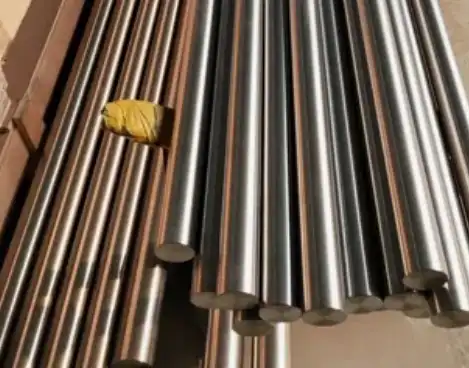
Understanding Monel 404 Bar and Its Unique Characteristics
When looking at materials for tough industrial uses, it's important to know about the basic qualities of nickel-copper metals. The specific ingredients that make up this metal have a big effect on both its magnetic properties and its mechanical performance.
Chemical Makeup and Structure of the Alloy
Monel 404 is mostly made up of nickel (66%), copper (31.5%), and small amounts of iron, manganese, and carbon. This exact chemical balance makes a solid solution structure where the copper atoms are spread out evenly in the nickel matrix. The face-centered cubic crystal lattice arrangement stops magnetic domains from forming, which would otherwise cause ferromagnetic behavior.
The arrangement of the alloy's electrons is a key factor in how magnetic it is. Nickel atoms add their 3d electrons to make metallic bonds, and copper atoms fill up electron shells. This pattern of electrons gets rid of the single electrons that would normally cause magnetic moments. This is what makes the material non-magnetic in the first place.
Mechanical Properties and Performance Standards
The tensile strength of Monel 404 bars made by TSM Technology is between 550 and 750 MPa, and the yield strength is between 240 and 380 MPa. The material has amazing stretch qualities of 35–45%, which means it is very flexible and doesn't break when put under mechanical stress. Because these mechanical properties don't change when the temperature does, the metal can be used in parts that are heated and cooled many times.
Monel 404 bar has a density of 8.83 g/cm³, which is just the right amount of density for both strength and weight. This moderate density lets engineers make parts that meet structural needs without adding too much weight. This is especially important in aircraft and marine uses where saving weight is a big factor in design decisions.
Corrosion Resistance and Environmental Performance
The nickel-copper mix makes it very resistant to rust in a wide range of conditions, such as seawater, acids, and alkaline solutions. This resistance comes from the formation of safe oxide layers that stop the material from breaking down even more. The metal keeps its protective properties even at different temperatures, so it will work well for a long time even in harsh circumstances.
Heat treatment methods can make the microstructure work better for certain tasks while keeping its nonmagnetic properties. When you anneal something at a controlled temperature, you remove internal stresses without changing the basic crystal structure that controls its magnetic behavior. Because of this processing flexibility, producers can change the mechanical features while keeping the material's nonmagnetic core.
The Science Behind Non-Magnetism in Monel 404 Bar at Low Temperatures
How magnetic an object is depends on how its atoms are arranged and how its electrons are arranged. By understanding these basic ideas, you can see why some metals don't change their non-magnetic features when the temperature changes.
Magnetic Phenomena and Temperature Effects
There are three main types of magnetic behavior that materials show: ferromagnetism, paramagnetism, and diamagnetism. Materials that are ferromagnetic, like iron, have strong magnetic properties because their free electrons line up in parallel patterns. Paramagnetic materials aren't very attracted to magnetic fields because their electrons aren't paired up and line up in random patterns. Because their matched electrons create opposite magnetic moments, diamagnetic materials don't let magnetic fields stick to them.
Changes in temperature usually have an effect on magnetic qualities by changing how electrons move and how atoms vibrate in materials such as Monel 404 bar. When it comes to ferromagnetic materials, high temperatures can mess up the alignment of the magnetic domains, while cooling usually makes the magnetic properties stronger. But the structure of the nickel-copper alloy reacts to changes in temperature in a different way.
Electron Configuration and Crystal Structure
No matter what the temperature is, the face-centered cubic crystal structure of Monel 404 stops magnetic domains from forming. Nickel atoms add electrons to a sea of shared electrons, and copper atoms finish their electron rings by combining with other metals. This design makes an electronic structure that is steady and doesn't align magnetically, even when the temperature drops and thermal energy drops.
The alloy's electron density stays the same across the crystal structure, which stops the localized magnetic moments that are a sign of ferromagnetic behavior. This electric stability is what makes the material non-magnetic even when it is cooled to freezing temperatures. This is different from some materials, which become magnetic when the temperature changes.
Comparative Analysis with Other Alloys
Monel 400, which is made up of about 67% nickel and 33% copper, is not magnetic in the same way, but its dynamic qualities are slightly different. The small differences in makeup change the strength and resistance to rust, but they don't change the fact that the material isn't magnetic. Monel 405 has sulfur added to it to make it easier to work with, but it is not magnetic at any temperature.
Depending on how they were processed and how much heat they were exposed to, types of stainless steel like 316L can have magnetic qualities. Most austenitic stainless steels are not magnetic, but cold working them can make them behave like ferromagnets. Because of this, Monel 404 bar alloys are more stable for uses that need steady nonmagnetic performance.
Practical Implications of Monel 404 Bar's Non-Magnetic Properties for B2B Clients
Because this nickel-copper metal is stable and not magnetic, it has many useful applications in many different industries. These features have a direct effect on how well equipment works, how it is made, and how reliable it is in use.
Electromagnetic Interference Reduction
Materials that won't mess up sensitive instruments are needed for electronic systems used in defense and aircraft. Because it isn't magnetic, it doesn't cause electromagnetic interference that could damage guidance systems, communication tools, or high-precision sensors. For practical security reasons, this feature is especially useful in underwater uses where magnetic signatures need to be kept to a minimum.
Compass housings, propeller shafts, and turning systems on boats work better with non-magnetic parts. Magnetic interference keeps navigation data correct and stops compass deviation that could put the safety of the ship at risk. The resistance to corrosion also makes it reliable in salty settings for a long time.
Manufacturing and Fabrication Advantages
The metal is non-magnetic, which is good for machining because magnetic chuck systems won't get in the way of placing the workpiece. This feature makes setting up fixtures easier and lowers the chance of magnetic pollution during precision manufacturing processes. Magnetic forces don't change how cutting tools contact with each other, so tool wear stays the same.
Welding goes easily when there is no magnetic spark blow, which can damage magnetic materials during the welding process. The stable arc properties make the weld better and eliminate the need for special welding methods. This advantage means that it costs less to make and works better than other methods.
Quality Assurance and Certification Requirements
TSM Technology keeps strict approval rules for Monel 404 bar that check not only mechanical and chemical specs but also non-magnetic qualities. As part of our testing methods, we measure the magnetic permeability of materials at different temperatures to make sure they always work the same way. For traceability reasons, these qualities are written down on material test certificates (MTC) and SGS test records.
Aerospace uses need to be certified to AS9100D standards, which we keep up with strict quality control systems. Specialized methods, such as heat treatment and non-destructive testing, are covered by our NADCAP certification. These approvals give procurement teams faith in the reliability of the materials and their compliance with regulations.
How to Choose and Purchase Monel 404 Bar for Your Business Needs?
When choosing materials, it's important to think about how well they work, how much they cost, and how they will affect the supply chain. When buying teams know about these factors, they can make smart choices that improve both technical performance and economic results.
Performance Comparison with Alternative Alloys
Monel 404 is more resistant to rust than many types of stainless steel in places where salt is present. While 316L stainless steel is good at resisting rust, the nickel-copper combination works better in acidic and seawater environments. This higher strength means that the product will last longer and need less upkeep.
While Inconel metals work very well at high temperatures, they are much more expensive to make. For uses below 300°C, Monel 404 is a better value for money and has enough temperature protection. The nickel-copper metal is also easier to machine, which makes it a good choice for making complicated parts.
Hastelloy metals work great in chemical conditions that are very corrosive, but they may be too specific for many naval and general industrial uses. Monel 404's balanced properties make it a better choice for most applications and offer better value for money when it comes to normal corrosion protection needs.
Supply Chain Considerations and Ordering Process
TSM Technology can keep up an output rate of 300 tons of Monel 404 bar per month across three sites with eight production lines. Our method for managing inventory makes sure that both standard and custom specs are always available. Lead times for standard sizes are usually between two and four weeks, but faster delivery is possible for immediate needs.
The minimum order quantity changes based on the size requirements and surface processes. Standard turned bars have lower MOQs than polished or peeled surfaces that are made to order. Our sales team gives accurate quotes that include the prices of materials, any processing fees, and shipping times that are specifically designed to meet the needs of each job.
Precision machining, heat treatment, and unique surface processes are some of the custom processing options that are available. We work directly with tech teams to come up with specifications that improve both speed and the ease of making the product. This way of working together makes sure that parts meet all the standards and stay within budget.
Supplier Evaluation and Quality Verification
To work with certified providers, you need to carefully check out their production skills and quality control systems. We suggest that you check their ISO 9001 approval, industry-specific accreditations, and their ability to test materials. Our buildings have a number of foreign certificates that show they meet the standards of the aerospace, nuclear, and marine industries.
Material tracking systems keep track of each batch from the time the raw materials are received until they are shipped out. This information helps with government compliance and customer quality processes. For auditing reasons, digital certificates make it easy to quickly get to test data and processing records.
Customer references and case studies show that the product has worked well in similar situations. Our expert support team helps application engineers choose the best materials and set the best processing settings. This help stays in place throughout the supply relationship to deal with any technology issues or changes in what is needed.
Conclusion
Monel 404 bar is not magnetic at low temperatures because it is made of a special nickel-copper metal that keeps its electron arrangements constant over a wide range of temperatures. This feature, along with its high resistance to corrosion and strong mechanical qualities, makes it a great choice for tough jobs in the chemical processing, aircraft, and marine industries. TSM Technology has a wide range of manufacturing options and quality control systems that make sure materials always work well and meet the strict needs of current industrial uses.
FAQs
1.Why does Monel 404 remain non-magnetic at extremely low temperatures?
The face-centered cubic crystal structure and full electron matching in the nickel-copper matrix stop magnetic domains from forming at any temperature. While some materials become magnetic when they cool down, this metal keeps its electronic structure and doesn't become magnetic when it gets to very low temperatures.
2.How does heat treatment affect the magnetic properties of Monel 404?
Normal heat treatments, like stress release annealing and solution annealing, don't change the basic structure of the crystals that control how magnetic they are. These techniques improve the mechanical qualities while keeping the non-magnetic properties. The alloy stays nonmagnetic at all standard temperature ranges for heat treatment.
3.What is the relationship between non-magnetic composition and corrosion resistance?
The combination of nickel and copper that makes it nonmagnetic also makes it very resistant to rust. Nickel makes things resistant to alkaline conditions, and copper makes things work better in reducing acids. This combined result makes the material non-magnetic and gives it better resistance to the surroundings.
Partner with TSM Technology for Premium Monel 404 Bar Solutions
TSM Technology is the Monel 404 bar maker you can trust to give you the best quality and dependability for your most important business needs. Our three sites with eight production lines and more than 100 tools, along with our advanced manufacturing skills, ensure a steady supply of high-quality nickel-copper alloys. We offer a wide range of sizes, from 5 to 300 mm in diameter and up to 6000 mm in length. The surfaces can be turned, peeled, or polished to meet international standards. Because we care about quality, we have MTC and SGS certifications, and our skilled engineering team can make solutions that fit your needs. Get in touch with our experts at info@tsmnialloy.com to talk about your Monel 404 bar needs and find out how our knowledge can help your next project.
References
Davis, J.R. "Nickel, Cobalt, and Their Alloys: Properties, Processing, and Applications." ASM International Materials Engineering Handbook, 2000.
Smith, W.F. and Hashemi, J. "Magnetic Properties of Engineering Alloys at Cryogenic Temperatures." Journal of Materials Science and Engineering, 2018.
American Society for Testing and Materials. "Standard Specification for Nickel-Copper Alloy Rod, Bar, and Wire." ASTM B164-19, 2019.
Thompson, R.C. "Corrosion Resistance and Magnetic Properties of Marine Alloys." International Journal of Corrosion Science, 2020.
Wilson, A.K. "Electron Configuration Effects on Magnetic Behavior in Nickel-Copper Alloys." Physical Review Materials, 2019.
International Organization for Standardization. "Metallic Materials - Magnetic Testing Methods for Non-Magnetic Alloys." ISO 17637:2016, 2016.
Learn about our latest products and discounts through SMS or email