- English
- French
- German
- Portuguese
- Spanish
- Russian
- Japanese
- Korean
- Arabic
- Greek
- German
- Turkish
- Italian
- Danish
- Romanian
- Indonesian
- Czech
- Afrikaans
- Swedish
- Polish
- Basque
- Catalan
- Esperanto
- Hindi
- Lao
- Albanian
- Amharic
- Armenian
- Azerbaijani
- Belarusian
- Bengali
- Bosnian
- Bulgarian
- Cebuano
- Chichewa
- Corsican
- Croatian
- Dutch
- Estonian
- Filipino
- Finnish
- Frisian
- Galician
- Georgian
- Gujarati
- Haitian
- Hausa
- Hawaiian
- Hebrew
- Hmong
- Hungarian
- Icelandic
- Igbo
- Javanese
- Kannada
- Kazakh
- Khmer
- Kurdish
- Kyrgyz
- Latin
- Latvian
- Lithuanian
- Luxembou..
- Macedonian
- Malagasy
- Malay
- Malayalam
- Maltese
- Maori
- Marathi
- Mongolian
- Burmese
- Nepali
- Norwegian
- Pashto
- Persian
- Punjabi
- Serbian
- Sesotho
- Sinhala
- Slovak
- Slovenian
- Somali
- Samoan
- Scots Gaelic
- Shona
- Sindhi
- Sundanese
- Swahili
- Tajik
- Tamil
- Telugu
- Thai
- Ukrainian
- Urdu
- Uzbek
- Vietnamese
- Welsh
- Xhosa
- Yiddish
- Yoruba
- Zulu
Will Monel 400 Sheet Withstand High Temperatures?
Introduction
When selecting materials for industrial equipment, temperature performance is often a key consideration. High-temperature environments can affect metal strength, corrosion resistance, and service life. Engineers need materials that can maintain stable performance under both thermal and mechanical stress.
Monel 400 Sheet is a nickel-copper alloy widely recognized for its excellent corrosion resistance and reliable mechanical properties. While it is best known for seawater and chemical applications, many engineers also consider its performance in elevated temperature environments.
So, can Monel 400 Sheet withstand high temperatures?
The answer depends on the operating conditions, temperature range, and application requirements. Monel 400 can maintain useful mechanical properties across a wide temperature range, but it is not designed as a high-temperature alloy for extreme heat applications.
In this article, I will explain the temperature performance of Monel 400 Sheet, its limitations, and how to select the right material for high-temperature industrial applications.
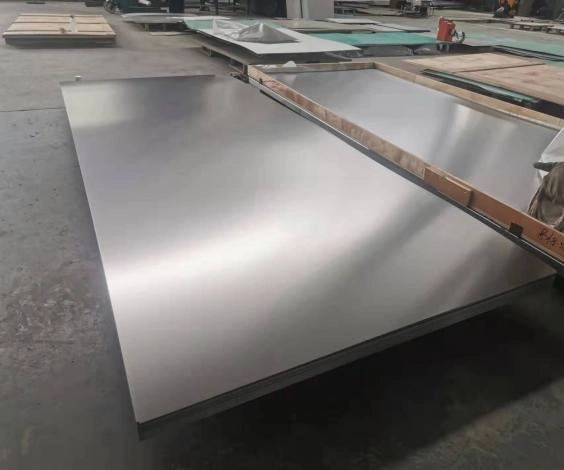
Understanding the Temperature Performance of Monel 400 Sheet
Monel 400 is a nickel-copper alloy containing mainly nickel and copper. This alloy structure gives it excellent resistance to corrosion and good mechanical stability.
A Monel 400 Sheet is commonly supplied according to standards such as ASTM B127 / ASME SB-127. It is used in industries where corrosion resistance is often more important than extreme temperature strength.
The main advantages of Monel 400 include:
- Good mechanical properties from sub-zero temperatures to elevated temperatures
- Excellent seawater corrosion resistance
- Good resistance to many chemical environments
- Good toughness
- Good fabrication performance
However, every alloy has a practical operating limit. Understanding the relationship between temperature and material properties is important before selecting Monel 400.
How Does High Temperature Affect Monel 400 Sheet?
Temperature changes can influence several important material properties.
Strength Reduction at Elevated Temperatures
Like most metals, Monel 400 gradually loses strength as temperature increases. At normal operating temperatures, it maintains good mechanical performance.
However, when exposed to higher temperatures for extended periods, engineers should consider:
- Tensile strength reduction
- Yield strength changes
- Long-term deformation risks
For applications involving continuous high-temperature exposure, engineers should review operating conditions carefully.
Corrosion Performance at Higher Temperatures
One of the major advantages of Monel 400 Sheet is its corrosion resistance. In many environments, increasing temperature can accelerate corrosion reactions.
Monel 400 performs well in many reducing environments, including:
- Seawater
- Salt solutions
- Hydrofluoric acid environments
- Alkaline solutions
However, high-temperature oxidizing environments may require different nickel alloys designed specifically for heat resistance.
Monel 400 Sheet Temperature Range and Service Conditions
The suitable temperature range of Monel 400 depends on the application environment.
Low Temperature Performance
Monel 400 performs very well at low temperatures. It maintains:
- Good toughness
- Stable mechanical properties
- Resistance to embrittlement
This makes it suitable for applications exposed to cold marine environments and low-temperature chemical systems.
Moderate Elevated Temperatures
Monel 400 can be used in many applications involving moderate heat. Examples include:
- Heat exchanger components
- Chemical processing equipment
- Industrial piping components
In these applications, corrosion resistance is often the main reason for selecting Monel 400.
Extreme High-Temperature Applications
For extremely high-temperature applications, Monel 400 may not be the first choice. Industries requiring:
- Very high heat resistance
- Long-term creep strength
- Oxidation resistance at extreme temperatures
may consider other nickel-based alloys. Material selection should always match the actual service environment.
Applications Where Monel 400 Sheet Handles Heat and Corrosion
Many industrial applications require both temperature resistance and corrosion protection.
Heat Exchanger Applications
Heat exchangers often operate with temperature changes and corrosive fluids. Monel 400 Sheet is suitable for some heat exchanger components because it provides:
- Good corrosion resistance
- Stable mechanical performance
- Reliable fabrication characteristics
The alloy is especially useful when seawater or chemical solutions are involved.
Chemical Processing Equipment
Chemical plants often combine temperature and corrosion challenges. Monel 400 is used in equipment exposed to:
- Chemical solutions
- Salt environments
- Alkali solutions
Its corrosion resistance helps improve equipment durability.
Marine Systems
Marine equipment can experience:
- Seawater exposure
- Temperature fluctuations
- Salt atmosphere
Monel 400 Sheet provides reliable performance in these conditions. Applications include:
- Marine heat exchangers
- Pumps
- Valves
- Seawater system components
Monel 400 Sheet vs High-Temperature Nickel Alloys
When temperature becomes the main design factor, engineers often compare Monel 400 with other nickel alloys.
Monel 400 Advantages
Monel 400 is preferred when applications require:
- Excellent corrosion resistance
- Good weldability
- Good toughness
- Seawater performance
High-Temperature Nickel Alloy Advantages
Other nickel alloys may provide better performance for:
- Extreme heat exposure
- High-temperature oxidation resistance
- Creep resistance
The best choice depends on the complete operating environment. A material that performs well in corrosion resistance may not always provide the highest temperature strength.
Factors to Consider Before Choosing Monel 400 Sheet for High Temperature Service
Before purchasing Monel 400 Sheet, engineers should evaluate several factors.
Operating Temperature
Confirm:
- Normal operating temperature
- Maximum temperature
- Exposure duration
Short-term temperature exposure and continuous high-temperature service can have different effects.
Environment Conditions
Temperature alone does not determine material performance. Consider:
- Chemical exposure
- Pressure conditions
- Seawater contact
- Mechanical loading
Monel 400 performs best when corrosion resistance is a primary requirement.
Material Certification and Quality
For industrial applications, buyers should request:
- Material Test Certificate
- Chemical composition report
- Mechanical test information
- Product traceability
Reliable documentation helps ensure the material meets project requirements.
How to Choose a Reliable Monel 400 Sheet Supplier?
Selecting a professional supplier is important for industrial projects. A trusted Monel 400 Sheet supplier should provide:
Professional Manufacturing Experience
Nickel alloys require careful processing and quality control. A qualified manufacturer should understand:
- Alloy characteristics
- Rolling processes
- Heat treatment requirements
- Inspection procedures
Quality Control System
Important quality controls include:
- Chemical analysis
- Mechanical testing
- Dimensional inspection
- Surface inspection
These processes help ensure consistent product performance.
Technical Support
A professional supplier can help customers select suitable materials based on:
- Temperature conditions
- Corrosion environment
- Application requirements
Why Choose TSM Nialloy for Monel 400 Sheet?
TSM Nialloy specializes in nickel alloy materials and provides corrosion-resistant alloy solutions for industrial customers.
TSM Technology Co., Ltd. focuses on:
- Professional nickel alloy manufacturing
- Strict quality control
- Material traceability
- Customized supply solutions
Our Monel 400 Sheet products are suitable for applications requiring corrosion resistance, stable mechanical performance, and reliable material quality.
We support customers in marine, chemical processing, oil and gas, and industrial sectors.
If you need a reliable Monel 400 Sheet manufacturer or want technical advice about temperature applications, please contact our team.
Email: info@tsmnialloy.com
Conclusion
So, will Monel 400 Sheet withstand high temperatures?
Monel 400 can perform well in many elevated temperature applications, especially when corrosion resistance is a key requirement. It maintains good toughness and mechanical stability across a wide temperature range.
However, it is not designed for extreme high-temperature applications where maximum heat resistance and creep strength are required.
Choosing the right alloy depends on temperature, corrosion conditions, pressure, and service requirements.
References
- ASTM B127 — Standard Specification for Nickel-Copper Alloy Plate, Sheet, and Strip
- ASM Specialty Handbook: Nickel, Cobalt, and Their Alloys
- ASM Handbook Volume 13A — Corrosion: Fundamentals, Testing, and Protection
- ASM Handbook Volume 1 — Properties and Selection: Irons, Steels, and High-Performance Alloys
- Nickel Institute — Nickel Alloy Properties and Applications
- Schweitzer, P. A. — Corrosion Resistance Tables: Metals, Plastics, Nonmetallics and Coatings
Learn about our latest products and discounts through SMS or email