- English
- French
- German
- Portuguese
- Spanish
- Russian
- Japanese
- Korean
- Arabic
- Greek
- German
- Turkish
- Italian
- Danish
- Romanian
- Indonesian
- Czech
- Afrikaans
- Swedish
- Polish
- Basque
- Catalan
- Esperanto
- Hindi
- Lao
- Albanian
- Amharic
- Armenian
- Azerbaijani
- Belarusian
- Bengali
- Bosnian
- Bulgarian
- Cebuano
- Chichewa
- Corsican
- Croatian
- Dutch
- Estonian
- Filipino
- Finnish
- Frisian
- Galician
- Georgian
- Gujarati
- Haitian
- Hausa
- Hawaiian
- Hebrew
- Hmong
- Hungarian
- Icelandic
- Igbo
- Javanese
- Kannada
- Kazakh
- Khmer
- Kurdish
- Kyrgyz
- Latin
- Latvian
- Lithuanian
- Luxembou..
- Macedonian
- Malagasy
- Malay
- Malayalam
- Maltese
- Maori
- Marathi
- Mongolian
- Burmese
- Nepali
- Norwegian
- Pashto
- Persian
- Punjabi
- Serbian
- Sesotho
- Sinhala
- Slovak
- Slovenian
- Somali
- Samoan
- Scots Gaelic
- Shona
- Sindhi
- Sundanese
- Swahili
- Tajik
- Tamil
- Telugu
- Thai
- Ukrainian
- Urdu
- Uzbek
- Vietnamese
- Welsh
- Xhosa
- Yiddish
- Yoruba
- Zulu
Challenges in Bending and Forming Monel K500 Pipes
When making things out of Monel K500 pipe, there are special problems that need to be solved with special knowledge and tools. Nickel-copper alloys that have been aged and hardened have great strength and resistance to rust, which is good for demanding uses but makes bending and shaping difficult. Engineers and procurement experts can make better decisions about which materials to use, how they need to be processed, and what suppliers can do for important industry projects when they understand these problems.
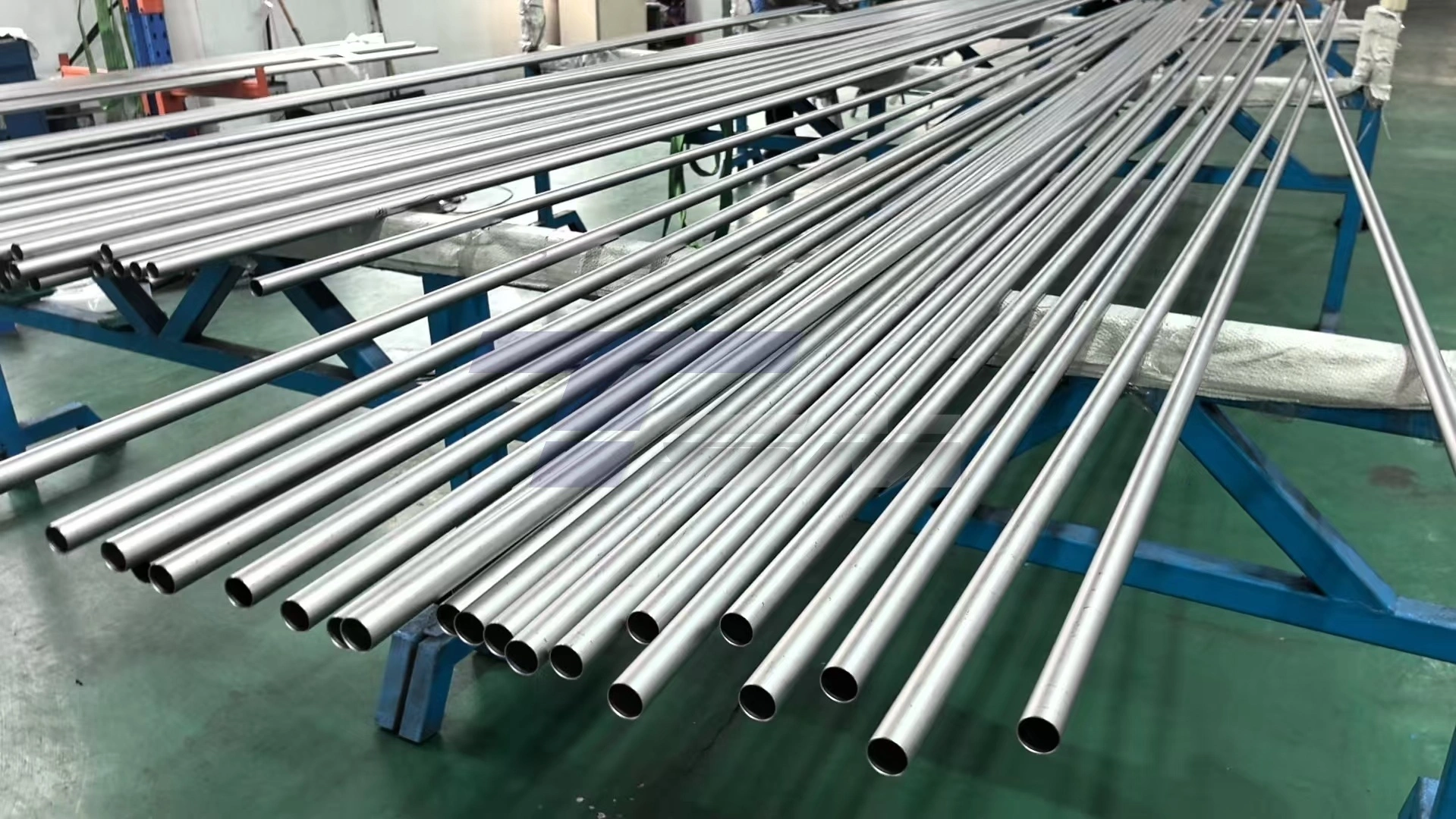
Key Material Characteristics of Monel K500 Pipes Influencing Bending and Forming Performance
The unique properties of Monel K500 have a big effect on how it behaves during the manufacturing process. This nickel-copper metal is made up of 63-67% nickel and 27-33% copper. Aluminum and titanium are added to make it stronger over time. The material has a very high tensile strength of 1100 MPa and is very resistant to corrosion in naval settings. This makes it perfect for tough jobs.
Material Composition and Microstructure Effects
Monel K500's age-hardened structure makes a complicated architecture that changes how it can be shaped. γ' phase (Ni3Al/Ti) particles settle down during heat treatment and make the matrix stronger. This makes the hardness values hit HRC 35. This method for strengthening is good for mechanical qualities and makes it harder for plastic to deform during bending.
When the metal is cold shaped, its work-hardening properties become more noticeable. When a material is bent, its yield strength rises quickly as the stress level rises. This means that higher creating forces are needed. This behavior is very different from that of lighter materials, so it needs to be carefully thought out when designing tools and planning the process.
Temperature Sensitivity and Processing Windows
How Monel K500 reacts to changes in temperature has a huge impact on how well it forms. It stays strong at temperatures ranging from -196°C to 550°C, but the best conditions for shaping are found within certain temperature ranges. For cold forming, the temperature is usually room temperature. For hot forming, the temperature needs to be carefully controlled between 900°C and 1150°C to get the required ductility without losing any of the mechanical qualities.
States of heat treatment for Monel K500 pipe have a big effect on formability. Solution-annealed conditions give the most flexibility for complicated shaping tasks, while aged conditions make the metal stronger but harder to work with. When engineers understand these connections, they can choose the right material conditions for each making job.
Common Challenges and Causes in Bending and Forming Monel K500 Pipes
When working with nickel-copper alloy lines, manufacturing workers often run into the same problems. These problems come from the way the material is made, and they need special methods to be solved in a way that keeps the accuracy of the measurements and the quality of the surface.
Springback and Shape Retention Issues
When Monel K500 is bent, it has a lot of springback because it has a high elastic stiffness and yield strength. When the forming forces are taken away, this phenomenon makes the material partly return to its original shape. This can cause angular errors that are bigger than what was intended. To make up for springback, engineers have to overbend parts, which requires exact math and often more than one try to get the right shape.
It's especially hard to keep the shape of pipes or parts with thin walls that are big. When you mix high strength and stretchy rebound, the dimensions can change in unpredictable ways that can affect how well the system fits together and how well it works. To handle these factors well, you need to use more advanced forming methods and make changes to the tools you use.
Heat-Affected Zone Complications
When you weld Monel K500 pipes, you create heat-affected zones that change the mechanical qualities of the area and make it harder to form the pipes later. The repeated heating and cooling that happens during welding can change the age-hardened microstructure, making different areas of the pipe length harder or more flexible. These differences cause uneven compression when bending, which could lead to stress clusters or problems with the dimensions.
Having to do a post-weld heat process makes the making steps more complicated. Stress-relief treatments must be carefully timed and combined with forming operations so that the integrity of the weld is not compromised and the mechanical qualities are not lost in high-stakes service situations.
Temperature Management Constraints
During hot forming, precise temperature control is very important. Too much heat above 1150°C can make grains grow and weaken the material's mechanical properties, while too little heat below 900°C makes it too stiff to bend into complex shapes. To keep the products constant, the small processing window needs high-tech heating tools and tracking systems.
When cold forming, different weather problems can happen. When plastic deformation leads to work hardening, heat is produced that can change the qualities of the material in the area. During intense forming operations, it is important to control the rate of deformation and use cooling techniques to stop unwanted temperature effects.
Proven Techniques and Best Practices for Effective Bending and Forming
Age-hardened nickel-copper metals, such as Monel K500 pipe, can only be worked on using special methods that have been developed through years of experience in the field. These tried-and-true methods solve the specific problems while keeping the material's purity and the accuracy of its measurements throughout the manufacturing process.
Optimized Bending Methods and Tooling
Mandrel-supported bending methods work better for thin-wall Monel K500 pipes because they keep the cross-sectional structure and don't let the walls break. The shape of the mandrel has to take into account the material's high strength and springiness, which means that special tools are often needed for certain uses. Using multiple making stations in a progressive bending method can make complicated shapes while reducing stress concentrations.
Roll bending machines that are designed to work with high-strength metal give reliable results for large-radius tasks. Depending on the pipe diameter, wall thickness, and goal radius, the roll setup, surface treatments, and forming speeds need to be fine-tuned. In production settings, these factors have a big effect on the quality of the surface and the accuracy of the measurements.
Strategic Heat Treatment Applications
Solution annealing processes done before forming make the material more flexible and lower the force needed to turn it into complex forms. To get a soft, usable state, the material is heated to 980–1010°C and then quickly cooled. This method makes it possible to make tight-radius turns and complex shapes that would not be possible when the material is old.
After shape is done, post-forming age hardening brings back the power and hardness. The aging process at 590°C for certain amounts of time creates the best mechanical qualities while keeping the shape that was made. This order makes it easy for producers to meet both the formability and final property standards.
Stress-relieving treatments done between forming steps help control leftover pressures and keep parts from breaking during multi-step processes. These middle-level heat processes get rid of the effects of work hardening and get the material ready for more deformation without affecting its structural stability.
By using these all-around methods to shape Monel K500 pipes, makers can meet strict requirements while still keeping the exceptional qualities that make this alloy useful for important tasks. The methods need a lot of knowledge to be used correctly, but they produce better results when they are.
Comparative Insights: Monel K500 Pipes vs Other Material Pipes in Forming Challenges
By knowing how Monel K500 stacks up against other materials, engineers can make smart choices about which material to use for different making tasks. Each metal family has its own pros and cons that affect how easy it is to make, how much it costs, and how well it works in the end.
Monel K500 vs Stainless Steel Performance
The tensile strength of Monel K500 pipe is 1100 MPa, which is higher than the tensile strength of normal types of stainless steel (500–800 MPa for austenitic stainless steels). While it is stronger, it is less flexible when it comes to shaping. To get the same bend radius, you need to use more force and special tools. Stainless steels tend to have more stable work-hardening behavior, while age-hardened structures have stronger springback effects.
Its ability to prevent corrosion makes Monel K500 a better choice for use in marine settings than 316L stainless steel, where it works 100 times better. This benefit usually supports the extra work that goes into shaping it in cases where long-term dependability in acidic conditions is needed.
Comparison with Inconel and Copper-Nickel Alloys
Inconel metals can usually handle higher temperatures, but they are harder to shape because they harden quickly and don't conduct heat well. Monel K500 is more reliable when it comes to shaping at mild temperatures, and it still has great resistance to corrosion. When it comes to uses that don't need to withstand high temperatures, Monel K500 often has a better cost-to-performance ratio.
Copper-nickel metals are easier to shape than Monel K500, but they don't have the same strength or corrosion protection. The 90/10 and 70/30 copper-nickel types are easier to bend, but they can't match the mechanical qualities that can be gained through age hardening. The needs of the project decide if the benefits of making outweigh the limits in performance.
Monel K500 vs Monel 400 Distinctions
Because it was solution-strengthened without any age-hardening elements, Monel 400 is easier to shape. The material has less springback and needs less force to shape, which makes it a good choice for complicated shapes. However, Monel K500 is much stronger thanks to the addition of aluminum and titanium, which makes it lighter and better at working in high-stress situations.
The structure of precipitation-strengthened Monel K500 makes it more difficult to shape than Monel 400. When engineers choose between these closely related metals, they have to weigh the benefits of higher strength against the difficulties of making them.
Procurement Considerations for Monel K500 Pipes with Bending/Forming Needs
To find high-quality nickel-copper alloy pipes, you need to pay close attention to what the provider can do, what the material standards are, and how the pipes need to be processed. Because these materials are so specific, they need to be worked on with skilled makers who know both how metals work and how to make things that are shapeable.
Supplier Qualification and Capabilities
Certified sellers for Monel K500 pipe must show that they follow the ASTM B165 and ASME SB165 guidelines and keep track of their products all the way through the supply chain. This method is used by TSM Technology, which has AS9100D approval and a lot of quality paperwork, such as Material Test Certificates and SGS testing records. The company has three factories that together run more than 100 machines on eight production lines. This gives them stable capacity for big projects.
The companies that make things should be able to make pipes in all the sizes and shapes that are needed. TSM Technology can make tubes with outer sizes ranging from 6.0mm to 324mm and wall thicknesses ranging from 0.5mm to 30mm, so they can be used in a variety of situations. Most industrial setups can be done with lengths of up to 12,000 mm without the need for extra joins.
Customization and Pre-Forming Services
Advanced providers offer processing that adds value and can make it easier for production processes further down the line. Pre-bending services, optimizing heat treatment, and custom surface treatments like sanding or anodizing cut down on the work that customers have to do and keep the standard high. When working with complicated shapes or for specific tasks that need exact material conditions, these services become very useful.
With the help of collaborative engineering, material specs can be made better to meet unique forming needs. Suppliers with a lot of experience can suggest heat treatment states, dimensional limits, and processing steps that make manufacturing easier while still meeting performance standards. This knowledge is very useful for tough jobs in the energy, marine, and aircraft fields.
The procurement process benefits from early supplier engagement during design phases. Material property optimization, forming possibility assessment, and cost optimization all need design teams and material sources to work together closely. Setting up these connections early on in the project development process ensures success and keeps problems like costly redesigns or material substitutions from happening.
Conclusion
It's hard to bend and shape Monel K500 pipes because the material is very strong and has a microstructure that has been age-hardened. This makes it different from working with other metals. Engineers can come up with good making plans by understanding how springback works, how to deal with heat-affected zones, and the limits of temperature control. To be successful, you need to use tried-and-true methods like improved tools, smart heat treatment applications, and working together with suppliers. Even though these problems need specialized knowledge and tools, Monel K500's better mechanical qualities and resistance to corrosion make the extra work worth it for important uses in the energy, marine, and aircraft industries.
FAQ
1.What causes springback issues when bending Monel K500 pipes?
The alloy's high tensile strength (1100 MPa) and high elastic modulus cause springback. These properties make the alloy very elastic again after the forming forces are gone. The age-hardened microstructure doesn't allow lasting deformation, so it takes overbending compensation and special tools to get the goal shapes right.
2.How does heat treatment affect Monel K500 formability?
Solution annealing at 980–1010°C gives the most flexibility for complicated shaping operations. Aging conditions give the metal more strength but make it harder to work with. Manufacturers can improve the shapeability of materials during processing and bring back their mechanical qualities through aging processes after they have been formed.
3.What temperature ranges work best for hot forming operations?
For hot forming, the temperature must be carefully controlled between 900°C and 1150°C. Temperatures below this range don't allow enough flexibility, and temperatures above 1150°C can cause grains to grow and properties to break down. To keep this small working window open, you need high-tech heating and tracking tools.
Partner with TSM Technology for Superior Monel K500 Pipe Solutions
TSM Technology is a great company that can make Monel K500 pipes. They have 14 years of experience working with this metal and many certifications to back them up. Our state-of-the-art factories use precise CNC machines and strict quality control systems to make pipes that meet ASTM B165 standards with an accuracy of ±0.01mm. Our engineering team will help you every step of the way with your project, whether you need standard sizes or unique making solutions.
As a reliable provider of Monel K500 pipes to the energy, marine, and aircraft industries around the world, we know how important it is to have accurate materials and skilled workers who can process them. Ultrasonic inspection, hydrostatic testing, and full paperwork packages are all part of our thorough testing methods. These meet your quality standards. Email our materials experts at info@tsmnialloy.com to talk about your unique making problems and find out how our proven skills can help you be more successful in your manufacturing.
References
Davis, J.R. "Nickel, Cobalt, and Their Alloys." ASM Specialty Handbook. ASM International, 2000.
Smith, G.V. "An Evaluation of the Yield, Tensile, Creep, and Rupture Strengths of Wrought 304, 316, 321, and 347 Stainless Steels at Elevated Temperatures." ASTM Data Series Publication DS 5S2, 1969.
Rebak, R.B. "Nickel Alloys for Corrosive Environments." Advanced Materials and Processes, Vol. 158, No. 2, 2000.
Totten, G.E. and Mackenzie, D.S. "Handbook of Aluminum: Physical Metallurgy and Processes." Marcel Dekker Inc., 2003.
Boyer, H.E. "Atlas of Stress-Strain Curves." ASM International, 1987.
Craig, B.D. "Handbook of Corrosion Data." ASM International, 1995.
Learn about our latest products and discounts through SMS or email