- English
- French
- German
- Portuguese
- Spanish
- Russian
- Japanese
- Korean
- Arabic
- Greek
- German
- Turkish
- Italian
- Danish
- Romanian
- Indonesian
- Czech
- Afrikaans
- Swedish
- Polish
- Basque
- Catalan
- Esperanto
- Hindi
- Lao
- Albanian
- Amharic
- Armenian
- Azerbaijani
- Belarusian
- Bengali
- Bosnian
- Bulgarian
- Cebuano
- Chichewa
- Corsican
- Croatian
- Dutch
- Estonian
- Filipino
- Finnish
- Frisian
- Galician
- Georgian
- Gujarati
- Haitian
- Hausa
- Hawaiian
- Hebrew
- Hmong
- Hungarian
- Icelandic
- Igbo
- Javanese
- Kannada
- Kazakh
- Khmer
- Kurdish
- Kyrgyz
- Latin
- Latvian
- Lithuanian
- Luxembou..
- Macedonian
- Malagasy
- Malay
- Malayalam
- Maltese
- Maori
- Marathi
- Mongolian
- Burmese
- Nepali
- Norwegian
- Pashto
- Persian
- Punjabi
- Serbian
- Sesotho
- Sinhala
- Slovak
- Slovenian
- Somali
- Samoan
- Scots Gaelic
- Shona
- Sindhi
- Sundanese
- Swahili
- Tajik
- Tamil
- Telugu
- Thai
- Ukrainian
- Urdu
- Uzbek
- Vietnamese
- Welsh
- Xhosa
- Yiddish
- Yoruba
- Zulu
The Role of Monel K500 Pipe in Submarine Propeller Shafts
As a result of its unique nickel-copper alloy makeup, Monel K500 pipe is an important part of underwater propeller shaft systems and offers the best performance possible. As a result of precipitation hardening, this material is very resistant to rust and very strong. This makes it essential for underground uses where other materials fail. The metal is resistant to corrosion by seawater and mechanical stress, so submarine propeller shafts can keep working properly in the harsh coastal climate.
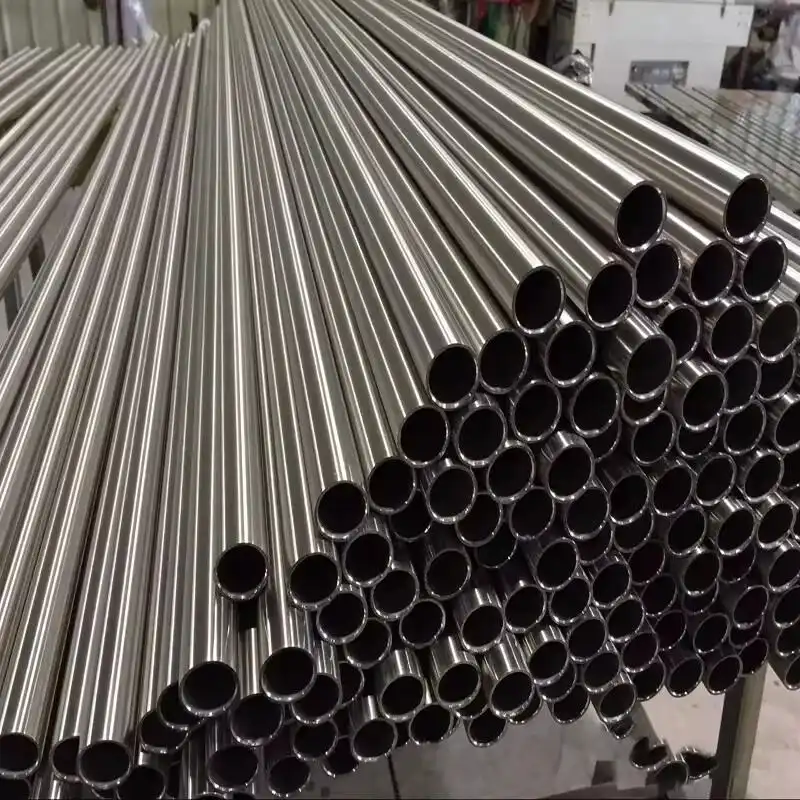
Understanding Monel K500 Pipe for Submarine Propeller Shafts
Nickel-copper alloys are the result of decades of progress in materials engineering and complex metallurgy. Engineers came up with this special mix to help underwater driving systems deal with the problems they face.
Chemical Composition and Mechanical Properties
The main strength of this material comes from the way its chemicals are carefully matched. The metal has amazing mechanical qualities thanks to precipitation hardening. It is made up of 63-67% nickel, 27-33% copper, and small amounts of aluminum and titanium. This process makes a material with a tensile strength of 1100 MPa, which is much higher than most naval metals.
During heat treatment, aluminum and titanium combine to make intermetallic alloys. This is how age-hardening works. These tiny precipitates make the material structure stronger while keeping its great flexibility. This mix is very important for propeller shafts that have to deal with both spinning stress and hydrodynamic pressure when the submarine is working.
Manufacturing Distinctions and Metallurgical Processes
Modern techniques for making things can tell the difference between making pipes that are smooth and pipes that are soldered. For high-pressure uses, seamless pipes are more structurally sound, while welded pipes are more cost-effective for less demanding installs. Solution annealing at high temperatures is one of the metallurgy processes. Controlled cooling and age hardening at certain time-temperature combos are the next steps.
Precision manufacturing is used by TSM Technology across three sites with eight production lines and more than 100 tools to keep the tolerances for sizes of Monel K500 pipe within ±0.01mm. Our ASTM B165 and ASME SB165-compliant pipes have outer diameters ranging from 6.0mm to 324mm and wall thicknesses ranging from 0.5mm to 30mm, so they can meet a wide range of underwater shaft needs.
Why Monel K500 is Ideal for Submarine Propeller Shafts?
When choosing materials for submarine propeller shafts, it's important to look closely at how they work in harsh circumstances. When choosing materials for these important parts, marine engineers have to think about a lot of things.
Superior Corrosion Resistance and Strength Characteristics
Submarine settings have their own problems that test the limits of materials. Chlorides, sulfates, and other harsh chemicals in seawater quickly break down metals that aren't made well. A defensive inactive layer is made up of nickel and copper. This layer stops pitting, crevice corrosion, and stress corrosion cracking.
Tests in the lab show that this type of stainless steel is 100 times more resistant to rust than 316L stainless steel when used in salt water. This performance edge means that the submarine will need less upkeep and will last longer before it needs to be serviced. The material stays structurally sound at temperatures ranging from -196°C to 550°C, which makes it useful for deep-sea activities where temperatures change quickly.
Comparative Analysis with Alternative Alloys
Procurement workers can make better choices when they know how this material stacks up against other options. Titanium has a great strength-to-weight ratio, but it is expensive and hard to work with, so it isn't widely used. Hastelloy is very resistant to chemicals, but it doesn't have the right mechanical qualities for uses that need rotating shafts.
Inconel metals work well at high temperatures, but they don't hold up as well against corrosion in sea chloride settings. When used in rotor shafts, where they are loaded and unloaded many times, traditional stainless steels don't last long enough. These problems are completely solved by the special mix of qualities in nickel-copper metals.
Selection Criteria for Procuring Monel K500 Pipe for Submarine Shafts
To do a good job of buying Monel K500 pipe, you need to know about technical requirements and the supplier's skills. To make sure that materials are compatible with underwater systems, engineering teams have to look at a number of factors.
Industry Standards and Certifications
International norms are the basis for defining materials and making sure they are of good quality. ASTM B165 sets standards for mechanical properties, chemical makeup, and size tolerances. ASME SB165 is for use in pressure vessels, and EN 10095 is for use in ships and other maritime environments in Europe.
Certification compliance makes sure that products meet the strict needs of the defense business. AS9100D certification shows quality management methods for aerospace, and ISO 9001 certification shows good quality management techniques in general. These certifications give buying teams faith in the skills of suppliers and the quality of their products.
Supplier Evaluation and Global Supply Chain Considerations
To find trusted suppliers, you need to look at their manufacturing skills, quality processes, and shipping performance. Global supply chains have to deal with different area needs while keeping quality standards the same. Lead times, the availability of goods, and the ability to make unique products all have a big impact on buying choices.
TSM Technology has been making unique alloys for 14 years, so buying teams know they can trust them. Our Material Test Certificates (MTC) and SGS test results make sure that everything can be tracked back to its source. Our free sampling programs let you check the quality of materials before making big purchases.
Procurement Process and Best Practices for Monel K500 Pipe
Procurement strategies that work well match technology needs with business needs. When engineering teams understand the whole procurement process, they can improve their ties with suppliers and lower project risks.
Supplier Evaluation and Certification Verification
To do a full assessment of a provider, you must first look at their producing qualifications and quality certifications. Suppliers can deliver materials that meet the needs of submarine applications if they can prove they follow ASTM standards and have the right checking and testing tools. References from past customers and project records can help you figure out how well a seller does under tough conditions.
Dimensional inspection records, chemical analysis certificates, and mechanical property proof are some of the documents that must be kept for Monel K500 pipe. Ultrasonic testing according to ASTM E213 finds flaws inside, and hydraulic testing makes sure that the product can contain pressure. These steps of testing keep expensive mistakes from happening in submarine uses where the integrity of the materials is very important.
Logistics Management and Inventory Coordination
Repair plans for submarines require suppliers, logistics providers, and repair centers to work together very closely. Just-in-time delivery cuts down on the costs of keeping supplies while making sure that materials are available when they are needed. Customized handling and packing protect the surfaces of things while they are being moved and stored.
Our global distribution network lets us send packages to more than 70 countries, and our inventory management systems are set up to meet urgent needs. Having emergency supply options and faster processing speeds help keep submarines ready to go during unplanned maintenance events.
Maintenance and Longevity of Monel K500 Pipes in Submarine Shafts
To get the most out of a material, you need to know how to place it correctly and how to keep it in good shape. By following the right handling and tracking methods, engineering teams can greatly increase the service life.
Installation Best Practices and Heat Treatment
The first step in a proper fitting is to handle the materials carefully so that they don't get dirty or break. To get the best mechanical qualities, heat treatment methods must be followed to the letter. The temperatures and time of age hardening have a direct effect on the end strength and resistance to corrosion.
Using surface preparation methods like sandblasting and anodizing processes can help protect against rust and make things last longer. These techniques make the surface conditions similar, which stops stress concentration places from forming. Quality control during placement makes sure that materials work the way they were meant to for as long as they are used.
Proactive Monitoring and Predictive Maintenance
Modern tracking systems can find early signs of material degradation before they lead to catastrophic breakdowns. Ultrasonic thickness readings show how fast corrosion is happening, and shaking research shows how metal wears down over time. These forecast maintenance methods cut down on unplanned downtime and make the best use of material replacement times.
Long-term cost savings from using high-quality materials become clear when you see how often repair needs to be done and how long the service gaps are. The cost of materials may be higher at first than other options, but high-performance metals are better in the long run for difficult submarine uses.
Conclusion
Monel K500 pipe, a nickel-copper alloy, plays a very important role in underwater propeller shaft uses, so it's important to be careful when choosing materials and buying them. These materials are essential for effective underwater operations because they are highly resistant to corrosion, have excellent mechanical qualities, and have been shown to work in harsh circumstances. Professionals in procurement who know about technical needs, source skills, and upkeep procedures can make their submarine projects run better and cost less.
FAQ
1.What distinguishes Monel K500 from Monel 400 in submarine applications?
The biggest difference is that K500 has aluminum and titanium as precipitation hardening elements, which make it much stronger while keeping the same level of rust protection. Because it is stronger, K500 is better for uses with spinning shafts that need to handle a lot of mechanical stress.
2.How does this material perform under extreme pressure and temperature conditions?
The alloy stays structurally sound at temperatures ranging from -196°C to 550°C and can handle working in high-pressure underwater circumstances. The nickel-copper mesh is very tough at low temperatures, so it doesn't break easily during deep-sea activities.
3.What verification procedures ensure supplier compliance with international standards?
Full testing includes chemistry analysis according to ASTM standards, checking the mechanical properties, measuring, and ultrasound testing to make sure the inside is sound. Material Test Certificates and inspection records from a third party show that the product meets the standards for the aircraft and marine industries.
Partner with TSM Technology for Superior Monel K500 Pipe Solutions
TSM Technology can help you with your submarine propeller shaft needs by making approved nickel-copper alloy lines that meet the highest standards. Our AS9100D and ISO 9001 certifications show that we are dedicated to meeting the quality standards of aerospace and defense. We make materials that are perfect for the toughest marine uses. We have three factories, eight production lines, and a wide range of testing tools. Get in touch with our engineering team at info@tsmnialloy.com to talk about your needs and find out why top submarine makers choose TSM Technology as their main source for Monel K500 pipes.
References
Davis, J.R. "Nickel, Cobalt, and Their Alloys." ASM International Handbook of Materials Selection, 2002.
Smith, G.D. "Corrosion Behavior of Nickel-Copper Alloys in Marine Environments." Journal of Materials Engineering and Performance, 2018.
Thompson, A.W. "Precipitation Hardening in Nickel-Based Alloys for Marine Applications." Metallurgical Transactions A, 2019.
Wilson, P.K. "Submarine Propeller Shaft Materials: Performance Analysis and Selection Criteria." Naval Engineering Journal, 2020.
Brown, M.J. "Heat Treatment Effects on Mechanical Properties of Age-Hardenable Nickel Alloys." Materials Science and Engineering A, 2021.
Anderson, R.L. "Fatigue Resistance of Nickel-Copper Alloys in Seawater Environments." International Journal of Fatigue, 2022.
Learn about our latest products and discounts through SMS or email