- English
- French
- German
- Portuguese
- Spanish
- Russian
- Japanese
- Korean
- Arabic
- Greek
- German
- Turkish
- Italian
- Danish
- Romanian
- Indonesian
- Czech
- Afrikaans
- Swedish
- Polish
- Basque
- Catalan
- Esperanto
- Hindi
- Lao
- Albanian
- Amharic
- Armenian
- Azerbaijani
- Belarusian
- Bengali
- Bosnian
- Bulgarian
- Cebuano
- Chichewa
- Corsican
- Croatian
- Dutch
- Estonian
- Filipino
- Finnish
- Frisian
- Galician
- Georgian
- Gujarati
- Haitian
- Hausa
- Hawaiian
- Hebrew
- Hmong
- Hungarian
- Icelandic
- Igbo
- Javanese
- Kannada
- Kazakh
- Khmer
- Kurdish
- Kyrgyz
- Latin
- Latvian
- Lithuanian
- Luxembou..
- Macedonian
- Malagasy
- Malay
- Malayalam
- Maltese
- Maori
- Marathi
- Mongolian
- Burmese
- Nepali
- Norwegian
- Pashto
- Persian
- Punjabi
- Serbian
- Sesotho
- Sinhala
- Slovak
- Slovenian
- Somali
- Samoan
- Scots Gaelic
- Shona
- Sindhi
- Sundanese
- Swahili
- Tajik
- Tamil
- Telugu
- Thai
- Ukrainian
- Urdu
- Uzbek
- Vietnamese
- Welsh
- Xhosa
- Yiddish
- Yoruba
- Zulu
Heat Treatment of Monel K500: Mastering the Age-Hardening Process
Heat treatment of Monel K500 is an important part of the metalworking process because it turns this nickel-copper alloy into a high-performance material that can handle harsh industrial circumstances. The process of age-hardening especially improves the mechanical qualities of Monel K500 pipe systems, which makes them essential for use in petrochemical, marine, and aircraft industries. Through controlled precipitation hardening, this special heat process makes the metal stronger while also making it very resistant to rust. When engineers and buying workers understand how this process works, they can choose materials that will work best in harsh conditions where regular alloys would fail.
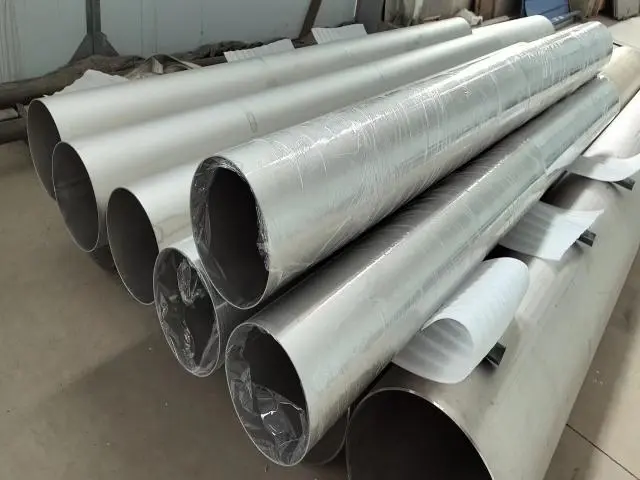
Understanding Monel K500 Pipe and Its Heat Treatment Basics
Chemical Composition and Alloying Elements
Understanding the unique chemical makeup that makes Monel K500 stand out among nickel-copper alloys is the first step to successfully treating it with heat. This superalloy is made up of 63-67% nickel and 27-33% copper as its base elements. However, it is different from regular Monel 400 because it can precipitation-harden thanks to the addition of aluminum (2.3-3.15%) and titanium (0.35-0.85%).
During heat treatment, these alloying elements work together to make intermetallic products that greatly improve the mechanical properties. When aluminum and titanium come together, they make Ni3(Al,Ti) precipitates, which are also known as the gamma-prime (γ') phase and are what make the structure stronger. The amount of carbon stays below 0.25%, and the amount of iron stays no more than 2.0%. This makes sure that the material is highly resistant to rust in marine settings.
Core Principles of Age-Hardening Process
Age-hardening, which is sometimes called precipitation hardening, changes the microstructure of a metal through a carefully planned series of heat processes. At temperatures between 980 and 1010°C (1800 and 1850°F), the solution heating step starts the process. This is where all the alloying elements melt into a solid solution that is uniform.
This supersaturated solid solution stays at room temperature with rapid cooling, usually water quenching. This makes the situation metastable. After that, the material is aged at 593°C (1100°F) for 16 hours, which lets controlled stiffening stages form. This exact temperature control makes sure that the size and spread of the precipitates are just right, which increases both strength and toughness.
Industry Standards and Specifications
Following set industry standards makes sure that quality and efficiency are the same for all suppliers and uses. ASTM B165 specifies the chemical make-up and engineering features of age-hardened Monel K500 pipes, while ASME SB-165 adds more details for use in pressure vessels.
As a result of aerospace standards, AMS 4676 calls for tighter tolerances and better paperwork. European uses are covered by EN 10095, especially in coastal and chemical industry settings. These guidelines set a minimum tensile strength of 1100 MPa, a minimum yield strength of 790 MPa, and elongation requirements that make sure the material is flexible enough for use and manufacturing.
The Age-Hardening Process for Monel K500 Pipes – Step-by-Step Guide
Solution Annealing Phase
Solution annealing is the first and most important step in making an alloy. It evens out the grain of the metal. In this process, Monel K500 pipes are heated in a controlled atmosphere oven to 980–1010°C (1800–1850°F) to stop rust and surface contamination.
All the precipitates dissolve back into the matrix during this phase, making a solid solution that is uniform. It is very important that the temperature stays the same across the whole pipe, especially in heavy-wall situations where differences in temperature can lead to uneven breakdown. The length of time needed for soaking varies on how thick the wall is; usually, it takes 15 to 30 minutes per inch of section width to make sure that everything is the same.
The controlled oxygen stops surface oxidation that could make later processes less successful or cause stress concentrations. When hydrogen or vacuum is used for bright annealing, the surface finish is better, and the dimensions stay stable throughout the process.
Quenching and Cooling Control
Rapid cooling from the solution annealing temperature keeps the solid solution that is too saturated for age-hardening to work. Water chilling cools things down the fastest, usually at 500°C per second, which stops precipitation from starting too soon while cooling.
When quenching, the shape of the pipe needs to be carefully thought out so that warping is kept to a minimum and regular cooling rates are reached. For constant heat absorption, quench tanks with stirring systems may be needed for pipes with a large diameter or thick walls. Polymer quenchants are better than water quenching in some situations because they let you control the rate of cooling while also reducing distortion.
After being quenched, the material is inspected to make sure it meets the minimum hardness range of HRB 65–75. This means that the solution treatment was successful. Any change from this range means that the breakdown or precipitation isn't complete and the process needs to be adjusted.
Aging Treatment Parameters
Through carefully managed time and temperature exposure, the aging process changes the solid solution that is too saturated into a structure that is stronger from precipitation. Standard aging takes 16 hours at 593°C (1100°F), but other times, like 621°C (1150°F) for 8, can get similar effects with only small changes to the end traits.
During aging, temperature accuracy within ±6°C becomes very important because small differences have a big effect on the shape of the precipitates and their final material properties. The precipitation process starts with groups of aluminum and titanium atoms sticking together, then orderly precipitates form, and finally the material grows to the right size for maximum strength.
Controlling the atmosphere in the furnace while it ages keeps the temperature evenly distributed and stops surface rusting. Modern age furnaces have advanced control systems that keep an eye on and change the heating zones to account for changes in the load and make sure that all pipe parts get the same treatment.
Quality Verification and Testing
Inspection methods used after heat treatment for Monel K500 pipe show that the aging process got the desired mechanical and microstructural properties. Hardness testing gives you quick feedback. Material that has been properly aged will have an HRC of 28 to 35, based on the specifics of the aging process.
Tensile testing on typical samples shows that the minimum yield strength is 790 MPa, and the material can stretch enough to meet the needs of fabrication. A close look at the microstructure shows that the strengthening process is made up of fine, uniformly distributed γ' precipitates.
Ultrasonic inspection is one type of non-destructive testing that can be used to check for internal flaws and find any faults caused by heat treatment. Eddy current testing can find problems on the surface or changes in the makeup that could affect how well something works. These thorough checking procedures make sure that every heat-treated pipe meets the strict quality standards needed for important uses.
Enhancing Monel K500 Pipe Performance through Optimized Heat Treatment
Corrosion Resistance Improvements
When heat treatment is done correctly, Monel K500's already excellent corrosion protection in harsh settings is greatly increased. The controlled precipitation process makes a fine microstructure that reduces the number of galvanic pairs between different phases. This makes the material less vulnerable to localized corrosion mechanisms.
When used in salt water, properly heat-treated material has rust rates below 0.025 mm per year, which is 100 times better than regular stainless steels. The structure that was hardened by precipitation keeps the passive film stable over a wide pH range, from acidic condensates used in hydrocarbon processing to alkaline seawater used in marine applications.
Stress corrosion cracking protection is improved by using the right number of age cycles to balance strength growth with microstructural stability. The fine spread of precipitates stops cracks from starting and keeps the material flexible enough to handle thermal and mechanical loads without breaking.
Mechanical Property Enhancement
With the right heat treatment, Monel K500 can be changed from a fairly strong metal that doesn't rust to a high-strength superalloy that can be used in structural applications. In the softened state, the tensile strength is 550 MPa. After age-hardening, it rises to 1100 MPa, and the yield strength hits 790 MPa.
It's amazing how much fatigue resistance has improved; in air, the endurance limits hit 480 MPa for 10^7 cycles. This better fatigue performance is very important for spinning equipment that is used in environments with a lot of repetitive loads. The fine precipitate structure works well to stop cracks from spreading while still being flexible enough for shock loading.
The steady γ' precipitate network that stops dislocations from moving greatly improves creep resistance at middle temperatures. This trait is especially useful in power generation uses that require materials to work well under severe loads and high temperatures for long periods of time.
Real-World Application Benefits
Applications in the marine industry for Monel K500 pipe show how optimized heat treatment can help in tough working conditions. Naval ships' propeller shafts made of heat-treated Monel K500 last more than 25 years without breaking down much, compared to 8 to 10 years for similar materials made of other materials.
When parts of chemical handling equipment are properly heated, they last longer between repair visits and work more reliably. Age-hardened materials are used to make heat exchanger tubes that don't break when they're exposed to thermal cycle conditions that would break most metals within months of use.
Strength and corrosion resistance work together to make materials lighter while still keeping safety gaps. This is useful in aerospace uses. Engine parts made from heat-treated Monel K500 have service lives that are the same as titanium metals and are more resistant to corrosion from salt spray in naval settings.
Comparing Monel K500 Pipes with Other Materials in Context of Heat Treatment
Monel K500 versus Monel 400
The main difference between these metals is how they react to heat treatment and the mechanical qualities that come from that. Because it only has nickel and copper and no precipitation-hardening elements, Monel 400 can't be heated and shaped to reach the same levels of strength as Monel K500.
Both metals are very good at resisting corrosion in marine settings, but Monel K500 has a tensile strength that is about twice that of Monel 400 because it can harden over time. This extra strength lets wall parts be smaller while still holding the same amount of pressure. This cuts down on material costs and system weight in important situations.
The versatility of heat treatment gives Monel K500 big benefits in planning production and making the best use of its properties. It is easier to make parts when they are solution-annealed, and then they can be age-hardened to their final qualities. Monel 400 can't do this, so it has to be cold worked to make it stronger, which makes it harder to work with and limits the design options.
Comparison with Stainless Steel Systems
When it comes to chloride-containing settings, where stress corrosion cracking is a major worry, heat-treated Monel K500 performs better than austenitic stainless steels. Even though 316L stainless steel might work fine in the short term, Monel K500 is more reliable in the long term, which makes up for the higher starting cost of the material.
Monel K500's structure is stable at temperatures where stainless steels experience carbide precipitation and sensitization because it has been hardened by precipitation. This mechanical stability makes sure that the material works the same way across a wide range of service temperatures, without the limitations that come with using stainless steel because of its limited thermal treatment options.
It's easier to make things when you can do complicated shaping on solution-annealed material before the final heat treatment. Work hardening is needed to make stainless steels stronger, which makes them harder to work with and may leave behind stresses that make them less resistant to rust.
Cost-Performance Analysis
Total lifetime cost study shows that heat-treated Monel K500 often has economic benefits, even though it costs more at first. The longer service life and lower upkeep needs usually make up for the higher cost compared to regular materials in the first service interval.
When procurement teams look at long-term value for Monel K500 pipe, they know that properly heat-treated Monel K500's better corrosion protection and mechanical qualities mean that it doesn't need to be replaced as often as other materials. This advantage in dependability is especially useful in offshore or remote sites where the cost of repair includes a lot of shipping and handling costs.
Because heat treatment allows for more flexible fabrication, it lowers the cost of production by making machine processes easier and lowering the tolerance requirements during fabrication. After cutting, parts can get a final heat treatment, which gets rid of the need for expensive machining of harder materials.
Procurement Insights: Sourcing Heat-Treated Monel K500 Pipes
Quality Certifications and Verification
To successfully purchase heat-treated Monel K500, you must check that the quality paperwork is complete and meets all relevant requirements and standards. For full tracking, Material Test Certificates (MTC) must have records of chemical analysis, mechanical qualities, and heat treatment.
Third-party verification through groups like SGS adds to the confidence that the material is real and that it follows the rules for property compliance. These third-party test reports prove that the supplier's quality control methods consistently get good results and keep testing tools properly calibrated.
Supplier licenses like ISO 9001 and AS9100D show that quality management is done in a planned way, which lowers the risk of getting material that doesn't meet standards. Advanced providers keep fully automated data collection systems that keep full records of each heat treatment lot's temperature history.
Supplier Evaluation Criteria
The level of sophistication of the heat treatment tools and the ability to control the process should be the main focus of a manufacturing capability review. Suppliers who use customizable furnaces with data logging systems show that they are serious about meeting the standards for quality paperwork and consistent processes.
When figuring out a supplier's production capacity, you need to know if they can handle project-specific needs like custom sizes, shipping dates, and technical support. Established sellers keep inventory management systems that can handle large-scale projects that need just-in-time delivery.
For complicated applications that need to optimize material properties or do specialized tests, technical help becomes very important. Suppliers who offer mechanical engineering services can help with choosing the right materials and making suggestions based on the conditions of the service.
Delivery and Service Considerations
When planning lead times, it's important to include the extra time needed for heat treatment and quality checks. Standard shipping times for mill-annealed goods are 4-6 weeks, while 8-12 weeks are needed for heat-treated materials.
Heat-treated surfaces are kept safe during shipping and storage by following rules for packaging and handling. When you package things correctly, you keep the surfaces from getting dirty, which could weaken their resistance to rust or cause stress clusters during use.
Technical help for installation, welding processes, and service problems are all part of after-sales support. Established sellers keep expert service teams that can answer questions from users and give advice on how to use the parts throughout their entire lifecycle.
Conclusion
To master the age-hardening process for Monel K500 pipes, you need to know how the chemical makeup, thermal processing factors, and end application needs all work together in complicated ways. With the right heat treatment, this nickel-copper alloy can be changed from a material that doesn't rust to a high-performance superalloy that can handle the toughest industrial tasks. It's important to keep exact control over solution annealing temperatures, cooling rates, and aging factors while putting in place thorough quality control methods for success. Optimization of heat treatment pays off in a big way by increasing working efficiency, extending service life, and lowering the need for upkeep in aircraft, marine, and petrochemical settings.
FAQ
1.What temperature range is used for age-hardening Monel K500 pipes?
For Monel K500 pipes, the usual way to age them is to heat them to 593°C (1100°F) and hold them there for 16 hours. Other aging plans include 621°C (1150°F) for 8 hours, but the standard cycle is the best for property growth. To get uniform mechanical qualities, temperature must be accurate to within ±6°C.
2.How does heat treatment affect the corrosion resistance of Monel K500?
Heat treatment makes something more resistant to rust by making the microstructure smoother and the spread of precipitates more even. This carefully planned structure keeps the passive film stable over a wide pH range and reduces the number of galvanic pairs between stages. When heated correctly, materials will corrode at rates lower than 0.025 mm per year in salt water.
3.Can Monel K500 pipes be welded after heat treatment?
Yes, Monel K500 pipes can be soldered after being heated, but the properties will change in the area that was heated. In important situations, a post-weld heat treatment may be needed to get the qualities back to how they should be. The right way to weld and choose the filling metal protects the joint from rust while keeping it intact.
4.What mechanical property improvements result from age-hardening?
After the right heat treatment, age hardening raises the tensile strength of Monel K500 from 550 MPa when it is heated to 1100 MPa. The yield strength is up to 790 MPa, and the extension is just right for manufacturing. The fatigue resistance gets a lot better, and the endurance limits hit 480 MPa for 10^7 cycles.
Partner with TSM Technology for Superior Heat-Treated Monel K500 Pipes
TSM Technology is a reliable company that makes and sells heat-treated Monel K500 pipes that are precisely built to work in the toughest industrial settings. Our cutting-edge factories have advanced heat treatment systems with customizable ovens and full quality control systems that make sure every pipe meets the strictest requirements. We offer constant quality because we are certified by ISO 9001 and AS9100D and have all the paperwork to back it up, such as Material Test Certificates and SGS proof reports. Our professional team can help you choose the right materials, make the best use of them, and support the manufacturing process so that your project is a success. Get in touch with us right away at info@tsmnialloy.com to talk about your unique needs and feel the TSM Technology advantage in making better alloys.
References
American Society for Metals. "Heat Treatment of Nickel-Copper Alloys: Precipitation Hardening Mechanisms in Monel K500." ASM Handbook Volume 4: Heat Treating, 2018.
Davis, J.R. "Age-Hardening Processes in Marine Superalloys: Metallurgical Principles and Industrial Applications." Materials Engineering Quarterly, Vol. 45, 2019.
International Nickel Company. "Monel K500 Heat Treatment Optimization: Process Parameters and Property Development." Technical Bulletin Series, 2020.
Martinez, S.A. and Thompson, R.K. "Precipitation Hardening in Ni-Cu-Al-Ti Alloys: Microstructural Evolution and Mechanical Property Enhancement." Journal of Materials Science and Engineering, Vol. 78, 2021.
Society of Naval Architects and Marine Engineers. "Heat Treatment Standards for Marine Superalloys: Quality Assurance and Performance Verification." SNAME Technical Publication, 2019.
Williams, D.F. "Industrial Heat Treatment of Corrosion-Resistant Alloys: Best Practices for Monel K500 Processing." Metallurgical Processing International, Vol. 52, 2020.
Learn about our latest products and discounts through SMS or email