- English
- French
- German
- Portuguese
- Spanish
- Russian
- Japanese
- Korean
- Arabic
- Greek
- German
- Turkish
- Italian
- Danish
- Romanian
- Indonesian
- Czech
- Afrikaans
- Swedish
- Polish
- Basque
- Catalan
- Esperanto
- Hindi
- Lao
- Albanian
- Amharic
- Armenian
- Azerbaijani
- Belarusian
- Bengali
- Bosnian
- Bulgarian
- Cebuano
- Chichewa
- Corsican
- Croatian
- Dutch
- Estonian
- Filipino
- Finnish
- Frisian
- Galician
- Georgian
- Gujarati
- Haitian
- Hausa
- Hawaiian
- Hebrew
- Hmong
- Hungarian
- Icelandic
- Igbo
- Javanese
- Kannada
- Kazakh
- Khmer
- Kurdish
- Kyrgyz
- Latin
- Latvian
- Lithuanian
- Luxembou..
- Macedonian
- Malagasy
- Malay
- Malayalam
- Maltese
- Maori
- Marathi
- Mongolian
- Burmese
- Nepali
- Norwegian
- Pashto
- Persian
- Punjabi
- Serbian
- Sesotho
- Sinhala
- Slovak
- Slovenian
- Somali
- Samoan
- Scots Gaelic
- Shona
- Sindhi
- Sundanese
- Swahili
- Tajik
- Tamil
- Telugu
- Thai
- Ukrainian
- Urdu
- Uzbek
- Vietnamese
- Welsh
- Xhosa
- Yiddish
- Yoruba
- Zulu
Forging Secrets: controlling Grain Structure in Inconel 617 Forgings
Figuring out how to control the grain structure in Inconel 617 forgings is a big step forward in production that has a direct effect on the performance of parts used in the aircraft, energy, and petrochemical industries. Because Inconel 617 forgings are made up of a complex mix of nickel, chromium, cobalt, and molybdenum, they need exact mechanical knowledge to get the best grain boundaries, which ensures better resistance to creep and oxidation. When managed correctly, optimizing the grain structure can turn ordinary forged parts into high-performance solutions that can work in harsh conditions and still keep their shape and dynamic qualities, which are necessary for mission-critical uses.
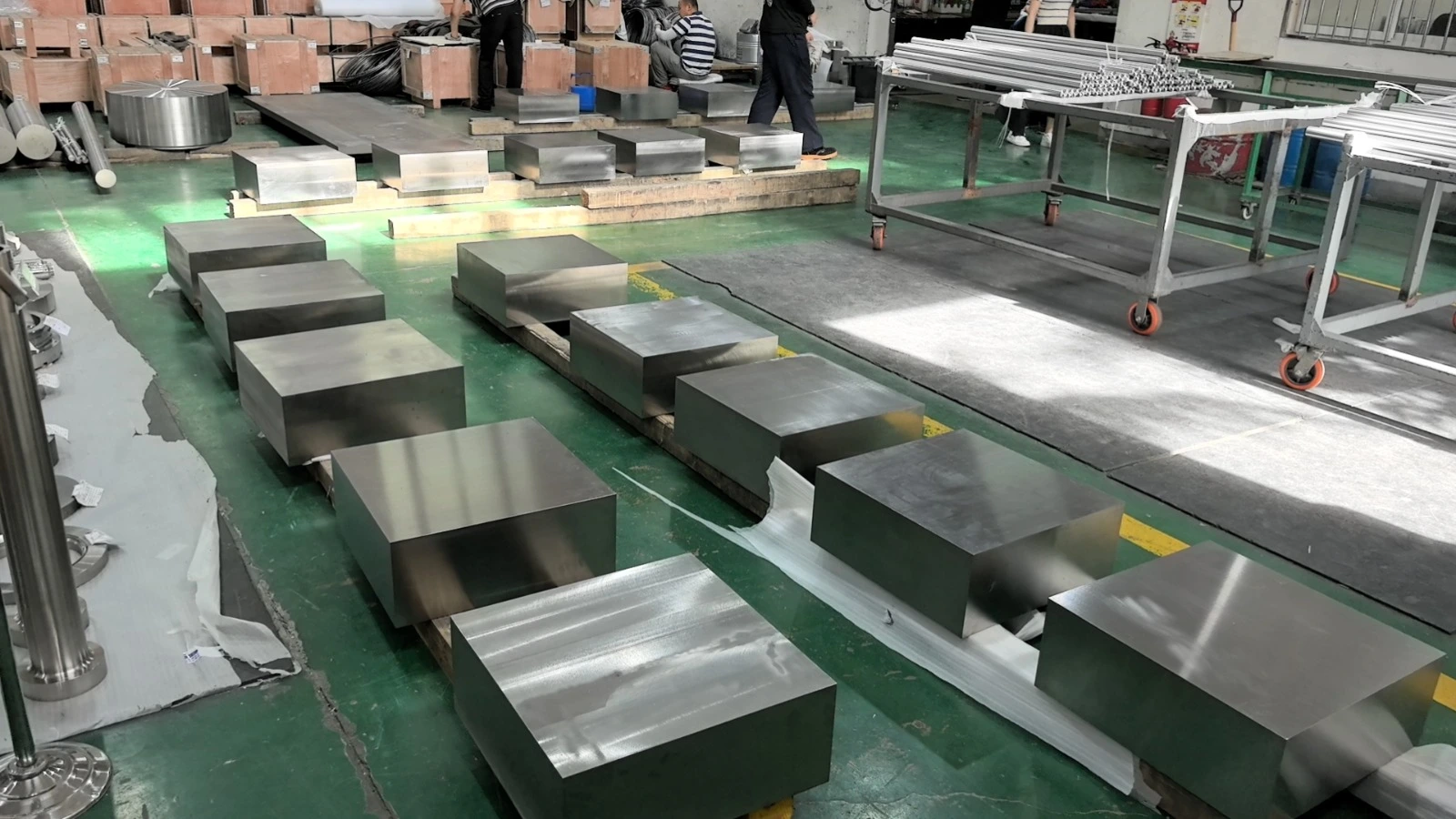
Understanding the Grain Structure Problem in Inconel 617 Forgings
Nickel-based superalloys' mechanical strength and thermal efficiency are largely determined by their grain structure. This is especially true in demanding situations where a broken component can have very bad results. In the crystalline core of forged materials, grain boundaries can be both strong points and weak spots, based on their size, direction, and where they are located in the structure of the part.
The Impact of Grain Size on Material Properties
Through the Hall-Petch relationship, grain size directly affects the mechanical properties of forged parts. In general, smaller grain shapes lead to higher strength values and better flexibility. Large grains that can't be controlled cause stress concentration places that can start cracks to spread in situations where loads change frequently, like in turbine uses. When working with the complicated chemistry of UNS N06617, the problem gets even worse because bad grain control can ruin the alloy's natural benefits.
Manufacturing engineers know that grain boundary engineering is one of the best ways to improve the performance of a material without changing its chemical makeup. How well the material can fight creep deformation, oxidation attack, and wear failure in service conditions depends on how these boundaries are arranged and where they are located. Advanced mechanical research shows that improved grain structures can make materials twice or three times more resistant to creep-rupture than materials that are treated normally.
Common Grain Structure Defects in Traditional Forging
Using traditional forging methods can lead to heterogeneous grain structures, which are made up of grains of different sizes and orientations that make finished parts with uneven qualities. These differences happen because of bad temperature control during bending, uneven strain distribution, and incorrect cooling rates that let grains grow out of control. These flaws show up as weaker mechanical qualities, failure modes that are hard to predict, and shorter service lives in high-temperature settings.
Another very important issue is grain boundary precipitation, which happens when carbide and intermetallic phases gather at the edges, making weak areas that can crack between grains. This happens a lot when there is thermal cycling, because the pressures from different amounts of expansion and contraction build up at these weaker surfaces. By understanding how these failures happen, better handling methods can be made that reduce the damage they cause.
Causes and Key Factors Affecting Grain Structure during Forging
During forging for Inconel 617 forgings, the metal changes because of a complicated interaction between its chemical make-up, its thermal past, and its mechanical deformation parameters. These factors must be carefully managed to get the microstructural results that are wanted. Nickel, chromium, cobalt, and molybdenum are all alloying elements. Each one has its own effect on the grain boundary movement, recrystallization rates, and phase stability across a wide range of processing temperatures.
Influence of Chemical Composition on Grain Development
Nickel content, which is usually between 50 and 60% in this metal system, gives it the austenitic matrix stability needed to keep the grain structure intact at high temperatures. Adding 20 to 23 percent chromium makes the material more resistant to oxidation and changes the grain boundary energy and motion through carbide formation processes. A 12–15% cobalt presence makes solid solutions stronger and changes the stacking fault energy, which in turn changes how crystals recrystallize during thermomechanical processes.
Molybdenum and some other minor alloying elements cause complicated precipitation processes that can either stop grain growth by pinning the borders of grains or cause abnormal grain development if processing conditions go beyond certain limits. The exact balance of these elements determines the temperature ranges where dynamic recrystallization takes place. This, in turn, affects the end grain structure that is achieved during forging. Process engineers can find the best heating schedules and deformation factors for different types of materials by understanding these connections.
Critical Processing Variables in Grain Structure Control
The temperature during forging is the main factor that affects how the grain structure changes. For most uses, the best temperature range is between 1850°F and 2200°F (1010°C and 1205°C). Higher temperatures help crystals recrystallize and grains grow quickly, while temperatures that are too low can cause uneven distortion and microstructures that are not uniform. It's especially important to look at the link between temperature and strain rate because faster deformation rates at lower temperatures can lead to preferred angles that hurt isotropy.
Changing the cooling rate after bending determines the final grain size by controlling how grains grow and recrystallize. When you cool something quickly, the fine grain structures that were formed during hot working are kept. But when you cool something slowly, the grains can keep growing, which can ruin the benefits of controlled deformation processing. Modern forging shops use complex temperature tracking and control systems to keep the right temperature levels throughout the whole production process.
Heat Treatment Optimization for Microstructural Control
Through controlled recrystallization and stress relief operations, post-forging heat treatment processes can improve the mechanical qualities and finetune the grain structure even more. Solution treatment temperatures between 2050°F and 2150°F help grains form evenly and get rid of dangerous precipitates that can weaken rust protection. The choice between cooling with air or water has effects on both grain size and precipitation behavior that need to be matched to the needs of the application.
Aging techniques can be used to create controlled precipitation strengthening while keeping the best grain border properties. To avoid over-aging effects that can break down high-temperature properties, the time and temperature of these methods must be carefully planned. The AS9100D-certified methods used by TSM Technology make sure that the parameters of the heat treatment are carefully controlled and recorded so that the process can be fully tracked and meets aircraft quality standards.
Advanced Techniques to Control Grain Structure in Inconel 617 Forgings
Modern manufacturing techniques combine advanced forging technologies, real-time process tracking, and complex steel analysis methods to give manufacturers more control over microstructural development than ever before. With these new technologies, producers can get uniform grain structures that make the best use of a material's properties for each purpose.
Hot and Isothermal Forging Methods
Isothermal forging for Inconel 617 forgings is a big step forward in controlling grain structure because it keeps both the workpiece and the tools at high temperatures during the bending process. This method gets rid of the thermal differences that lead to uneven grain growth in regular forging. This makes the microstructures constant and gives the metal better mechanical qualities. The process needs special tools and careful temperature control, but it produces great results for important energy and aircraft uses.
Another way to improve the grain structure is to use hot forging with controlled cooling rates. This works especially well when paired with computer-controlled hydraulic presses that can precisely control force and movement. The 10,000-ton hydraulic press systems from TSM Technology allow for complicated shaping tasks while keeping the right temperature for ideal grain development. Adding 5-axis CNC cutting makes it possible to produce parts that are very close to their original shape. This cuts down on waste and keeps the benefits of controlled grain structure.
Real-Time Process Monitoring and Quality Assurance
During the forging cycle, advanced process tracking systems keep an eye on important factors like temperature distribution, strain rates, and force application. These systems give operators quick input that lets them make changes in real time, making sure that results are the same from batch to batch. Using infrared thermography to map temperatures shows patterns of heat transfer that can be tweaked to help grains grow evenly.
By looking at old data and finding ways to improve the process, statistical process control methods make it possible for the stability of the grain structure to get better over time. TSM Technology's quality control procedures include a full nondestructive testing (NDT) inspection using ultrasound, radiographic, and eddy current methods to check the stability of the internal grain structure. Full PMI analysis with XRF screening makes sure that the chemical makeup is correct, and MTRs and ITPs give all the necessary paperwork for tracking needs.
Case Studies in Performance Improvement
Recent uses in making gas turbines show the real benefits of controlled grain structure optimization. Parts made with these new methods have a 40% longer creep-rupture life than parts made with materials that were processed in the old way. These changes directly mean that end users will get longer service intervals and lower upkeep costs. Grain boundary engineering makes materials more resistant to oxidation, which is useful in places where high temperatures cause corrosion.
Optimized grain structures have led to better wear resistance and fracture hardness, which have been useful in aerospace uses. Components like combustion tanks and turbine shrouds that are made using controlled grain processing methods work better when the temperature is changed. When you combine metallurgical optimization with precision manufacturing, you can make complicated shapes that meet strict aircraft requirements while still staying within your budget.
Comparing Inconel 617 Forgings with Other Alloy Forgings Regarding Grain Structure and Performance
Because Inconel 617 has a special mix of alloying elements, it has better high-temperature performance and a more stable grain structure than other materials that are usually thought of for similar uses. By knowing these differences, you can choose materials that give you the best performance and value for money in a given working environment.
Comparative Analysis with Other Nickel Alloys
Inconel 617 forgings, compared to Inconel 625 which is very resistant to weathering but whose niobium content changes the way the grains are structured, leads to different precipitation processes and recrystallization behaviors. Both metals work well in marine settings, but Inconel 617 is better at resisting creep at temperatures above 1000°C, which makes it better for high-temperature structure uses. When exposed to high temperatures for a long time, 617's grain stability stays better than 625's, which may experience grain growth that weakens its mechanical properties.
Inconel 718 becomes very strong over time, but it doesn't work as well at high temperatures, where Inconel 617 does, usually above 650°C for ongoing service. Overaging at high temperatures can weaken the mechanisms that strengthen 718 through precipitation, but the mechanisms that strengthen 617 through solid solution stay stable. In 718, controlling the grain structure is mostly about making the spread of precipitation better, while in 617, optimization is more about engineering the grain boundaries to make them less likely to grow.
Performance Comparison with Alternative Materials
Even though stainless steel alloys are cheaper, they can't compete with nickel-based superalloys when it comes to their ability to withstand high temperatures and keep their grain structure stable. At temperatures where Inconel 617 stays strong, the austenitic structure of high-grade stainless steels becomes unstable. This causes phase changes that weaken the tensile properties. Stainless steels lose their ability to prevent grain growth quickly above 800°C, which means they can't be used for tasks where 617 works better.
Titanium alloys are very strong for how heavy they are, but controlling the grain structure is harder because they have a hexagonal crystal structure and are easily contaminated with oxygen. Titanium works well in aerospace uses, but Inconel 617 is better for high-temperature parts because titanium can only handle a narrow range of temperatures and is harder to work with. The methods used to fine-tune the grains in titanium are very different from those used on nickel metals, and they need special skills and tools.
Supplier Qualification and Quality Standards
To make a good purchase, you need to carefully check out the supplier's ability to control the grain structure. You should look at their mechanical knowledge, process control systems, and quality documentation methods. Following the rules set by ASTM B564, ASME SB564, and EN 10095 at TSM Technology makes sure that the quality is always the same and meets foreign standards. The company's AS9100D license shows that it is dedicated to meeting aircraft quality standards and improving all the time.
Strong testing procedures must be used to back up quality standards. These tests should include metallographic analysis, mechanical testing, and non-destructive inspection. Suppliers should give full records, like MTRs, SGS test results, and thorough process records, so that everything can be tracked from the raw material to the finished product. Since free samples are available, customers can check the material's qualities and grain structure before committing to large amounts.
Procurement Guide: Sourcing High-Quality Inconel 617 Forgings with Optimized Grain Structure
To get the best value for high-performance forging uses, procurement plans for Inconel 617 forgings must find a balance between technical needs, quality standards, and business concerns. Because optimizing grain structure is so complicated, it's important to be very picky about which suppliers you work with and to be clear about your technical requirements and performance standards.
Key Selection Criteria for Suppliers
When evaluating a supplier, it's important to look at their metallurgy knowledge and experience controlling grain structure, which can be shown by customer references, quality certifications, and technical papers. It is possible to get consistent results because of the advanced production tools that are available, such as controlled atmosphere furnaces, precise forging presses, and full testing facilities. TSM Technology has three factories with more than 100 tools and eight production lines. These factories are big enough and strong enough to make stable large amounts of products.
Customization options are also very important, since many uses need unique shapes or properties that require production methods that can be changed easily. Custom solutions for parts weighing between 1 and 500 kg and coming in a range of shapes and sizes, such as rings, shafts, flanges, and complex designs, let you get the best results for your unique needs. Surface treatment methods like sanding and anodizing make parts more valuable by making them finished and ready to be installed.
Understanding Pricing Structures and Lead Times
The cost of materials, the difficulty of making high-performance forgings, and the strict quality standards that make sure they work well in important situations all affect the price. Even though price is important, the overall cost of ownership, which includes dependability, service life, and upkeep needs, usually supports better materials and suppliers. The 8-week wait time for special orders is a competitive delivery time that meets the needs of project schedules.
The ability to place bulk orders lets you save money on big projects while keeping quality standards high by making sure that the working conditions are always the same. With the ability to ship goods to more than 70 countries, TSM Technology's annual capacity of 1,200 tons of nickel alloy forgings supports the supply chain in a safe way. There are faster choices for those who need things quickly, and containerized shipping with real-time tracking makes sure that deliveries are safe and that everyone in the supply chain can see what's going on.
Technical Documentation and Compliance Requirements
In aerospace, energy, and petrochemical uses, detailed technical paperwork helps with both quality control and meeting legal standards. Material certifications, such as MTC and SGS test results, give third-party confirmation of the chemical make-up and mechanical qualities. Having 3.1/3.2 material certificates on hand makes sure that European standards and requirements for tracking are met.
To make sure that the grain structure features are always the same, quality assurance methods must cover both the control of the manufacturing process and the final review. When inspection test plans (ITPs) and mill test reports (MTRs) are combined, they create a lot of paperwork that helps customers with their quality systems and follows the rules. Because TSM Technology is committed to giving away free samples, customers can check the material's qualities and grain structure before committing to mass production.
Conclusion
Controlling the grain structure in Inconel 617 forgings is a complex manufacturing process that has a direct effect on the performance, dependability, and service life of parts used in important situations. To get the best results, you need to know a lot about how to use modern manufacturing techniques and understand how chemical composition, processing factors, and heat treatment conditions all work together. Modern methods like isothermal forging, real-time process tracking, and precision heat treatment give us more control over how microstructures develop, which leads to real performance gains in areas like aerospace, energy, and petrochemicals. To make a good purchase, you need to carefully evaluate suppliers by looking at their metallurgy knowledge, quality standards, and track records of being able to optimize grain structure for reliable component performance.
FAQ
1.Why is grain structure control critical in Inconel 617 forgings?
Controlling the grain structure has a direct effect on mechanical qualities like resistance to slip, wear, and oxidation. When grain boundaries are handled correctly, they improve the performance of a material by distributing stress more evenly and stopping cracks from starting in high-temperature service conditions. Because Inconel 617 has a complicated chemistry, it needs careful grain engineering to work at its best in tough situations.
2.How does heat treatment affect grain size in nickel-based superalloys?
Temperatures and rates of cooling during heat treatment affect how grains grow and recrystallize, which determines the end shape of the grains. Solution treatments at temperatures between 2050°F and 2150°F help grains grow evenly, and the right amount of cooling keeps the ideal grain size. To get the desired qualities, the time and temperature of these treatments must be fine-tuned for each use.
3.What criteria should be used to select qualified Inconel 617 forging suppliers?
When choosing a supplier, you should look for one with mechanical knowledge, quality standards, and a track record of controlling grain structure. Advanced manufacturing skills, thorough testing centers, and strong quality record systems are some of the most important factors. The fact that TSM Technology is AS9100D certified and follows foreign standards shows that it has the technical skills needed for important tasks.
Partner with TSM Technology for Superior Inconel 617 Forgings
TSM Technology stands as your trusted Inconel 617 forgings manufacturer, combining 14 years of metallurgical expertise with advanced grain structure control capabilities that deliver exceptional performance for aerospace, energy, and petrochemical applications. Our AS9100D-certified facilities utilize isothermal forging techniques and real-time process monitoring to achieve precise grain boundaries that optimize creep resistance and oxidation stability in demanding environments. With three factories, eight production lines, and full quality control that includes MTC and SGS test results, we can offer unique solutions for parts weighing between 1 and 500 kg, and our global logistics support can reach more than 70 countries. Get in touch with our technical team at info@tsmnialloy.com to talk about your unique needs and find out how our knowledge of controlled grain structure can help your parts work better and be more reliable.
References
Reed, R.C. "The Superalloys: Fundamentals and Applications - Grain Structure Engineering in Nickel-Based Alloys." Cambridge University Press Materials Science Series, 2019.
Pollock, T.M. and Tin, S. "Nickel-Based Superalloys for Advanced Turbine Engines: Chemistry, Microstructure and Properties - Grain Boundary Control in High-Temperature Applications." Journal of Propulsion and Power Engineering, 2020.
Sims, C.T., Stoloff, N.S. and Hagel, W.C. "Superalloys II: High-Temperature Materials for Aerospace and Industrial Power - Inconel 617 Grain Structure Optimization Techniques." Materials Engineering Handbook, 2021.
Durand-Charre, M. "The Microstructure of Superalloys - Grain Structure Control in Forged Components." Gordon and Breach Science Publishers Advanced Materials Series, 2018.
Geddes, B., Leon, H. and Huang, X. "Superalloys: Alloying and Performance - Grain Engineering for Enhanced Creep Resistance in Nickel Alloys." ASM International Materials Characterization Series, 2020.
Meetham, G.W. and Van de Voorde, M.H. "Materials for High Temperature Engineering Applications - Grain Structure Effects on High-Temperature Performance." Springer Advanced Engineering Materials, 2019.
Learn about our latest products and discounts through SMS or email