- English
- French
- German
- Portuguese
- Spanish
- Russian
- Japanese
- Korean
- Arabic
- Greek
- German
- Turkish
- Italian
- Danish
- Romanian
- Indonesian
- Czech
- Afrikaans
- Swedish
- Polish
- Basque
- Catalan
- Esperanto
- Hindi
- Lao
- Albanian
- Amharic
- Armenian
- Azerbaijani
- Belarusian
- Bengali
- Bosnian
- Bulgarian
- Cebuano
- Chichewa
- Corsican
- Croatian
- Dutch
- Estonian
- Filipino
- Finnish
- Frisian
- Galician
- Georgian
- Gujarati
- Haitian
- Hausa
- Hawaiian
- Hebrew
- Hmong
- Hungarian
- Icelandic
- Igbo
- Javanese
- Kannada
- Kazakh
- Khmer
- Kurdish
- Kyrgyz
- Latin
- Latvian
- Lithuanian
- Luxembou..
- Macedonian
- Malagasy
- Malay
- Malayalam
- Maltese
- Maori
- Marathi
- Mongolian
- Burmese
- Nepali
- Norwegian
- Pashto
- Persian
- Punjabi
- Serbian
- Sesotho
- Sinhala
- Slovak
- Slovenian
- Somali
- Samoan
- Scots Gaelic
- Shona
- Sindhi
- Sundanese
- Swahili
- Tajik
- Tamil
- Telugu
- Thai
- Ukrainian
- Urdu
- Uzbek
- Vietnamese
- Welsh
- Xhosa
- Yiddish
- Yoruba
- Zulu
Ultrasonic Testing (UT) for Inconel 617 Forgings: What You Need to Know
An essential non-destructive testing (NDT) technique for assessing the internal quality of Inconel 617 forgings in demanding applications is ultrasonic testing (UT). UT can detect interior discontinuities that might compromise the dependability of parts used in chemical processing, power generation, and aerospace equipment by using high-frequency sound waves. Effective ultrasonic inspection necessitates a thorough comprehension of the material properties, forging process, and inspection requirements of Inconel 617, a nickel-based high-temperature alloy with a complex microstructure. UT supports quality assurance and long-term service dependability for essential forged components by assisting manufacturers in confirming internal integrity without causing damage to the item.
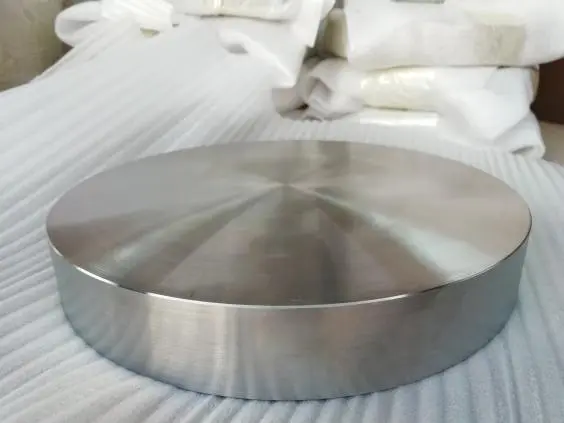
Understanding Ultrasonic Testing (UT) for Inconel 617 Forgings
High-frequency sound waves are used in ultrasonic testing (UT) to analyze a material's interior structure. Ultrasonic waves follow predictable patterns as they pass through a homogeneous substance. However, a portion of the sound energy is reflected back to the probe when they come across discontinuities like voids, inclusions, fissures, or other internal alterations. Trained inspectors may assess the position, size, and features of possible indicators within Inconel 617 forgings by examining these reflected signals. UT is particularly useful for thick-section nickel-based alloy forgings where internal flaws might not be apparent from the outside because it offers volumetric examination capability in contrast to surface inspection techniques.
Fundamental Principles of Ultrasonic Wave Propagation
The interaction of sound waves with material barriers is the foundation of ultrasonic testing. Ultrasonic waves move at a comparatively constant speed when they enter a homogeneous metal structure. A portion of the energy is reflected back and picked up by the transducer if the waves come into contact with a discontinuity that causes a change in acoustic impedance. Information regarding potential internal conditions inside the component is provided by the reflected signals, also known as indicators. These signals are assessed by skilled NDT workers using acceptance criteria, inspection protocols, and calibration standards. Because the alloy's grain structure and production history might affect sound transmission and signal interpretation, ultrasonic examination of Inconel 617 forgings necessitates careful calibration.
Challenges Specific to Nickel-Chromium Superalloys
Because of their intricate microstructures, nickel-based alloys, like Inconel 617 forgings, might be more difficult to check than regular steels. Grain structure and texture may vary throughout the forging process, and the alloy has a face-centered cubic (FCC) gamma matrix. These metallurgical properties may produce background noise during inspection and have an impact on the propagation of ultrasonic waves. In order to produce trustworthy results, inspectors might need to take into account:
Geometry of components
Forging a path
Grain composition
Selection of probes
Method of calibration
Relevant acceptance standards
It may be necessary to inspect complex forged components from several angles in order to enhance defect detection capabilities and lower the likelihood of missed indications.
Critical Properties of Inconel 617 Forgings Impacting UT Performance
The performance of ultrasonic examination is directly impacted by the material properties of Inconel 617 forgings. Engineers and inspectors may choose appropriate testing methods and increase inspection reliability by being aware of these characteristics.
Chemical Composition Effects on Acoustic Properties
The microstructure and ultrasonic response of Inconel 617 are significantly influenced by its chemical composition. Chromium, cobalt, molybdenum, aluminum, and other alloying elements are all present in Inconel 617, an alloy based on nickel. While molybdenum and cobalt enhance high-temperature mechanical performance, chromium helps with oxidation resistance. Variations in microstructure, carbide distribution, and grain properties may affect the behavior of ultrasonic signals throughout manufacture and heat treatment. During UT inspection, accurate calibration and skilled interpretation are crucial since these effects do not always point to flaws. To ensure accurate evaluation, qualified inspection procedures for Inconel 617 forgings should take into account the relationship between alloy composition, forging condition, and expected ultrasonic response.
Mechanical Properties Influencing Inspection Parameters
Inspection planning and ultrasonic wave transmission are both impacted by the mechanical characteristics of Inconel 617 forgings. Under harsh operating circumstances, Inconel 617, a nickel-based superalloy intended for high-temperature operation, retains excellent mechanical strength and structural stability. These qualities make it appropriate for parts that need to function dependably at high temperatures. However, the ultrasonic signal response can be impacted by elements like residual stress, grain orientation, and forging deformation. To guarantee correct assessment, areas with complicated geometries or severe deformation may need extra calibration or inspection angles. Effective detection of internal discontinuities in thick-section forgings requires careful consideration of the type of probe, scanning technique, and inspection coverage.
Forging Process Variables Affecting Inspection Results
The internal structure of Inconel 617 forgings is directly impacted by the forging process, which may have an impact on the outcomes of ultrasonic inspections. When forging, elements like:
Temperature of forging
Ratio of reduction
Condition of heat treatment
Cooling procedure
Development of grain structure
may affect the ultimate properties of the material.
A more homogeneous microstructure, which facilitates more reliable ultrasonic transmission, is made possible by a well-managed forging process. On the other hand, inspectors must take into account variances in acoustic response during examination due to variations in processing conditions. Because of this, the actual component design, material condition, and relevant inspection requirements are often taken into consideration while developing UT methods.
Ultrasonic Testing Procedures and Standards for Inconel 617 Forgings
Standardized processes, specialized tools, and skilled workers are necessary for accurate ultrasonic examination of Inconel 617 forgings. Typically, a full UT procedure consists of:
Choosing appropriate ultrasonic equipment
Using the proper reference standards for calibration
Specified scanning coverage
Assessment of identified indications
Documentation and reporting for inspections
It is possible to guarantee uniform and traceable findings across various production phases and inspection facilities by adhering to accepted inspection methods.
Applicable Standards and Specifications
The component application, client needs, and industry rules all influence the relevant ultrasonic inspection standards. While ultrasonic testing processes may adhere to appropriate NDT standards, including criteria outlined in documents like ASME Section V where needed by the application, standards like ASTM B564 stipulate material specifications for nickel alloy forgings. Additional client requirements in the pressure equipment, energy, and aerospace sectors may specify:
Coverage of inspections
Acceptance standards
Requirements for reporting
Requirements for inspector qualifications
To guarantee that the finished Inconel 617 forgings satisfy the necessary service conditions, a competent supplier should examine these specifications before to manufacture and inspection.
Advanced UT Techniques for Complex Geometries
When compared to traditional methods, advanced ultrasonic techniques can yield more detailed inspection results for complex Inconel 617 forgings. Multiple ultrasonic components are used in Phased Array Ultrasonic Testing (PAUT) to electronically regulate beam coverage and direction. For components with intricate geometries, curved surfaces, or hard-to-reach places, this technique may increase inspection flexibility. Another sophisticated ultrasonic technique that is often used for fracture identification and size in appropriate settings is Time-of-Flight Diffraction (TOFD). It can provide more details regarding discontinuity dimensions by analyzing diffracted signals from fault points. Component geometry, inspection goals, and relevant quality criteria all influence the use of advanced UT techniques.
Data Interpretation and Acceptance Criteria
Both technical expertise and an awareness of the intended use of the component are necessary for interpreting ultrasonic inspection results. Not all ultrasonic signs indicate a serious problem. Inspectors assess indicators using criteria like:
Features of the signal
Location Dimensions
Orientation
Relevant acceptance standards
Acceptance standards are often more stringent for high-performance parts utilized in energy or aerospace systems since dependability and safety are important factors. Traceability is further supported by comprehensive reports and digital inspection records, which enable manufacturers and customers to examine inspection history as needed.
Comparing Ultrasonic Testing with Other NDT Methods for Inconel 617 Forgings
The component design, anticipated defect types, inspection goals, and application requirements all influence the choice of non-destructive testing (NDT) technique for Inconel 617 forgings. The benefits of various NDT methods vary. While alternative techniques could provide superior results for surface inspection or material identification, ultrasonic testing is often utilized for volumetric evaluation. To get a more thorough quality assessment for crucial nickel-based alloy components, a variety of inspection techniques are often used.
Ultrasonic vs. Radiographic Testing
Different methods for assessing interior conditions in forged components are offered by radiographic testing and ultrasonic testing. By producing a picture of interior density fluctuations, radiographic testing is useful for identifying certain volumetric discontinuities, such as inclusions or porosity. However, the direction of the defect and the imaging settings may affect its capacity to identify certain planar faults. For Inconel 617 forgings, ultrasonic testing has a number of benefits, such as:
Capacity to assess more in-depth portions
Strong capacity to identify discontinuities of the planar kind
Inspection feedback in real time
No radiation exposure while undergoing testing
However, when examining intricate nickel-based alloy structures, UT calls for knowledgeable operators and accurate calibration. UT and radiographic testing are regarded as complementary rather than antagonistic techniques in many industrial applications.
Advantages Over Surface Testing Methods
Surface-breaking discontinuities may be found using surface inspection techniques including eddy current testing (ECT) and dye penetrant testing (PT). However, when assessing interior conditions inside thick Inconel 617 forgings, these techniques are limited. Volumetric inspection is made possible by ultrasonic testing, which enables inspectors to assess subsurface regions that cannot be investigated using just surface-based or visual methods. Finding internal discontinuities is crucial for minimizing unforeseen component performance problems in nickel-based superalloys used in high-temperature and high-stress situations.
Integration with Comprehensive Quality Programs
Several NDT techniques are frequently combined in contemporary quality control programs to provide thorough inspection coverage. For instance:
Internal material conditions may be assessed via ultrasonic testing.
Surface-breaking indicators may be examined using dye penetrant testing.
Dimensional inspection confirms the accuracy of components.
Material testing verifies mechanical and chemical requirements.
Manufacturers may develop a more thorough quality assessment procedure for Inconel 617 forgings by combining several inspection techniques. Customer demands, industry norms, and component needs should all be taken into consideration when choosing an inspection strategy.
Practical Guidance on Procuring and Utilizing UT Services for Inconel 617 Forgings
Buyers should consider both technical capabilities and quality management procedures when making a purchase of Inconel 617 forgings or scheduling ultrasonic inspection services. Several elements are necessary for a trustworthy inspection procedure, such as: Qualifications for inspectors, Capability of equipment, Procedures for inspection, Techniques for calibration, Quality of documentation, and adherence to client specifications. Procurement teams may choose appropriate manufacturing partners and lower quality risks by being aware of these issues.
Selecting Qualified Inspection Providers
For projects involving critical Inconel 617 forgings, selecting a qualified inspection provider is a crucial first step.
Purchasers need to think about: Qualifications for Inspectors: In accordance with accepted industry procedures, such as qualification methods based on relevant NDT standards, UT employees should get the proper training and certification. Because material structure and forging conditions can affect ultrasonic interpretation, skilled inspectors are especially crucial when working with nickel-based alloys.
System of Quality Management: Consistency is ensured in the following areas with the use of an organized quality management system: Calibration of equipment, Procedures for inspection, Data capture, Control of traceability. Customers may need certain quality certificates or documents, depending on the application and industry.
Knowledge of Nickel-Based Alloys: Suppliers who have experience with nickel-based superalloys are aware of the difficulties related to intricate microstructures, Variations connected to forging, Selection of inspection parameters, and evaluation of acceptance criteria. This expertise facilitates improved communication between producers and consumers as well as increased inspection reliability.
Technical Specifications and Requirements
When scheduling an ultrasonic examination for Inconel 617 forgings, clear technical communication is crucial. Customers should provide pertinent technical data prior to the start of the examination, such as: Drawings of components, Specifications for materials, Conditions of forging, Standards for inspections, Acceptance standards, Service specifications.
Inspection teams can use this information to create proper protocols and choose the right tools, calibration techniques, and scanning methods. Cooperation between design engineers, material experts, and NDT staff helps guarantee that inspection coverage for complicated forged components satisfies the real application requirements.
Cost Optimization and Lead Time Management
During the production of Inconel 617 forgings, careful planning may save inspection costs and cut down on needless delays. The length and expense of UT inspections are influenced by a number of variables, including: Size and shape of components, Coverage of necessary inspections, Method of testing, Documentation specifications, and acceptance criteria. Workflow efficiency may be increased, and extra handling can be decreased by early coordination between forging production and inspection operations. Establishing standardized inspection protocols can enhance communication and promote stable quality control for recurring orders or long-term projects.
Conclusion
In order to confirm the internal quality of Inconel 617 forgings used in the aerospace, energy, chemical processing, and other demanding sectors, ultrasonic testing is crucial. Due to the intricate nickel-based alloy structure of Inconel 617, accurate inspection requires proper calibration, skilled workers, and a thorough understanding of the connection between material properties and ultrasonic response. UT offers an efficient way to find internal discontinuities and support the long-term dependability of crucial forged components when paired with appropriate NDT procedures and quality documentation. To achieve consistent component performance, manufacturers and procurement teams must choose an experienced supplier with good material expertise and inspection capabilities.
FAQ
1. What defects can ultrasonic testing detect in Inconel 617 forgings?
Several internal discontinuities in Inconel 617 forgings may be found via ultrasonic testing, such as: Internal fissures Included, The porosity Discontinuities associated with forging
Additional modifications that impact the transmission of ultrasonic signals: Component geometry, inspection tools, calibration standards, and acceptance criteria all affect the capacity to find certain flaws.
2. How does the forging process affect UT inspection results?
Inconel 617 forgings' internal condition, material consistency, and grain structure are all impacted by the forging process. These elements may have an impact on signal interpretation as well as how ultrasonic waves go through the material. As a result, the forging direction, component shape, heat treatment condition, and relevant quality criteria should all be taken into account during inspection operations.
3. What are typical turnaround times for UT inspection reports?
The following variables affect the turnaround time for ultrasonic inspection reports: Complexity of components, scope of the inspection, Method of testing, and requirements for reporting. Simple inspections can be finished fast, while complicated components that require sophisticated methods and thorough documentation could take longer to evaluate. Prior to production planning, customers should verify inspection schedules with the supplier.
4. Can ultrasonic testing verify material chemistry or heat treatment conditions?
The main purpose of ultrasonic testing is to assess discontinuities and interior material states. Neither the chemical composition nor the outcomes of heat treatment are fully confirmed. Material chemistry is often confirmed using techniques like optical emission spectroscopy and Positive Material Identification (PMI. Further testing may be necessary for mechanical characteristics and the impacts of heat treatment, such as tensile examination, Testing for hardness, and metallographic analysis. To obtain thorough material verification, many assessment techniques are often used.
Partner with TSM Technology for Advanced Inconel 617 Forging Solutions
For applications needing dependable performance in harsh industrial settings with high temperatures, TSM Technology offers Inconel 617 forgings. We assist clients with technical communication, manufacturing coordination, and quality documentation based on project requirements thanks to our expertise with nickel-based alloy materials. For applications in the aerospace, energy, chemical processing, and other industries, our team can help with material selection, forging requirements, inspection documentation, and customized solutions. For technical inquiries or requests for quotes, please get in touch with: Email address: info@tsmnialloy.com
References
American Society for Testing and Materials. "Standard Specification for Nickel Alloy Forgings." ASTM B564-22, West Conshohocken, PA, 2022.
American Society of Mechanical Engineers. "Nondestructive Examination Rules for Materials." ASME Boiler and Pressure Vessel Code Section V, New York, NY, 2021.
American Society for Nondestructive Testing. "Ultrasonic Testing Method for Heavy-Section Steel Forgings." ASTM A388-18, West Conshohocken, PA, 2018.
International Organization for Standardization. "Non-destructive Testing - Ultrasonic Testing - Specification for General Principles." ISO 16810:2014, Geneva, Switzerland, 2014.
Special Metals Corporation. "INCONEL Alloy 617 Technical Bulletin." Publication SMC-029, Huntington, WV, 2020.
Aerospace Material Specification. "Nickel Alloy Bars, Forgings, and Rings." AMS 5887G, SAE International, Warrendale, PA, 2019.
Learn about our latest products and discounts through SMS or email