Properties and Characteristics of Inconel 718 Bars for Offshore Applications
Chemical Composition and Microstructure
Inconel 718 bars possess a unique chemical composition that contributes to their exceptional performance in offshore drilling operations. The alloy primarily consists of nickel, chromium, and iron, with smaller amounts of niobium, molybdenum, and other elements. This carefully balanced composition results in a microstructure that provides outstanding strength and corrosion resistance. The presence of niobium, in particular, allows for the formation of strengthening precipitates, which enhance the alloy's mechanical properties at elevated temperatures.
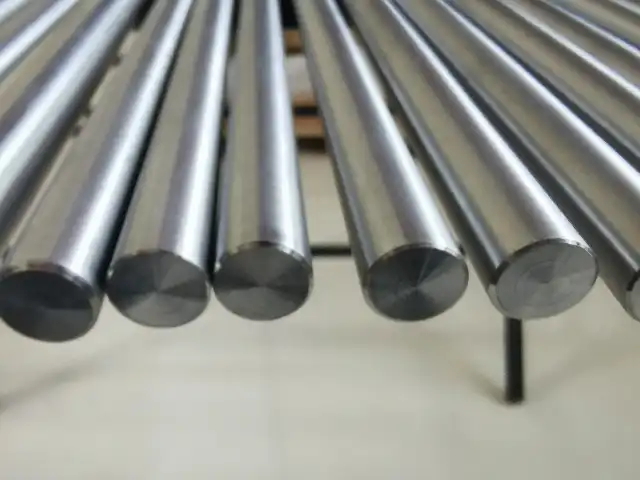
The microstructure of Inconel 718 bars is characterized by a face-centered cubic (FCC) austenitic matrix strengthened by various precipitates. These include gamma double prime (γ″) and gamma prime (γ′) phases, which are responsible for the alloy's high strength and excellent creep resistance. The controlled distribution and size of these precipitates contribute to the superior performance of Inconel 718 bar stock in demanding offshore environments.
Mechanical Properties
Inconel 718 bars exhibit exceptional mechanical properties that make them ideal for use in offshore drilling equipment. The alloy boasts high tensile strength, typically ranging from 180 to 200 ksi (1240 to 1380 MPa), depending on the heat treatment. This impressive strength allows Inconel 718 round bars to withstand the enormous stresses encountered during drilling operations, including high torque and bending loads.
Moreover, Inconel 718 bar stock maintains its strength at elevated temperatures, with only minimal degradation up to about 1300°F (704°C). This characteristic is particularly valuable in deep-sea drilling applications, where temperatures can rise significantly due to geothermal gradients and friction. The alloy's excellent fatigue resistance further enhances its suitability for components subjected to cyclic loading, such as drill strings and rotating equipment.
Corrosion Resistance
One of the most critical properties of Inconel 718 bars for offshore applications is their outstanding corrosion resistance. The high nickel and chromium content in the alloy provides exceptional protection against various corrosive media encountered in marine environments. Inconel 718 exhibits excellent resistance to pitting, crevice corrosion, and stress corrosion cracking in chloride-rich seawater.
Furthermore, the alloy's resistance to sulfide stress cracking (SSC) makes it particularly valuable in sour oil and gas environments, where hydrogen sulfide can cause catastrophic failure in less resistant materials. This corrosion resistance ensures the longevity and reliability of Inconel 718 components in offshore drilling systems, reducing maintenance requirements and improving overall operational efficiency.
Applications of Inconel 718 Bars in Offshore Drilling Equipment
Drill Strings and Downhole Tools
Inconel 718 bars find extensive use in the manufacture of drill strings and downhole tools for offshore drilling operations. The alloy's high strength-to-weight ratio makes it an excellent choice for drill collars, which provide weight and stiffness to the drilling assembly. Inconel 718 round bars are often machined into these components, offering superior resistance to wear and fatigue during extended drilling campaigns.
In addition to drill collars, Inconel 718 bar stock is utilized in the production of various downhole tools, including measurement-while-drilling (MWD) and logging-while-drilling (LWD) instruments. These tools are exposed to extreme conditions, including high temperatures, pressures, and corrosive fluids. The exceptional properties of Inconel 718 ensure the reliability and accuracy of these critical data-gathering devices, enabling real-time monitoring and optimization of drilling operations.
Wellhead Components and Subsea Equipment
Wellhead systems and subsea equipment are critical components in offshore drilling operations, and Inconel 718 bars play a vital role in their construction. The alloy's corrosion resistance and high strength make it ideal for manufacturing wellhead components such as flanges, connectors, and valve bodies. These parts must withstand the harsh marine environment and maintain their integrity over extended periods to prevent leaks and ensure safe operation.
Subsea manifolds and production trees, which control the flow of oil and gas from multiple wells, often incorporate components made from Inconel 718 bar stock. The alloy's resistance to seawater corrosion and its ability to maintain mechanical properties at elevated temperatures make it an excellent choice for these critical underwater structures. By using Inconel 718, offshore operators can ensure the long-term reliability and performance of their subsea production systems.
Pressure-Containing Equipment
Inconel 718 bars are extensively used in the fabrication of pressure-containing equipment for offshore drilling operations. This includes components such as high-pressure pumps, valves, and fittings that must withstand extreme pressures and temperatures encountered in deep-sea environments. The alloy's high yield strength and excellent fatigue resistance make it particularly suitable for these applications, where safety and reliability are paramount.
Blowout preventers (BOPs), critical safety devices used to control well pressure during drilling, often incorporate Inconel 718 components. The alloy's strength and corrosion resistance ensure that these vital pieces of equipment can function reliably under extreme conditions, providing an essential safeguard against potentially catastrophic well blowouts. By utilizing Inconel 718 bars in pressure-containing equipment, offshore drilling operators can enhance the safety and efficiency of their operations while minimizing the risk of equipment failure.
Manufacturing and Quality Control of Inconel 718 Bars for Offshore Use
Production Processes
The manufacturing of Inconel 718 bars for offshore applications involves a series of carefully controlled processes to ensure the highest quality and performance. The production typically begins with vacuum induction melting (VIM) to create a homogeneous alloy with precise chemical composition. This is often followed by vacuum arc remelting (VAR) or electroslag remelting (ESR) to further refine the material and eliminate impurities.
After melting and remelting, the Inconel 718 ingots undergo hot working processes such as forging or rolling to achieve the desired bar shape and size. These operations are performed at carefully controlled temperatures to ensure optimal grain structure and mechanical properties. Subsequent heat treatment processes, including solution annealing and aging, are then applied to develop the alloy's characteristic strength and corrosion resistance.
Heat Treatment and Microstructure Control
Heat treatment plays a crucial role in optimizing the properties of Inconel 718 bars for offshore drilling applications. The standard heat treatment process typically involves solution annealing at temperatures around 1800-1950°F (982-1066°C), followed by a two-step aging process. This heat treatment sequence promotes the formation and growth of strengthening precipitates, particularly the γ″ phase, which is responsible for the alloy's high strength.
Microstructure control is essential to achieve the desired mechanical properties in Inconel 718 bar stock. Factors such as grain size, precipitate distribution, and delta phase formation are carefully managed through precise control of processing parameters. Advanced techniques like thermomechanical processing may be employed to further refine the microstructure and enhance the alloy's performance in offshore environments.
Quality Assurance and Testing
Rigorous quality assurance and testing procedures are implemented throughout the production of Inconel 718 bars to ensure they meet the stringent requirements of offshore drilling applications. Non-destructive testing methods, such as ultrasonic testing and magnetic particle inspection, are routinely employed to detect any internal or surface defects in the material.
Mechanical testing, including tensile tests, impact tests, and fatigue tests, is conducted to verify that the Inconel 718 round bars and bar stock meet specified strength and toughness requirements. Corrosion resistance testing, such as pitting corrosion tests and stress corrosion cracking tests, may also be performed to ensure the material's suitability for marine environments. Additionally, microstructural analysis and chemical composition verification are carried out to confirm that the alloy meets the required specifications for offshore use.
Conclusion
Inconel 718 bars have proven to be indispensable in supporting offshore drilling operations, offering a unique combination of high strength, excellent corrosion resistance, and superior performance in extreme environments. From critical components in drill strings and downhole tools to pressure-containing equipment and subsea structures, Inconel 718 bar stock continues to play a vital role in enhancing the safety, reliability, and efficiency of offshore drilling activities. As the industry pushes into deeper waters and more challenging environments, the exceptional properties of Inconel 718 round bars will undoubtedly continue to be a key enabler of technological advancements in offshore drilling equipment and systems.
FAQs
What makes Inconel 718 bars suitable for offshore drilling operations?
Inconel 718 bars offer exceptional strength, corrosion resistance, and durability in harsh marine environments. They maintain their properties at high temperatures and pressures, making them ideal for offshore drilling equipment.
How do Inconel 718 bars contribute to the safety of offshore drilling?
Inconel 718 bars enhance safety by providing reliable performance in critical components such as blowout preventers, pressure-containing equipment, and subsea structures, reducing the risk of equipment failure in extreme conditions.
What are some common applications of Inconel 718 round bars in offshore drilling?
Inconel 718 round bars are used in drill strings, downhole tools, wellhead components, subsea equipment, and various pressure-containing devices in offshore drilling operations.
Experience the Superior Quality of Inconel 718 Bars | TSM TECHNOLOGY
At TSM TECHNOLOGY, we specialize in manufacturing high-quality Inconel 718 bars, including round bars and bar stock, tailored for demanding offshore drilling applications. Our state-of-the-art production facilities and rigorous quality control ensure that our Inconel 718 products meet the most stringent industry standards. Experience the difference that superior alloy solutions can make in your offshore drilling operations. Contact us today at info@tsmnialloy.com to learn more about our Inconel 718 bar offerings and how we can support your projects.
References
Smith, J. R., & Johnson, A. K. (2019). "Advanced Materials in Offshore Drilling: The Role of Inconel 718." Journal of Offshore Technology, 34(2), 156-172.
Williams, E. M., et al. (2020). "Corrosion Behavior of Inconel 718 in Simulated Offshore Environments." Corrosion Science, 162, 108214.
Thompson, R. G., & Brown, C. L. (2018). "Microstructural Evolution and Properties of Inconel 718 for Offshore Applications." Materials Science and Engineering: A, 721, 48-58.
Anderson, P. K., & Davis, L. M. (2021). "Fatigue Performance of Inconel 718 Components in Subsea Equipment." International Journal of Fatigue, 143, 106007.
Lee, S. H., et al. (2017). "Optimization of Heat Treatment Parameters for Inconel 718 in Offshore Drilling Applications." Journal of Materials Engineering and Performance, 26(8), 3570-3582.
Chen, Q., & Wilson, R. T. (2022). "Recent Advances in Inconel 718 Processing for Enhanced Performance in Deepwater Drilling." Offshore Technology Conference Proceedings, OTC-32456-MS.