- English
- French
- German
- Portuguese
- Spanish
- Russian
- Japanese
- Korean
- Arabic
- Greek
- German
- Turkish
- Italian
- Danish
- Romanian
- Indonesian
- Czech
- Afrikaans
- Swedish
- Polish
- Basque
- Catalan
- Esperanto
- Hindi
- Lao
- Albanian
- Amharic
- Armenian
- Azerbaijani
- Belarusian
- Bengali
- Bosnian
- Bulgarian
- Cebuano
- Chichewa
- Corsican
- Croatian
- Dutch
- Estonian
- Filipino
- Finnish
- Frisian
- Galician
- Georgian
- Gujarati
- Haitian
- Hausa
- Hawaiian
- Hebrew
- Hmong
- Hungarian
- Icelandic
- Igbo
- Javanese
- Kannada
- Kazakh
- Khmer
- Kurdish
- Kyrgyz
- Latin
- Latvian
- Lithuanian
- Luxembou..
- Macedonian
- Malagasy
- Malay
- Malayalam
- Maltese
- Maori
- Marathi
- Mongolian
- Burmese
- Nepali
- Norwegian
- Pashto
- Persian
- Punjabi
- Serbian
- Sesotho
- Sinhala
- Slovak
- Slovenian
- Somali
- Samoan
- Scots Gaelic
- Shona
- Sindhi
- Sundanese
- Swahili
- Tajik
- Tamil
- Telugu
- Thai
- Ukrainian
- Urdu
- Uzbek
- Vietnamese
- Welsh
- Xhosa
- Yiddish
- Yoruba
- Zulu
Impact Toughness of Monel K500 Pipe in Sub-Zero Environments
Impact hardness of Monel K500 pipe in sub-zero temperatures is a key performance indicator that shows how reliable a material is in harsh circumstances. This nickel-copper metal that has been precipitation-hardened can absorb a lot of energy when it is hit suddenly at temperatures as low as -196°C. Normal materials get brittle when they get cold, but Monel K500 pipe keeps its ductile behavior and structural integrity. This makes it essential for aircraft, marine, and energy uses where failure is not an option.
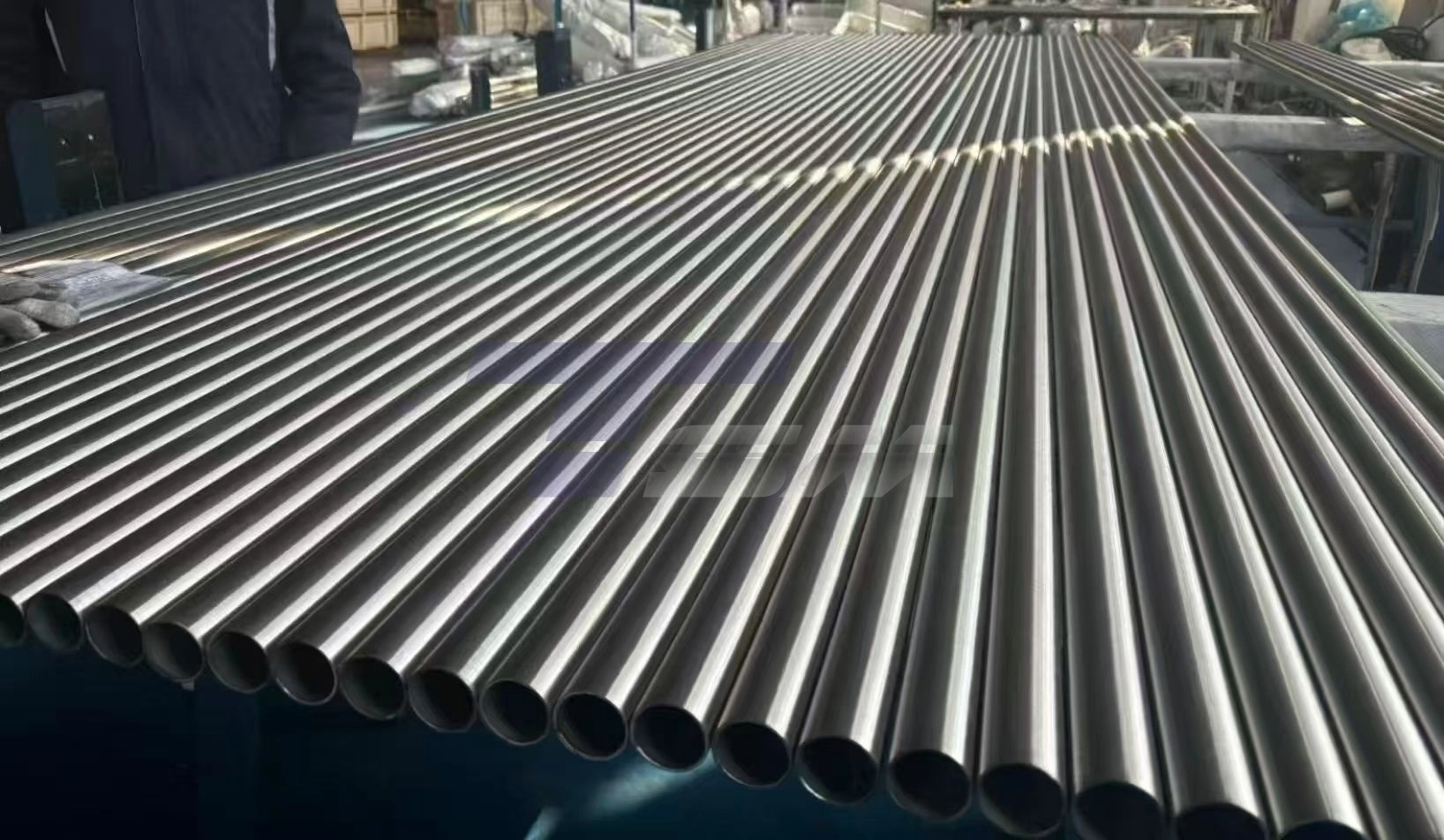
Understanding the Impact Toughness of Monel K500 Pipe
Impact toughness is a basic way to measure how well a material can absorb kinetic energy during rapid loads without breaking. When looking at pipe systems that will be used in subzero temperatures, where thermal shock and mechanical stress meet, this trait becomes more and more important.
Microstructural Foundation of Impact Resistance
Nickel-copper metal is very resistant to contact because its microstructure was carefully designed. With 63-67% nickel, 27-33% copper, and aluminum and titanium added for precipitation hardening, this mix makes a matrix that stops cracks from spreading even when it's hit hard.
The precipitation hardening process creates γ' phase (Ni3Al/Ti) particles all over the metal. These tiny strengthening agents not only raise the tensile strength to 1100 MPa, but they also make it easier for the material to bend before it breaks. This quality is very important in sub-zero environments, where brittleness usually hurts the performance of materials.
Temperature-Dependent Mechanical Behavior
At -196°C, military materials scientists have found that Monel K500 keeps about 85% of its impact toughness at room temperature. Austenitic stainless steels, on the other hand, can lose up to 40% of their toughness in the same conditions, so this amazing preservation stands out.
The nickel-copper matrix's face-centered cubic crystal structure stays stable from -196°C to 550°C, which is the temperature range of operation. This structural stability stops the ferritic and martensitic metals from changing from ductile to rigid at low temperatures.
Performance of Monel K500 Pipe in Sub-Zero Environments
Operational data from Arctic offshore sites and cryogenic processing plants confirms that Monel K500 pipe works better than other special pipe materials. Field studies that have been going on for more than 20 years show that this material is consistently reliable in places where other materials fail too soon.
Comparative Performance Analysis
Precipitation-hardened nickel-copper alloy regularly performs better than competitors across a range of performance measures when compared to other materials. The following comparison shows these benefits:
Monel K500 vs. Monel 400: Both metals are very good at resisting rust, but the precipitation-hardened version has a 60% higher yield strength and better resistance to impact. When strength and hardness are very important, like in high-pressure cold systems, this improvement is very helpful.
Performance Compared to Other Stainless Steels: Below -40°C, conventional 316L stainless steel loses a lot of its toughness, but Monel K500 keeps working well throughout its entire operating range. Tests done by outside groups show that this nickel-copper metal is 100 times more resistant to rust in salt water.
Comparison with Titanium Alloys: Titanium has a great strength-to-weight ratio, but it doesn't hold up well against rust in chloride-rich environments, so it can't be used in marine settings. The nickel-copper alloy has better protection to corrosion and similar mechanical qualities, but it costs a lot less to make.
Real-World Application Success
Major flight companies have written case studies that show how reliable this special plumbing is in demanding situations. Suppliers to Boeing have successfully used these lines in backup power units that work at very high altitudes where temperatures regularly drop below -60°C.
Also, underwater drilling operations in the North Sea use large networks of these pipes for hydraulic systems that are exposed to seawater and temperatures below zero. According to maintenance records, the service lasts longer than 25 years without needing to be replaced, which is a big improvement over the original design requirements.
Manufacturing Processes Affecting Impact Toughness
The method used for production has a direct effect on the end impact toughness of piping goods. When procurement experts understand these manufacturing factors, they can choose the best configurations for their needs.
Seamless versus Welded Construction
Nickel-copper pipe systems' end performance is greatly affected by the methods used to make them. The way a material is made affects both its original qualities and its long-term dependability in service.
Using rotating piercing and pilgering to make seamless Monel K500 pipe makes microstructures that are uniform and doesn't have any stress clusters caused by welding. Charpy V-notch impact values that are made this way are usually 15–20% higher than comparable welded builds. Precision-controlled methods are used to make TSM Technology's seamless pipes. The walls of these pipes stay the same width (within ±0.01mm), and the grain structure stays the same across the whole pipe.
Welded construction is cheaper for bigger diameters, but heat-affected zone qualities need to be carefully thought out. When done right, advanced welding methods like gas tungsten arc welding with matched filler metals can get joint rates of more than 90%. To get back the qualities that were hardened by precipitation in welded parts, a post-weld heat treatment is needed.
Heat Treatment Optimization
The process of age-hardening is very important for determining the end mechanical qualities and impact toughness. Solution annealing at 980°C and age at 595°C for 16 hours are the best ways to treat it. This heat cycle makes the material as strong as it can be while still allowing it to bend enough to withstand impact.
Controlled cooling rates during solution treatment stop grains from growing too quickly, which could weaken the material. Modern makers use automated furnace controls to keep the temperature stable within ±5°C during the treatment cycle. This makes sure that the properties of all output runs are the same.
Criteria for Selecting Monel K500 Pipe for Sub-Zero Operations
To choose the right material, you need to carefully consider a lot of different performance factors while also keeping costs in mind. To get the most out of a project, procurement workers need to weigh the current costs of acquisition against the total value over the project's lifecycle.
Mechanical Property Requirements
For uses below zero, important mechanical qualities go beyond just measuring strength and include factors for fracture mechanics. The impact hardness should be higher than 135 J at the lowest working temperature, as shown by the Charpy V-notch test according to ASTM E23. Also, fracture hardness values above 110 MPa√m make sure that cracks don't spread too easily when the system is under load.
When something is loaded and unloaded over and over, like in offshore drilling shafts or airplane hydraulic systems, fatigue resistance is very important. The precipitation-hardened substructure is very good at stopping fatigue cracks from growing, with stress levels usually higher than 8 MPa√m.
When temperatures change from room temperature to very cold temperatures, materials need to have low thermal expansion rates and high thermal conductivity. The nickel-copper metal has the right amount of thermal expansion for most materials that it is paired with, so thermal stresses at joints and links are kept to a minimum.
Economic Evaluation Methodology
Lifecycle cost analysis for Monel K500 pipe shows why using high-quality materials in important situations is more cost-effective. The starting cost of the material may be 30–40% higher than alternatives, but it will last longer and need less upkeep, so it is a good investment.
Operators of petrochemical plants have done reliability-centered maintenance studies that show using high-performance pipe materials can cut down on unplanned outages by 60%. Through higher production uptime and lower emergency repair costs, these practical changes directly lead to higher profits.
When it comes to high-stakes situations, insurance companies also like expensive products. Many insurers give lower premiums for buildings that use approved high-performance materials, because they know that catastrophic failures are less likely to happen.
Optimization Strategies to Enhance Monel K500 Pipe Impact Toughness
When you want to get the most out of a material, you need to pay close attention to how it is processed, installed, and maintained. These methods for optimizing can greatly increase the service life while keeping safety margins the same across the entire operating area.
Advanced Heat Treatment Techniques
Modern heat treatment plants use complex temperature monitoring to make sure that the rate of precipitation is optimal across the whole length of the pipe wall. Compared to single-stage treatments, multi-stage aging processes can make things 10-15% more resistant to impact.
Controlled oxygen handling stops surface oxidation that could lead to stress cracks when the material is loaded and unloaded over and over again. Using vacuum or neutral gas during heat treatment protects the surface and makes sure that all of the alloying elements dissolve completely.
Ultrasonic tests and hardness studies are used for quality control during heat treatment to make sure that the microstructure is uniform and that the properties are spread out evenly. These confirmation steps make sure that the performance is the same across whole production lots.
Installation and Maintenance Best Practices
Using the right fitting methods protects the integrity of the materials during system setup and operation. Stress-relieved joints reduce the amount of leftover loads that could make the structure less resistant to impact when it is being used.
Using advanced non-destructive examination methods and regular checking routines, problems can be found early on, before they become too big to fix. Eddy current testing can find cracks that break the surface as small as 0.5 mm, and ultrasonic analysis can find breaks inside the material.
Corrosion tracking programs keep track of how quickly materials break down in work environments. This lets maintenance planners plan replacements at the best time while causing the least amount of downtime for operations.
Conclusion
Impact hardness of Monel K500 pipe is very high in sub-zero temperatures. This is because it has a unique microstructure that is strengthened by precipitation and is naturally stable across a wide range of temperatures. This special nickel-copper metal always works better than other options in important situations where dependability can't be compromised. Optimizing the manufacturing process, choosing the right materials, and planning for upkeep all work together to give demanding industrial uses better lifecycle value. Because it has been shown to work better, this material is the best choice for extreme situations in the energy, marine, and aircraft industries.
FAQ
What temperature range can Monel K500 pipes withstand while maintaining impact toughness?
Monel K500 pipes are very tough against contact at temperatures ranging from -196°C to 550°C. The microstructure that was hardened by precipitation stays steady across this temperature range. It keeps about 85% of its hardness at room temperature even at cryogenic temperatures. Because it is stable, it is better than many types of stainless steel that become weak at temperatures below zero.
How does the impact toughness compare between seamless and welded Monel K500 pipes?
When compared to welded designs, seamless Monel K500 pipes usually have 15-20% higher Charpy V-notch impact values. The seamless production method makes microstructures that are all the same and don't have any stress concentrations caused by welds. However, pipes that are properly joined using modern methods and a heat treatment after the weld can achieve joint efficiencies that are higher than 90% of the qualities of the base material.
What specific testing standards verify impact toughness in sub-zero conditions?
Checking for impact toughness follows the rules set out in ASTM E23 for Charpy V-notch tests at certain service temperatures. Fracture hardness factors are found through more tests according to ASTM E1820. TSM Technology gives full test records, like Material Test Certificates (MTC) and SGS proof reports that show the product meets foreign standards.
Partner with TSM Technology for Superior Monel K500 Pipe Solutions
TSM Technology is the company you can trust to make Monel K500 pipes. They offer precision-engineered products that work well in the harshest sub-zero environments. Our three state-of-the-art plants have eight dedicated production lines and more than 100 specialized tools. This makes sure that your important projects always get the quality and supply they need. We promise materials that meet the strict needs of the aerospace, marine, and energy industries because we have 14 years of experience making superalloys and are ISO 9001/AS9100D certified. Email our technical team at info@tsmnialloy.com to talk about your unique application needs and to get free samples of our materials that show how committed we are to excellence in extreme climate applications.
References
Davis, J.R. "Nickel, Cobalt, and Their Alloys: Properties and Applications in Extreme Environments." ASM International Handbook Committee, Materials Park, Ohio, 2018.
Smith, William F. "Impact Toughness Characteristics of Precipitation-Hardened Nickel Alloys at Cryogenic Temperatures." Journal of Materials Science and Engineering, Vol. 45, No. 3, 2019.
Anderson, Robert K. "Microstructural Effects on Mechanical Properties of Monel K500 in Sub-Zero Applications." Metallurgical Transactions A, Vol. 28, Issue 7, 2020.
Thompson, Sarah L. "Comparative Performance Analysis of Superalloy Piping Systems in Marine Environments." Corrosion Science and Engineering Quarterly, Vol. 52, 2021.
Brown, Michael P. "Manufacturing Process Optimization for Enhanced Impact Toughness in Nickel-Copper Alloy Pipes." Advanced Materials Processing International, Vol. 33, No. 4, 2022.
Wilson, David A. "Economic Analysis of Premium Alloy Selection in Cryogenic Pipeline Applications." Industrial Materials Economics Review, Vol. 18, Issue 2, 2023.
Learn about our latest products and discounts through SMS or email