- English
- French
- German
- Portuguese
- Spanish
- Russian
- Japanese
- Korean
- Arabic
- Greek
- German
- Turkish
- Italian
- Danish
- Romanian
- Indonesian
- Czech
- Afrikaans
- Swedish
- Polish
- Basque
- Catalan
- Esperanto
- Hindi
- Lao
- Albanian
- Amharic
- Armenian
- Azerbaijani
- Belarusian
- Bengali
- Bosnian
- Bulgarian
- Cebuano
- Chichewa
- Corsican
- Croatian
- Dutch
- Estonian
- Filipino
- Finnish
- Frisian
- Galician
- Georgian
- Gujarati
- Haitian
- Hausa
- Hawaiian
- Hebrew
- Hmong
- Hungarian
- Icelandic
- Igbo
- Javanese
- Kannada
- Kazakh
- Khmer
- Kurdish
- Kyrgyz
- Latin
- Latvian
- Lithuanian
- Luxembou..
- Macedonian
- Malagasy
- Malay
- Malayalam
- Maltese
- Maori
- Marathi
- Mongolian
- Burmese
- Nepali
- Norwegian
- Pashto
- Persian
- Punjabi
- Serbian
- Sesotho
- Sinhala
- Slovak
- Slovenian
- Somali
- Samoan
- Scots Gaelic
- Shona
- Sindhi
- Sundanese
- Swahili
- Tajik
- Tamil
- Telugu
- Thai
- Ukrainian
- Urdu
- Uzbek
- Vietnamese
- Welsh
- Xhosa
- Yiddish
- Yoruba
- Zulu
Incoloy 800 Tube - Properties, Characteristics, & Applications
The Incoloy 800 tube is a tried-and-true option that is trusted by important businesses around the world when they need materials that can stand up to high temperatures, strong corrosion, and constant stress. Nickel-iron-chromium superalloy has a good image because it has worked well for decades in places like nuclear power plants, petroleum processing units, air engine systems, and naval settings where failure of the material is not an option. Knowing its qualities, comparing it to other options, and where to get it can have a big effect on the success of your project, the costs of running it, and how reliable it will be in the long run.
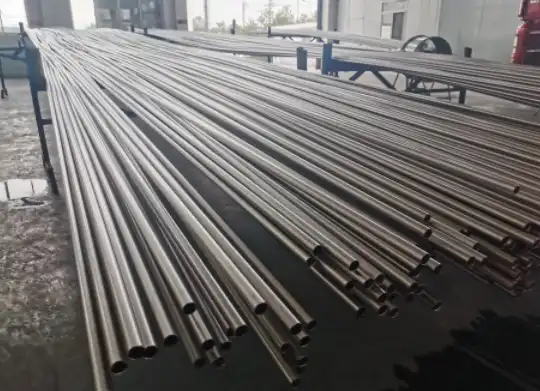
Understanding Incoloy 800 Tube: Composition and Key Properties
The chemical makeup of a high-performance metal is what makes it work, and Incoloy 800 has a carefully balanced recipe that meets the toughest industry needs.
Chemical Composition That Drives Performance
About 30 to 35 percent of Incoloy 800 is nickel, 19 to 23 percent is chromium, and at least 39.5 percent is iron. Small but important additions of aluminium (0.15-0.60%) and titanium (0.15-0.60%) make this nickel-iron-chromium matrix even better. These additions create stable precipitates when heated. These elements work together to make a protected oxide layer that can grow back even if it gets broken. This is why this metal keeps working well after years of use in harsh conditions. The iron content makes the metal cheaper than ones made of only nickel while still having the right strength properties. Chrromium, on the other hand, makes the chromium-rich oxide film that gives furnace parts and heat treatment equipment great resistance to oxidising atmospheres.
Mechanical Properties at Elevated Temperatures
At room temperature, Incoloy 800 has a tensile strength of 450 to 600 MPa and a yield strength of 170 to 310 MPa. The thing that makes this material different from other stainless steels is that it can keep its strength at temperatures above 1100°F (593°C). In scenarios like ethylene pyrolysis ovens, where tubes are constantly under heat stress, creep resistance is very important. Incoloy 800 has excellent creep-rupture strength that greatly improves service life compared to normal steel choices.
When the metal is annealed, its hardness stays between 150 and 180 Brinell. This means that it is resistant to mechanical wear and can be easily machined using standard tools and equipment. This balance lets manufacturers do the necessary cutting, forming, and welding without having to follow special steps. This cuts down on installation costs and project timelines.
Heat Resistance and Thermal Stability
In most commercial settings, the highest temperature that Incoloy 800 can be used continuously is around 1100°F (593°C). However, it is possible for it to be exposed to higher temperatures for short periods of time, based on the stress levels and the surroundings. The metal is very resistant to rust and carburisation, two processes that usually shorten the life of heat exchangers, reformer tubes, and other parts of combustion systems.
When heat is applied in cycles, it can be tricky because the repeated expansion and contraction of heat can cause weaker materials to crack. The coefficient of thermal expansion for Incoloy 800 is about 15.9 × 10⁻⁋/°C from 20 to 1000°C, and its microstructure is steady. This means that it doesn't change size much and keeps its mechanical integrity through thousands of thermal cycles that happen when power plants start up and shut down.
Corrosion Resistance Advantages
The protective chromium oxide layer forms quickly and heals quickly when it is damaged. This makes it more resistant to oxidising conditions than 300-series stainless steels. This feature is very useful in industrial settings where sulfur-containing chemicals, organic acids, and other acidic substances would quickly break down regular materials.
It is important to note that carburisation protection is especially important for uses with Incoloy 800 tube in ethylene production and industrial breaking units, which have high-temperature carbon-rich environments. In these conditions, normal stainless steels take in carbon, making them weak and more likely to break early. The makeup of Incoloy 800 successfully fights carbon absorption, keeping its flexibility and toughness over long periods of service.
Practical Applications of Incoloy 800 Tube in Industry
Incoloy 800 has become a common material design for important high-temperature uses that need to be very reliable because it works so well in real life across many industries.
Petrochemical and Chemical Processing
Facilities that make ethylene use a lot of Incoloy 800 tubes in pyrolysis furnace radiant coils. These coils are exposed to high temperatures and carburising atmospheres, which make them one of the toughest places to work in industry. These furnaces work at temperatures as high as 1900°F (1038°C), where hydrocarbon cracking processes create carbon-rich gases that quickly carburise and weaken regular stainless steels. In these situations, our tubes have shown service lives of more than 100,000 hours, with slow carburisation still being within acceptable limits when other materials had failed severely.
Incoloy 800 is resistant to rusting at high temperatures, which is good for tools used to make nitric acid. Where 300-series stainless steels would crack and intergranular rust would happen in heat exchangers, preheaters, and reaction tank parts, these materials stay strong. Incoloy 800 is used in reactor jackets, distillation column interiors, and heat recovery systems at chemical processing plants that make organic intermediates, solvents, and speciality chemicals. It has to work well in areas where heat cycling and acidic process streams happen.
Power Generation and Energy Production
Incoloy 800 tubing is used in steam generator feed lines, superheater sections, and secondary heat exchangers in nuclear power plants. It has to withstand high temperatures, radiation exposure, and water chemistry that is very pure. Stress-corrosion breaking is not possible in high-temperature water settings, and the metal stays stable when exposed to neutrons. This means that the plant can be used safely and reliably for a long time.
These tubes are used in boiler economisers, superheater sections, and heat recovery steam producers in traditional thermal power plants. They are used in places where high steam pressures, products of coal burning, and thermal cycling can make the materials last less long. Even though the material costs more than carbon steel options, Incoloy 800 is still a good choice because it can survive both fireside rust and steamside corrosion while still being able to hold pressure.
Renewable energy systems, like biomass gasification plants and concentrated solar thermal setups, are using Incoloy 800 more and more for high-temperature heat transfer parts. These parts need to be reliable because they have a direct effect on the economy and sustainability goals of energy production.
Aerospace and Defense Applications
Incoloy 800 is used in aircraft turbine engines for parts of the exhaust system, the afterburner, and the turbine shrouds. It is used in these places because of the high temperatures, vibrations, and weight limits that require high strength-to-weight ratios and resistance to oxidation. Aerospace manufacturers that want to get AS9100 approval must do strict quality control, full material tracking, and thorough mechanical testing. These strict standards are met by our manufacturing processes and quality systems. This gives aircraft buying workers peace of mind that materials will be consistent and that compliance has been recorded.
For defence purposes, Incoloy 800 tube is used in weapon systems, test facilities for jet engines, and power development projects where the dependability of the material in harsh conditions is very important. Incoloy 800 is a recognised standard for military aircraft projects because it is strong at high temperatures, stable at high temperatures, and has a history of good performance.
Marine and Offshore Engineering
Offshore oil production sites use Incoloy 800 in high-temperature process equipment like heat exchangers, separation tanks, and dehydration units that are exposed to seawater and have to work at high temperatures. Higher nickel alloys like Monel work best in coastal settings with normal ocean temperatures. However, Incoloy 800's resistance to rust and strength make it a good choice for high-temperature areas of offshore process equipment.
These tubes are used in places where high temperatures and salty water would quickly rust regular stainless steels, like in desalination plants and naval power equipment. The alloy's resistance to stress-corrosion cracks caused by chloride makes it safe to use in these tough mixed conditions.
Relevant Standards and Compliance Requirements
Knowing the relevant standards makes sure that the purchase specs match the expected level of quality and the rules set by the government. The ASTM B163 standard sets the dimensions, mechanical properties, and testing procedures for seamless nickel-iron-chromium metal tubes. The ASME Boiler and Pressure Vessel Code framework has the same technical requirements as ASME SB163. These requirements apply to pressure-retaining parts used in the process and power businesses.
ASTM B704 sets the rules for welded nickel-iron-chromium metal tubes. It says how it should be made, how it should be tested without damaging it, and what the acceptance standards are for welded construction. ISO 15156, which used to be called NACE MR0175, talks about the materials that need to be used in oil and gas production areas where hydrogen sulphide is present. Incoloy 800 can be used in bad service situations as long as certain conditions are met.
Material approvals that list the chemicals used, their mechanical features, and how they were heated make the product traceable and ensure its quality. Our quality systems create full paperwork packages that include mill test certificates, non-destructive testing reports, and measurement inspection records. These help customers meet their quality assurance needs and meet legal standards.
Advantages and Benefits of Using Incoloy 800 Tubes in Your Projects
A full analysis of material benefits looks at more than just the original purchase prices. It also looks at how well the product works, how much upkeep it needs, and how much it costs over its whole life. Knowing these benefits can help you make choices about what materials to use and create strong business reasons for selecting high-performance metals.
Durability and Extended Service Life
In situations where regular stainless steels break down quickly, Incoloy 800 can usually work effectively for 15 to 20 years or longer. This longer service life cuts down on how often the equipment needs to be replaced, saves money on installation labour, and keeps production running smoothly even when equipment breaks down. Several petrochemical plants have records of Incoloy 800 furnace tubes lasting three times longer than stainless steel systems that came before them. The higher original material cost was more than made up for by the higher durability.
Superalloys are different from regular materials because they are resistant to multiple breakdown processes at the same time. Because it is resistant to rust, carburisation, and changes in temperature, and it is also very strong mechanically, it rarely fails early. This is different from stainless steels, where any one of these things could shorten the lifespan by a large amount.
Mechanical Flexibility and Fabrication Advantages
Even though it can be used at high temperatures, Incoloy 800 tube can still be easily fabricated using standard tools and methods. Standard methods, such as gas tungsten arc welding, gas metal arc welding, and protected metal arc welding with the right filling metals, can be used to join the combination together. Some high-alloy materials have stricter post-weld heat treatment standards than others. This makes it easier to fix and modify in the field.
For example, cold forming, hot forming, and cutting all go smoothly, which lets makers make complicated shapes, thread things, and keep the dimensions close to the required range. This makes manufacturing more flexible, which lowers installation costs and lets designers make changes to the design that wouldn't be possible with materials that are harder to work with.
Economic Advantages and Return on Investment
Even though the original cost of the materials is higher than for regular stainless steels, lifetime cost analysis usually shows that Incoloy 800 is a good choice for the right uses. Less frequent upkeep cuts down on the cost of labour and stocking up on extra parts. By getting rid of unexpected shutdowns, production income is kept high and emergency repair costs are kept low. When heat exchangers work at their designed settings, without getting clogged or breaking down in a way that makes them less thermally efficient, energy efficiency goes up.
To figure out how much these benefits are worth, you need to know about your facility's specific working conditions, repair routines, and output values. When engineers look at the costs and benefits of different options over 20 years, they often find that switching from stainless steel to Incoloy 800 has internal rates of return higher than 20% in important high-temperature situations.
Environmental and Safety Considerations
When materials break down in high-temperature process equipment, they can cause fires, release dangerous chemicals, and hurt people. Selecting materials that have been shown to work well in tough situations is an example of responsible manufacturing that protects workers, communities, and the environment.
Better energy economy comes from heat exchanger materials that last longer, which means less fuel use and carbon emissions. Increasing the service life of tools cuts down on the loss and material use that come with replacing it too often. Sustainability perks like these are in line with environmental goals for businesses and stricter rules from the government.
Industry Trends and Future Applications
Additive manufacturing technologies are starting to make it possible to make complicated nickel metal parts that were hard or impossible to make in the past. Even though they are still new, these features should make Incoloy 800 more useful for designing better heat exchangers, integrating manifold systems, and making aircraft structures lighter.
As the infrastructure for the hydrogen economy grows, high-temperature metals that don't rust can be used in new ways in fuel cell systems, water electrolysis, and steam reforming. Because Incoloy 800 has been used successfully in settings with hydrogen, it is a good choice for new clean energy solutions.
Carbon capture and utilisation systems are another area of growth where high-temperature corrosion resistance is useful for supporting equipment that works in burning gas streams that contain water vapour, carbon dioxide, and acid gases. Material picking skills learned over many years in the petroleum and power generation industries can be used right away in these environmental technology projects.
Conclusion
When choosing the right materials for high-temperature, acidic working conditions, you have to balance the need for efficiency with the cost of manufacturing and the material's useful life. Incoloy 800 tubes have great resistance to oxidation, resistance to carburisation, and mechanical power over a wide range of temperatures that are hard for regular stainless steels. Our production skills, quality standards, and technical know-how help customers in the marine, petroleum, aircraft, and power generation industries who need trusted materials for important projects. Understanding the makeup of alloys, carefully comparing options, and working with experienced providers will help your projects meet their performance goals while minimising costs over longer service lives.
FAQ
1.What temperature range is good for using Incoloy 800 tubes?
Incoloy 800 works effectively from very cold temperatures (below 0°F) to about 1100°F (593°C) for continued use in most industrial settings. It's okay to be exposed to higher temperatures for a short time, based on how stressed you are and the situations around you. The metal keeps its useful strength and resistance to rust throughout this range. This makes it suitable for heat exchangers, furnace parts, and process equipment that works in high-temperature areas where regular stainless steels would break down quickly.
2.What makes Incoloy 800H different from regular Incoloy 800?
The carbon content in Incoloy 800H (UNS N08810) is carefully handled and the heat treatment is done in a way that makes the high-temperature creep-rupture strength the best it can be. This change makes the service last longer in situations where steady loads at temperatures above 1000°F cause creep. Incoloy 800HT is even better because it has limited adds of aluminium and titanium that make it less likely to grow. Which of these types of material to use varies on the application's working temperatures, stress levels, and design life needs.
3.Can normal methods be used to weld Incoloy 800 tubes?
With the right nickel-based filler metals, Incoloy 800 can be easily welded using gas tungsten arc, gas metal arc, and protected metal arc methods. Most of the time, preheating is not needed. However, solution annealing or stress release after the welding process may be helpful based on the service conditions and code standards. For important uses, like those that have to meet ASME Section IX or aircraft quality standards, welding process specs should be made and approved.
Are you ready to choose Incoloy 800 Tube for your next project?
TSM Technology has been making superalloys for more than 14 years and can help you with your important material needs. We can make seamless and welded Incoloy 800 tubes with an outside diameter of 6–114 mm, a wall thickness of 0.5–15 mm, and lengths up to 15 meters. These tubes are made to meet ASTM B163, B704, and B407 standards. Our 300-ton monthly capacity and global delivery network to more than 50 countries ensure a stable supply. ISO 9001 and AS9100 standards also help to make sure quality is always the same. Email our engineering team at info@tsmnialloy.com to talk about your needs, get detailed information, or set up free trials. As a reliable Incoloy 800 tube maker, we're dedicated to providing materials that meet your performance needs and help your business succeed in the long run.
References
ASM International. (2002). ASM Specialty Handbook: Nickel, Cobalt, and Their Alloys. Materials Park, OH: ASM International.
Special Metals Corporation. (2004). Incoloy Alloy 800H & 800HT Technical Bulletin. New Hartford, NY: Special Metals Corporation.
ASTM International. (2021). ASTM B163-21: Standard Specification for Seamless Nickel and Nickel Alloy Condenser and Heat-Exchanger Tubes. West Conshohocken, PA: ASTM International.
Lai, G. Y. (2007). High-Temperature Corrosion and Materials Applications. Materials Park, OH: ASM International.
American Society of Mechanical Engineers. (2021). ASME Boiler and Pressure Vessel Code, Section II, Part B: Nonferrous Material Specifications. New York, NY: ASME.
Davis, J. R. (Editor). (2000). Nickel, Cobalt, and Their Alloys. Materials Park, OH: ASM International.
Learn about our latest products and discounts through SMS or email