- English
- French
- German
- Portuguese
- Spanish
- Russian
- Japanese
- Korean
- Arabic
- Greek
- German
- Turkish
- Italian
- Danish
- Romanian
- Indonesian
- Czech
- Afrikaans
- Swedish
- Polish
- Basque
- Catalan
- Esperanto
- Hindi
- Lao
- Albanian
- Amharic
- Armenian
- Azerbaijani
- Belarusian
- Bengali
- Bosnian
- Bulgarian
- Cebuano
- Chichewa
- Corsican
- Croatian
- Dutch
- Estonian
- Filipino
- Finnish
- Frisian
- Galician
- Georgian
- Gujarati
- Haitian
- Hausa
- Hawaiian
- Hebrew
- Hmong
- Hungarian
- Icelandic
- Igbo
- Javanese
- Kannada
- Kazakh
- Khmer
- Kurdish
- Kyrgyz
- Latin
- Latvian
- Lithuanian
- Luxembou..
- Macedonian
- Malagasy
- Malay
- Malayalam
- Maltese
- Maori
- Marathi
- Mongolian
- Burmese
- Nepali
- Norwegian
- Pashto
- Persian
- Punjabi
- Serbian
- Sesotho
- Sinhala
- Slovak
- Slovenian
- Somali
- Samoan
- Scots Gaelic
- Shona
- Sindhi
- Sundanese
- Swahili
- Tajik
- Tamil
- Telugu
- Thai
- Ukrainian
- Urdu
- Uzbek
- Vietnamese
- Welsh
- Xhosa
- Yiddish
- Yoruba
- Zulu
Nickel Alloy Aging Treatment Applications and Material Selection Guide
Introduction
In the first part of this article, we introduced the basic principles of aging treatment, precipitation strengthening mechanisms, and common heat treatment processes for nickel-based alloys. For manufacturers, engineers, and purchasers of nickel alloy materials, understanding the relationship between alloy composition, heat treatment, and final performance is essential when selecting products such as nickel alloy tubes, pipes, bars, forgings, and custom components.
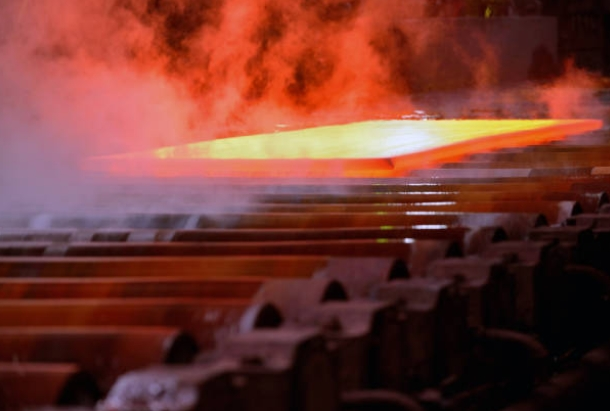
Typical Applications of Heat-Treated Nickel Alloys
Nickel alloys with optimized heat treatment are widely used in industries where conventional metals cannot provide sufficient performance.
1. Aerospace Applications
The aerospace industry represents one of the most demanding applications for heat-treated nickel alloys.
Aerospace components operate under extreme temperatures and cyclic mechanical loading, requiring precipitation-hardened nickel alloys with excellent creep and fatigue resistance.
Components such as turbine discs, blades, shafts, combustion chambers, and fasteners require materials that maintain strength for thousands of operating hours.
Inconel 718 in Aerospace Components
Inconel 718 is one of the most widely used precipitation-hardened nickel alloys in aerospace manufacturing.
After solution treatment and aging, Inconel 718 provides excellent strength, fatigue resistance, and creep performance for critical aerospace components.
Typical applications include turbine components, engine parts, and aerospace fasteners.
The carefully controlled γ″ precipitation structure generated during aging treatment is the primary reason for its outstanding mechanical properties.
2. Gas Turbine and Power Generation Applications
Gas turbines and power generation equipment require heat-treated nickel alloys to withstand prolonged exposure to high temperatures, thermal cycling, creep, and oxidation. Proper aging treatment improves long-term reliability and extends maintenance intervals.
3. Chemical Processing Industry
Chemical processing equipment operates in highly corrosive environments where both corrosion resistance and mechanical reliability are essential.
Although corrosion resistance is the primary consideration, mechanical strength after fabrication is equally important.
Hastelloy C276 Applications
Hastelloy C276 is widely used in reactors, heat exchangers, piping systems, and pollution control equipment because of its outstanding resistance to aggressive chemical environments.
Typical applications include:
-
Chemical reactors
-
Heat exchangers
-
Process piping
-
Pollution control equipment
-
Waste treatment systems
Heat treatment and proper post-weld processing help maintain corrosion resistance and prevent harmful phase formation.
4. Oil, Gas and Offshore Applications
Offshore environments expose materials to seawater, chlorides, and high-pressure conditions.
Nickel alloys are widely selected for:
-
Subsea equipment
-
Downhole tools
-
Valves
-
Pressure control systems
-
Heat exchangers
Inconel 625 for Marine Service
IInconel 625 is widely used in offshore platforms, subsea equipment, and seawater cooling systems because of its excellent corrosion resistance and high strength.
It is commonly used in:
-
Offshore platforms
-
Marine engineering
-
Subsea components
-
Seawater cooling systems
5. Nuclear and Energy Applications
Nuclear power systems require materials with exceptional reliability because components may operate for decades without replacement.
Nickel alloys such as Alloy 600 and Alloy 690 are widely used in nuclear power systems because of their long-term corrosion resistance and thermal stability.
Heat treatment improves:
-
Microstructural stability
-
Resistance to thermal aging
-
Long-term mechanical properties
Materials such as Alloy 600 and Alloy 690 have been widely used in nuclear-related applications due to their corrosion resistance and high-temperature performance.
Nickel Alloy Heat Treatment Standards
Industrial nickel alloy products are manufactured according to internationally recognized standards.
Common standards include:
ASTM B166
ASTM B167
ASTM B619
ASTM B622
AMS5662
These standards define chemical composition, mechanical properties, heat treatment, and testing requirements.
How Heat Treatment Affects Nickel Alloy Selection
Choosing a nickel alloy is not only about selecting the chemical composition.
Engineers must consider:
Operating Temperature
Higher temperatures usually require alloys with:
-
More stable strengthening phases
-
Better creep resistance
-
Improved oxidation resistance
Mechanical Load
High-stress applications require:
-
Higher yield strength
-
Better fatigue resistance
-
Optimized precipitation structures
Corrosion Environment
Different environments require different alloys.
Examples:
| Environment | Recommended Materials |
|---|---|
| General chemical processing | Alloy 825 |
| Severe chloride environment | Hastelloy C276 |
| Seawater applications | Inconel 625 / Super Duplex |
| High-temperature strength | Inconel 718 |
| Acid processing | Hastelloy C22 |
Common Heat Treatment Problems and Solutions
| Heat Treatment Issue | Possible Effects | Recommended Solution |
|---|---|---|
| Insufficient Aging | Incomplete precipitation, lower hardness, and reduced strength due to insufficient aging temperature or holding time. | Optimize the aging temperature and holding time according to the alloy grade and heat treatment specification. |
| Over Aging | Excessive precipitate growth reduces the strengthening effect and may decrease ductility and overall mechanical performance. | Carefully control the aging temperature and duration to avoid unnecessary long-term exposure. |
| Incorrect Cooling | Improper cooling after solution treatment can result in an unstable microstructure, reduced corrosion resistance, and inferior mechanical properties. | Follow the specified cooling method, such as air cooling or rapid cooling, as required for the alloy and heat treatment process. |
TSM Technology Nickel Alloy Manufacturing Capability
TSM Technology supplies high-performance nickel alloy products for demanding industrial applications.
Our product range includes:
-
Nickel Alloy Tubes
-
Nickel Alloy Pipes
-
Nickel Alloy Bars
-
Nickel Alloy Forgings
-
Custom Machined Components
We provide materials including:
-
Inconel 600
-
Inconel 625
-
Inconel 718
-
Incoloy 800
-
Hastelloy C276
-
Monel 400
Our manufacturing process includes:
-
Heat treatment
-
Non-destructive testing
-
Material traceability
All products are supplied according to customer requirements and relevant international standards.
With experienced engineers and strict quality control procedures, TSM Technology supports customers in aerospace, chemical processing, marine, energy, and industrial equipment industries.
Frequently Asked Questions About Nickel Alloy Aging Treatment
What is aging treatment in nickel alloys?
Aging treatment is a heat treatment process that promotes the controlled precipitation of γ′ and γ″ strengthening phases. It improves strength, creep resistance, fatigue performance, and microstructural stability.
What is the difference between solution treatment and aging treatment?
Solution treatment creates a supersaturated solid solution by dissolving alloying elements into the matrix. Aging treatment then forms strengthening precipitates to achieve the desired mechanical properties.
Which nickel alloys require aging treatment?
Precipitation-hardened alloys such as Inconel 718, Inconel X-750, and Waspaloy require aging treatment. Solution-strengthened alloys like Inconel 625, Hastelloy C276, and Monel 400 generally do not.
Does Inconel 625 require aging treatment?
No. Inconel 625 is primarily strengthened by solid solution strengthening, so it typically requires solution annealing rather than precipitation aging.
Why is Inconel 718 stronger after aging?
Aging promotes the formation of fine γ″ and γ′ precipitates that block dislocation movement. This significantly improves the alloy's strength, fatigue resistance, and creep performance.
Conclusion
Proper aging treatment enables nickel alloys to achieve the strength, creep resistance, and microstructural stability required for demanding applications. Selecting the correct alloy grade together with the appropriate heat treatment process is essential for maximizing service life and reliability.
TSM Technology supplies high-quality nickel alloy products manufactured under strict quality control to meet international standards for aerospace, chemical processing, marine, and energy industries.
Contact us
If you are looking for high-quality nickel alloy tubes, nickel alloy bars, or custom forged nickel alloy products, our experienced manufacturing team can provide reliable material solutions for demanding industrial applications.
Email: info@tsmnialloy.com
Learn about our latest products and discounts through SMS or email