- English
- French
- German
- Portuguese
- Spanish
- Russian
- Japanese
- Korean
- Arabic
- Greek
- German
- Turkish
- Italian
- Danish
- Romanian
- Indonesian
- Czech
- Afrikaans
- Swedish
- Polish
- Basque
- Catalan
- Esperanto
- Hindi
- Lao
- Albanian
- Amharic
- Armenian
- Azerbaijani
- Belarusian
- Bengali
- Bosnian
- Bulgarian
- Cebuano
- Chichewa
- Corsican
- Croatian
- Dutch
- Estonian
- Filipino
- Finnish
- Frisian
- Galician
- Georgian
- Gujarati
- Haitian
- Hausa
- Hawaiian
- Hebrew
- Hmong
- Hungarian
- Icelandic
- Igbo
- Javanese
- Kannada
- Kazakh
- Khmer
- Kurdish
- Kyrgyz
- Latin
- Latvian
- Lithuanian
- Luxembou..
- Macedonian
- Malagasy
- Malay
- Malayalam
- Maltese
- Maori
- Marathi
- Mongolian
- Burmese
- Nepali
- Norwegian
- Pashto
- Persian
- Punjabi
- Serbian
- Sesotho
- Sinhala
- Slovak
- Slovenian
- Somali
- Samoan
- Scots Gaelic
- Shona
- Sindhi
- Sundanese
- Swahili
- Tajik
- Tamil
- Telugu
- Thai
- Ukrainian
- Urdu
- Uzbek
- Vietnamese
- Welsh
- Xhosa
- Yiddish
- Yoruba
- Zulu
What Is Aging Treatment of Nickel Alloys? Principles, Processes and Applications (Part 1)
Introduction
Nickel alloys are widely used in aerospace, power generation, chemical processing, marine engineering, and other industries where materials must withstand extreme temperatures, high stress, and corrosive environments. However, the excellent performance of nickel-based alloys does not depend only on their chemical composition. The final mechanical properties are strongly influenced by heat treatment processes, especially aging treatment. Understanding aging treatment helps engineers and buyers select the right nickel alloy for demanding applications.
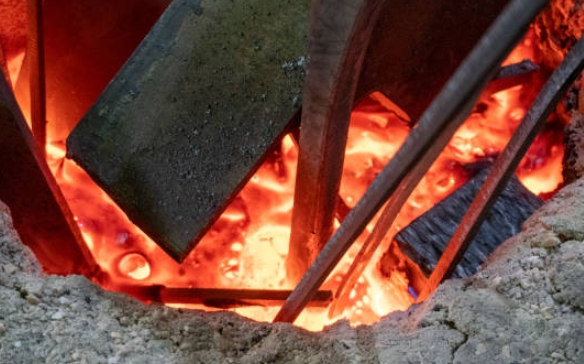
What Is Aging Treatment of Nickel Alloys?
Aging treatment is a heat treatment process performed after solution treatment, sometimes after intermediate treatment, to optimize the microstructure and mechanical properties of nickel-based superalloys. During solution treatment, alloying elements are dissolved into a uniform solid solution at high temperature. After rapid cooling, the alloy remains supersaturated. The aging process then allows controlled precipitation of strengthening phases from the supersaturated solid solution.
| Objective | Benefit |
|---|---|
| Fine γ′/γ″ precipitation | Higher strength |
| Grain boundary strengthening | Better creep resistance |
| Stable microstructure | Longer service life |
Unlike simple heat treatment methods, aging treatment requires precise control because the size, quantity, and distribution of precipitates directly affect alloy performance. Aging treatment improves tensile strength, creep resistance, fatigue resistance, and long-term microstructural stability.
Which Nickel Alloys Require Aging Treatment?
| Alloy | Strengthening Mechanism | Aging Required |
|---|---|---|
| Inconel 718 | γ′ + γ″ | ✔ Yes |
| Inconel X-750 | γ′ | ✔ Yes |
| Waspaloy | γ′ | ✔ Yes |
| Inconel 625 | Solid Solution | ✘ Normally No |
| Hastelloy C276 | Solid Solution | ✘ No |
| Hastelloy C22 | Solid Solution | ✘ No |
| Monel 400 | Solid Solution | ✘ No |
Does Every Nickel Alloy Need Aging Treatment?
No. Only precipitation-hardened nickel alloys require aging treatment. Alloys such as Inconel 718, Inconel X-750, and Waspaloy rely on γ′ or γ″ precipitation for strengthening. In contrast, solution-strengthened alloys including Inconel 625, Hastelloy C276, Hastelloy C22, and Monel 400 achieve their properties primarily through alloy chemistry and generally do not require aging treatment.
The Principle of Aging Treatment: Precipitation Strengthening
Nickel-based superalloys achieve much of their exceptional strength through precipitation strengthening, which is the primary purpose of aging heat treatment. During the aging process, alloying elements such as aluminum (Al), titanium (Ti), niobium (Nb), and tantalum (Ta) diffuse within the nickel matrix and form fine, uniformly distributed strengthening precipitates. These precipitates effectively hinder dislocation movement, significantly improving the alloy's mechanical properties, especially at elevated temperatures.
γ′ Phase (Gamma Prime)
The γ′ phase is an ordered intermetallic compound primarily composed of Ni₃(Al,Ti). It provides excellent resistance to creep deformation and maintains its strengthening effect at elevated temperatures, making it essential for turbine blade materials.
γ″ Phase (Gamma Double Prime)
Another key strengthening phase is the γ″ (Gamma Double Prime) phase, which is particularly important in precipitation-hardened alloys such as Inconel 718. The γ″ phase provides outstanding yield strength, tensile strength, and fatigue resistance, making it a major contributor to the alloy's overall performance. In Inconel 718, the combination of γ″ and γ′ precipitation strengthening creates an excellent balance of strength, toughness, and long-term reliability, making the alloy one of the most widely used nickel-based superalloys for high-temperature and high-stress applications.
Nickel Alloy Heat Treatment Process
The complete heat treatment process for nickel alloys typically includes:
1. Solution Treatment
Solution treatment is the first stage of heat treatment.
The alloy is heated to a high temperature where alloying elements dissolve into the nickel matrix.
Main purposes:
Eliminate undesirable phases
Create a homogeneous structure
Prepare the alloy for precipitation strengthening
After solution treatment, rapid cooling is usually applied to retain the supersaturated structure.
2. Intermediate Treatment
Some advanced nickel alloys require an intermediate treatment before final aging.
Its purposes include:
Controlling grain boundary precipitation
Adjusting precipitate distribution
Improving creep performance
This step is commonly used in complex aerospace-grade superalloys.
3. Aging Treatment
Aging is the final strengthening stage.
During aging:
Fine γ′ or γ″ particles precipitate
Grain boundaries may develop strengthening carbides
Mechanical properties reach the designed level
Aging may be performed as:
Single-stage aging
Two-stage aging
Multi-stage aging
The selected process depends on alloy composition and application requirements.
How Are Aging Treatment Parameters Determined?
The performance of nickel alloys depends greatly on aging treatment parameters, especially aging temperature, holding time, and cooling method.
Incorrect aging conditions may result in insufficient precipitation strengthening or excessive precipitate growth, reducing mechanical performance.
The main factors considered during aging treatment design include:
Alloy chemical composition
Service temperature
Required mechanical properties
Strengthening phase characteristics
Long-term stability requirements
Aging Temperature Selection Principles
Matching the Service Temperature
For high-temperature alloys, aging temperature is usually selected close to the alloy's operating temperature.
The purpose is to ensure that the microstructure remains stable during service.
If the aging temperature is significantly lower than the service temperature:
Strengthening phases may grow during operation
Precipitate distribution may become unstable
Long-term strength may decrease
If the aging temperature is significantly higher than the service temperature:
Excessive precipitation may occur
Microstructure may change during service
Material properties may become unstable
Therefore, matching aging temperature with actual operating conditions is essential.
Influence of Alloy Composition
The aging temperature is closely related to alloy chemistry.
Elements such as:
Aluminum
Titanium
Niobium
Tantalum
Increase the stability temperature of strengthening phases.
For example:
Higher Al + Ti content generally increases γ′ phase stability
Higher Nb content promotes γ″ strengthening
Complex alloying improves high-temperature capability
This is why different nickel alloys require different aging schedules.
Aging Time and Cooling Methods
Aging time is another important factor affecting precipitate size and distribution.
Typical aging times include:
8–16 hours for many industrial nickel alloys
16–24 hours for aerospace applications
Longer aging cycles for specialized superalloys
Cooling after aging is usually performed by air cooling.
Compared with rapid cooling processes used after solution treatment, aging cooling is less critical because the desired precipitate structure has already formed.
Single-Stage and Multi-Stage Aging Treatment
Different nickel alloys require different aging systems.
Single-Stage Aging
Single-stage aging uses one aging temperature.
Advantages:
Simple process
Lower production cost
Suitable for many commercial alloys
It is commonly applied to materials where one type of strengthening phase dominates.
Two-Stage Aging
Two-stage aging is widely used for precipitation-hardened nickel alloys.
The first aging stage promotes the formation of specific strengthening phases.
The second stage optimizes:
Particle size
Distribution
Grain boundary strengthening
A typical example is Inconel 718, where solution treatment followed by two-stage aging creates a balanced combination of strength and toughness.
Heat Treatment of Common Nickel Alloys
Different nickel alloys are designed for different environments, so their heat treatment processes vary.
Inconel 718 Heat Treatment
Inconel 625 Heat Treatment
Unlike precipitation-hardened Inconel 718, Inconel 625 is strengthened primarily through solid solution strengthening. Therefore, its heat treatment mainly involves solution annealing and stress relieving rather than aging.
Hastelloy Alloy Heat Treatment
Hastelloy C276 and Hastelloy C22 are solution-strengthened alloys. Heat treatment mainly consists of solution annealing followed by rapid cooling to preserve corrosion resistance.
Relationship Between Heat Treatment and Final Properties
The final properties of nickel alloys depend on the interaction between:
Chemical composition
Heat treatment temperature
Holding time
Cooling rate
Manufacturing process
A properly designed aging treatment can significantly improve:
| Property | Effect of Aging Treatment |
|---|---|
| Tensile strength | Increased |
| Yield strength | Increased |
| Hardness | Increased |
| Creep resistance | Improved |
| Fatigue resistance | Improved |
| Microstructure stability | Enhanced |
However, excessive aging may cause:
Precipitate coarsening
Reduced ductility
Lower fatigue performance
Therefore, optimized heat treatment is essential.
Why Heat Treatment Matters for Nickel Alloy Applications
Nickel alloys are selected for applications where failure is unacceptable.
Typical industries include:
Aerospace Industry
Used for turbine blades, engine discs, and fasteners.
Proper aging treatment provides the creep resistance and fatigue strength required for long-term operation at elevated temperatures.
Power Generation
Used in:
Gas turbines
Nuclear systems
High-temperature piping
Heat treatment ensures long-term reliability under continuous operation.
Chemical Processing
Nickel alloys are used in:
Reactors
Heat exchangers
Pressure vessels
Piping systems
Because they resist:
Acids
Chlorides
Oxidizing chemicals
Marine and Offshore Engineering
Nickel alloys are widely used in:
Seawater systems
Offshore platforms
Subsea equipment
Their heat-treated microstructure provides excellent strength and corrosion resistance.
Conclusion of Part 1
Proper aging treatment transforms a nickel alloy from a workable material into a high-performance engineering alloy capable of operating in extreme temperatures and aggressive environments. Selecting the correct heat treatment process is just as important as selecting the right alloy grade.
Continue reading Part 2 to learn how aging treatment is applied in aerospace, marine, chemical processing, and power generation industries, and how different nickel alloys are heat treated for specific service conditions.
Looking for Heat-Treated Nickel Alloy Products?
TSM Technology supplies high-quality nickel alloy tubes, nickel alloy bars, and custom forged nickel alloy products. Our experienced manufacturing team can provide reliable material solutions for demanding industrial applications.
Email: info@tsmnialloy.com
Learn about our latest products and discounts through SMS or email