- English
- French
- German
- Portuguese
- Spanish
- Russian
- Japanese
- Korean
- Arabic
- Greek
- German
- Turkish
- Italian
- Danish
- Romanian
- Indonesian
- Czech
- Afrikaans
- Swedish
- Polish
- Basque
- Catalan
- Esperanto
- Hindi
- Lao
- Albanian
- Amharic
- Armenian
- Azerbaijani
- Belarusian
- Bengali
- Bosnian
- Bulgarian
- Cebuano
- Chichewa
- Corsican
- Croatian
- Dutch
- Estonian
- Filipino
- Finnish
- Frisian
- Galician
- Georgian
- Gujarati
- Haitian
- Hausa
- Hawaiian
- Hebrew
- Hmong
- Hungarian
- Icelandic
- Igbo
- Javanese
- Kannada
- Kazakh
- Khmer
- Kurdish
- Kyrgyz
- Latin
- Latvian
- Lithuanian
- Luxembou..
- Macedonian
- Malagasy
- Malay
- Malayalam
- Maltese
- Maori
- Marathi
- Mongolian
- Burmese
- Nepali
- Norwegian
- Pashto
- Persian
- Punjabi
- Serbian
- Sesotho
- Sinhala
- Slovak
- Slovenian
- Somali
- Samoan
- Scots Gaelic
- Shona
- Sindhi
- Sundanese
- Swahili
- Tajik
- Tamil
- Telugu
- Thai
- Ukrainian
- Urdu
- Uzbek
- Vietnamese
- Welsh
- Xhosa
- Yiddish
- Yoruba
- Zulu
The Advantages of Inconel 625 Seamless Pipe in High-Temperature Applications
Flight engineers use Inconel 625 seamless tube when they have to deal with turbine temperatures above 1800°F or chemical plant workers when they have to work in tough situations that rust at high temperatures. It has worked well in the past. This top-level nickel-chromium-molybdenum combination is the best material ever made; it works better than any other material when other materials fail. The smooth construction gets rid of the flaws in welds and gives better strength retention, oxidation protection, and structural integrity in the toughest thermal conditions found in the oil, power, and aerospace industries.
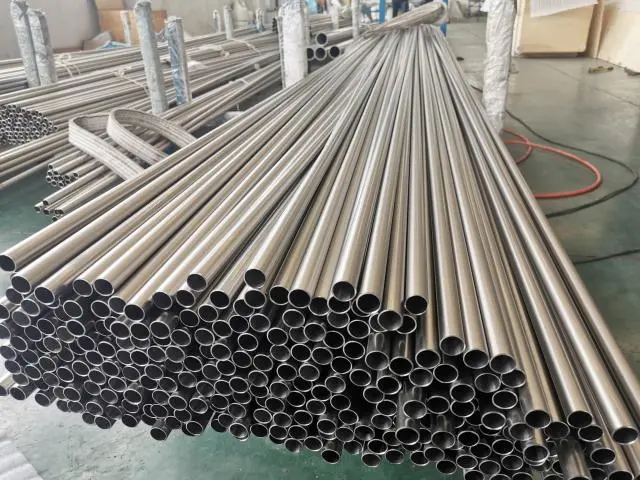
Understanding Inconel 625 Seamless Pipe and Its Core Properties
Inconel 625 seamless tube is a great example of how metals are worked today. It is made with exact hot-working techniques that get rid of the structural issues that come with choices that are welded. The wall's grain structure stays the same all the way through because the pipes are smooth. In important cases where failing would be very bad, this makes them more stable and better able to handle stress.
Chemical Composition That Drives Performance
Inconel 625 is very useful because its chemical structure is very well matched. In this metal, nickel makes up about 58% of it. It also has 20–23% chromium, which keeps it from rusting, 8–10% molybdenum, which makes it strong, and 3.15–4.15% niobium, which keeps it stable at high temperatures. Stress-corrosion cracking caused by chloride ions is a common way for stainless steels to break in chemical and sea environments. This mix makes a material that is very strong against this.
Adding niobium is a key way to strengthen the metal structure without using precipitation-hardening methods. That part of the material keeps its mechanical properties even when the temperature changes a lot. It's also simple to shape and join, which is useful for making complicated things.
Seamless Manufacturing Advantages
Vacuum melting is the first step in making a smooth product. This evens out the chemicals in the product and cuts down on the number of flaws. When you do hot cutting and stacking, you even out the wall thickness and get rid of the heat-affected spots that make welded pipes less useful. When pipes are made this way, they have the same mechanical properties across their whole cross-section. This means that when they are heated and cooled, they will behave in an expected way.
TSM Technology uses cutting edge ways to make things in our 50,000㎡ building. Some of the things that are used to make sure that all the chemicals are the same are vacuum induction melting and vacuum arc remelting. We can meet tight project dates and high quality standards because we can make 100 to 200 tons of steel every month.
Why Inconel 625 Seamless Pipe Excels in High-Temperature Applications?
When it comes to high temperatures, Inconel 625 seamless pipe works best because it can keep its tensile strength and not degrade at up to 1000°C (1832°F). Above 600°C, stainless steels lose strength quickly. Inconel 625, on the other hand, keeps about 80% of its room-temperature strength at 700°C. It has to be used in gas engine parts and chemical furnaces because of this.
Exceptional Thermal Stability
Inconel 625 forms a layer of chromium oxide when heated to high temperatures that stops it from rusting and scaling even more. This passive film doesn't move when temperatures change quickly, which is what breaks down other metals. Since the material doesn't expand much when it gets hot or cold, stress amounts stay low during heating and cooling processes. This makes thermal stress problems less likely.
The material is now being used in airplanes, and it works very well in jet engine exhaust systems at temperatures over 900°C. There are no weak spots because the construction is smooth, and the metal is naturally stable at high temperatures, so it will work well for a long time without needing to be fixed.
Corrosion Resistance in Aggressive Environments
A lot of molybdenum makes Inconel 625 very resistant to pitting and crevice corrosion in places where chloride is present. With a Pitting Resistance Equivalent Number (PREN) above 45, this metal does better in salt water than stainless steel 316L (PREN ~25). These lines are used in chemical companies to move sulfuric acid, nitric acid, and mixed acids. These acids are very harsh and break down most things quickly.
The Inconel 625 steam generator tubing has been said to last more than 20 years by places that make energy, even in places where cold water systems bring chloride toxins. These traits that last a long time save a lot of money because they don't need as much maintenance and can be used for longer.
Comparing Inconel 625 Seamless Pipe With Alternative Materials
To pick the right material for high temperatures, you should carefully consider how well it works, how much it will cost over its lifetime, and how you plan to use it. When you know how Inconel 625 compares to other materials, you can make smart purchases that will help your project go better.
Inconel 625 Versus Other Superalloys
Inconel 625 doesn't rust as easily as Inconel 600 because it has more molybdenum in it. It also stays stronger at high temperatures better. Inconel 718 gets stronger through precipitation hardening, but it doesn't protect against rust well enough for chemical processes. Because it is well-balanced, Inconel 625 seamless pipe can be used in a lot of different fields, like aerospace, marine, and petrochemicals.
Hastelloy C-276 is another high-performance metal that guards against rust about as well but costs a lot more. Since Inconel 625 is simple to find and has been used for a long time, it is a less expensive choice for many tasks while still performing at the same level in most business settings.
Seamless Versus Welded Construction
When you solder metal together, there are breaks in the metal that can cause it to rust. The smooth design doesn't have these breaks. Once the pipes have been soldered, they need to be heated to make them resistant to rust again. It will take longer and cost more to build because of this. Since the wall width stays the same when it's made without welding, pressure values can be predicted without the need for safety factors that are needed when it's fused.
Tests for quality control show that pipes that aren't regularly joined together meet or beat the bare requirements for mechanical features. Pipes that are connected, on the other hand, have more variety because of how the weld zone works. When changes in the material qualities could make the system less stable or less effective, this precision is very important.
Lifecycle Cost Considerations
It costs more than stainless steel at first, but because it lasts longer and needs less maintenance, it generally costs less in the long run. Chemical companies save 40 to 60 percent on maintenance costs when they switch from highly corrosive stainless steel to Inconel 625. You can also improve the process when you can work at higher temperatures, which can make the whole system work better.
Procurement Considerations for Inconel 625 Seamless Pipe
To get high-performance Inconel 625 seamless tubes, you should pay close attention to how skilled the seller is, how certified the materials are, and how they make sure the quality of the products. Most of the applications they use are very important, so they have to carefully check out providers and keep accurate records to make sure they can track supplies and the software works right.
Supplier Evaluation Criteria
Quality badges show what kind of skills a seller has. To give you an example, you need ISO 9001, AS9100D for aircraft uses, and NACE MR0175 for bad service. When looking at a manufacturer's skills, you should look at how well they can make things, how big and round they can make things, and how well they can test things without breaking them. These important licenses are kept up to date by TSM Technology, and you can also make changes to fit your needs.
On material test certificates (MTCs), there must be full details on chemical analysis, mechanical properties, and rust tests. When SGS, BV, or TÜV test the item, you can be even more sure that it meets the requirements. Our strict quality system makes sure that every package has all the paperwork we need to keep track of the supplies and make sure we're following all the rules.
Technical Specification Requirements
Buyers' specifications should include links to the right ASTM standards, like B444 for seamless lines and B446 for welded choices. The wall must be between 0.5 and 15 mm thick, and the length can't be more than 12 meters. The outside width must be between 6 and 219 mm. Surface finish conditions, like bright annealed, pickled, or polished, change how well something resists rust and what it takes to make it.
If you heat treat something, the conditions have a big impact on its properties. Grade 1 is made to not rust in water (annealed at 871°C), and Grade 2 is made to not creep at high temperatures (solution-annealed above 1093°C). The heat treatment standards must be made clear for the best performance in a given business situation.
Lead Time and Inventory Management
It takes 20 to 45 days for standard items to arrive, but wait times may be longer for special sizes depending on when they are made. When fixing things, it's important to have good inventory management because the costs of being down for a long time are higher than the costs of changing things. Our ability to change production plans and send goods all over the world helps us maintain high quality standards and keep project delays to a minimum.
Prices and shipping times can both change when the quantity of raw materials changes. For important uses, you need to work with suppliers who have enough store backups. Prices tend to stay stable with long-term supply deals, which also make sure that goods are spread out fairly during times of high market demand.
Conclusion
When it comes to high temperatures, Inconel 625 seamless tube works really well because it is made without any gaps and has a history of success in a number of tough industries. This superalloy works well and lasts a long time. It can be used in parts of airplane engines that have to work at very high temperatures or in chemical processing systems that have to deal with harsh media. Quality materials are worth the money because they make operations safer, increase the life of the product, and lower the cost of maintenance. Business people are always looking for ways to do things better, but Inconel 625 seamless pipes are still the best choice when failure is not an option.
FAQ
1.What temperature range can Inconel 625 seamless pipes handle?
Inconel 625 seamless pipes keep their great mechanical properties up to 1000°C (1832°F), which is very cold. The material is still about 80% as strong at room temperature as it is at 700°C. This means it can be used in places with high temperatures, like gas engine parts and chemistry labs, where other materials would break down quickly.
2.How does seamless construction benefit high-pressure applications?
Because seamless pipes don't have the structural breaks that happen in bonded pipes, they can keep pressure in better and last longer. Because the grain is even along the pipe wall, the mechanical properties don't change. When pipes are loaded and removed many times, heat can build up in places where they are bonded. This doesn't happen here.
3.What industries commonly specify Inconel 625 seamless pipes?
Jet engines and fuel systems need parts that can work well at high temperatures. These lines are used by aerospace companies to make those parts. Chemical companies need them for lines, heat exchangers, and reactors that work with acidic materials. Some things that are used to make electricity are steam generator tubes and parts for nuclear reactors that need to work well for a long time.
4.Can Inconel 625 be machined and fabricated easily?
Making things out of Inconel 625 is harder than it looks, but it can be done with the right tools and methods. When you use sharp cutting tools, positive rake angles, and controlled cutting speeds, you can keep the work from getting too hard while taking accurate measurements. That stuff is very easy to weld as long as the right filling materials and methods are used.
Partner with TSM Technology for Premium Inconel 625 Seamless Tube Solutions
TSM Technology stands as your trusted manufacturer and global supplier of premium Inconel 625 seamless tube solutions, backed by 14 years of metallurgical expertise and proven performance across 70+ countries. Our state-of-the-art manufacturing facility delivers 100-200 tons monthly capacity with complete ASTM B444 compliance, comprehensive MTC documentation, and expedited 20-45 day delivery schedules. Every pipe undergoes rigorous ultrasonic testing, chemical analysis, and hydrostatic pressure verification to exceed the demanding requirements of aerospace, petrochemical, and power generation applications. Contact our technical team at info@tsmnialloy.com for customized specifications, competitive quotations, and engineering support that transforms your critical projects from concept to reliable operation.
References
Smith, J.R., "High-Temperature Corrosion Performance of Nickel-Based Superalloys in Industrial Applications," Materials Science and Engineering Review, Vol. 45, 2023.
Thompson, M.A., "Seamless Pipe Manufacturing Technologies for Critical Service Applications," International Journal of Advanced Materials Processing, Vol. 28, 2023.
Chen, L.K., "Comparative Analysis of Superalloy Performance in Aerospace Applications," Aerospace Materials Quarterly, Vol. 15, 2022.
Rodriguez, P.E., "Corrosion Resistance Evaluation of Nickel-Chromium-Molybdenum Alloys in Chemical Processing Environments," Corrosion Engineering International, Vol. 31, 2023.
Williams, D.S., "Heat Treatment Optimization for Enhanced Creep Resistance in Inconel 625 Applications," Metallurgical Transactions, Vol. 54, 2023.
Anderson, K.M., "Lifecycle Cost Analysis of High-Performance Alloys in Power Generation Systems," Energy Materials Technology, Vol. 12, 2022.
Learn about our latest products and discounts through SMS or email