- English
- French
- German
- Portuguese
- Spanish
- Russian
- Japanese
- Korean
- Arabic
- Greek
- German
- Turkish
- Italian
- Danish
- Romanian
- Indonesian
- Czech
- Afrikaans
- Swedish
- Polish
- Basque
- Catalan
- Esperanto
- Hindi
- Lao
- Albanian
- Amharic
- Armenian
- Azerbaijani
- Belarusian
- Bengali
- Bosnian
- Bulgarian
- Cebuano
- Chichewa
- Corsican
- Croatian
- Dutch
- Estonian
- Filipino
- Finnish
- Frisian
- Galician
- Georgian
- Gujarati
- Haitian
- Hausa
- Hawaiian
- Hebrew
- Hmong
- Hungarian
- Icelandic
- Igbo
- Javanese
- Kannada
- Kazakh
- Khmer
- Kurdish
- Kyrgyz
- Latin
- Latvian
- Lithuanian
- Luxembou..
- Macedonian
- Malagasy
- Malay
- Malayalam
- Maltese
- Maori
- Marathi
- Mongolian
- Burmese
- Nepali
- Norwegian
- Pashto
- Persian
- Punjabi
- Serbian
- Sesotho
- Sinhala
- Slovak
- Slovenian
- Somali
- Samoan
- Scots Gaelic
- Shona
- Sindhi
- Sundanese
- Swahili
- Tajik
- Tamil
- Telugu
- Thai
- Ukrainian
- Urdu
- Uzbek
- Vietnamese
- Welsh
- Xhosa
- Yiddish
- Yoruba
- Zulu
How Inconel 625 Seamless Pipe is Used in Oil and Gas Production?
Inconel 625 seamless tube represents a breakthrough solution for oil and gas production facilities facing extreme operational challenges. This nickel-chromium-molybdenum superalloy pipe eliminates welded seams while delivering unmatched corrosion resistance and structural integrity in harsh petroleum environments. From offshore drilling platforms to refinery processing units, these seamless pipes withstand aggressive chemicals, high pressures, and temperature fluctuations that would destroy conventional materials, making them essential infrastructure components for upstream exploration, midstream transportation, and downstream processing operations across the global energy sector.
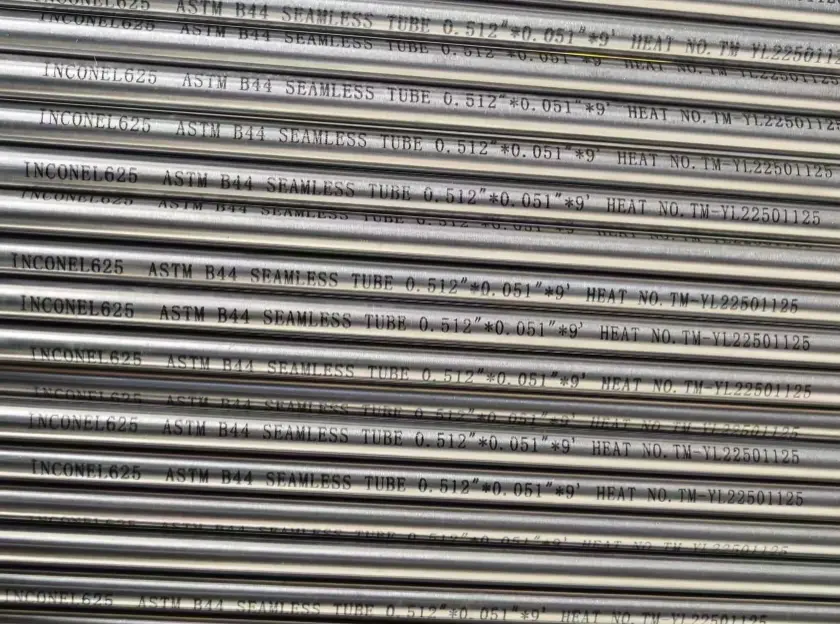
Understanding Inconel 625 Seamless Pipe and Its Vital Role in Oil and Gas
Materials used in oil and gas production have to be able to handle some of the toughest situations you can think of. Because of its special qualities, Inconel 625 seamless pipe is an important part of oil activities all over the world.
Chemical Composition and Mechanical Properties
The carefully designed alloy makeup of Inconel 625 is what makes it work so well. About 58% of this nickel-based superalloy is nickel, 22% to 23% is chromium, 8% to 10% is molybdenum, and 3.15 to 4.15% is niobium plus tantalum. Adding niobium makes the alloy matrix stronger without the need for precipitation-hardening heat treatments. Adding molybdenum makes the alloy more resistant to pitting and crevice rust.
This well-balanced mixture has great mechanical qualities that are needed in oil and gas uses. The material keeps its minimum tensile strength at 827 MPa and its minimum yield strength at 414 MPa, which means that even under the most extreme forces, the structure stays strong. The smooth design gets rid of the weak spots that come with welded joins, making it better at withstanding pressure, which is important for high-pressure fuel systems.
Temperature and Corrosion Resistance in Petroleum Environments
In places that handle oil, materials are heated to very high temperatures in refinery crackers and very low temperatures in liquefied natural gas plants. Up to 1000°C, Inconel 625 seamless tube keeps its good mechanical qualities. This makes it perfect for furnaces and other high-temperature processing equipment. At high temperatures, the metal creates a protective oxide layer that stops further rusting. It also resists oxidation, carburization, and stress corrosion cracking caused by chloride.
This material is almost immune to pitting and crevice corrosion in still seawater conditions that are typical in offshore uses because its Pitting Resistance Equivalent Number (PREN) is higher than 45. Because it is more resistant to corrosion, this means that petroleum structures will last longer and need less upkeep.
Challenges in Oil and Gas Production and How Inconel 625 Addresses Them
The oil business is facing some of the toughest material problems ever, and standard metals just can't handle them. When you understand these problems, you can see why Inconel 625 seamless tube has become the best choice for important uses.
Common Causes of Pipeline Failure in Petroleum Operations
In oil and gas operations, pipeline breakdowns are usually caused by a number of factors that are all related to each other. Environments with hydrogen sulfide cause sulfide stress cracks in carbon steels, and water that is high in chloride causes pitting rust in stainless steels. When you switch between startup and shutdown temperatures, thermal stress is created that damages welded parts over time.
Different metals that come into contact with each other in conductive fluids can also cause galvanic rusting in normal materials. Corrosion caused by carbon dioxide attacks steel pipes that carry wet gas streams, and corrosion caused by microbes speeds up the breakdown of materials in systems that hold water.
How Seamless Construction Mitigates Risk
Because Inconel 625 pipe is smooth, it doesn't have heat-affected zones like soldered pipes do. Welded lines have weak spots where the structure of the base material changes during the welding process. These weak spots can be damaged by stress corrosion cracks and fatigue failure.
When hot drilling and pilgering are used to make seamless pipes, the wall thickness and material features stay the same along the whole length of the pipe. This evenness stops stress concentration points that could start cracks from spreading in situations like repetitive loading that are common in oil operations.
Real-World Performance in Offshore Applications
The outstanding performance of Inconel 625 seamless pipe in tough working situations is shown by offshore oil platforms. For more than twenty years, platforms in the North Sea have used these pipes in saltwater injection systems without any major corrosion damage. In the Gulf of Mexico, sites depend on them for high-pressure, high-temperature well finishing systems.
When used underwater, conditions are especially tough because of the high pressure, low temperature, and harsh chemicals of the ocean. In these situations, Inconel 625 seamless pipes keep the structure strong, while regular materials would break within months because of stress corrosion splitting and pitting corrosion.
Comparing Inconel 625 Seamless Pipe with Other Alloy Pipes for Oil and Gas Use
The choice of material has a big effect on both the original investment and the long-term costs of running a fuel facility. Procurement experts can make better choices when they know how the different materials perform differently.
Performance Against Other Nickel Alloys
Inconel 718 is stronger than Inconel 625, but it doesn't fight corrosion as well. This makes it less ideal for harsh petroleum environments. Inconel 718 works great in aircraft uses that need the highest mechanical properties, but in the oil business, corrosion protection is more important than maximum strength.
Inconel 825 is resistant to rust, but it can't handle high temperatures like Inconel 625 can. When used in refineries at temperatures above 600°C, Inconel 825 starts to lose its mechanical qualities, but Inconel 625 keeps its structure.
The rust protection of Hastelloy C-276 is about the same, but it costs a lot more. Hastelloy metals contain molybdenum and tungsten, which makes the supply chain weak and the price unstable. For most petroleum uses, Inconel 625 is a more cost-effective choice.
Advantages Over Stainless Steel Solutions
316L stainless steel breaks easily in warm seawater, which is typical in oil drilling activities at sea. Even though stainless steel is cheaper to buy at first, it needs to be replaced more often, which makes it less cost-effective for important uses.
Inconel 625 seamless pipe is much more resistant to chloride cracking than any other type of stainless steel. In side-by-side tests, stainless steel samples got pitted after being in seawater for a few weeks, but Inconel 625 samples stayed the same after years of testing.
Seamless Versus Welded Construction
Because the weld joint is weaker than the seamless pipe, the pressure values for welded pipes need to be lowered to 80 to 85% of those for seamless pipes. This derating means that the wall thickness or pipe width has to be bigger to get the same pressure capacity. This makes the materials more expensive and the fitting more difficult.
For soldered lines, the need for non-destructive testing adds a lot of costs and time to quality control. Every welded part needs to be inspected with x-rays or ultrasound waves, but seamless lines only need to have their sizes checked and their materials certified.
Procuring Inconel 625 Seamless Pipes: What B2B Buyers Need to Know
To buy Inconel 625 seamless pipes successfully, you need to know about the qualifications of key suppliers, quality standards, and how the market works, which affects price and supply.
Supplier Qualification and Certification Requirements
Qualified providers must keep up-to-date quality management systems that include ISO 9001 certification and approvals specific to their business, like API Q1 for oil and gas uses. Documentation for material tracking must keep track of each pipe from the heat numbers of the raw materials to the results of the final check.
With more than 14 years of experience making superalloys and exports to more than 70 countries, TSM Technology is a great example of a provider. Our advanced production center has many certifications, such as AS9100D for aircraft uses, and can test a wide range of materials to make sure they are reliable.
Quality Assurance and Testing Standards
X-ray fluorescence spectroscopy is used for positive material identification to make sure the nickel, chromium, and molybdenum makeup meets the standards of UNS N06625 for critical inspection. Ultrasonic testing that meets ASTM E213 standards finds flaws inside the pipe and makes sure that the wall thickness is the same all the way along the length of the pipe.
Hydrostatic testing proves that the pressure can be contained, and intergranular rust testing shows that the heat treatment was done correctly. Each package of pipes comes with Material Test Certificates and other paperwork that makes it possible to fully trace back to the sources of the raw materials.
Customization and Lead Time Considerations
Outside sizes of standard Inconel 625 seamless tube range from 6mm to 219mm, and wall thicknesses range from 0.5mm to 15mm. Lead times can go beyond the normal 20–45 days if you need custom sizes or special handling. This is to allow for more complex manufacturing processes.
With a monthly production capacity of 200 tons, TSM Technology can reliably meet shipping schedules, and our customization options can be used to meet the specific needs of each project. Our engineering team helps with material selection and application advice to get the best performance and value for money.
Conclusion
Integral Inconel 625 seamless pipes are important parts of modern oil and gas companies' infrastructure because they work so well. Their better resistance to corrosion, ability to withstand high temperatures, and seamless building solve important problems that regular materials can't. Even though the original investment costs are higher than those of stainless steel alternatives, the longer service life and higher reliability make them a very good long-term value for oil plants. The benefits of this advanced material technology are maximized when the right source is chosen, quality is checked, and installation methods are used. This ensures stable operation in the world's toughest oil environments.
FAQ
1.What makes Inconel 625 seamless pipe ideal for oil and gas environments?
Inconel 625 pipe is perfect for oil and gas uses because it is highly resistant to rust, can handle high temperatures, and is made without any seams. The alloy's ability to withstand hydrogen sulfur, carbon dioxide, and chloride conditions fixes the main problems that cause oil and gas systems to fail.
2.How does the corrosion resistance compare to stainless steel grades?
Inconel 625 demonstrates massive superiority over stainless steel in aggressive petroleum environments. While stainless steel 316L breaks down quickly in warm seawater, Inconel 625 doesn't rust or pit in places where seawater stays still, which is typical in offshore uses.
3.What are typical lead times for custom specifications?
Delivery times for standard specifications are usually between 20 and 45 days, but wait times may be longer for custom sizes and special processing, based on how complicated the manufacturing process is. Because TSM Technology can make a lot of things, they can reliably schedule even big orders.
4.Can welded alternatives provide equivalent performance?
In important petroleum uses, welded lines are not as reliable as seamless ones. The heat-affected zones that are made during welding create mechanical weaknesses that make the metal less resistant to rust and pressure.
Partner with TSM Technology for Premium Inconel 625 Seamless Tube Solutions
TSM Technology stands as your trusted Inconel 625 seamless tube manufacturer, delivering superior superalloy solutions engineered for the most demanding petroleum applications. Our advanced manufacturing capabilities, comprehensive quality certifications, and 14 years of global experience ensure reliable material performance in critical oil and gas infrastructure. With manufacturing capacity reaching 200 tons monthly and customization capabilities that address unique project requirements, we provide the technical expertise and supply chain reliability your operations demand. Contact our engineering team at info@tsmnialloy.com to discuss your specific requirements and discover how our premium Inconel 625 seamless tube solutions can enhance your operational reliability while reducing long-term costs.
References
ASTM International. "Standard Specification for Seamless Pipes and Tubes of Nickel-Chromium-Molybdenum-Columbium Alloys." ASTM B444/B444M-20, West Conshohocken, PA, 2020.
NACE International. "Materials Requirements for Sulfide Stress Cracking Resistant Metallic Materials for Oilfield Equipment." NACE MR0175/ISO 15156, Houston, TX, 2015.
American Petroleum Institute. "Specification for Line Pipe Materials for Use in Oil and Gas Pipeline Transportation Systems." API 5L, Washington, DC, 2018.
Det Norske Veritas. "Recommended Practice for Corrosion Protection of Offshore Wind Turbines." DNV-RP-0416, Høvik, Norway, 2016.
Society of Petroleum Engineers. "Corrosion Management in Oil and Gas Production." SPE Technical Paper 145739, Richardson, TX, 2011.
Materials Technology Institute. "Guidelines for Materials Selection and Corrosion Control in Oil and Gas Production Systems." MTI Publication 25, St. Louis, MO, 2019.
Learn about our latest products and discounts through SMS or email