- English
- French
- German
- Portuguese
- Spanish
- Russian
- Japanese
- Korean
- Arabic
- Greek
- German
- Turkish
- Italian
- Danish
- Romanian
- Indonesian
- Czech
- Afrikaans
- Swedish
- Polish
- Basque
- Catalan
- Esperanto
- Hindi
- Lao
- Albanian
- Amharic
- Armenian
- Azerbaijani
- Belarusian
- Bengali
- Bosnian
- Bulgarian
- Cebuano
- Chichewa
- Corsican
- Croatian
- Dutch
- Estonian
- Filipino
- Finnish
- Frisian
- Galician
- Georgian
- Gujarati
- Haitian
- Hausa
- Hawaiian
- Hebrew
- Hmong
- Hungarian
- Icelandic
- Igbo
- Javanese
- Kannada
- Kazakh
- Khmer
- Kurdish
- Kyrgyz
- Latin
- Latvian
- Lithuanian
- Luxembou..
- Macedonian
- Malagasy
- Malay
- Malayalam
- Maltese
- Maori
- Marathi
- Mongolian
- Burmese
- Nepali
- Norwegian
- Pashto
- Persian
- Punjabi
- Serbian
- Sesotho
- Sinhala
- Slovak
- Slovenian
- Somali
- Samoan
- Scots Gaelic
- Shona
- Sindhi
- Sundanese
- Swahili
- Tajik
- Tamil
- Telugu
- Thai
- Ukrainian
- Urdu
- Uzbek
- Vietnamese
- Welsh
- Xhosa
- Yiddish
- Yoruba
- Zulu
Mechanical Properties and Applications of Inconel Alloy 617 Tube
When engineers have to work in harsh situations like temperatures above 1100°C, toxic atmospheres, and mechanical forces that would kill most materials, they turn to tried-and-true solutions. One option is Inconel 617 tube, which is made of a nickel-chromium-cobalt-molybdenum metal and has great strength at high temperatures, resistance to oxidation, and structural stability. These tubes are made to strict ASTM B168 and ASME SB168 standards. They are used in nuclear reactor systems, industrial heat exchanges, air engine parts, and power generation boilers. With outside sizes from 6 mm to 114 mm and wall thicknesses from 0.5 mm to 15 mm, this metal is very useful and can be used in a lot of different industries. Its quality can be tracked and it meets all approval requirements.
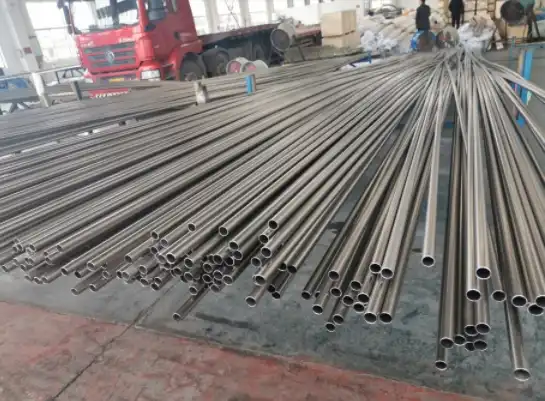
Understanding the Chemical and Mechanical Properties of Inconel 617 Tube
Chemical Composition That Defines Performance
The success of UNS N06617 tubes comes directly from the way their chemicals are carefully adjusted. Nickel is the base element, making up about 44-56% of the metal. It is resistant to rust and stable in metalworking. A 20–24% chromium presence makes an oxide layer that protects the material from oxidation and sulfidation at high temperatures. Adding 10 to 15 percent cobalt makes it harder for things to grow and keeps the power at high temperatures. At 8–10%, molybdenum helps to improve stable solutions and makes them more resistant to localised rust.
Even though they are added in smaller amounts (about 0.8 to 1.5% aluminium and 0.6% titanium), they are very important to the ways that precipitation hardens materials. Iron content stays below 3% most of the time, and carbon levels are carefully managed to find a good mix between strength and workability. Because the elements are perfectly balanced, the metal can keep its shape at temperatures where most materials would break.
Mechanical Strength Across Temperature Ranges
Understanding how machines work under working stress is what separates good material selection from expensive mistakes. These nickel-based metal tubes have a minimum tensile strength of 760 MPa and a minimum yield strength of 350 MPa when they are at room temperature. Values of elongation greater than 30% show good flexibility, which is very important during the manufacturing and fitting processes.
As the temperature rises, the material's real strengths become clear. Between 650°C and 980°C, the metal has great creep strength, which means it doesn't bend when loaded continuously for long periods of time. Material that has been properly heat-treated can survive 1000-hour creep breach tests at 900°C, which meets the strict requirements of companies that make gas turbines and other power generation equipment. The highest Brinell hardness of 241 when the metal is warmed gives it good wear protection while still allowing it to be machined into precise parts.
Heat Treatment and Microstructural Optimization
Solution annealing is the main heat treatment for this metal. It is usually done at temperatures between 1150°C and 1200°C and then quickly cooled down. This process turns carbides and other solids into solid solutions, which makes the metal more flexible and resistant to rust. For uses that need higher creep strength, ageing processes at moderate temperatures help carbides form at the edges of grains in a controlled way.
When purchasing workers look at material specs, they should check the paperwork for heat treatment. When materials are treated correctly, they have a regular austenitic microstructure with carbides that stop dislocations from moving at high temperatures. Controlling the grain size during processing has an effect on both the mechanical traits at room temperature and the creep behaviour at high temperatures. Material approvals from trusted sources include readings of grain size and mechanical test results for all temperature ranges that matter. This gives quality assurance teams the tracking they need for nuclear and military uses.
Applications and Temperature Resistance in Critical Industries
Aerospace and Defense Manufacturing
Aerospace companies need materials that will work efficiently in the harshest situations you can think of. Jet engine combustion chambers are put through a lot of temperature cycles, oxidising atmospheres, and mechanical pressures that would kill less durable materials in hours. In these situations, engineers choose straight Inconel 617 tube made from this nickel-chromium metal because it stays strong and doesn't rust at temperatures up to 1200°C.
The alloy's ability to be shaped and stay stable at high temperatures is what makes ducting systems work. These systems move hot gases from burning sections to turbine stages. These nickel-based tubes protect the metal below by forming stable, adhesive oxide scales. This is different from austenitic stainless steels, which oxidise quickly above 900°C. This resistance to rust makes parts last longer and requires less upkeep, which are both very important in commercial flight where downtime directly costs money.
This metal is good for making turbine parts because it doesn't wear down easily when heated. Heating and cooling over and over again creates thermal stresses that make cracks spread in materials that aren't flexible enough. Because this metal keeps its elasticity at high temperatures, it doesn't easily crack, so it can be used for years without needing to be overhauled.
Power Generation Equipment
Materials used in nuclear reactors have to be able to withstand radiation damage, stay stable in high-temperature water and steam, and be completely reliable because of what would happen if they failed. Heat exchanger tubes made from UNS N06617 are used in advanced reactor designs where the temperatures are higher than what normal materials can handle. ASTM G28 tests proved that the metal is resistant to intergranular rust, which protects its integrity in places where grain boundary attack could weaken pressure boundaries.
Advanced combustion systems allow thermal power plants to work at higher and higher temperatures, which makes them more efficient. Both steam-side oxidation and flame rust happen at the same time in the superheater and reheater tubes. When choosing a material, it's important to keep rust resistance, creep strength, and fabricability all in mind. These nickel-chromium-cobalt-molybdenum tubes meet all three standards, which lets companies that make power supply equipment meet efficiency goals while keeping service life levels that are good enough.
Oil, Gas, and Petrochemical Processing
Refineries and petroleum plants work with materials that break down regular metals in a number of different ways. Sulfidation is a type of rust that quickly eats through carbon steel and stainless steel when sulphur chemicals are present at high temperatures. Some types of crude oil contain naphthenic acids that make the evaporation process more difficult. This nickel-based metal makes heat exchanger tubes that are resistant to both types of attack. They work well in places where carbon steel tubes break after just a few months.
Offshore sites face extra problems, like being in places with a lot of salt, high temperatures, and mechanical pressures. Monel metals work great in seawater, but they need to be stronger at high temperatures for processing equipment that works with hot fuels. This material is used to make piping systems, valve trim parts, and the inside of pressure vessels. It has a long service life, which lowers platform downtime and maintenance costs.
This material is used in the chemical processing industry for tasks that involve oxidising acids, chloride solutions at high temperatures, and changing temperatures from room temperature to process temperature. The material is resistant to stress-corrosion breaking in salt settings, which is a way that austenitic stainless steels often fail. When engineering managers choose materials for vital service, they know that spending money on better alloys keeps accidents and costly unexpected shutdowns from happening.
Real-World Performance Data
A case study from a European gas turbine maker showed that switching from Incoloy 800H to this nickel-chromium-cobalt metal in combustion transition parts increased the service life by more than 40%. Better resistance to rust and creep strength meant less upkeep was needed, which lowered lifetime costs even though the original cost of materials was higher.
Using Inconel 617 tube instead of stainless steel tubes in delayed coking heaters helped petrochemical owners in the Middle East stop having tube problems that happened all the time. Multiple failure modes were dealt with at the same time by the material's sulfidation resistance and thermal fatigue strength, showing its value in tough working conditions.
Comparing Inconel 617 Tube with Alternative Alloy Tubes
Performance Against Inconel 625
When choosing a material, people often compare similar high-performance metals. The base of Inconel 625, which is marked UNS N06625 and is made of nickel and chromium, is the same, but it has niobium instead of cobalt and less aluminium and titanium. This difference in makeup leads to different performance traits. Inconel 625 is better at resisting rust in water, which makes it better for uses with acids and seawater at normal temperatures. But when temperatures go above 980°C, the 617 metal that has been strengthened with cobalt stays more stable and doesn't creep.
When considering projects between 600°C and 900°C, procurement experts should take certain weather factors into account. Considering cycle oxidation as the main issue, the aluminium content in 617 is helpful because it creates protected alumina scales. When chloride stress-corrosion breaking is happening at temperatures below 600°C, 625 is more resistant because it has more molybdenum in it. Neither option is always better; the best choice relies on the specifics of the situation.
Comparison with Incoloy 800H
For some high-temperature uses, Incoloy 800H is a cheaper choice. It is made up of iron as the base element and nickel and chromium as additives. Because of this change in makeup, the material is about 30–40% less expensive than superalloys made from nickel. Above 980°C, the temperature limit is clear: Incoloy 800H starts to oxidise faster and loses some of its creep strength. For uses that are constantly exposed to temperatures above 1000°C, the nickel-chromium-cobalt metal is better and worth the extra money because it lasts longer and has a lower failure rate.
When temperatures are in the middle, mechanical qualities show important differences. In a temperature range of 650°C, both metals are strong enough, but the material that has been toughened with cobalt stays stronger over time. The extra creep resistance that cobalt adds is needed for applications with design lives of more than 100,000 hours at temperature.
Stainless Steel and Carbon Steel Alternatives
In order to cut down on material costs, engineers sometimes check to see if standard materials would work for uses that are on the edge. Standard austenitic stainless steels, such as 304H or 316H, can handle oxidation up to about 900°C, but they don't have the creep strength needed for parts that are under pressure above 650°C. Austenitic stainless steels lose their power quickly at high temperatures, which can be dangerous in important situations.
Although carbon steel tubes are much cheaper than superalloy materials, they work well at low temperatures but oxidise badly above 550°C. At temperatures where these nickel-based metals work well, oxidation scaling alone can cause more than a few millimetres of thickness loss per year. Even though it costs more at first, superalloys are usually better for uses above 800°C when lifecycle costs like replacement frequency, downtime, and safety are taken into account.
Hastelloy Alloy Considerations
When it comes to harsh chemical conditions with acids and chlorides, Hastelloy grades, especially C-276 and X, work really well. These nickel-molybdenum-chromium alloys are more resistant to rust in water than the cobalt-molybdenum metal we're talking about in Inconel 617 tube. But because Hastelloy types have a lot of molybdenum, the highest temperature they can be used at is only about 980°C. This is because long-term exposure to high temperatures causes weak intermetallic phases to form. The balanced qualities that the aluminium and cobalt additions give to UNS N06617 are often useful for uses that need both high-temperature hardness and rust protection.
Buying Guide for High-Quality Superalloy Tubes: Sourcing and Supplier Insights
Certification and Quality Documentation Requirements
Verification of several pieces of paperwork is needed to make sure that the material meets the requirements. Alloy compliance is proven by material test papers that show the chemical make-up using optical emission spectroscopy or X-ray fluorescence analysis. The results of tests on mechanical properties, such as tensile strength, yield strength, and extension at room temperature and higher temperatures, show that the material meets the standards of ASTM B168.
More tracking is needed for aerospace and nuclear uses. Permanently marking heat numbers on tubes is needed so that fitted parts can be linked to production records. Portable X-ray fluorescence analysers can give positive material identification reports that prove the makeup of a metal independently. Documentation from non-destructive tests, such as eddy current or ultrasound inspection results, shows that there are no flaws below the surface that could weaken the pressure stability.
ISO 9001 certification is a basic condition for quality control, and aircraft providers should keep their AS9100 approval up to date. For nuclear uses, you might need ASME Section III approval with N-stamp power. Instead of depending only on what suppliers say, procurement professionals should check these certifications directly with the groups that issued them.
Evaluating Supplier Capabilities and Reliability
Choosing a supplier is more than just comparing prices. The ability to manufacture affects both the quality of the product and the dependability of delivery. When a factory has more than one production line with backup equipment, it can keep to its plan better than when it only has one line and equipment breaks down. We have three dedicated buildings with more than 100 specialised tools and eight production lines. This gives us the freedom to make both large batches of products and one-of-a-kind items.
Technical help is what sets capable sellers apart from distributors who are just selling things. Materials experts who can talk about how heat treatment changes mechanical qualities, suggest ways to make things, or figure out what the specifications mean are more useful than just providing materials. This knowledge is especially useful when dealing with non-standard uses or fixing problems in the field.
Samples are available so that you can check before making big orders. Suppliers with a good reputation give customers samples of their products along with full paperwork. This lets customers test the products on their own and make sure they work with current processes. Free sample programs show that the seller is confident in the quality of the product while lowering the risk for the customer.
Custom Orders and Stock Availability
Many uses need sizes, lengths, or surface treatments that aren't available in the catalogue. Customisation options, such as non-standard outer sizes, specialised surface finishes, or cut-to-length services, get rid of the need for extra processing and lower the total cost of acquisition. Being able to make tubes up to 15,000 mm long makes them useful in situations where soldered joints would not be reliable or would be too expensive.
On the other hand, having regular sizes in stock lets you quickly meet pressing needs. Balanced inventory management by providers is useful for customers who have to deal with machine breakdowns or scheduling changes that come up out of the blue. Procurement pros can make better plans when they know how a seller handles inventory—for example, whether they keep a lot of stock on hand or mostly make things to order.
Conclusion
When choosing the right materials like Inconel 617 tube for harsh work settings, you have to weigh a lot of different performance needs against the cost of acquisition and the logistics of the supply chain. This nickel-chromium-cobalt-molybdenum alloy has great mechanical qualities, like a tensile strength of over 760 MPa, excellent creep resistance, and oxidation stability up to 1200°C. These properties make it ideal for use in aircraft, power generation, petrochemicals, and nuclear uses. To properly source materials, you need to check the certifications of the suppliers, know how the market works and how that affects prices and wait times, and make sure you have all the paperwork you need to support quality and tracking standards. If you install and take care of these high-performance tubes according to the best practices, they will last longer and pay for themselves through less downtime, better safety, and more reliable operations.
FAQ
1.What range of temperatures can these nickel-chromium tubes handle?
UNS N06617 tubes work successfully in constant service up to 1100°C and can handle short-term contact to 1200°C. At these high temperatures, the metal keeps its mechanical strength and forms protective oxide scales that stop the material from breaking down quickly. If the temperature is below 980°C, cheaper alternatives might be better. But if the temperature is above 1000°C, this metal is better at resisting rust and has higher creep strength than iron-based alternatives.
2.How does this metal stack up against regular stainless steel when it comes to high-temperature uses?
Standard austenitic stainless steels lose strength quickly above 650°C and rust more quickly above 900°C. The nickel-chromium-cobalt mix gives the metal a lot more creep strength and resistance to oxidation at high temperatures. Even though stainless steel is much cheaper, superalloys are better for important high-temperature uses because they last longer and are less likely to break. When the temperature is higher than 800°C, lifecycle cost analysis usually favours the nickel-based metal.
3.What approvals should I look for when I buy these tubes?
Specifications for buying things should include non-destructive testing records, material test certificates that show the chemical make-up and mechanical qualities, and approval to ASTM B168 or ASME SB168 standards. For aerospace uses, suppliers must be certified by AS9100, and for nuclear services, they must be compliant with ASME Section III. Getting ISO 9001 approval is a basic condition for quality management. Marked heat numbers on materials make it possible to connect fixed parts to factory records.
Partner with a Trusted Inconel 617 Tube Supplier
For more than 14 years, TSM Technology has been specialising in high-quality nickel metals for aircraft makers, refinery owners, and power generation companies around the world. Our three factories, each with eight production lines, make Inconel 617 tubes that meet ASTM B168 and ASME SB168 standards and come with full approval and material tracking paperwork. We can customise for non-standard sizes, treat the surface with sanding and anodising, and provide full technical support from materials engineers who understand the hurdles you face in your application. Every package comes with material test certificates and SGS reports, which are the proof your quality assurance teams need. Email our team at info@tsmnialloy.com to talk about your unique needs, get detailed data sheets, or set up free samples that show how committed we are to quality and accuracy.
References
Davis, J.R. (2000). Nickel, Cobalt, and Their Alloys. ASM International, Materials Park, Ohio.
Lai, G.Y. (2007). High-Temperature Corrosion and Materials Applications. ASM International, Materials Park, Ohio.
Special Metals Corporation Technical Bulletin (2019). INCONEL Alloy 617: Technical Data and Engineering Properties.
Donachie, M.J. and Donachie, S.J. (2002). Superalloys: A Technical Guide, Second Edition. ASM International, Materials Park, Ohio.
American Society for Testing and Materials (2021). ASTM B168-21: Standard Specification for Nickel-Chromium-Iron-Molybdenum-Copper-Columbium Alloy Plate, Sheet, and Strip.
Sims, C.T., Stoloff, N.S., and Hagel, W.C. (1987). Superalloys II: High-Temperature Materials for Aerospace and Industrial Power. John Wiley & Sons, New York.
Learn about our latest products and discounts through SMS or email