- English
- French
- German
- Portuguese
- Spanish
- Russian
- Japanese
- Korean
- Arabic
- Greek
- German
- Turkish
- Italian
- Danish
- Romanian
- Indonesian
- Czech
- Afrikaans
- Swedish
- Polish
- Basque
- Catalan
- Esperanto
- Hindi
- Lao
- Albanian
- Amharic
- Armenian
- Azerbaijani
- Belarusian
- Bengali
- Bosnian
- Bulgarian
- Cebuano
- Chichewa
- Corsican
- Croatian
- Dutch
- Estonian
- Filipino
- Finnish
- Frisian
- Galician
- Georgian
- Gujarati
- Haitian
- Hausa
- Hawaiian
- Hebrew
- Hmong
- Hungarian
- Icelandic
- Igbo
- Javanese
- Kannada
- Kazakh
- Khmer
- Kurdish
- Kyrgyz
- Latin
- Latvian
- Lithuanian
- Luxembou..
- Macedonian
- Malagasy
- Malay
- Malayalam
- Maltese
- Maori
- Marathi
- Mongolian
- Burmese
- Nepali
- Norwegian
- Pashto
- Persian
- Punjabi
- Serbian
- Sesotho
- Sinhala
- Slovak
- Slovenian
- Somali
- Samoan
- Scots Gaelic
- Shona
- Sindhi
- Sundanese
- Swahili
- Tajik
- Tamil
- Telugu
- Thai
- Ukrainian
- Urdu
- Uzbek
- Vietnamese
- Welsh
- Xhosa
- Yiddish
- Yoruba
- Zulu
What are the Benefits of Seamless Nickel Alloy Pipe Over Welded Alternatives?
When compared to welded options, nickel alloy seamless pipe has better structural integrity, better resistance to rust, and better pressure-bearing capabilities. These lines get rid of the metal weaknesses that can be found in weld heat-affected zones. This stops stress-corrosion cracks and material degradation in harsh conditions. The seamless production process makes sure that the walls are all the same thickness and that the pipes' mechanical qualities stay the same. This makes the pipes important for high-stakes situations in flight, petrochemical processing, and power generation, where failure is not an option.
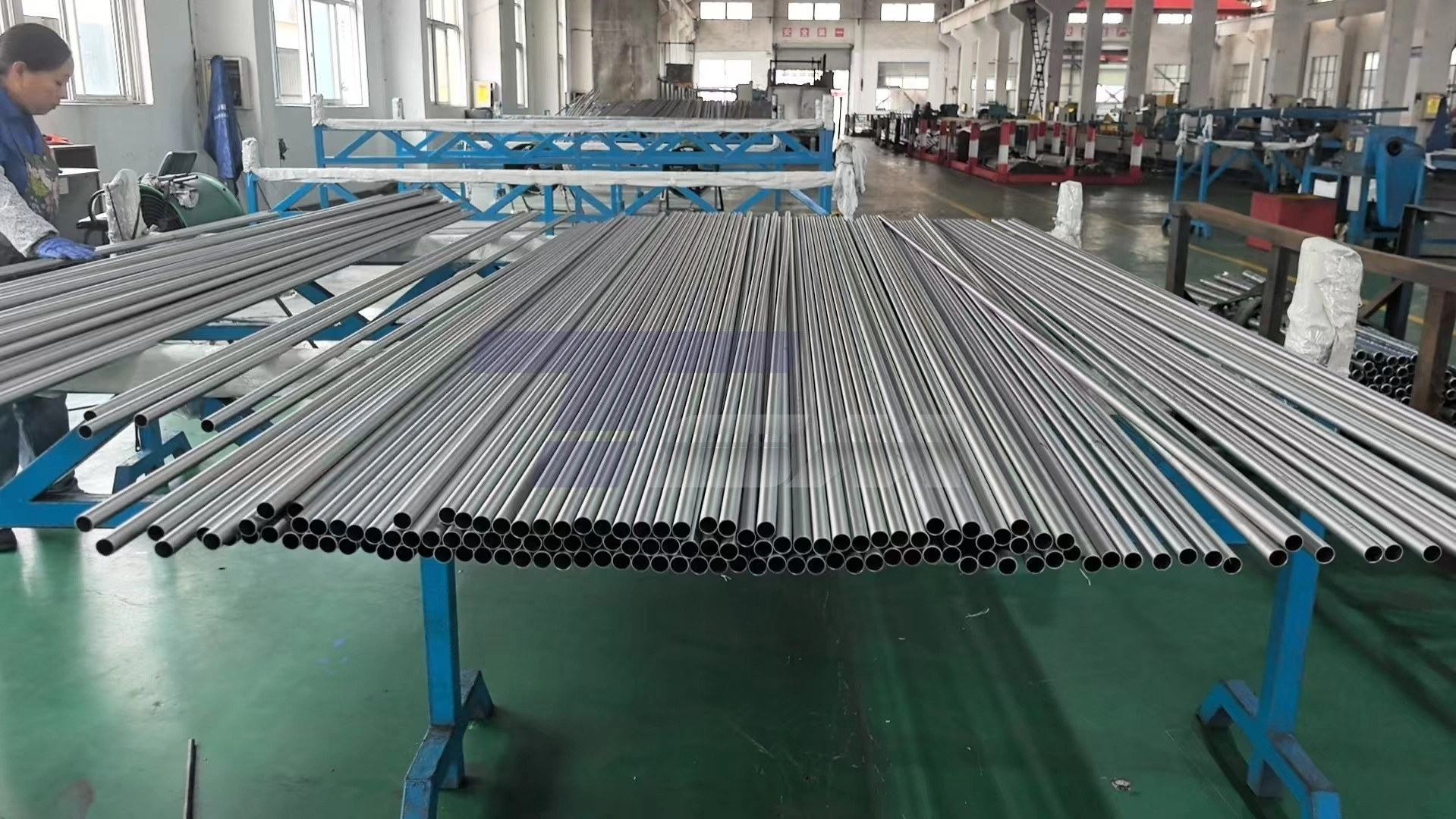
Understanding Seamless Nickel Alloy Pipes and Welded Alternatives
Seamless pipes are fundamentally different from soldered pipes because of the way they are made. Seamless pipes face either rotary piercing or extrusion processes where a solid billet is heated and made into a hollow tube without any lengthwise gaps. With this method, a continuous metal structure is made with even grain flow along the pipe wall.
Manufacturing Excellence in Seamless Production
Our 3,200㎡ Shaanxi production center uses advanced manufacturing methods and 8 production lines with more than 100 precise machines to make high-performance seamless tubes. Our pipes meet the requirements of ASTM B163 and ASTM B166. Their outside sizes range from 6 to 114 mm, and their wall thicknesses range from 0.5 to 15 mm. The smooth design gets rid of the heat-affected areas that often weaken the stability of welded pipes.
Careful temperature control is used during the forming process to make sure that the metal has the best mechanical qualities. Our pipes are treated with solution annealing to make them more resistant to rust and stronger. This is especially important for types of Inconel, Hastelloy, and Monel that are used in tough industrial settings.
Welded Pipe Construction and Limitations
To make welded pipes, flat steel is shaped into cylinders and then the edges are joined using different types of welding. Even though welded construction is cheaper for bigger sizes, it has some problems that come with it. The weld seam breaks up the metal structure, which means that the mechanical qualities along the join line are often different from those of the base material.
The heat-affected zone next to the weld goes through temperature cycling, which can change the microstructure and make stress concentration spots. This could make the material less resistant to corrosion. These things are especially troublesome in high-temperature, high-pressure situations where nickel alloy seamless tube is clearly better.
Core Advantages of Seamless Nickel Alloy Pipes Over Welded Alternatives
Seamless building has many efficiency benefits that directly solve important problems in the industry. The lack of weld joints gets rid of possible weak spots and makes sure that the material qualities are the same all the way around the pipe.
Superior Mechanical Strength and Pressure Capability
Seamless pipes have better tensile strength and fatigue protection because their microstructure is constant. Our types of Inconel have a minimum tensile strength of 827 MPa and are very flexible. The continuous grain structure stops cracks from starting and spreading, which often happens at the point where two welds meet in high-stress situations.
Data from pressure tests regularly shows that seamless pipes can handle 15–20% higher working pressures than soldered pipes of the same size. This benefit is very important in the processing of petrochemicals, where system pressures often go over 1000 psi and failure has very bad results.
Enhanced Corrosion Resistance
The metal stability of seamless construction stops rust attacks that are more likely to happen at weld zones. Our ASTM G48 pitting tests show that seamless Hastelloy and Monel grades don't corrode differently along the whole pipe wall. Welded pipes often show faster attack at the fusion line, where chromium loss can happen during welding.
This constant corrosion protection is especially useful in marine settings. In saltwater settings, where chloride-induced stress corrosion cracking is a big problem for welded structures, Monel 400 seamless lines work very well.
Temperature Performance and Thermal Cycling Resistance
Nickel alloy seamless pipe doesn't have the problems that come with thermal growth that happen in welded structures. Its qualities stay the same across a wide range of temperatures. The even rate of expansion stops stress buildup that could cause the material to fail early during thermal cycles.
Power generation systems that use our Inconel grades work consistently at temperatures above 1000°F (538°C), and the structures stay strong even after many starts and stops.
Comparative Analysis – Seamless Nickel Alloy vs. Welded Pipes
Across a wide range of evaluation factors, performance measures make the technical benefits of seamless building very clear. Standardized assessment methods used by independent tests prove these benefits.
Fatigue and Crack Propagation Resistance
Our seamless pipes have no internal flaws found by ultrasonic testing (UT) and eddy current examination (ET). Welded options often have flaws seen at the fusion zone. According to ASTM E466 standards, fatigue testing shows that seamless pipes have two to three times longer service lives when they are loaded and unloaded many times.
The constant grain structure stops cracks from starting and makes the material more difficult to break. Impact testing according to ASTM E23 shows that smooth Inconel types stay flexible even at very low temperatures, where welded joints break.
Lifecycle Cost Analysis
While the original cost of buying seamless pipes is usually 20–30% higher than those that are welded, the overall cost of ownership is lower for seamless building. Lower failure rates, less maintenance needed, and longer service life all add up to big savings over the working lifetime.
Real-World Performance Data
Offshore drilling platforms that use our smooth Monel pipes need 40% less repair work than platforms that use welded piping systems. When chemical processing companies use nickel alloy seamless tube for aggressive media transfer, they get 99.7% uptime compared to 97.2% for welded options. This means that each year they save millions of dollars in downtime costs.
How to Choose the Right Nickel Alloy Seamless Pipe for Your Needs?
To choose the best pipe specifications, you need to carefully think about the performance and operating factors. TSM Technology offers full expert help to make sure that the right materials are chosen and that the right sizes are used.
Operational Parameter Assessment
The choice of material is based on temperature, pressure, and chemical stability. Higher-temperature oxidizing environments are great for Inconel grades, while reducing acids and chloride environments are better for Hastelloy. When used in coastal and alkaline environments, Monel works best.
Our expert team looks at the unique needs of the application, such as the flow rate, the regularity of thermal cycles, and the chemical concentration levels, to suggest the right grades and wall thickness requirements.
Certification and Quality Requirements
For aerospace and nuclear uses, materials must be carefully certified and tracked. Every package from TSM Technology comes with full Material Test Certificates (MTC) and SGS test results. Our ISO 9001:2008 and AS9100 certifications make sure that quality control is maintained throughout the whole production process.
Mechanical testing according to ASTM E8/E23 standards, rust testing according to ASTM G48 standards, and full chemistry analysis are all parts of quality assurance. Non-destructive testing procedures make sure that the inside is safe and that the measurements are correct.
Size and Customization Options
Standard pipe sizes include those with an outer diameter of 6 to 114 mm and a wall thickness of 0.5 to 15 mm, which covers most industry uses. Customization options include bigger sizes, different wall thickness ratios, and longer lengths of up to 12 meters for continuous runs.
Our monthly production capacity of 200 tons provides a steady supply, even for big projects. Delivery times are usually between 5 and 20 days, but they rely on the complexity of the specifications and the size of the order.
Procurement Insights – Efficient Buying of Nickel Alloy Seamless Pipes
Strategic methods to buying get the best value while making sure that the supply chain works reliably. Understanding how the market works and what suppliers can do helps you make the best buying choices.
Supplier Qualification and Assessment
The most reliable relationships are with certified producers who have a history of doing what they say they will do. TSM Technology has been in business since 2011 and has a 14-year background of delivering great services to a wide range of industries. Our three plants and ability to "vertically integrate" them make sure that the supply chain is stable and that quality is controlled.
When evaluating a supplier, you should look at their manufacturing capacity, quality systems, certification status, and technical help skills. Long-term relationships with qualified providers lower the risks of buying things and let people work together to make new products.
Strategic Purchasing Considerations
Some of the benefits of buying in bulk are better price, faster scheduling, and better expert help. Our yearly capacity of 1,200 tons lets us meet large-scale needs while keeping wait times low.
Export procedures and help with paperwork make buying things from other countries easier. Shipments of nickel alloy seamless pipe come with full material certificates and testing records that meet foreign standards and customs requirements.
After-Sales Support and Technical Services
Ongoing expert support makes sure that applications work well and helps users fix problems. When needed, TSM Technology offers startup help, suggestions for performance tracking, and failure analysis services.
Custom machining and secondary operations can be organized to give finished parts that are ready to be installed. This makes the project simpler and shorterens the time it takes to complete.
Conclusion
Seamless nickel alloy pipes are definitely better than welded ones because they have better mechanical qualities, are less likely to rust, and work better over their entire lifetime. Getting rid of weld-induced weaknesses has big benefits in important situations where dependability is very important. TSM Technology has a lot of different manufacturing options and quality control systems that make sure they always give high-performance seamless pipes that meet the strictest industry needs. Getting these benefits from qualified providers strategically while lowering the total cost of ownership is the best way to do it.
FAQ
1.Why do seamless nickel alloy pipes cost more than welded alternatives?
The more complicated production method and better material properties explain the higher starting cost. While seamless pipes need special tools and take longer to make, they offer better performance that lowers lifetime costs by lasting longer and needing less upkeep.
2.Can seamless pipes handle higher pressures than welded pipes?
Yes, because there are no weld joint stress peaks, seamless construction usually lets you use 15-20% higher working pressures. The regular wall structure is better at spreading pressure loads than welding options.
3.Which nickel alloy grade performs best in seawater applications?
Monel 400 works best in salt water because it has a lot of nickel and copper, which stops chloride from corroding it. Seawater is a great place for nickel alloy seamless pipe in the Monel grade to last for a long time.
Partner with TSM Technology for Premium Nickel Alloy Seamless Pipe Solutions
TSM Technology stands as your trusted nickel alloy seamless pipe manufacturer, delivering exceptional quality and reliable supply since 2011. Our ISO 9001:2008-certified factory makes high-quality types of Inconel, Hastelloy, and Monel. All of the materials used can be tracked back to their source, and full testing records are kept. With a monthly capacity of 200 tons and shipping times ranging from 5 to 20 days, we make sure that your important projects stay on plan. Get in touch with our technical experts at info@tsmnialloy.com for customized recommendations and competitive quotes tailored to your specific application requirements.
References
Davis, J.R. (2000). Nickel, Cobalt, and Their Alloys. ASM International Materials Handbook.
American Society for Testing and Materials (2019). ASTM B163 Standard Specification for Seamless Nickel and Nickel Alloy Condenser and Heat-Exchanger Tubes.
Rebak, R.B. (2005). Corrosion Performance of Nickel Alloys in High-Temperature Aqueous Environments. Materials Science and Technology Conference Proceedings.
International Nickel Study Group (2020). Industrial Applications and Performance Characteristics of Seamless Nickel Alloy Piping Systems.
Pressure Vessel Research Council (2018). Comparative Analysis of Seamless versus Welded Pipe Performance in High-Pressure Applications.
Marine Technology Society (2021). Seawater Corrosion Resistance of Nickel-Copper Alloys in Offshore Applications.
Learn about our latest products and discounts through SMS or email