- English
- French
- German
- Portuguese
- Spanish
- Russian
- Japanese
- Korean
- Arabic
- Greek
- German
- Turkish
- Italian
- Danish
- Romanian
- Indonesian
- Czech
- Afrikaans
- Swedish
- Polish
- Basque
- Catalan
- Esperanto
- Hindi
- Lao
- Albanian
- Amharic
- Armenian
- Azerbaijani
- Belarusian
- Bengali
- Bosnian
- Bulgarian
- Cebuano
- Chichewa
- Corsican
- Croatian
- Dutch
- Estonian
- Filipino
- Finnish
- Frisian
- Galician
- Georgian
- Gujarati
- Haitian
- Hausa
- Hawaiian
- Hebrew
- Hmong
- Hungarian
- Icelandic
- Igbo
- Javanese
- Kannada
- Kazakh
- Khmer
- Kurdish
- Kyrgyz
- Latin
- Latvian
- Lithuanian
- Luxembou..
- Macedonian
- Malagasy
- Malay
- Malayalam
- Maltese
- Maori
- Marathi
- Mongolian
- Burmese
- Nepali
- Norwegian
- Pashto
- Persian
- Punjabi
- Serbian
- Sesotho
- Sinhala
- Slovak
- Slovenian
- Somali
- Samoan
- Scots Gaelic
- Shona
- Sindhi
- Sundanese
- Swahili
- Tajik
- Tamil
- Telugu
- Thai
- Ukrainian
- Urdu
- Uzbek
- Vietnamese
- Welsh
- Xhosa
- Yiddish
- Yoruba
- Zulu
What are the Corrosion Resistance Properties of Hastelloy C22 Tube?
It is very hard for Hastelloy C22 tube to rust in both oxidizing and reducing environments. This makes it a great choice for tough work environments. This metal (UNS N06022) is made up of nickel, chromium, and molybdenum. It doesn't rust or burn when it comes into contact with strong acids such as sulfuric acid and hydrochloric acid, chlorine-containing liquids, or seawater. Twenty to twenty-two percent chromium, 12.5 to 14.5 percent molybdenum, and 2.5 to 3.5 percent tungsten work together to form a stable film that doesn't break down even when heated or exposed to strong chemicals. This makes it better than many normal stainless steels.
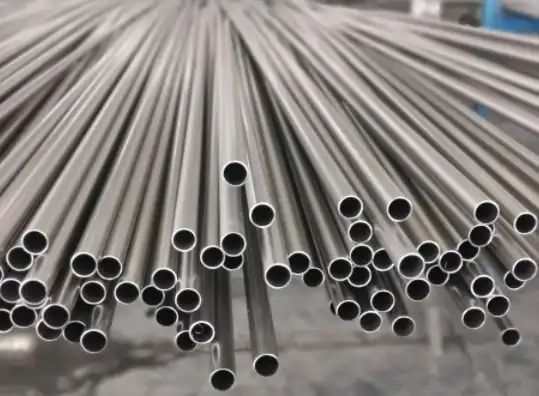
Understanding Hastelloy C22 Tube: Composition and Corrosion Resistance
This metal, which is made of nickel, doesn't rust because its chemicals are carefully controlled. We make tubes at TSM Technology that keep their exact chemical ratios so that they always work the same way, even in tough factory conditions.
Chemical Composition Impact on Passivation
Nickel is what makes up the base structure, and it automatically keeps chloride from attacking it. A chromium level of 20 to 22% makes an oxide layer that guards and fixes itself when it gets damaged. A molybdenum level of 12.5 to 14.5% makes it much more immune to small rust attacks like pitting and crevices. When you add 2.5% to 3.5% tungsten to the metal, it works even better with reducing solutions and cases where there are both oxidizing and reducing forces. Between 2% and 6% iron helps the structure stay stable without making it less able to resist rust. It forms a film on the top that doesn't move, even when the pH and temperature change.
Mechanisms of Corrosion Inhibition
If people who work with materials know how this metal fights different types of rust, they can make better decisions, using Hastelloy C22 tube. It stops anodic breakdown in nitric acid and ferric chloride solutions, which are oxidizing acids, because the film is not active. On the other hand, the large amounts of molybdenum and tungsten stop cathodic processes in reducing environments like sulfuric and hydrochloric acids. The amount of carbon is kept at a maximum of 0.015 percent on purpose. This limits the amount of carbide that forms during heat treatment and welding. This keeps the grain borders strong and stops rusting between the grains. For this reason, the metal is different from past nickel-based materials that broke down at the weld while they were being used.
Performance in Mixed Oxidizing-Reducing Media
Often, places that work with chemicals have surroundings that are hard to understand because oxidizing and reducing conditions change or live together. It can't be oxidized because it has chromium in it, and molybdenum and tungsten in it can't react with reducing acids. ASTM B622, ASTM B619, and ASTM B626 tubes are great for heat exchanges, reactor tanks, and systems where process conditions change because they can be welded or left smooth. The material doesn't need to be checked often or changed too soon because it keeps its shape and doesn't rust.
Detailed Properties and Performance of Hastelloy C22 Tube
What these tubes are made of doesn't just decide how well they work under working stress and corrosive attack; their physical and mechanical qualities do too.
Mechanical Properties Supporting Durability
It doesn't rust and has a tensile strength of 690 MPa and a yield strength of 283 MPa, which means it is strong physically. The fact that it can stretch by 45% shows how flexible it is. This means that you can bend, shape, and join it without breaking it. There are changes in pressure, temperature, and mechanical movements that happen in petrochemical pipe systems and aircraft heat exchanges. These tubes can handle these things because they are strong and bendable. With a melting point of 1399°C and a density of 8.69 g/cm³, the material is stable enough to be used in power plants and industrial ovens where temperatures are high.
Heat Treatment and Microstructural Optimization
The right heat treatment gets rid of any secondary phases and makes sure the structure is consistently austenitic. This makes the Hastelloy C22 tube less likely to rust. Most of the time, solution annealing takes place between 1120°C and 1180°C. After that, the metal cools down quickly. In this process, carbides don’t form and alloying elements are spread out better, which makes passivation work better. When they buy a material, sources should make sure that they give them test records that show them the correct way to heat treat it. This is because preparing it incorrectly can lower its performance in acidic service.
Operating Temperature Range and Chemical Resistance Profile
From very cold temperatures all the way up to about 650°C, which is most industrial process settings, the metal doesn't rust. It also protects better than austenitic stainless steels like 316L in places where chloride is present, especially when it comes to stopping stress corrosion cracking that most materials do in hot chloride solutions. This type of steel can stand up to hydrochloric acid at all temperatures and amounts, but other types can't. It can handle standard amounts and temperatures of sulfuric acid very well. It can also handle mixed acid situations very well, like when sulfuric and nitric acids are present. Different parts of a building don't need to have different material standards because these chemicals can work with each other. Inventory and maintenance are made easy by this.
Comparison: Hastelloy C22 Tube vs Alternative Materials
To choose the best material, you need to know how the different metals work in relation to the needs of the application.
Hastelloy C22 vs Hastelloy C276
The nickel, chromium, and molybdenum processes in both metals are pretty much the same. However, small differences make them work better and cost more. That's why Hastelloy C22 is more immune to oxidation media while still working well in reducing settings. It has a little more chromium and a little less molybdenum than Hastelloy C276. Because Hastelloy C22 has less carbon than Hastelloy C276 (up to 0.015 percent vs. 0.02%), there is less chance of carbide precipitation during welding. This makes heat-affected zones less sensitive. Hastelloy C22 is often a good choice for people who weld a lot or who work in places where the oxidizing and reducing conditions change all the time.
Comparison with Stainless Steel and Inconel
Some types of austenitic stainless steel, like 304 and 316L, don't rust in warm conditions and are much cheaper. They do, however, break down quickly in chloride- or acidic conditions, where stress rust causes them to split and crack. In places where stainless steels can't work, nickel metals do well. One of the best things about Inconel metals is that they don't rust or carburize easily at high temperatures. They are great for engine parts and exhaust systems because of this. But Hastelloy C22 tube usually do better than Inconel grades at normal temperatures when it comes to chemical protection in acidic water-based media. They are also easier to weld.
Titanium Tubes as an Alternative
It is very hard for titanium and its alloys to rust when they are exposed to oxidizing agents and chlorine, especially when they are used in seawater. They are not as thick as nickel metals, which makes them better for uses in boats and planes where weight is an issue. But titanium isn't very strong against reducing acids, and hydrogen can sometimes make it weak, which limits its use. Titanium is more expensive and has to be welded in a certain way. For this reason, nickel-chromium-molybdenum metals are often a better choice for places that work with chemicals and other mixed settings.
Procurement Considerations for Hastelloy C22 Tube
To find good tubes, you need to look at the credentials of the suppliers, the materials' certifications, and the procedures that affect when and how much the job will cost.
Supplier Certifications and Quality Assurance
Makers you can trust should have licenses that show they meet quality standards around the world. The rules for seamless tubes are set by ASTM B622, and the rules for bonded tubes are set by ASTM B619 and ASTM B626. These standards spell out the mechanical qualities that should be present, along with the chemical make-up ranges and limits. People who want to get an ASME license for a pressure tank must follow certain rules. This is necessary for uses in power generation and petrochemicals. Getting ISO 9001 quality control approval makes sure that the same methods are used every time and that goods can be tracked. Materials test records (MTRs) should include chemical analysis connected to heat, mechanical test results, and proof of non-destructive testing. Purchasing managers should ask for these. With X-ray fluorescence and Positive Material Identification (PMI), you can show what kind of metal something is. Ultrasonic testing can find flaws inside tubes that are supposed to fit together perfectly.
Customization Options and Lead Times
Hastelloy C22 tube: Outside diameters range from 6 to 114 mm, wall thicknesses from 0.5 to 15 mm, and lengths of up to 15,000 mm for some mixtures of diameter and wall thickness. You can get custom sizes to fit your design needs, but depending on when the product is being made, you may have to wait longer. Making more of something at once can help with big sales, which makes shipping more reliable. Because they work with sources early on in the planning process, materials engineers can make sure that the specs match the stock sizes. This might help the job go more quickly and save money.
Criteria for Selecting Trusted Suppliers
You should not only look at a supplier's credentials, but also at how helpful they are, how long their deliveries take, and how good their customer service is. Suppliers who know a lot about metals can help you pick the right products, make ideas for how to make them, and fix problems with service. Supply lines that are already set up make it less likely that something will go wrong, and order amounts that are flexible can be used for both big jobs and regular upkeep. When people know about things like wait times, prices, and good papers, they are more likely to trust the buying choices they make.
Practical Applications and Case Studies of Hastelloy C22 Tube in Corrosive Environments
The fact that the material is used in real life in many different businesses shows how useful it is for fixing important rust issues.
Chemical Processing Industry
Sometimes harsh chemicals are used in chemical plants and factories. These tubes are used in heat exchanges, reactor tanks, and pipe systems. No stainless steel lines were used in a hydrochloric acid alkylation unit of a big petrochemical company. Instead, seamless Hastelloy C22 tubing was used. The answer stopped the pitting failures that happened all the time and caused unplanned shutdowns every 18 to 24 months. A check after five years of use showed that there wasn't much rust. This showed that the material was very strong and would save a lot of money by lasting longer and needing less maintenance.
Aerospace and Power Generation
Turbine builders use tubes made of a nickel-chromium-molybdenum metal in combustion chambers and heat recovery systems. There is a lot of heat and burning in these systems, which makes the conditions oxidizing. At seaside sites where cooling with saltwater puts people at risk of chloride, a company that makes tools for power plants started using Hastelloy C22 tubes for condensers. Because the material didn't crack easily when stressed by chloride, it didn't fail as quickly as standard austenitic stainless steels did. It became easier to use the plant and cost less to fix in an emergency.
Marine and Offshore Engineering
People who build ships and work on remote sites are always near water. Rust in pits and cracks breaks down carbon steel and many types of stainless steel very fast. An offshore oil station made a water treatment system and added steel tubes that meet ASTM B619 to it. The upgrade fixed rust problems that had been going on for a long time in heat exchangers and transfer pipes that are in contact with hot, chloride-filled fluids that have gases mixed in them. After placement, monitoring showed that there was no localized corrosion. This proves that the material can handle harsh marine environments.
Pharmaceutical Manufacturing
Because they don't want their goods to get contaminated, drug companies need materials that can withstand chemical attacks and still be clean. A drug company picked Hastelloy C22 tubes for clean-in-place (CIP) systems that use cleaning liquids that are acidic and germ-killing agents. Because the material didn't have much carbon and didn't rust, metallic ions couldn't get out. It passed high purity standards and could be cleaned over and over with strong chemicals.
Conclusion
The fact that Hastelloy C22 tube doesn't rust makes it an important material for companies that work with harsh chemicals, high temperatures, and tough circumstances. It is very good at preventing pitting, crevice corrosion, and stress corrosion cracking in both oxidizing and reducing conditions because it has the right amount of nickel, chromium, molybdenum, and tungsten. These tubes can be used in chemical processing, aircraft, sea, and power production that need stable, long-term service. They have a tensile strength of 690 MPa, are very flexible, and are compatible with many chemicals. By carefully choosing sources, paying attention to certifications, and knowing why some materials are better than others, procurement workers and materials experts can make smart decisions that improve the results of projects and the value over their entire life.
FAQ
1. What environments are best suited for Hastelloy C22 tubing?
It works really well in tough environments like sulfuric acid, hydrochloric acid, oceans, and places where there are both oxidizing and reducing agents. Regular stainless steels pit or crack under stress, so this one works well in places where regular stainless steels don't, like making medicines, refining petrochemicals, and handling chemicals.
2. Which certifications confirm product authenticity and quality?
For smooth tubes, look for ones that are certified to ASTM B622. For welded tubes, look for ones that are certified to ASTM B619 or ASTM B626. You have to meet certain standards for pressure tanks in order to get an ASME license. ISO 9001 spells out how to control quality. A material test record (MTR) should be sent with every order. This should include a chemical study connected to heat and a check of the mechanical properties through PMI testing and non-destructive examination.
3. How does heat treatment affect corrosion resistance?
When solution annealing is done properly at 1120–1180°C and then cooled quickly, carbides are broken down and the microstructure gets better. This makes the passivation ability higher. This process stops the sensitivity of the grain boundaries and ensures that the defense against rust is the same everywhere. To make sure that products will work well in places that are acidic, materials engineers should make sure that the sources they use offer properly heat-treated goods with written down thermal processing parameters.
Partner with TSM Technology for Premium Hastelloy C22 Tube Supply
You can depend on TSM Technology to make good Hastelloy C22 tubes. They have been selling nickel metals that don't rust to companies all over the world for 14 years. These companies work with industries like aerospace, petrochemicals, marine, and power production. We make our tubes to meet ASTM B622, ASTM B619, and ASTM B626 standards. They can be either smooth or joined. They can be made in any length up to 15,000 mm and range in size from 6 mm to 114 mm. We make sure that the high-performance materials you need for your important projects are approved by strict quality control measures such as PMI testing, ultrasound examination, and full material tracking. We know how hard it is to make sure that supply chains work well, meet strict standards, and buy things on time. Our expert team helps you choose the right products, plan the production, and make sure that the long-term service is at its best. Contact us right away at info@tsmnialloy.com to talk about your project needs, get specific specs, or get fair quotes for big orders that meet your strict industry standards.
References
1. Ahmad, Z. (2006). Principles of Corrosion Engineering and Corrosion Control. Elsevier Science & Technology.
2. Cramer, S.D. & Covino, B.S. (2003). ASM Handbook Volume 13A: Corrosion: Fundamentals, Testing, and Protection. ASM International.
3. Haynes International. (2020). Hastelloy C-22 Alloy: Principal Features and Properties. Technical Literature H-2019E.
4. Rebak, R.B. (2000). Corrosion Resistance of Nickel Alloys in Reducing Environments. Materials Selection and Design, ASM Handbook Volume 20.
5. Sedriks, A.J. (1996). Corrosion of Stainless Steels. John Wiley & Sons, New York.
6. ASTM International. (2021). ASTM B622: Standard Specification for Seamless Nickel and Nickel-Cobalt Alloy Pipe and Tube. West Conshohocken, PA.
Learn about our latest products and discounts through SMS or email