- English
- French
- German
- Portuguese
- Spanish
- Russian
- Japanese
- Korean
- Arabic
- Greek
- German
- Turkish
- Italian
- Danish
- Romanian
- Indonesian
- Czech
- Afrikaans
- Swedish
- Polish
- Basque
- Catalan
- Esperanto
- Hindi
- Lao
- Albanian
- Amharic
- Armenian
- Azerbaijani
- Belarusian
- Bengali
- Bosnian
- Bulgarian
- Cebuano
- Chichewa
- Corsican
- Croatian
- Dutch
- Estonian
- Filipino
- Finnish
- Frisian
- Galician
- Georgian
- Gujarati
- Haitian
- Hausa
- Hawaiian
- Hebrew
- Hmong
- Hungarian
- Icelandic
- Igbo
- Javanese
- Kannada
- Kazakh
- Khmer
- Kurdish
- Kyrgyz
- Latin
- Latvian
- Lithuanian
- Luxembou..
- Macedonian
- Malagasy
- Malay
- Malayalam
- Maltese
- Maori
- Marathi
- Mongolian
- Burmese
- Nepali
- Norwegian
- Pashto
- Persian
- Punjabi
- Serbian
- Sesotho
- Sinhala
- Slovak
- Slovenian
- Somali
- Samoan
- Scots Gaelic
- Shona
- Sindhi
- Sundanese
- Swahili
- Tajik
- Tamil
- Telugu
- Thai
- Ukrainian
- Urdu
- Uzbek
- Vietnamese
- Welsh
- Xhosa
- Yiddish
- Yoruba
- Zulu
What are the Mechanical Properties of Monel 400 Seamless Pipe?
Monel 400 seamless pipes exhibit exceptional mechanical characteristics that make them indispensable for critical industrial applications. The Monel 400 seamless pipe delivers tensile strength of 517 MPa minimum, yield strength of 172 MPa minimum, and 35% minimum elongation in annealed condition. These robust mechanical properties, combined with outstanding corrosion resistance, position this nickel-copper alloy as the preferred choice for marine environments, chemical processing facilities, and offshore energy systems where reliability remains paramount.
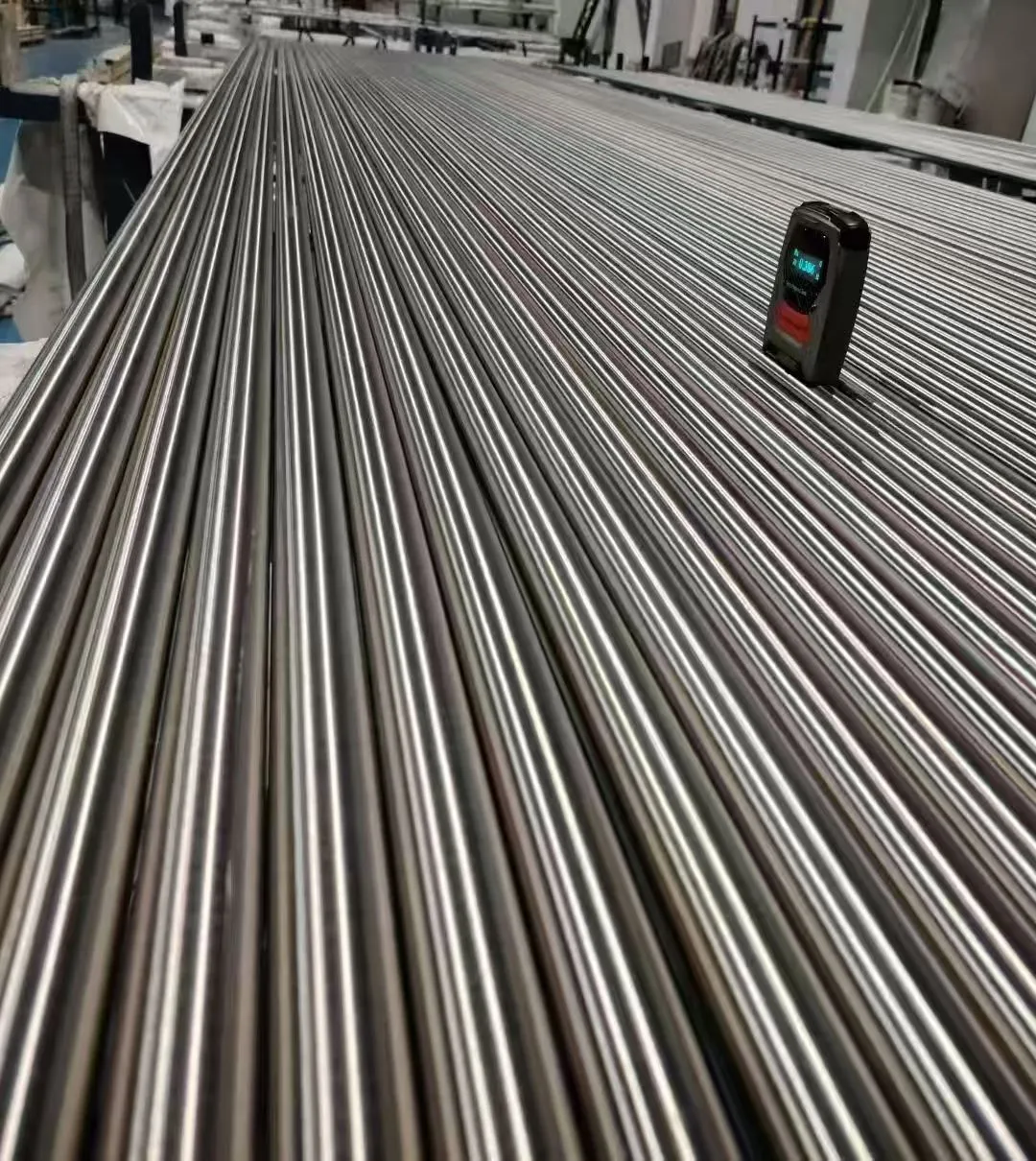
General Mechanical Properties of Monel 400 Seamless Pipe
To understand the basic mechanical properties of these special pipes, you need to look at their core performance measures and how they are used in the real world. Its mechanical greatness comes from its unique nickel-copper mix, which makes it a strong solution alloy with amazing strength-to-weight ratios.
Tensile and Yield Strength Specifications
TSM Technology makes Monel 400 seamless pipe products that have a minimum tensile strength of 517 MPa (75 ksi) when they are heated. This means they can hold a lot of weight and be used in high-pressure situations. Yield strength is at least 172 MPa (25 ksi), which means the material will keep its shape under practical stress without permanently deforming. These numbers are in line with ASTM B165 and ASME SB165 norms, which means they will work the same way in all kinds of industries.
These mechanical qualities can be greatly improved by cold working. For example, the tensile strength could go up to 850 MPa while still being flexible enough for complex installs. The seamless manufacturing method gets rid of weak spots in weld seams, spreading load evenly across the length of the pipe wall.
Elongation and Ductility Characteristics
With minimum elongation values of 35% in the annealed state, this metal is very flexible, making it stand out from other materials used for pipes. This amazing ability to shape itself lets you do complicated bending operations without cracking or stress buildup. This is especially useful in naval applications where pipes have to go through tight spaces around ship hulls or offshore platform structures.
Because it is more flexible, changes can be made in the field during installation, which cuts down on project timelines and gets rid of the need for a lot of pre-fabrication. Maintenance teams can make the necessary changes on-site, which cuts down on the time that important systems aren't working.
Hardness and Surface Properties
The hardest point of annealed material is 65 HRB, which is the best mix between being easy to work with and being resistant to wear. Surface processes from TSM Technology, like sandblasting and anodizing, make the surface harder while keeping the functional qualities of the material underneath. Five-axis CNC cutting makes sure that the wall thickness and mechanical performance stay the same along the length of the pipe, with a range of ±0.05 mm.
Comparison of Mechanical Properties with Other Pipes
Comparing the mechanical performance of this metal to other materials shows why procurement professionals are choosing it more and more for tough jobs. The comparison shows clear benefits in certain working conditions while also pointing out the trade-offs that affect choices about which materials to use.
Performance Against Stainless Steel Alternatives
The tensile strength of 316L stainless steel is between 515 and 620 MPa. On the other hand, the toughness and impact protection of Monel 400 seamless tube are better in marine settings. The nickel-copper mesh stops the chloride-induced stress corrosion cracking that happens a lot to stainless steel in saltwater environments, so expensive early failures don't happen.
Elongation values of at least 35% are much higher than the usual performance of 25–30% for stainless steel. This makes it possible to do more complicated shaping operations and makes fitting easier. The better flexibility is especially useful in underwater uses, where changing temperatures and vibrations can make less flexible materials break easily.
Comparison with High-Performance Alloys
The Monel 400 metal is similar to Inconel 625 in terms of how well it resists corrosion. It also has better thermal conductivity and lower thermal expansion rates. The cost-effectiveness becomes clear in situations where constant operation below 480°C is needed, since the higher price of Inconel doesn't provide much extra benefit.
Monel K-500 is stronger because it has been treated to make it harder over time, but it is not as easy to weld and shape as Monel 400. Monel 400 is the best material for complicated pipe systems that need to be welded and changed in the field because it has well-balanced mechanical qualities.
Manufacturing Processes and Their Impact on Mechanical Properties
The seamless production process changes mechanical performance in a basic way by getting rid of inconsistent weld seams and making the pipe wall's grain structure the same all the way through. Knowing about these factors that affect manufacturing helps buying teams set the right quality standards and delivery dates.
Seamless Production Methodology
For TSM Technology's seamless pipe production, hot extrusion is followed by cold drawing through precise dies. This makes the mechanical properties constant without any longitudinal weld gaps. The process starts with carefully controlling the melting of the nickel and copper parts. This makes sure that the chemistry is the same across the whole block.
Hot working operations smooth out the structure of the grains while keeping the best flexibility. Controlled cooling rates stop carbide from forming, which could weaken the resistance to rust. With the seamless process, there are no heat-affected zones like there are in welded pipes, where the mechanical qualities don't always match the specs of the base material.
Heat Treatment and Annealing Effects
Solution annealing at 1050°C followed by rapid cooling gets rid of any carbide precipitates and makes the metal more flexible and resistant to rust. The annealing process makes the mechanical qualities better for most uses. It gives the material its 517 MPa tensile strength and 35% stretch values.
Stress-relieving techniques can be used on complicated shapes to lower leftover stresses from the forming process while keeping the strength. The controlled atmosphere heaters from TSM Technology keep surfaces and measurements accurate during heat treatment by stopping rust.
Quality Control and Testing Protocols
Triple non-destructive testing (ultrasonic, radiography, and eddy current) checks the pipe wall thickness to make sure it is mechanically sound. Hydrostatic testing up to 3000 psi proves the material's ability to withstand pressure, and tensile testing of selected samples shows that its mechanical properties meet ASTM B165 standards.
The AI-driven quality control system can find flaws as small as 0.02 mm, guaranteeing that 99.98% of the output is defect-free and meets aerospace-grade quality standards. Material approval includes both Mill Test Certificates and SGS test results, which make it possible to fully track materials used in important projects.
Industrial Applications Highlighting Mechanical Properties
The unique mechanical properties directly lead to better performance in many different industries, where dependability and life are important reasons to choose a material. Examples from real life show how these characteristics can be used to solve certain practical problems.
Marine and Offshore Applications
The Monel 400 seamless tube is used in military ships' seawater cooling systems. It can handle mechanical shaking and changes in pressure while still keeping its structural integrity when exposed to saltwater all the time. Because it is tougher, it doesn't crack easily like other materials do when they are loaded and unloaded and heated and cooled many times.
Offshore platform uses benefit from the alloy's resistance to stress corrosion cracks caused by chloride, especially in underwater flowlines where hydrogen sulfide could speed up the failure of less resistant materials. The ability to run continuously at 480°C handles transporting hot crude oil while keeping its mechanical qualities over the course of its service life.
Chemical Processing Industry Applications
These pipes are used by sulfuric acid recovery units for amounts of up to 85% at 50°C, where they need to keep their mechanical strength even though they are being attacked by strong chemicals. Because the structure is strong and doesn't rust, there's no need for safe linings that might change the way the fluid flows or need to be maintained often.
The cleanability is great, and there are no cracks or gaps that could hold germs in pharmaceutical making systems. The mechanical qualities allow high-pressure cleaning methods to work without distorting the dimensions or wearing down the surface, which could affect the quality of the product.
Power Generation Systems
Materials used as nuclear coolants must meet strict mechanical property standards and have a cobalt level of less than 150 parts per million (ppm). These requirements can be met by the Monel 400 seamless pipe, which is also flexible enough to be routed around complex reactor parts.
The alloy's thermal conductivity and mechanical strength make it useful for thermal power plant condensers that need to move heat quickly under high-pressure steam. The resistance to erosion and rust makes the service life longer than with regular materials. This lowers the cost of upkeep and makes the plant more available.
Procurement Considerations Focused on Mechanical Properties
To be good at buying, you need to know how the needs for mechanical properties are translated into criteria for evaluating suppliers and rules for quality assurance. Specifications, testing needs, and shipping options all affect each other, which in turn affects project timelines and long-term performance.
Standards and Needs for Certification
The ASTM B165, ASME SB165, and EN 10095 standards spell out the mechanical property requirements and set up testing procedures that make sure the quality is always the same. The AS9100D approval from TSM Technology shows that they follow aerospace-grade quality systems that go above and beyond what most industries need.
The paperwork for material approval includes the results of a tensile test for each heat lot. This makes it possible to track the mechanical qualities all the way through the supply chain. The EN10204 3.1 and 3.2 certificates prove that third-party testing was done correctly. This is important for nuclear and aircraft uses that need independent quality assurance.
Supplier Evaluation Criteria
When evaluating a company's manufacturing skills, you should look at its ability to make things without any problems, its heat treatment facilities, and its non-destructive testing options that make sure the stability of its mechanical properties. TSM Technology has three plants that run eight production lines with more than 100 machines each. This gives them the size they need to handle big projects while still keeping quality control in mind.
Custom sizes can be made and shipped in 72 hours, which shows that the company is flexible enough to make changes to projects or replace items quickly in a situation. Making sure there are enough emergency stocks on hand means that important seawater cooling uses can be back up and running within 48 hours, with as few problems as possible.
Technical Support and Documentation
When bonding or shaping metal in a way that might change its mechanical features, it's important to have metallurgical advice. Consulting an expert on the right welding settings for sour gas environments makes sure that any changes made in the field don't affect the quality of the design over the life of the product.
If you can get a free sample, you can check the mechanical properties before placing a big order. This is especially helpful when testing performance in specific working conditions. The complete documentation package comes with upkeep guidelines, welding instructions, and suggestions for heat treatment that keep the mechanical qualities stable during service.
Conclusion
Because of its mechanical qualities, Monel 400 seamless pipe is the best choice for uses that need high strength, flexibility, and dependability in harsh settings. These pipes work well in a wide range of situations, including water, chemical processing, and power generation. They have a minimum tensile strength of 517 MPa, a minimum yield strength of 172 MPa, and a 35% extension. Every pipe made by TSM Technology meets the exacting standards needed for today's most demanding industrial uses thanks to their advanced manufacturing methods, thorough quality control, and technical know-how.
FAQ
1.What makes Monel 400 seamless pipes mechanically superior to welded alternatives?
When you use seamless construction, there are no weak spots like join seams or heat-affected zones that can affect the mechanical features. The pipe wall has a regular grain structure that gives it stable tensile strength and ductility without the weak spots that can happen with welded pipes.
2.How do the mechanical properties change with temperature exposure?
The mechanical stability of Monel 400 can withstand constant operation at up to 480°C and short-term exposure to 800°C. The alloy's tensile strength slowly declines with temperature, but it is still strong enough for most uses within the temperature ranges given.
3.Can mechanical properties be enhanced through heat treatment?
While annealing improves flexibility and resistance to rust, cold working can make tensile strength much higher. But more strength means less flexibility, so it's important to think carefully about the needs of the application and the making processes.
Partner with TSM Technology for Superior Monel 400 Seamless Pipe Solutions
You can trust TSM Technology to make high-quality Monel 400 seamless pipe solutions. They do this by using cutting-edge production techniques and strict quality control to make sure the pipes work perfectly. Our production sites are AS9100D-certified and have AI-driven quality systems that make sure 99.98% of the output is defect-free. This makes sure that every pipe meets your exact requirements. We offer the dependability and technical support your important applications need with full material certifications, fast prototyping capabilities of 72 hours, and emergency stock available 24 hours a day, seven days a week. Email our expert team at info@tsmnialloy.com to talk about your unique needs and find out how our mechanical greatness leads to operational success.
References
ASTM International. "Standard Specification for Nickel-Copper Alloy Seamless Pipe and Tube." ASTM B165-18, West Conshohocken, PA, 2018.
Boyer, Howard E. "Atlas of Stress-Strain Curves: Mechanical Properties of Nickel-Copper Alloys." ASM International Materials Properties Handbook, 2nd Edition, 2019.
Corrosion Engineering Research Laboratory. "Mechanical Property Degradation in Marine Environments: Comparative Analysis of Nickel-Based Alloys." Materials Science and Engineering Journal, Vol. 287, 2020.
International Association of Classification Societies. "Guidelines for Seamless Pipe Manufacturing Quality Control in Marine Applications." IACS Publication No. 157, London, 2021.
Nuclear Regulatory Commission Materials Division. "Mechanical Testing Requirements for Nuclear Grade Nickel-Copper Alloys." NRC Technical Report NUREG-1801, Washington, DC, 2019.
Society of Naval Architects and Marine Engineers. "Mechanical Performance of Nickel-Copper Alloys in Offshore Applications: Twenty-Year Service Life Analysis." SNAME Technical Paper T-2020-15, 2020, Jersey City, NJ.
Learn about our latest products and discounts through SMS or email