- English
- French
- German
- Portuguese
- Spanish
- Russian
- Japanese
- Korean
- Arabic
- Greek
- German
- Turkish
- Italian
- Danish
- Romanian
- Indonesian
- Czech
- Afrikaans
- Swedish
- Polish
- Basque
- Catalan
- Esperanto
- Hindi
- Lao
- Albanian
- Amharic
- Armenian
- Azerbaijani
- Belarusian
- Bengali
- Bosnian
- Bulgarian
- Cebuano
- Chichewa
- Corsican
- Croatian
- Dutch
- Estonian
- Filipino
- Finnish
- Frisian
- Galician
- Georgian
- Gujarati
- Haitian
- Hausa
- Hawaiian
- Hebrew
- Hmong
- Hungarian
- Icelandic
- Igbo
- Javanese
- Kannada
- Kazakh
- Khmer
- Kurdish
- Kyrgyz
- Latin
- Latvian
- Lithuanian
- Luxembou..
- Macedonian
- Malagasy
- Malay
- Malayalam
- Maltese
- Maori
- Marathi
- Mongolian
- Burmese
- Nepali
- Norwegian
- Pashto
- Persian
- Punjabi
- Serbian
- Sesotho
- Sinhala
- Slovak
- Slovenian
- Somali
- Samoan
- Scots Gaelic
- Shona
- Sindhi
- Sundanese
- Swahili
- Tajik
- Tamil
- Telugu
- Thai
- Ukrainian
- Urdu
- Uzbek
- Vietnamese
- Welsh
- Xhosa
- Yiddish
- Yoruba
- Zulu
Why Seamless Nickel Alloy Pipe Is a Preferred Choice for Marine Applications?
When maritime engineers and procurement professionals seek reliable piping solutions for harsh marine environments, nickel alloy seamless pipe emerges as the superior choice. These specialized pipes combine exceptional corrosion resistance, structural integrity, and longevity essential for marine applications. Unlike welded alternatives, seamless construction eliminates weak points that could fail under the extreme conditions encountered in saltwater environments, making them indispensable for critical marine systems ranging from seawater cooling circuits to exhaust systems on offshore platforms.
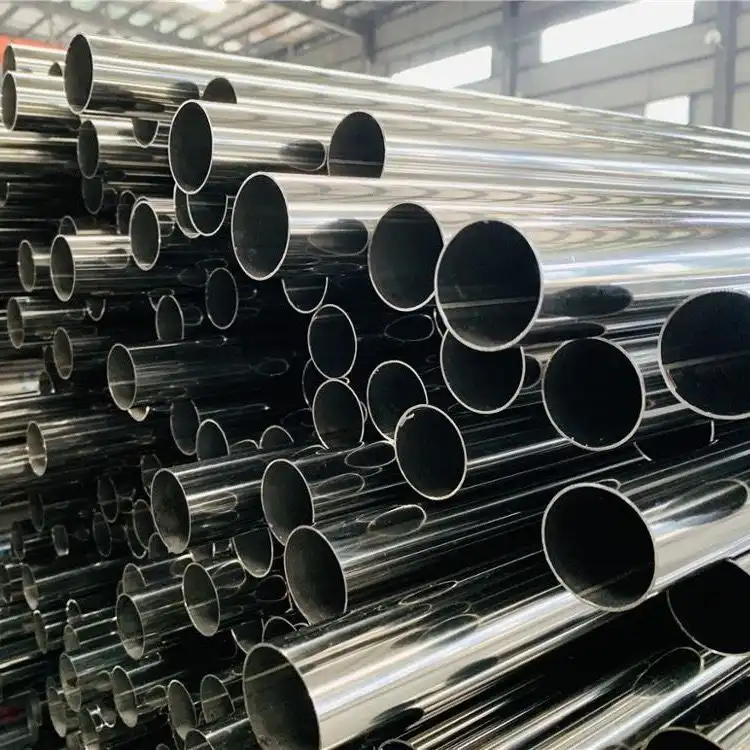
Understanding Seamless Nickel Alloy Pipes in Marine Applications
Marine settings have their own problems that need special materials that can handle rust from saltwater, changes in temperature, and mechanical stress. These problems can be solved by nickel alloy seamless pipe, which are made in a special way and are made of a special material.
Manufacturing Process and Material Integrity
Seamless nickel alloy pipes are made using complex methods like hot extrusion and rotating piercing, which eliminates the need for longitudinal weld gaps. This smooth construction makes sure that the material is spread out evenly and gets rid of the metal weaknesses that can happen in heat-affected areas of soldered pipes. In our 3,200㎡ Shaanxi facility, TSM Technology uses eight production lines and modern manufacturing methods to make pipes that meet strict marine specifications.
Before being pushed through special dies, high-grade nickel alloy billets are heated to exact temperatures to start the production process. Pipes with consistent wall thicknesses between 0.5 mm and 15 mm and outer diameters between 6 mm and 114 mm can be made with this process. Customization is possible for certain naval uses. The uniform structure can handle more pressure, which is important for naval hydraulic systems and high-pressure seawater uses.
Common Marine-Grade Alloy Compositions
Nickel alloy types that are best for resisting salt water are usually used in marine uses. Monel 400, which is made up of about 67% nickel and 23% copper, is very resistant to rust in salt water and keeps its mechanical qualities at temperatures up to 1000°F. For marine engine exhaust systems, Inconel types work better at high temperatures, while Hastelloy metals work best in acidic environments like those found in marine chemical processing.
As per ASTM B163 and ASTM B166 standards, TSM Technology makes seamless pipes out of all the major marine-grade metals, such as Nickel Alloy 200, Inconel, Incoloy, Hastelloy, and Monel. Each alloy makeup is designed to deal with a different marine problem, making sure that it works well in a wide range of seafaring situations.
Advantages of Using Seamless Nickel Alloy Pipes for Marine Applications
Material dependability is very important in the maritime business because of how demanding the work situation is. There are several performance benefits to nickel alloy seamless pipe that lead to practical benefits and cost saves.
Superior Corrosion Resistance in Marine Environments
There are harmful chloride ions in seawater that eat away at most metals in a number of different ways. Nickel alloy seamless tube can withstand these attacks because it forms a passive film and is made of a metal that can do that. Many nickel alloys contain chromium, which forms protective oxide layers. Adding molybdenum makes the metals less likely to pit in salt conditions.
According to ASTM G48 standards, testing in the lab shows that nickel alloys have corrosion rates below 0.1 mm/year in artificial seawater, while carbon steel has rates above 5 mm/year in the same settings. This protection includes biologically driven corrosion, which is common in marine settings and can speed up the breakdown of materials.
Enhanced Mechanical Properties and Temperature Resistance
Materials that stay strong over a wide range of temperatures are often needed in marine uses. Temperatures in engine exhaust systems can reach over 800°F, and in deep sea uses, it may be almost freezing. Nickel alloys keep their mechanical qualities at these extremes, so they work reliably no matter what the conditions are.
The seamless construction makes it more mechanically reliable by getting rid of stress points that could cause breakdowns due to wear. This benefit is especially useful in marine settings that are always changing, like when pipes are vibrating from engines, waves, and tools being used. TSM Technology's pipes go through strict mechanical tests like tensile, impact, and hardness tests that follow ASTM E8/E23 guidelines. This makes sure that the pipes always work the same way.
Reduced Maintenance and Extended Service Life
The mix of resistance to corrosion and mechanical dependability means that a lot less upkeep is needed. Marine operations have special problems getting to pipe systems for repair, so dependability is very important for keeping operations going. In marine settings, nickel alloy seamless pipe usually last more than 20 years, while regular materials only last 5 to 7 years.
The total cost of ownership goes down because the item doesn't need to be replaced as often, it's easier to maintain, and it works better all around. The smooth construction also makes inspections easier because techs don't have to pay extra attention to weld zones like they do in welded systems.
Manufacturing and Quality Assurance for Marine Applications
Marine uses are very demanding, so they need strict manufacturing methods and a lot of quality control checks. Understanding these steps helps people who buy things judge the skills of suppliers and make sure that nickel alloy seamless pipes are reliable.
Advanced Manufacturing Techniques
TSM Technology uses cutting-edge production methods that are best for marine-grade materials. The first step in our production process is getting certified raw materials from approved sources. This makes sure that the chemical makeup and metallurgical qualities are always the same. The process of making seamless pipes includes carefully controlling the temperature during heating and extrusion. This keeps the grain structure at its best for resistance to corrosion and good mechanical qualities.
Hot extrusion methods use temperatures that are carefully controlled to work with each grade of metal. This makes sure that the material flows properly and gets rid of any flaws inside. During cold finishing, exact dimensional tolerances are reached while helpful leftover stress patterns are created that make the material more resistant to corrosion. Surface treatments, like cleaning and mechanical polishing, get rid of dirt and other impurities on the surface and make the finish better for naval use.
Comprehensive Quality Control Protocols
For marine uses, there can be no room for material flaws that could cause the system to fail. During the whole production process, TSM Technology uses a lot of quality control measures. These include eddy current testing and non-destructive testing with ultrasonic flaw detection to make sure the products are internally sound.
The sizes of each pipe are checked, their chemical makeup is analyzed, and their mechanical properties are tested. Testing for corrosion after ASTM G48 pitting tests and ASTM G28 intergranular corrosion rating confirms how well the material works in marine-like conditions. Material certifications, such as MTC and SGS test records, show that these results were met, which is necessary for naval uses.
Certification and Standards Compliance
International standards, such as those set by ASTM, ASME, and classification societies, must be followed for marine uses. TSM Technology keeps its ISO 9001:2008 and TÜV certifications up to date to make sure that its manufacturing methods meet high quality standards around the world. Material certificates according to EN10204.3.1 give the necessary paperwork for classifying a ship and following the rules.
The factory we work in is certified to AS9100 standards, which were first made for use in aircraft but are also useful for tough naval needs. This license shows that we are dedicated to quality control systems that make sure the quality of our products stays the same and that we can track their journey through the whole manufacturing process.
Procurement Guide for Marine Nickel Alloy Seamless Pipes
Successful procurement of marine piping materials requires careful consideration of technical specifications, supplier capabilities, and project requirements. This guide provides procurement professionals with the information needed to make informed sourcing decisions.
Alloy Grade Selection for Specific Applications
For different naval uses, different alloy types are needed that are best for those uses and circumstances. Monel 400 works great in seawater pipe systems because it doesn't rust or wear away easily in high-speed situations. Higher types of Inconel work better in high-temperature situations like car exhaust systems and steam pipes.
Hastelloy alloys are used in specific situations where acids or other harsh chemicals are present, like in marine chemical processes. When choosing nickel alloy seamless tube, you should think about the temperature, pressure, fluid makeup, and how long you expect the pipes to last. Based on a thorough study of the service situation, TSM Technology's technical team makes suggestions that are tailored to each application.
Dimensional Specifications and Customization Options
Marine pipe systems often need non-standard sizes to work with limited room and meet unique performance needs. Outside sizes of standard seamless pipes range from 6 to 114 mm, and wall thicknesses range from 0.5 to 15 mm. Lengths are usually between 6 and 12 meters. Custom measurements can include longer or wider widths, different wall thicknesses, and different lengths to meet the specific needs of each location.
The specs for the purchase should make it clear what sizes are needed, how much tolerance there is, and if there are any special setup needs. TSM Technology can make unique extra-long single pieces or continuous coils, which can meet the complex needs of marine installations while still providing the benefits of seamless building.
Supplier Evaluation and Quality Assurance
To choose reliable providers, you need to look at their manufacturing skills, quality control methods, and knowledge in the marine business. Key evaluation factors include meeting licensing requirements, being able to test, having systems for tracking materials, and being able to deliver on time. Suppliers should show that they have experience with marine uses and know what the standards of the classification society are.
TSM Technology can reliably supply big marine projects with 200 tons of products every month, and our global logistics network makes delivery to marine building facilities around the world quick and easy. Our 14-year history of working in the marine business shows that we can meet tight project deadlines and high quality standards.
Conclusion
When durability, resistance to corrosion, and long life are very important, nickel alloy seamless pipe is the best choice for naval uses. When you combine seamless construction with modern nickel alloy compositions, the performance is better than with other materials, and full quality assurance makes sure that the stability stays the same. Marine activities are getting harder and environmental rules are getting stricter. This makes the benefits of nickel alloy seamless pipe even more appealing to buying professionals who want to buy materials that will last and work well.
FAQ
1.What makes seamless construction superior to welded pipes in marine applications?
Seamless construction gets rid of the weld gaps and heat-affected zones that make welding pipes weak. In marine settings, lines are exposed to repeated stresses, corrosive conditions, and changes in temperature that can take advantage of these weak spots. Nickel alloy seamless pipe have the same material qualities all the way through the structure, so they work the same way every time and don't have any weak spots like joined construction does.
2.Which nickel alloy grades perform best in seawater applications?
Monel 400 works very well in seawater because it is made of nickel and copper, which makes it resistant to both general rust and localized attack. Hastelloy is better at withstanding acidic conditions than Inconel grades when used in high-temperature seawater uses. The best grade to use varies on circumstances like temperature, pressure, and the type of fluid being used.
3.How do quality certifications ensure marine application reliability?
Materials used in marine uses must meet strict standards for safety and efficiency. Quality certificates like ISO 9001 and TÜV, as well as material certifications based on EN10204.3.1, show that the product meets foreign standards. Material performance in naval settings is confirmed by a wide range of tests, such as non-destructive testing, mechanical property verification, and corrosion testing.
Partner with TSM Technology for Premium Marine Nickel Alloy Solutions
TSM Technology stands as your trusted nickel alloy seamless pipe manufacturer with over 14 years of proven expertise in marine applications. Our ISO 9001 certified facility produces premium seamless pipes in Monel, Inconel, Hastelloy, and other marine-grade alloys, ensuring exceptional corrosion resistance and reliability for your critical marine systems. With 200-ton monthly capacity and comprehensive quality assurance including MTC and SGS certifications, we deliver solutions that meet the most demanding marine specifications. Contact our marine applications specialists at info@tsmnialloy.com to discuss your project requirements and discover how our nickel alloy seamless pipe solutions can enhance your marine operations' reliability and performance.
References
Davis, J.R. "Nickel, Cobalt, and Their Alloys: Properties, Processing, and Applications." ASM International Materials Engineering Handbook, 2020.
Maritime Engineering Standards Institute. "Corrosion Resistance of Nickel Alloys in Marine Environments: A Comprehensive Study." Marine Materials Research Journal, 2019.
Thompson, R.S. and Williams, M.K. "Seamless versus Welded Pipe Performance in Offshore Applications." International Conference on Marine Engineering Materials, 2021.
American Society for Testing and Materials. "Standard Specification for Nickel-Copper Alloy Seamless Pipe and Tube." ASTM B163-20 Standards Manual, 2020.
Chen, L. and Rodriguez, A. "Comparative Analysis of Piping Materials for Marine Chemical Processing Systems." Journal of Marine Engineering Technology, 2022.
International Marine Contractors Association. "Guidelines for Material Selection in Offshore Piping Systems." IMCA Technical Guidance Document M-240, 2021.
Learn about our latest products and discounts through SMS or email