- English
- French
- German
- Portuguese
- Spanish
- Russian
- Japanese
- Korean
- Arabic
- Greek
- German
- Turkish
- Italian
- Danish
- Romanian
- Indonesian
- Czech
- Afrikaans
- Swedish
- Polish
- Basque
- Catalan
- Esperanto
- Hindi
- Lao
- Albanian
- Amharic
- Armenian
- Azerbaijani
- Belarusian
- Bengali
- Bosnian
- Bulgarian
- Cebuano
- Chichewa
- Corsican
- Croatian
- Dutch
- Estonian
- Filipino
- Finnish
- Frisian
- Galician
- Georgian
- Gujarati
- Haitian
- Hausa
- Hawaiian
- Hebrew
- Hmong
- Hungarian
- Icelandic
- Igbo
- Javanese
- Kannada
- Kazakh
- Khmer
- Kurdish
- Kyrgyz
- Latin
- Latvian
- Lithuanian
- Luxembou..
- Macedonian
- Malagasy
- Malay
- Malayalam
- Maltese
- Maori
- Marathi
- Mongolian
- Burmese
- Nepali
- Norwegian
- Pashto
- Persian
- Punjabi
- Serbian
- Sesotho
- Sinhala
- Slovak
- Slovenian
- Somali
- Samoan
- Scots Gaelic
- Shona
- Sindhi
- Sundanese
- Swahili
- Tajik
- Tamil
- Telugu
- Thai
- Ukrainian
- Urdu
- Uzbek
- Vietnamese
- Welsh
- Xhosa
- Yiddish
- Yoruba
- Zulu
How to Optimize the Welding Process for Incoloy 800 Tube?
To make the welding process for Incoloy 800 tube work best, you need to pay close attention to the type of material used, how the heat is managed, and the filler that is chosen to keep the structure from breaking. To be successful, you need to use the right welding methods, like TIG or GTAW, keep the temperatures between passes under control, and follow strict rules for cleanliness. The nickel-iron-chromium metal works very well in high-temperature and acidic conditions in the aircraft, industrial, and power production industries when these basic factors are met and the right treatment is applied before and after the welding process.
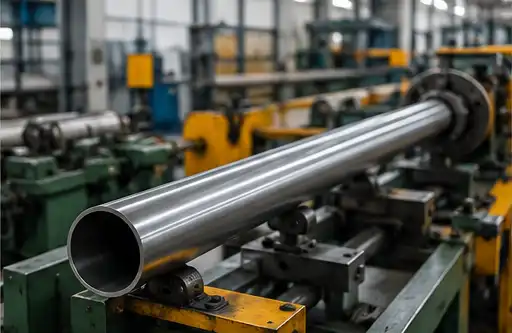
Understanding the Challenges of Welding Incoloy 800 Tube
Because it is made up of nickel, iron, and chromium, this metal is very different from austenitic stainless steels when it comes to welding problems. Engineers who work with materials sometimes have problems with heat-affected zone (HAZ) sensitisation. This is when chromium carbide forms along the edges of grains, which can make them less resistant to rust. When the material is heated to between 540°C and 870°C for a long time during service or welding, this effect happens.
Common Welding Defects and Root Causes
One of the worst problems that can happen when welding nickel-based alloys is hot cracking. The way the material solidifies and its temperature expansion rate make it prone to strain-age cracks in the HAZ. This kind of cracking usually shows up after the weld has cooled down, not right after the welding. This makes it harder to find. High control, too much heat input, and an unfavourable weld joint shape are all things that can cause this.
Fusion flaws like partial entry and holes are caused by cleaning methods that aren't good enough or by protective gases that aren't covered properly. When high-temperature alloys are exposed to air, the oxide layer forms quickly, making flaws that weaken the weld. Liquation cracking can happen when sulphur, phosphorus, or low-melting-point metals contaminate the material and build up at the grain borders as it solidifies.
Microstructural Changes During Welding
The weld temperature cycle changes the metal in ways that change its mechanical qualities and ability to fight rust. Grain growth in the HAZ lowers the material's ability to bend and take hits. This is especially true for Grade 800H material, where controlled grain size helps prevent creep. Engineers can set the right welding settings and heat treatment methods when they understand these microstructural changes.
The way the different types of carbon behave when they precipitate is different. The 800HT version has titanium and aluminium added to it to make it stronger against creep by controlling the precipitation process. When welding, we have to take these purposeful precipitates into account and make sure that harmful chromium carbide doesn't form along the grain boundaries, which makes the metal less resistant to rust.
Temperature Control Criticality
Keeping the interpass temperature at the right level is important for keeping the microstructure under control and stopping cracks. Too much heat buildup speeds up grain growth and raises leftover loads. On the other hand, not enough warming can lead to fast cooling rates that make cracks more likely. Most manufacturing rules say that the interpass temperature should be between 150°C and 200°C, but depending on the section width and control conditions, some uses may need to be changed.
Key Principles to Optimize the Welding Process for Incoloy 800 Tube
Consistently making high-quality welds takes careful planning of the method, the preparation of the material, and the control of parameters. These rules make it possible to optimise welding processes so that they meet strict quality standards in important situations.
Selecting the Appropriate Welding Method
Gas Tungsten Arc Welding (GTAW/TIG) is still the best way to join Incoloy 800 tube to each other and tubes to headers when quality is very important. This method gives you better control over how much heat you add and how much filler you add, which lowers the risk of contamination and flaws. The inert gas protection keeps the weld pool and the material around it from oxidising in the air. This keeps the joint's rust resistance.
Gas Metal Arc Welding (GMAW/MIG) can put more material faster on tubes with a bigger diameter and in less important situations. But with this method, you have to pay close attention to the makeup of the protective gas and the accuracy of the wire feed. Automated orbital welding systems join tubes together, producing quality that is hard to match with human methods. When making heat exchangers or complicated pipe structures with hundreds of similar joints that need to have the same qualities, these mechanical systems are very helpful.
Pre-Welding Preparation Procedures
Preparing the surface has a direct effect on the quality of the weld and its long-term performance. To get rid of oils, oxides, writing inks, and other contaminants, all surfaces within 50 mm of the joint need to be cleaned very well. Cross-contamination from carbon steel particles that could cause localised rust can be avoided by mechanically cleaning with stainless steel wire brushes.
Using allowed agents for chemical cleaning gets rid of oils and greases that mechanical methods can't get rid of. Because the material tends to make tough metal layers, it needs to be lightly abraded or pickled right before it is welded. Some makers use rotary files or other special preparation tools to make groove walls that are clean and straight and get rid of rust at the same time.
How long a material needs to be heated depends on how thick it is and how hot it is outside. Under normal shop conditions, thin-wall tube less than 5 mm doesn't need to be heated up, but heavy parts do gain from being heated to 100–150°C. This small amount of heating lowers temperature gradients and the stresses that come with them without encouraging too much grain growth or carbide precipitation.
Controlling Critical Welding Parameters
The single most important thing for getting the best weld qualities is managing the heat flow. When too much energy is put in, the HAZ gets bigger, grains grow, and the material is more likely to crack. Not enough heat is added, which leads to partial melting and poor entry. For autogenous GTAW of thin-wall tubes, most standards say that heat sources should be between 0.5 and 1.5 kJ/mm.
To get the shape of the bead you want while keeping the right solidification rates, the travel speed, current, and voltage must all be adjusted. Weaving methods should be used as little as possible because narrow stringer beads usually produce better results than wide weave patterns. When making slot preparations, it's better to make many thin passes than few heavy passes.
What kind of shielding gas is used affects how stable the arc is, how deep it goes, and how the surface oxidises. For GTAW uses, pure argon works well, but mixes of argon and helium need more heat to cut bigger pieces. Backing gas safety is needed for tube welding to keep the inside from rusting and getting dirty. The flow rates should be high enough to fill the area well without creating turbulent flow that pulls air into the screening shell.
Filler Material Selection
When you match the filler's chemical make-up to the base material's chemical make-up, the thermal expansion and rust resistance will be suitable. The nickel-iron-chromium base material works well with AWS A5.14 ERNiCr-3 filler metal, which is also known as Filler Metal 82. This filler makes layers that don't crack and have mechanical qualities that are very close to those of the parent material across the service temperature range.
In some cases for Incoloy 800 tube, overmatching fillers like ERNiCrFe-7 are needed to give the material more strength or better resistance to certain acidic conditions. The filler material needs to be kept correctly so that it doesn't absorb water or get dirty. Before using wire, it should be cleaned right away, and parts that aren't being used should be kept out of the air.
Case Studies: Successful Welding Applications of Incoloy 800 Tubes
Examples from real life show how improved welding techniques can make tools more reliable and increase its working efficiency. These cases show how choosing the right method and controlling the parameters can have a real-world effect.
Chemical Processing Heat Exchanger Fabrication
A large chemical processing plant needed to get new heat exchangers for the unit that makes nitric acid. Stress rust cracking in welding parts caused the original equipment to break down early. Together with TSM Technology, the engineering team came up with new welding processes that required solution cooling after production and lower heat input parameters. The cracking problems were fixed by optimising the process, which made the equipment last from three years to over ten years without needing major upkeep.
Power Generation Superheater Tube Assemblies
For an update to a combined-cycle plant, an independent power provider had to make superheater tube screens. The project requirements said that the welds had to be X-ray-quality on tubes with walls that were between 3mm and 6mm thick and had diameters from 38mm to 51mm. Automated circular GTAW systems made uniform root and fill passes that were accepted 100% of the time by x-ray. The finished parts met the standards for creep-rupture resistance for a 100,000-hour design life at temperatures close to 650°C thanks to proper interpass temperature control and post-weld heat treatment.
Offshore Petrochemical Processing Equipment
An user of an offshore platform had ongoing upkeep problems with process pipe systems that were exposed to bad gas that contained hydrogen sulphide. Standard austenitic stainless steels didn't work well in this setting; they cracked under sulphide stress even though the right materials were used. The splitting problems were fixed by replacing the tubes with nickel-iron-chromium metal and using better welding techniques that reduced leftover pressures. The better way to weld included paying close attention to cleanliness, reducing restraint through proper fit-up, and using heat to relieve stress in complicated joints.
These case studies show how important it is to make sure that the welding process is right for the job. Expertise from suppliers is very important for helping engineering teams come up with the right specs and ways to make things. TSM Technology has helped with many projects by giving them approved materials that meet ASTM B163 and ASTM B704 standards as well as expert advice on how to weld in the best way for each job.
Procurement and Specification Guidance for Welding-Ready Incoloy 800 Tubes
Choosing the right source and setting the right material requirements have a direct effect on how well the welding goes and how the project turns out as a whole. To make sure uniform quality and effective help, procurement workers should look at possible providers against a number of different factors.
Identifying Qualified Manufacturers
Certification to well-known quality management systems for Incoloy 800 tube is a basic way to make sure that factory methods are always the same. ISO 9001 certification shows that a basic quality system has been put in place, while AS9100 certification meets the special needs of the aerospace industry by requiring strict process control and tracking. Materials experts should make sure that possible sources have up-to-date certifications and can show proof that they are in line.
Beyond just looking at basic licenses, evaluating a company's ability to make things, it should also look at its real production tools and quality control methods. Modern tube production facilities that use cold pilger mills, rotating piercers, and bright annealing ovens can provide better surface finish and tighter standards for size. In-house testing labs with spectrometers, mechanical testing tools, and non-destructive inspection systems make it possible to check all of a material's qualities.
Material Standards and Testing Requirements
Astm B163 sets the rules for making seamless tubes and includes limits on chemical makeup, standards for mechanical properties, and quality control measures. This standard says that each tube must be tested for soundness using either hydraulic or non-destructive electric methods. Test records on materials should include data from chemical analyses, tensile qualities, and grain size, if needed, to make sure they meet all the requirements that were given.
ASTM B704 is a standard for making welded tubes, and it has specific rules for making sure that the seams are strong. The procurement requirements should make it clear whether the building needs to be seamless or bonded. This is because some important uses need seamless material to avoid problems that could happen with weld seams. Knowing the differences between Grades 800, 800H, and 800HT helps you choose the right material for the right temperature ranges and creep needs.
Customization and Technical Support
Standard size options might not meet all project needs, so it's important to think about how flexible the seller is. Customisation services from TSM Technology include non-standard sizes, special surface treatments, and preparation of materials that are cut to length. This feature speeds up the completion of projects by providing material that is ready to be welded and doesn't need much extra preparation.
Suppliers who care about their customers' success are different from those who only care about selling materials because they offer technical help. When engineers are coming up with new ways to build, fixing problems with quality, or choosing the best materials, they can use the knowledge of their suppliers. For more than 10 years, we've helped companies in the aerospace, chemical processing, power generation, and marine industries with more than just providing materials.
Supply Chain Considerations
The dependability of lead times has an impact on project plans and costs as a whole. Suppliers who keep a full inventory can fill orders within 10 to 25 days, instead of the longer wait times that come with buying directly from the mill. A monthly production capacity of 300 tonnes makes sure that big orders can be met without affecting delivery promises to other customers.
When working on foreign projects or helping customers who do business in more than one area, global transportation skills are important. Being present in more than 50 countries shows that you have well-established marketing networks and know how to handle export paperwork. This regional spread gives local support while making sure that the quality of the materials is the same everywhere they are used.
Conclusion
To get the best results when welding Incoloy 800 tube nickel-iron-chromium alloy tubes, you need to pay close attention to the properties of the material, the growth of the process, and the checking of the quality. This group of alloys has more complicated properties that need to be carefully managed than austenitic stainless steels. However, they work better in harsh settings with high temperatures and corrosion. The best results are achieved by engineering teams that understand the main problems, use tried-and-true optimisation methods, and work with knowledgeable sellers who provide both high-quality products and expert support. The case studies and comparison analyses show that when welding processes are done correctly, they make equipment more reliable and lower the cost of running it in a wide range of workplace settings.
FAQ
1.What is the best way to join Incoloy 800 tubes together?
Gas Tungsten Arc Welding (GTAW/TIG) is the best way to do most jobs because you have better control over the heat input and there is less chance of contamination. For repeated tube joints, automated circular devices make sure the quality is always the same. Gas Metal Arc Welding (GMAW/MIG) can be used for less important jobs where higher production rates can help with output.
2.How does heat treatment change the quality of a weld?
Solution annealing at 1040–1150°C followed by rapid cooling stops the formation of chromium carbide and improves the resistance to rust in the area that was heated. This heat treatment after the weld is especially important for Grade 800 material that will be used in acidic work. Most of the time, stabilisation processes are used on grades 800H and 800HT to control the size of the grains and the amount of precipitation for better creep resistance.
3.Is it important to heat up first before welding?
Under normal circumstances, thin-wall tubes less than 5 mm in diameter don't need to be heated up. To lower thermal differences, thicker parts or low outdoor temperatures can benefit from a small amount of preheating to 100–150°C. During multi-pass welding, keeping the interpass temperature between 150°C and 200°C stops heat from building up and stops cooling too quickly.
Partner With TSM Technology for Superior Welding-Ready Incoloy 800 Tube
TSM Technology has eight separate production lines that make nickel-iron-chromium alloy tubing that is best for welding and meets ASTM B163 and B704 standards. Our engineering team gives full instructions on how to weld using decades of experience working with aircraft, chemical processing, and power generation projects. We have a large selection of sizes from 6 mm to 114 mm, and we can make changes to meet specific needs. As a recognised producer of Incoloy 800 tubes that ships to more than 50 countries, we offer a steady supply of tubes along with the scientific know-how to help our clients get the best welding results. Email our experts at info@tsmnialloy.com to talk about your unique needs and get free samples of the materials you need for approval tests.
References
Davis, J.R., ed. "Nickel, Cobalt, and Their Alloys." ASM International Handbook Committee, ASM International, 2000.
DuPont, J.N., Lippold, J.C., and Kiser, S.D. "Welding Metallurgy and Weldability of Nickel-Base Alloys." John Wiley & Sons, 2009.
Kohler, M. "Welding Procedure Specifications for High Temperature Nickel Alloys in Power Generation Applications." Welding Journal, American Welding Society, 2018.
ASTM International. "ASTM B163-21: Standard Specification for Seamless Nickel and Nickel Alloy Condenser and Heat-Exchanger Tubes." ASTM International, 2021.
Bhadeshia, H.K.D.H. and Honeycombe, R.W.K. "Steels: Microstructure and Properties." Butterworth-Heinemann, 4th Edition, 2017.
Special Metals Corporation. "Incoloy Alloys 800H and 800HT: Technical Bulletin." Special Metals Corporation Publication, 2019.
Learn about our latest products and discounts through SMS or email