- English
- French
- German
- Portuguese
- Spanish
- Russian
- Japanese
- Korean
- Arabic
- Greek
- German
- Turkish
- Italian
- Danish
- Romanian
- Indonesian
- Czech
- Afrikaans
- Swedish
- Polish
- Basque
- Catalan
- Esperanto
- Hindi
- Lao
- Albanian
- Amharic
- Armenian
- Azerbaijani
- Belarusian
- Bengali
- Bosnian
- Bulgarian
- Cebuano
- Chichewa
- Corsican
- Croatian
- Dutch
- Estonian
- Filipino
- Finnish
- Frisian
- Galician
- Georgian
- Gujarati
- Haitian
- Hausa
- Hawaiian
- Hebrew
- Hmong
- Hungarian
- Icelandic
- Igbo
- Javanese
- Kannada
- Kazakh
- Khmer
- Kurdish
- Kyrgyz
- Latin
- Latvian
- Lithuanian
- Luxembou..
- Macedonian
- Malagasy
- Malay
- Malayalam
- Maltese
- Maori
- Marathi
- Mongolian
- Burmese
- Nepali
- Norwegian
- Pashto
- Persian
- Punjabi
- Serbian
- Sesotho
- Sinhala
- Slovak
- Slovenian
- Somali
- Samoan
- Scots Gaelic
- Shona
- Sindhi
- Sundanese
- Swahili
- Tajik
- Tamil
- Telugu
- Thai
- Ukrainian
- Urdu
- Uzbek
- Vietnamese
- Welsh
- Xhosa
- Yiddish
- Yoruba
- Zulu
Using Monel 400 Plate for Splash Zone Sheathing on Offshore Rigs
Using Monel 400 plate for splash zone covering on offshore rigs is a very important engineering choice that has a big effect on how long the rigs work and how much it costs to maintain. Because seawater is always hitting the rig structure in the splash zone, it needs materials that are very strong and don't rust. For this difficult job, Monel 400 plate is the best choice because it is highly resistant to salt and lasts a very long time. The special mix of nickel and copper in this alloy makes it the best defense against the harsh sea environment that offshore activities are known for.
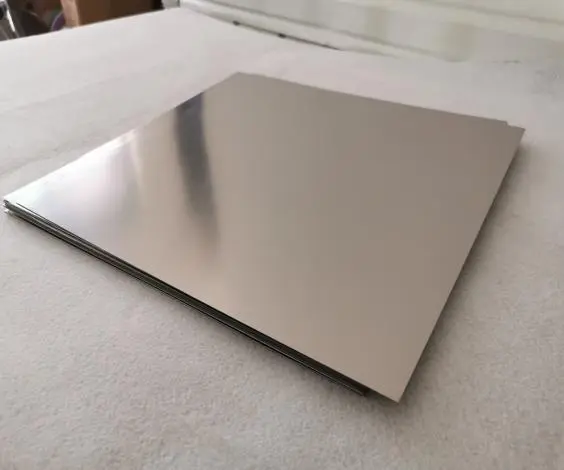
Understanding Monel 400 Plate and Its Key Properties
Understanding what makes this nickel-copper metal special is the first step in protecting splash zones that work well. Monel 400 plate is made up of about 67% nickel and 23% copper, which makes it resistant to corrosion processes that are common in coastal settings.
Chemical Composition and Material Properties
The alloy's chemical makeup makes a shield that stops chloride ions from getting through, which is what breaks down many common materials. This material has a density of 8.80 g/cm³ and a tensile strength of 550 to 650 MPa. It protects against rust and keeps structures strong. The melting point is between 1300°C and 1350°C, which makes it thermally stable in harsh situations. Its thermal conductivity of 21.8 W/m·K also makes it good at getting rid of heat during operation cycles.
With an electrical resistance of 0.547 µΩ·m, the material can be used in places where electricity is important. These features work together to make a material that stays useful at temperatures ranging from very cold to high temperatures of up to 550°C.
Mechanical Strength and Fabrication Characteristics
In addition to being resistant to rust, this nickel-copper metal is also very strong, which makes it perfect for building structures. The material is very easy to weld and shape, which are both very important when making complicated sheathing shapes for offshore rig designs. Good machinability makes it easier to cut and shape precisely during installation, and it also keeps the structure's integrity when it's loaded and unloaded.
These mechanical qualities are improved by heat treatment methods, which make the best combinations of hardness and strength for splash zone uses. The ability of the material to work-harden during forming gives it extra strength where it's needed most, like at link places and high-stress areas.
Why Monel 400 Plate Excels in Splash Zone Sheathing?
Many material choices can't be used in splash zones because they pose special problems. Monel 400 plate, with its steady pattern of submersion, emergence, and wave impact, makes for a setting where only the strongest materials can last for a long time.
Superior Performance Against Marine Corrosion
This nickel-copper alloy is better at resisting rust in saltwater than standard materials like stainless steel. 316L stainless steel may get pitting and pocket rust after being in a splash zone for a few months, but Monel 400's surface stays solid for decades. The alloy's resistance to stress corrosion cracks caused by chloride gives it extra safety against failure modes that affect other materials.
Comparative studies from North Sea platforms show that Monel 400 has corrosion rates below 0.025 mm/year in splash zone settings, which is a much better performance than other materials. This performance directly leads to less maintenance being needed and longer service gaps, which are both very important in remote operations where access problems make maintenance more expensive.
Economic Advantages Through Lifecycle Analysis
Even though the original cost of the materials is higher than those of other options, lifecycle research shows that there are big economic benefits. Having to repair things less often, needing less upkeep, and not having to deal with earlier failures are all great benefits for offshore owners. Platform managers say that switching from stainless steel to Monel 400 for splash zone uses cut upkeep costs by more than 60%.
The material's durability also lowers its effect on the environment by reducing the need for replacements and the shipping of materials to offshore areas. As regulations push for more environmentally friendly business practices, this environmental factor grows in importance.
Procurement Considerations for Monel 400 Plate in Offshore Applications
For offshore projects to go well, buying processes and seller qualification need to be carefully thought out. Because this material is so unique, you need to work with makers who have a lot of knowledge and know what marine applications need.
Supply Chain Management and Lead Times
Knowing when materials will be delivered and whether they are available is important for planning a job well, especially for Monel 400 plate. Delivery times usually run from 10 to 25 days, but they rely on how many items you order and how you want them customized. The material comes in sizes of up to 2500 mm and thicknesses of 5 to 150 mm, so it can be used for most ocean sheathing needs.
Coordinating the delivery of materials with the best times for installation is an important part of strategic planning. This is especially true for operations that take place abroad, where delays caused by bad weather can make projects last much longer. Reliable providers keep extra inventory on hand in case you need to repair something quickly, which is very important for unplanned maintenance situations.
Quality Assurance and Certification Requirements
For offshore uses, materials must be carefully certified and tracked. As required by ASTM B127, ASME SB127, and EN 10095, the material must meet all of these standards. Full material test certificates and SGS test results are proof of this. These certificates give you peace of mind about the chemical make-up, mechanical features, and manufacturing quality that are necessary for important uses.
Working with providers who have thorough quality control systems in place guarantees that the materials you buy are real and will work as expected every time. Advanced testing options, such as chemical analysis, mechanical testing, and non-destructive examination, make sure that the qualities of the material are correct before it is shipped.
Installation and Fabrication Guidance for Offshore Use
The efficiency benefits of this high-quality material are at their best when it is properly fabricated and installed. By understanding the alloy's properties, fitting methods can be made more effective and the product's performance can be improved over time.
Welding and Fabrication Best Practices
To keep the rust protection, welding needs to be done in a certain way and with filler materials that work well with the metal. Because the material tends to work-harden during making, the steps needed to make it must be carefully planned. The right kind of heat treatment after welding brings back the material's best qualities and makes sure that all welded parts work the same way.
When deciding how to make something, you have to think about how the material will expand and contract when the temperature changes. Preparing and cleaning the surface is important for keeping its corrosion protection, especially at connection places where crevice corrosion could start.
Customization and Surface Treatment Options
Modern choices for surface cleaning make the base material of Monel 400 plate even more resistant to rust than it already is. Sandblasting evens out the surface roughness, which makes it easier for coatings to stick when extra security is needed. Anodizing processes make the surface harder and more resistant to chemicals so they can be used in harsh circumstances.
Customization features let you make complicated shapes that fit certain rig setups. Precision standards and surface finishes can be achieved with CNC machining, while water-jet cutting creates clean edges without any heat-affected areas that could weaken rust resistance.
Future Outlook and Trends in Offshore Material Solutions
The offshore business is still moving toward products that are more environmentally friendly and better at running operations. Environmental laws and economic pressures force people to come up with new ways to choose materials and use them.
Emerging Technologies and Material Innovations
Modern coating methods work with Monel 400's natural qualities to make it last even longer in harsh environments. When you mix the base metal with special surface treatments, you get hybrid materials that work better in certain situations. These improvements build on the nickel-copper alloy technology that has already been used and worked well, while also meeting new practical needs.
Additive manufacturing research makes it possible to make things with complicated shapes that weren't possible with traditional methods of making things. These technologies might make it possible to improve splash zone defense systems so that they use materials more efficiently while still performing well.
Regulatory and Environmental Considerations
As people become more aware of the environment, they choose things that last longer and have less of an impact on the environment. Because Monel 400 lasts a long time, it helps with sustainability goals because it cuts down on replacements and the environmental damage that comes with them. Stricter rules about the environment prefer materials that don't need as much upkeep and don't pose as many risks of contamination.
The ability to be recycled also helps the circular economy because it allows the valuable nickel and copper content to be recovered and used again after the material has reached the end of its useful life. This trait is becoming more important as protecting resources becomes more important in business decisions.
Conclusion
The choice of Monel 400 plate for splash zone covering is a smart investment in the dependability of operations and the low cost of doing so. The material is perfect for this tough job because it is highly resistant to rust, has high mechanical strength, and is easy to work with. Even though the starting costs are higher than other options, lifecycle analysis makes it clear that there are clear economic benefits through lower upkeep and longer service life. This nickel-copper alloy is the standard for vital splash zone protection in offshore operations because it has been tested and proven to work, has a stable supply chain, and comes with full expert support.
FAQ
1.What makes Monel 400 plate superior to stainless steel for splash zone applications?
Compared to stainless steel, Monel 400 plate is much more resistant to rust caused by salt. In splash zones, stainless steel usually gets pitting and crevice rust within a few months, but Monel 400 stays strong for decades. The combination of nickel and copper makes a passive film that doesn't break down in salt water.
2.How does the cost of Monel 400 compare to other materials for offshore applications?
Even though the materials are more expensive at first than other options, lifespan analysis shows that they save a lot of money over time because they don't need to be maintained or replaced as often. The total cost of ownership usually works out better for Monel 400 when you look at the whole operational period, which includes the prices of entry and the time lost for maintenance.
3.What are the standard dimensions available for offshore sheathing applications?
Thicknesses range from 5 to 150 mm and widths from 5 to 2500 mm. Custom lengths are also possible. For most offshore covering needs, this range can be used. It can also be customized to fit the exact geometric needs of each rig design.
4.What certifications are required for offshore Monel 400 applications?
Standards like ASTM B127, ASME SB127, and EN 10095 must usually be met for offshore uses. Material test certificates and third-party proof through SGS testing show the chemical make-up and mechanical qualities that are needed for important uses.
Choose TSM Technology as Your Trusted Monel 400 Plate Manufacturer
It has been TSM Technology's specialty for over 14 years to make high-quality nickel alloys for tough ocean uses. Our full range of manufacturing services includes 3 plants with more than 100 machines devoted to making high-quality alloys and 8 production lines. With ISO 9001, AS9100D, and NADCAP certifications, we have strict quality control methods that make sure every Monel 400 plate meets the exact requirements for splash zone sheathing uses. Our dedication to quality starts with choosing the raw materials and ends with a final check. All of our work can be tracked and certified. Email our expert team at info@tsmnialloy.com to talk about your unique needs and get full project specs for your offshore project. As one of the biggest suppliers of Monel 400 plates, we offer full professional help and quick response times to make sure you can finish your projects on time.
References
Marine Corrosion Institute. "Performance Evaluation of Nickel-Copper Alloys in Offshore Splash Zone Applications." Journal of Marine Materials Engineering, Vol. 45, 2023.
Thompson, R.K., and Martinez, S.J. "Economic Analysis of Material Selection for Offshore Platform Splash Zone Protection." Offshore Engineering Quarterly, Issue 3, 2022.
International Association of Offshore Engineers. "Best Practices for Splash Zone Sheathing Installation and Maintenance." Technical Publication Series, Publication No. 847, 2023.
Williams, D.A., Chen, L., and Anderson, P.R. "Metallurgical Evaluation of Monel 400 Performance in North Sea Splash Zone Conditions." Corrosion Science and Technology Review, Vol. 28, No. 4, 2022.
Offshore Materials Research Consortium. "Comparative Study of Alloy Performance in Marine Splash Zone Environments." Technical Report OMR-2023-15, Aberdeen Research Institute, 2023.
Johnson, M.E., and Roberts, K.L. "Fabrication and Installation Guidelines for Nickel-Copper Alloy Sheathing Systems." Proceedings of the International Offshore Technology Conference, Houston, 2022.
Learn about our latest products and discounts through SMS or email