- English
- French
- German
- Portuguese
- Spanish
- Russian
- Japanese
- Korean
- Arabic
- Greek
- German
- Turkish
- Italian
- Danish
- Romanian
- Indonesian
- Czech
- Afrikaans
- Swedish
- Polish
- Basque
- Catalan
- Esperanto
- Hindi
- Lao
- Albanian
- Amharic
- Armenian
- Azerbaijani
- Belarusian
- Bengali
- Bosnian
- Bulgarian
- Cebuano
- Chichewa
- Corsican
- Croatian
- Dutch
- Estonian
- Filipino
- Finnish
- Frisian
- Galician
- Georgian
- Gujarati
- Haitian
- Hausa
- Hawaiian
- Hebrew
- Hmong
- Hungarian
- Icelandic
- Igbo
- Javanese
- Kannada
- Kazakh
- Khmer
- Kurdish
- Kyrgyz
- Latin
- Latvian
- Lithuanian
- Luxembou..
- Macedonian
- Malagasy
- Malay
- Malayalam
- Maltese
- Maori
- Marathi
- Mongolian
- Burmese
- Nepali
- Norwegian
- Pashto
- Persian
- Punjabi
- Serbian
- Sesotho
- Sinhala
- Slovak
- Slovenian
- Somali
- Samoan
- Scots Gaelic
- Shona
- Sindhi
- Sundanese
- Swahili
- Tajik
- Tamil
- Telugu
- Thai
- Ukrainian
- Urdu
- Uzbek
- Vietnamese
- Welsh
- Xhosa
- Yiddish
- Yoruba
- Zulu
What are the Specifications for ASTM B444 Inconel 625 Tubes?
It's important to know exact specs when looking for materials for high-stress commercial uses. ASTM B444 Inconel 625 tubes have great resistance to corrosion, high dynamic strength, and stable temperature, which are all important for the energy, industrial, aircraft, and marine industries. These nickel-chromium-molybdenum tubes that are smooth meet strict international standards and work reliably in situations where failure is not a choice. ASTM B444 covers seamless pipe and tube made from the UNS N06625 metal. It is made for places where protection to oxidation, pitting, and chloride stress corrosion cracking is needed. The standard makes a distinction between Grade 1 (annealed for general rust resistance) and Grade 2 (solution annealed for creep resistance above 1100°F). This makes sure that buying teams choose materials that meet the needs of operations.
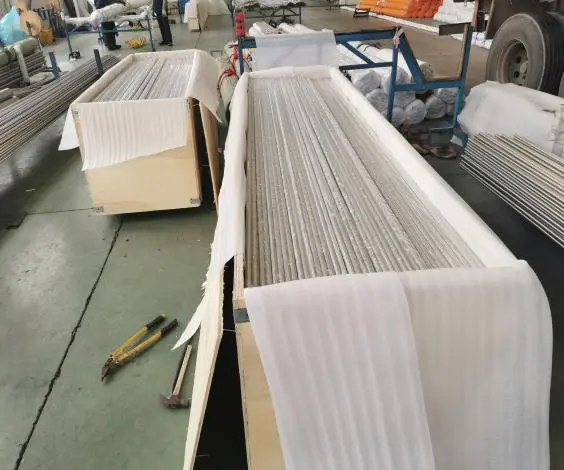
Understanding ASTM B444 Inconel 625 Tube Specifications
The ASTM B444 Inconel 625 tube standard covers all aspects of seamless tubes and sets standards that ensure uniform performance in tough situations. This standard spells out important details, like the chemical make-up and the mechanical qualities, that make sure every tube meets the standards set by the industry.
Chemical Composition Requirements
The chemicals that make up Inconel 625 have a direct effect on how well it stands up to harsh circumstances. ASTM B444 says that the nickel percentage must be at least 58% for the metal to be solid. Chromium levels between 20.0% and 23.0% protect against oxidation, and molybdenum levels between 8.0% and 10.0% protect against limited rust and pitting. Niobium levels between 3.15 and 4.15 percent make the structure stronger and stop intergranular erosion. This exact balance makes an alloy that can work in tough chemical conditions, like sulfuric acid plants or drilling platforms at sea. At TSM Technology, we use spectroscopic analysis to check the chemical makeup of each batch and make sure it meets the standards before production moves forward.
Mechanical Property Benchmarks
How tubes react to operating stress is determined by their mechanical performance. There must be at least 30% stretch and a minimum tensile strength of 827 MPa according to ASTM B444. There must also be a minimum yield strength of 414 MPa. These features make sure that tubes keep their shape when they are under pressure, changing temperatures, and being loaded mechanically. The alloy's physical properties are also shown by its density of 8.44 g/cm³ and its melting point range of 1290°C to 1350°C. As part of our manufacturing process, we test every output lot for tension and stiffness and provide Material Test Certificates that meet the requirements of EN 10204 3.1 and 3.2.
Dimensional Tolerances and Standards
When tubes have to fit into complicated systems or keep their flow properties, accuracy is important. The outside width of TSM Technology's ASTM B444 tubes ranges from 6 mm to 114 mm, and the wall thickness ranges from 0.5 mm to 15 mm. We keep limits of ±0.1 mm on the outside diameter and ±10% on the wall thickness. Tighter specs can be provided upon request. Permanent markings are put on each tube that show the standard, grade, measurements, and heat number. This makes it possible to track the tubes all the way through the supply chain. This care for accuracy in measurements makes installation easier and makes sure that the new system will work with the old one. This is especially important for retrofit projects in industrial plants.
Key Performance Characteristics of ASTM B444 Inconel 625 Tubes
Knowing how ASTM B444 Inconel 625 tubes work in real life situations helps engineers and sourcing specialists choose materials with confidence. The alloy's metallurgical design takes into account typical failure causes in harsh industrial settings.
Exceptional Corrosion Resistance
Corrosion protection is the main reason why businesses pick Inconel 625 over other materials. Because it has a lot of molybdenum and niobium, it is almost completely resistant to chloride-ion stress-corrosion cracking, which is a type of failure that happens a lot in salty and sea water. The metal doesn't rust or pit in still water, which makes it perfect for pipes on offshore platforms and desalination equipment. Inconel 625 can handle both oxidizing acids, like nitric acid, and reducing conditions, like sulfuric acid. This makes it useful in a wide range of chemical working streams. Intergranular rust testing and pitting resistance testing are done on our tubes to make sure they can keep their structure for long periods of time.
High-Temperature Stability and Strength
When used at temperatures up to 1000°C, materials must be able to fight creep, oxidation, and thermal stress. As the temperature rises, ASTM B444 Inconel 625 tubes keep their mechanical qualities even though carbon steels and many stainless metals weaken. The face-centered cubic structure of the metal stays steady and doesn't change phases in a way that could hurt its performance. This steadiness is very important in gas turbine exhaust systems, where temperature changes and thermal shock happen all the time. The alloy's low thermal expansion rate and resistance to oxidation scaling make it useful in aerospace uses. These properties help keep engine parts' dimensions stable. Heat treatments, especially solution annealing at temperatures above 1093°C, can be used to make the grain structure work best for different uses, depending on whether strength at room temperature or resistance to creep at high temperatures is more important.
Characteristics of Weldability and Fabrication
Some superalloys don't like being welded, bent, or shaped, which are all things that are needed for complex industrial systems. Inconel 625 is very easy to weld, and in areas where it gets hot, it doesn't crack or lose its rust protection. When done correctly, gas tungsten arc welding and gas metal arc welding make joints that are strong and match the qualities of the base metal. This feature makes it easier to make heat exchanges, reaction tanks, and piping systems with complicated shapes. The annealed and pickled finish makes the surface clean for welding, and the bright annealed finish is best for situations where the surface must be free of oxides. Because of the alloy's work-hardening rate, the right tools and methods must be used when it is being machined. We teach our clients these things so they can improve their manufacturing processes.
ASTM B444 Inconel 625 Tube vs Alternative Alloys: Making the Right Choice
Material selection includes comparing several options based on the needs of the application and finding the best balance between cost-effectiveness and technical performance. When you compare ASTM B444 Inconel 625 tubes to other materials, it's easy to see where this metal is the best value.
Inconel 625 vs Stainless Steel Tubes
Cost-effective stainless steel types like 316L offer moderate corrosion protection, making them appealing for projects that need to stay within their budget. But stainless steels break when they are exposed to chlorides at high temperatures, where they crack and split due to stress corrosion. The molybdenum and niobium in Inconel 625 stop these failure modes, so there are no more sudden shutdowns or replacement costs. Even though it costs more at first, Inconel 625 is usually better for offshore, chemical processing, and high-temperature uses based on lifetime study. The alloy stays stronger at temperatures above 500°C than austenitic stainless steels, which lets aircraft and power generation equipment have smaller walls and lighter weight.
Inconel 625 vs Inconel 600 and Monel Alloys
Nickel-based alloys are chosen based on the difficulties they face in the world. Because it has less molybdenum, Inconel 600 works well in high-temperature oxidation conditions, but it isn't as resistant to reducing acids and chloride stress corrosion as Inconel 625. While monel metals work well in hydrofluoric acid, they aren't as strong as Inconel 625 at high temperatures. Inconel 625 blends the corrosion protection of monel with better mechanical qualities, making it ideal for naval heat exchangers and other uses involving seawater with thermal cycling. Inconel 625 is useful in chemical plants that work with mixed acid streams because it can be used in both oxidizing and reducing situations. This makes managing materials easier and makes inventory less complicated.
Economic Considerations and Lifecycle Value
Material prices are only one part of the total cost of ownership. Because Inconel 625 doesn't rust or break down when heated, it has a much longer useful life than carbon steel or stainless steel. Lowering the time between upkeep, avoiding unexpected shutdowns, and fixing problems before they happen save a lot of money over decades of operation. Energy centers that are running at high capacity factors benefit the most, since every hour of unexpected downtime costs a lot of money. Our monthly production capacity of 200 tons guarantees a steady supply for big projects and framework agreements. This lowers the risk of buying and allows just-in-time delivery strategies that keep working capital from getting stuck in inventory.
Procurement Guide for ASTM B444 Inconel 625 Tubes
Strategic sourcing requires understanding not just technical specs. You also need to know about the supplier's skills, the certifications they need, and the details that affect project schedules and costs for ASTM B444 Inconel 625 tubes.
Certification and Quality Documentation
Meeting foreign standards is the first step in ensuring reliable buying. ASTM B444 tubes must come with Material Test Certificates that list their chemical make-up, mechanical qualities, and the conditions under which they were heat treated. Traceability is provided by EN 10204 3.1 certificates, which are given by the maker. EN 10204 3.2 certificates include verification by a third party outside the manufacturer. TSM Technology has ISO9001:2008 certification and TÜV approval, which show that they handle quality in a planned way throughout the whole production process. Before they are shipped, our tubes go through a lot of tests, such as an ultrasound scan, an eddy current scan, a hydraulic test, and a measurement check. This paperwork is very important for businesses that have to follow strict rules, like nuclear power and aircraft manufacturing, where the provenance of materials needs to be proven beyond a doubt.
Supplier Evaluation Criteria
When picking providers, you have to look at their manufacturing skills, quality control systems, and business dependability. Production ability is important for big projects that need to be delivered on time over long periods of time. Vertical integration from raw materials to finished tubes is possible at TSM Technology's three plants and eight production lines, which are all equipped with vacuum arc remelting ovens and 2,500-ton forging presses. This combination makes sure that quality is checked at every step and lessens your reliance on outside sources whose delays could affect your plans. Premium suppliers are different from basic suppliers because they offer technical help. Our engineering team helps with choosing materials, figuring out what specifications mean, and fixing problems during manufacturing, so they add value beyond just delivering products.
Lead Times and Services for Custom Processing
Standard goods usually ship between 5 and 20 days after an order is confirmed, but custom sizes and handling take longer. In addition to our normal range of 6 to 114 mm outer diameter and 0.5 to 15 mm wall thickness, TSM Technology can make measurements that are specific to your design needs. We offer a range of styles, such as polished, annealed and pickled, and bright annealed surfaces, each of which is best for a different use. Custom cutting services give tubes in exact lengths, which cuts down on trash and the work that needs to be done to make them at the customer's location. Using these wait times to plan when to buy things keeps projects from being late, especially when tubes are on important roads for building plants or putting together equipment.
Why Choose Certified ASTM B444 Inconel 625 Tube Suppliers?
The connection with the provider is more than just buying things. It's a strategic partnership that affects the success of the project, the reliability of operations, and the company's long-term ability to compete for ASTM B444 Inconel 625 tubes.
Manufacturing Excellence and Quality Assurance
Strong manufacturing methods and strict quality control lead to consistent quality. The 60,000-square-meter building that TSM Technology uses has high-tech tools that allow precise control over the properties of metals. The first step in our production method is to take high-purity nickel alloy bars and melt them in a controlled atmosphere. The next steps are hot working, cold drawing, heat treatment, and finishing. In-process inspections and tests are done at every stage to find possible problems before they become expensive ones. Examinations at both the macro and molecular levels show the internal structure and make sure the grain size meets the requirements. Positive Material Identification checks the alloy makeup on finished tubes to avoid mistakes that could cause catastrophic breakdowns in service.
Help with applications and technical knowledge
Complex industrial uses need technical understanding from the provider that goes beyond what is listed in the catalog. Our material engineers know how Inconel 625 works in a variety of settings and can suggest the best grades and heat processes for each service situation. We use our more than ten years of experience working with customers in the aerospace, chemical processing, marine, and energy industries to help them find answers when they run into problems with rust or unusual operating conditions. This advice helps you avoid mistakes that cost a lot of money when choosing materials and speeds up the project development timeline. After the product is delivered, customers can get help with manufacturing questions, developing welding procedures, and quality assurance issues. This makes sure that customers can easily add tubes to their systems.
Supply Chain Reliability and Global Reach
Uninterrupted supply of materials keeps production plans on track and stops costly delays. With a monthly capacity of 200 tons, TSM Technology can handle both small, one-of-a-kind orders and big projects that need supplies all the time. Since 2011, we've been dealing internationally, which has given us the logistics skills to serve customers around the world, handle export paperwork, organize freight transfers, and make sure that goods get to project sites around the world on time. This dependability is especially important for turnkey projects that have limited time for building or repair breaks that last a set amount of time. Framework deals and blanket orders let customers lock in capacity while keeping their inventory flexible. This strikes a balance between ensuring a steady supply of goods and making the best use of working capital.
Conclusion
ASTM B444 Inconel 625 tubes are a tried-and-true option for businesses that need unwavering performance in harsh environments with high temperatures and a lot of mechanical stress. Engineers and buyers can make better choices that improve project results and lifetime costs when they understand specifications, performance traits, and procurement issues. The alloy's ability to fight corrosion, stay stable at high temperatures, and be strong mechanically solves important problems in the aircraft, petrochemical, naval, and power production industries, where failure of materials has serious effects. Risks can be reduced and long-term operating success can be supported by working with qualified makers who offer full quality documents, expert support, and reliable supply chains.
FAQ
What distinguishes ASTM B444 Grade 1 from Grade 2 tubes?
An annealing heat process is used on Grade 1 ASTM B444 Inconel 625 tubes to make them more resistant to rust and improve their tensile strength for use at temperatures up to 593°C. Solution annealing is done on Grade 2 at higher temperatures (at least 1093°C), which makes it more resistant to creep and breakage in situations where the temperature is above 1100°F. The solution annealing process makes the grains bigger so they don't change shape when they're loaded with high temperatures for a long time. This is important for turbine parts and superheater tubes in power generation equipment.
Can ASTM B444 tubes handle seawater and chloride environments?
Of course. The high molybdenum content (8–10%) and niobium content make it very resistant to stress corrosion cracks and pitting rust caused by chloride. For this reason, Inconel 625 tubes are perfect for cooling systems that use saltwater, pipes on remote platforms, and desalination equipment where stainless steels would break too soon.
How do I verify supplier compliance with ASTM B444 standards?
Ask for Material Test Certificates that show the chemical make-up and mechanical qualities according to EN 10204 3.1 or 3.2. Check to see if the seller has the right quality certifications, such as ISO9001 and approvals specific to your business. Check the markings on the tubes; they should say "standard," "grade," and "heat number" so that everything can be tracked.
Partner with TSM Technology for Premium ASTM B444 Inconel 625 Tubes
TSM Technology stands ready to support your critical material requirements with certified ASTM B444 Inconel 625 tubes manufactured to exacting standards. Our fully integrated production center, thorough quality control systems, and more than ten years of experience in the field guarantee that the tubes you receive will meet your needs and work reliably in tough working conditions. Our 200-ton monthly capacity and 5–20-day delivery times keep your projects on track, whether you need standard sizes or special processing. As a reliable provider of Inconel 625 tubes, we include all the necessary paperwork with every package, such as ISO9001:2008, TÜV, and EN 10204 3.1 certificates. Contact our technical team at info@tsmnialloy.com to talk about your application needs, get full specs, or get a competitive quote for your next project.
References
ASTM International. "ASTM B444 - Standard Specification for Nickel-Chromium-Molybdenum-Columbium Alloys and Nickel-Chromium-Molybdenum-Silicon Alloy Seamless Pipe and Tube." Annual Book of ASTM Standards, Volume 02.04, 2023.
Special Metals Corporation. "Inconel Alloy 625 Technical Bulletin." Publication Number SMC-063, 2021.
National Association of Corrosion Engineers. "Selection and Application of Nickel Alloys in Aggressive Environments." NACE International Technical Report, 2022.
American Society of Mechanical Engineers. "Materials Selection Guidelines for Pressure Vessel Applications." ASME Boiler and Pressure Vessel Code, Section II Part D, 2023.
European Standard EN 10204. "Metallic Products - Types of Inspection Documents." European Committee for Standardization, 2020.
Aerospace Material Specification AMS 5581. "Nickel Alloy, Corrosion and Heat Resistant, Seamless Tubing 61.5Ni-21.5Cr-9.0Mo-3.65Cb." SAE International, 2023 Edition.
Learn about our latest products and discounts through SMS or email