- English
- French
- German
- Portuguese
- Spanish
- Russian
- Japanese
- Korean
- Arabic
- Greek
- German
- Turkish
- Italian
- Danish
- Romanian
- Indonesian
- Czech
- Afrikaans
- Swedish
- Polish
- Basque
- Catalan
- Esperanto
- Hindi
- Lao
- Albanian
- Amharic
- Armenian
- Azerbaijani
- Belarusian
- Bengali
- Bosnian
- Bulgarian
- Cebuano
- Chichewa
- Corsican
- Croatian
- Dutch
- Estonian
- Filipino
- Finnish
- Frisian
- Galician
- Georgian
- Gujarati
- Haitian
- Hausa
- Hawaiian
- Hebrew
- Hmong
- Hungarian
- Icelandic
- Igbo
- Javanese
- Kannada
- Kazakh
- Khmer
- Kurdish
- Kyrgyz
- Latin
- Latvian
- Lithuanian
- Luxembou..
- Macedonian
- Malagasy
- Malay
- Malayalam
- Maltese
- Maori
- Marathi
- Mongolian
- Burmese
- Nepali
- Norwegian
- Pashto
- Persian
- Punjabi
- Serbian
- Sesotho
- Sinhala
- Slovak
- Slovenian
- Somali
- Samoan
- Scots Gaelic
- Shona
- Sindhi
- Sundanese
- Swahili
- Tajik
- Tamil
- Telugu
- Thai
- Ukrainian
- Urdu
- Uzbek
- Vietnamese
- Welsh
- Xhosa
- Yiddish
- Yoruba
- Zulu
What Is Nickel Alloy Flat Bar Used For? Applications, Grades and Benefits
When your equipment faces extreme heat, corrosive chemicals, or seawater, choosing the right metal becomes essential. Nickel Alloy Flat Bar offers a practical solution for components that need strength, corrosion resistance, and reliable performance.
You can find these materials in chemical plants, marine equipment, power generation systems, and aerospace applications.
However, not every nickel alloy performs the same way. Each grade provides different benefits for specific operating conditions.
This guide explains the main applications, common grades, material benefits, and key factors to consider before purchasing nickel alloy flat bars.
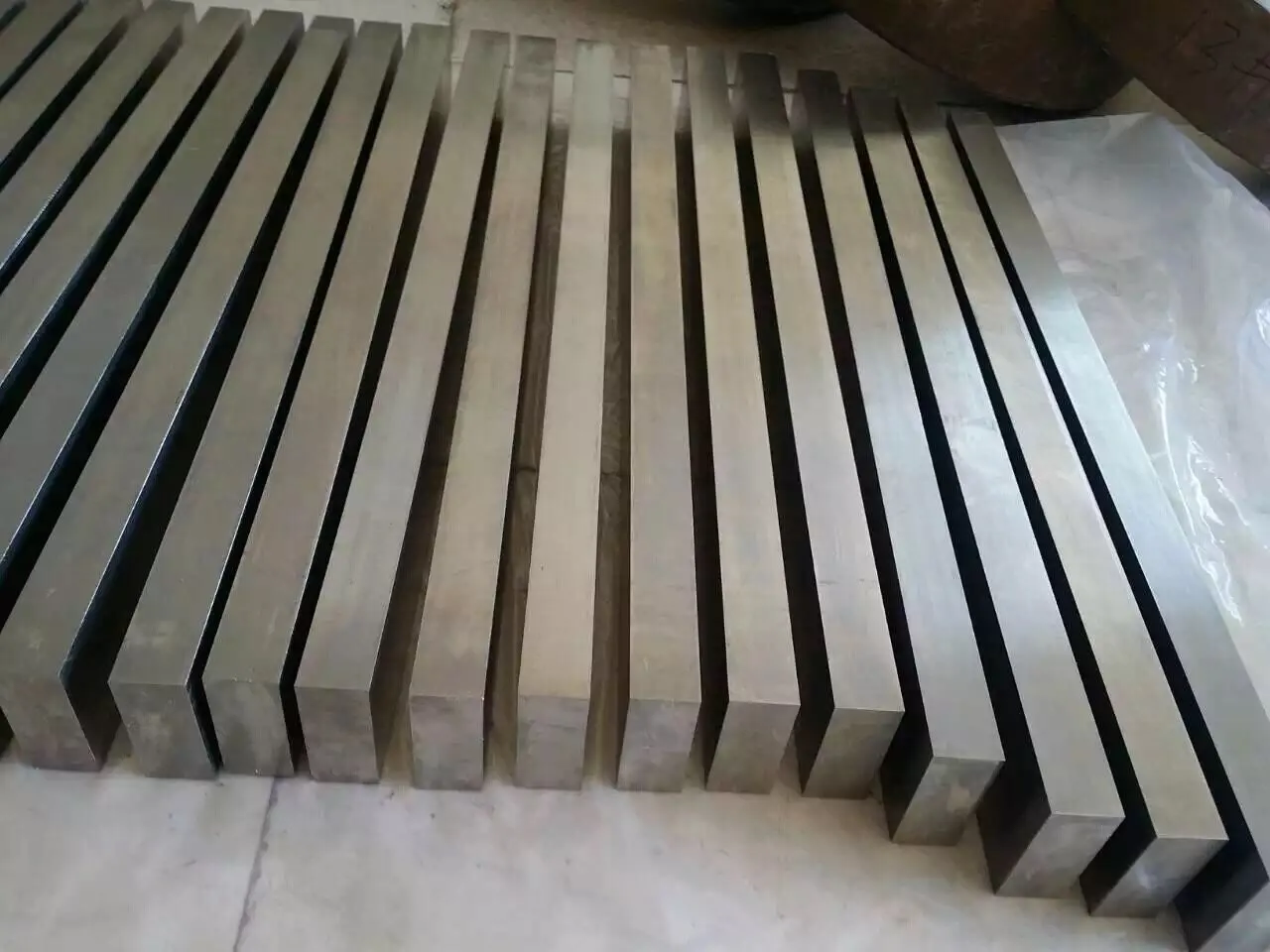
What Is Nickel Alloy Flat Bar?
Nickel alloy flat bar is a solid metal product with a rectangular cross-section. Manufacturers produce it in different widths, thicknesses, and lengths.
The material contains nickel and other elements, depending on the alloy grade. Common additions include chromium, molybdenum, copper, and iron.
These elements help improve properties such as corrosion resistance, oxidation resistance, and mechanical strength.
Unlike round bars, flat bars provide broad, flat surfaces. This shape makes them suitable for brackets, supports, and machined industrial components.
You can also cut, drill, or machine flat bars to meet your design requirements. Explore our Nickel Alloy Flat Bar product page for available materials and dimensional options.
How Does Nickel Alloy Flat Bar Differ From Regular Steel?
The main difference lies in how these materials perform under demanding conditions.
Carbon steel offers strength and relatively low material costs. However, it needs suitable protection against many corrosive environments.
Stainless steel provides better corrosion resistance through its chromium-rich protective surface.
Nickel alloys offer additional options for aggressive chemicals, elevated temperatures, and specialized engineering requirements.
Key Point: The best material depends on your operating environment, required strength, expected service life, and project budget.
What Are the Main Applications of Nickel Alloy Flat Bar?
Nickel alloy flat bars serve industries where ordinary materials may struggle with corrosion, temperature, or long-term exposure.
Their rectangular shape also supports machining and fabrication into specialized industrial components.
1. Chemical and Petrochemical Processing
Chemical plants handle acids, solvents, and other process fluids that can damage equipment.
Nickel alloys help address these challenges when engineers select a grade compatible with the chemical environment.
Common applications include:
- Equipment brackets and structural supports
- Valve and pump components
- Machined parts for chemical processing systems
- Components in corrosive processing equipment
- Support parts for reactors and heat exchangers
Hastelloy C276 offers broad resistance to many aggressive chemicals, including several chloride-containing environments.
Incoloy 825 also provides useful resistance to various reducing and oxidizing acids.
You should evaluate chemical concentration, temperature, and operating conditions before choosing either material.
2. Marine and Offshore Engineering
Marine equipment faces continuous exposure to seawater, salt deposits, and moisture.
These conditions increase the risk of localized corrosion and equipment damage.
Nickel alloy flat bars can serve as raw material for:
- Marine equipment brackets
- Pump and valve components
- Offshore equipment supports
- Seawater-handling system parts
- Corrosion-resistant fastening components
Monel 400 offers strong resistance to seawater in many service conditions.
Inconel 625 also provides excellent resistance to several marine corrosion mechanisms.
However, seawater performance depends on temperature, flow, deposits, and equipment design.
For offshore projects, review these factors alongside the mechanical requirements.
3. Aerospace and Aircraft Components
Aerospace equipment often operates under demanding mechanical and thermal conditions.
Some components experience repeated loading, elevated temperatures, or severe environmental exposure.
Suitable nickel alloys can help engineers address these requirements.
Potential applications include:
- Machined aerospace hardware
- High-strength brackets
- Engine-related support components
- Specialized fastening components
- Structural parts requiring certified materials
Inconel 718 is widely recognized for its high strength and useful performance at elevated temperatures.
Its precipitation-hardening behavior makes it suitable for many demanding aerospace components.
However, aerospace applications require careful material selection.
You must confirm the correct specification, heat treatment, product form, and approval requirements before production.
4. Power Generation and High-Temperature Equipment
Power generation systems rely on materials that can handle heat, oxidation, and mechanical stress.
Some nickel alloys maintain useful properties under conditions that challenge conventional steels.
Engineers may use nickel alloy flat bars to manufacture:
- Furnace support components
- Heat-treatment fixtures
- High-temperature brackets
- Industrial equipment supports
- Machined parts for thermal processing systems
Inconel 600 and 601 provide useful oxidation resistance for suitable high-temperature applications.
Inconel 601 is particularly known for its resistance to high-temperature oxidation.
The actual service limit depends on temperature, loading, exposure time, and surrounding atmosphere.
5. Oil and Gas Equipment
Oil and gas operations can expose equipment to chlorides, corrosive fluids, and demanding pressures.
Some environments also contain hydrogen sulfide, which introduces additional material selection requirements.
Nickel alloys can provide solutions for specific parts in these systems.
Typical applications include:
- Valve components
- Pump parts
- Offshore equipment supports
- Machined equipment hardware
- Corrosion-resistant structural components
Inconel 625 and certain other nickel alloys can serve in demanding oilfield applications.
For sour service, confirm the applicable NACE MR0175/ISO 15156 requirements.
Engineering Note: Never assume an alloy grade automatically qualifies for every sour-service condition.
Common Nickel Alloy Flat Bar Grades and Their Applications
Choosing the right grade is just as important as choosing the right product shape.
Each nickel alloy family offers a different balance of strength, corrosion resistance, and temperature performance.
The following grades represent common choices within the nickel alloy bar product range .
| Alloy Grade | UNS | Main Advantage | Typical Applications |
|---|---|---|---|
| Nickel 200 | N02200 | High nickel purity and corrosion resistance | Chemical equipment |
| Nickel 201 | N02201 | Low carbon content | Chemical and elevated-temperature applications |
| Monel 400 | N04400 | Seawater resistance | Marine and chemical equipment |
| Inconel 600 | N06600 | Oxidation and corrosion resistance | Furnace and processing equipment |
| Inconel 625 | N06625 | Strength and corrosion resistance | Marine, chemical, and offshore equipment |
| Inconel 718 | N07718 | High mechanical strength | Aerospace and industrial hardware |
| Incoloy 825 | N08825 | Resistance to several corrosive media | Chemical processing |
| Hastelloy C276 | N10276 | Broad chemical corrosion resistance | Chemical processing equipment |
Inconel 625 Flat Bar
Inconel 625 contains nickel, chromium, molybdenum, and niobium.
These elements provide a combination of strength and resistance to several aggressive environments.
You may consider this grade for marine equipment, chemical processing, and offshore components.
Inconel 718 Flat Bar
Inconel 718 is a precipitation-hardenable nickel alloy.
Its high strength makes it useful for demanding mechanical applications.
Engineers often consider it for aerospace hardware and other components requiring high mechanical performance.
Hastelloy C276 Flat Bar
Hastelloy C276 contains substantial amounts of nickel, chromium, and molybdenum.
It offers strong resistance to many corrosive chemicals and chloride-containing solutions.
This makes it a candidate for chemical processing equipment and specialized industrial components.
Monel 400 Flat Bar
Monel 400 is a nickel-copper alloy.
It offers good resistance to seawater and several chemical environments.
You can consider it for marine hardware, pump components, and related equipment.
What Are the Key Benefits of Nickel Alloy Flat Bar?
Nickel alloys offer several important benefits for demanding industrial environments.
Understanding these advantages helps you determine whether the higher material cost supports your project requirements.
Excellent Corrosion Resistance
Corrosion resistance is a major reason engineers choose nickel alloys.
Different alloying elements help protect the material against specific chemical environments.
Chromium supports oxidation resistance, while molybdenum improves resistance to certain forms of localized corrosion.
However, no nickel alloy resists every chemical under all operating conditions.
You should always check compatibility with your actual process environment.
Reliable High-Temperature Performance
Many nickel alloys maintain useful mechanical properties at elevated temperatures.
Some grades also resist oxidation during prolonged exposure to hot industrial environments.
This makes them valuable for furnace components, thermal processing equipment, and other high-temperature applications.
Temperature limits vary significantly between grades and material conditions.
Strong Mechanical Properties
Certain nickel alloys offer high strength while maintaining useful toughness.
Inconel 718 provides particularly high strength after suitable heat treatment.
Other grades prioritize corrosion resistance rather than maximum mechanical strength.
Your selection should match the component's loading conditions and service requirements.
Versatile Processing Options
Flat bars provide useful flexibility during component manufacturing.
You can use them for machining, cutting, drilling, and other fabrication operations.
However, processing behavior differs between alloys.
Some high-strength nickel alloys require careful tooling, cutting speeds, and machining methods.
For other cross-sectional shapes, explore our Nickel Alloy Round Bar and Nickel Alloy Square Bar product pages.
Nickel Alloy Flat Bar vs Stainless Steel Flat Bar
You may wonder whether nickel alloy flat bar offers enough benefits to justify its higher cost.
The answer depends on your service conditions.
| Factor | Nickel Alloy Flat Bar | Stainless Steel Flat Bar |
|---|---|---|
| Corrosion Resistance | Grade-specific resistance to aggressive media | Good in many environments; grade dependent |
| High-Temperature Performance | Specialized grades available | Suitable grades available with different limits |
| Mechanical Strength | Varies widely by alloy and condition | Varies by grade and condition |
| Material Cost | Generally higher | Generally lower |
| Typical Selection | Severe or specialized environments | General industrial applications |
Stainless steel remains a practical choice for many applications.
You may need a nickel alloy when the selected stainless steel cannot meet your corrosion, temperature, or strength requirements.
Compare the complete service requirements rather than relying on material names alone.
How Do You Choose the Right Nickel Alloy Flat Bar?
Before ordering, you should evaluate the application, alloy grade, dimensions, and certification requirements.
A clear purchasing specification reduces the risk of receiving unsuitable material.
Check Your Operating Conditions
Start with these questions:
- Which chemicals will contact the material?
- What operating temperatures will the component experience?
- Will the part face seawater or chloride exposure?
- What mechanical loads must it withstand?
- Does your project require a specific material standard?
Your answers help narrow the alloy selection.
Confirm Dimensions and Surface Finish
Flat bar dimensions directly affect machining and assembly.
Specify the required thickness, width, length, and tolerances.
You should also describe any requirements for flatness, straightness, and edge condition.
Choose a surface finish that supports your processing needs.
Review Material Standards and Certificates
Different nickel alloy grades follow different material specifications.
Common examples include:
- ASTM B160: Nickel rod and bar
- ASTM B164: Nickel-copper alloy rod and bar
- ASTM B166: Selected nickel-chromium alloy bars
- ASTM B446: Selected nickel-chromium-molybdenum alloy bars
- ASTM B574: Selected corrosion-resistant nickel alloy bars
Verify that the standard covers your requested grade, product form, dimensions, and delivery condition.
Request suitable material documentation, including chemical analysis and mechanical test results.
Where Can You Buy Custom Nickel Alloy Flat Bar?
Working with an experienced nickel alloy supplier can simplify material sourcing and purchasing.
At TSM Technology , we supply nickel alloy flat bars for industrial applications worldwide.
Our product range includes Inconel, Hastelloy, Monel, Incoloy, and Nickel 200/201 grades.
Our published dimensional range includes:
- Thickness: 3–200 mm
- Width: 20–600 mm
- Length: 1–6 m, with cut-to-length options
- Surface Options: Bright, polished, machined, and ground
- Documentation: Material certificates and available test reports
Specific dimensions and processing options depend on the selected grade and order requirements.
We also support customized dimensions and processing requests based on customer specifications.
For an accurate quotation, share your alloy grade, required size, quantity, standard, and delivery destination.
Review our custom nickel alloy flat bar specifications before sending your inquiry.
Frequently Asked Questions About Nickel Alloy Flat Bar
What is nickel alloy flat bar mainly used for?
You can use it to manufacture corrosion-resistant brackets, supports, valve parts, pump components, and specialized industrial hardware. Typical industries include chemical processing, marine engineering, aerospace, and energy.
Which nickel alloy flat bar is best for seawater applications?
Monel 400 and Inconel 625 offer useful resistance in many seawater environments. Your final choice should consider temperature, flow conditions, mechanical loading, and equipment design.
Can nickel alloy flat bar handle high temperatures?
Yes. Several grades offer useful performance at elevated temperatures. However, operating limits depend on alloy composition, heat treatment, loading, and exposure conditions.
Can I order custom nickel alloy flat bar sizes?
Yes. TSM Technology supports custom dimensions and processing requirements. Contact our team to confirm the available grade, dimensions, tolerance, and order conditions.
Find the Right Nickel Alloy Flat Bar for Your Project
The right material can help your equipment withstand demanding temperatures, corrosive environments, and mechanical loads.
Choosing the correct alloy grade also helps reduce material selection risks and unnecessary processing costs.
At TSM Technology, we help industrial buyers source nickel alloy flat bars that match their project requirements.
Need a quote or technical support?
Explore our Nickel Alloy Flat Bar product range or contact our team at info@tsmnialloy.com.
Share your specifications, and we can help you review suitable material options.
References
- ASTM International. ASTM B164-26: Standard Specification for Nickel-Copper Alloy Rod, Bar, and Wire.
- ASTM International. ASTM B166-25: Standard Specification for Nickel-Chromium-Iron Alloys and Nickel-Chromium-Cobalt-Molybdenum Alloy Rod, Bar, and Wire.
- ASTM International. ASTM B446-24: Standard Specification for Nickel-Chromium-Molybdenum-Niobium Alloy, Nickel-Chromium-Molybdenum-Silicon Alloy, and Nickel-Chromium-Molybdenum-Tungsten Alloy Rod and Bar.
- ASTM International. ASTM B574-23: Standard Specification for Low-Carbon Nickel-Chromium-Molybdenum and Related Nickel Alloy Rod and Bar.
- Haynes International. HASTELLOY C-276 Alloy. Technical Publication H-2002H, 2023.
- Special Metals Corporation. INCONEL Alloy 625. Technical Bulletin.
Learn about our latest products and discounts through SMS or email